14 Quiet Bonds a Home Cat Builds That Prove It Loves Living With You
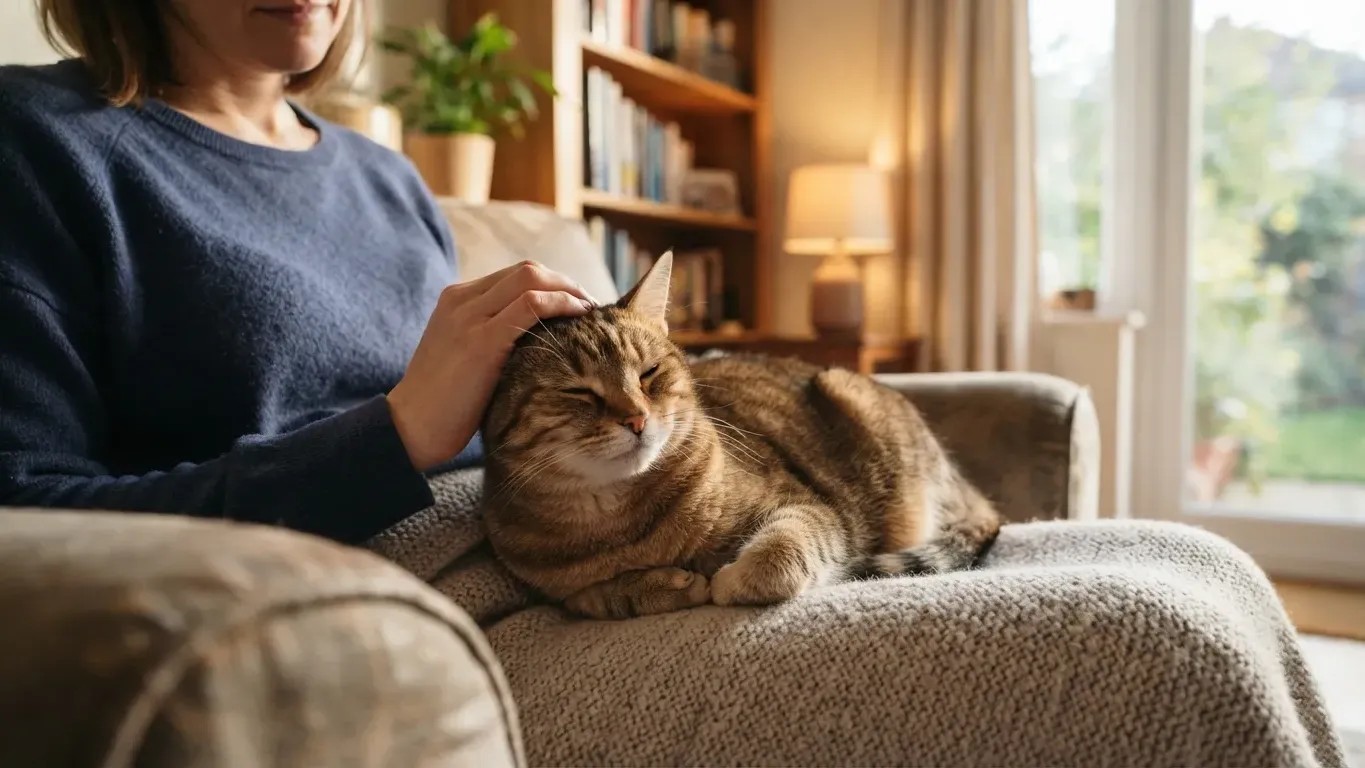
Most people assume cats are aloof, self-serving creatures who only tolerate humans for food and a warm windowsill. Science says otherwise.
A 2019 study in Current Biology tested cats the same way psychologists test human infants for parent attachment - and the results startled researchers. Your cat isn't ignoring you. It's speaking a quiet language almost nobody was ever taught to read.
Here's what the data actually says - and why the smallest gestures mean the most.
#14 - The Slow Blink Across the Room
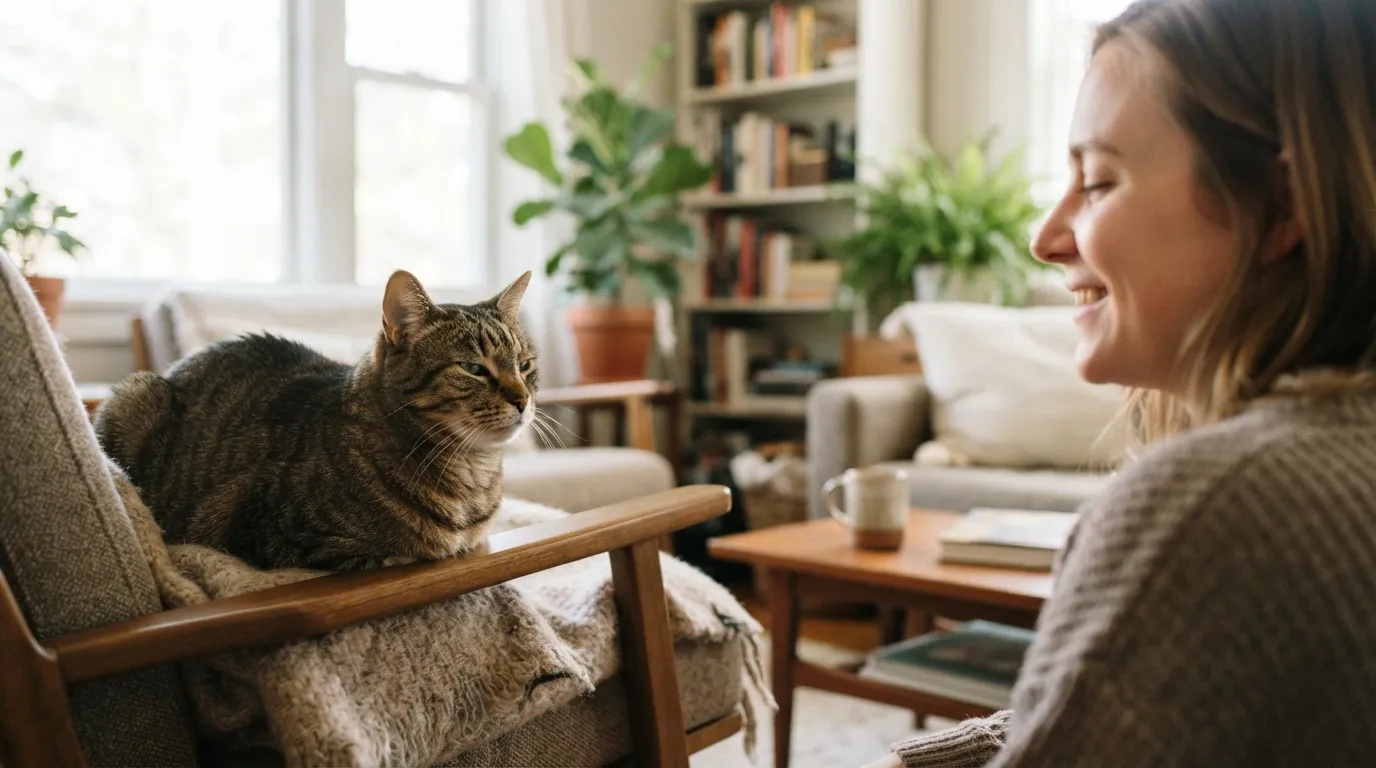
Your cat is sending you a kiss - and most owners completely miss it.
The slow blink is one of the most telling signals in cat body language, often called a "cat kiss." It signals trust and deep relaxation.
It costs a cat nothing to stare. Choosing to close its eyes in your presence is a deliberate act of vulnerability.
A survey by the welfare charity Cats Protection found that 69% of 1,100 cat owners recognized the slow blink as a sign of trust. Cats also respond to slow blinks started by humans, and often approach strangers who try it first.
The correct response is to slow-blink back - a gentle, deliberate closing and reopening of your own eyes. Most cats will return the gesture, starting a wordless exchange some vets call the "cat kiss."
Fast Facts
- Cats Protection surveyed 1,100 owners, and 69% correctly linked the slow blink to a relaxed, trusting cat.
- A 2020 University of Sussex study found cats were more likely to approach unfamiliar people who slow-blinked at them first.
- That same research showed cats slow-blink back at humans significantly more than they do at a blank, neutral stare.
But #13 gets even bolder...
#13 - The Tail-Up Greeting
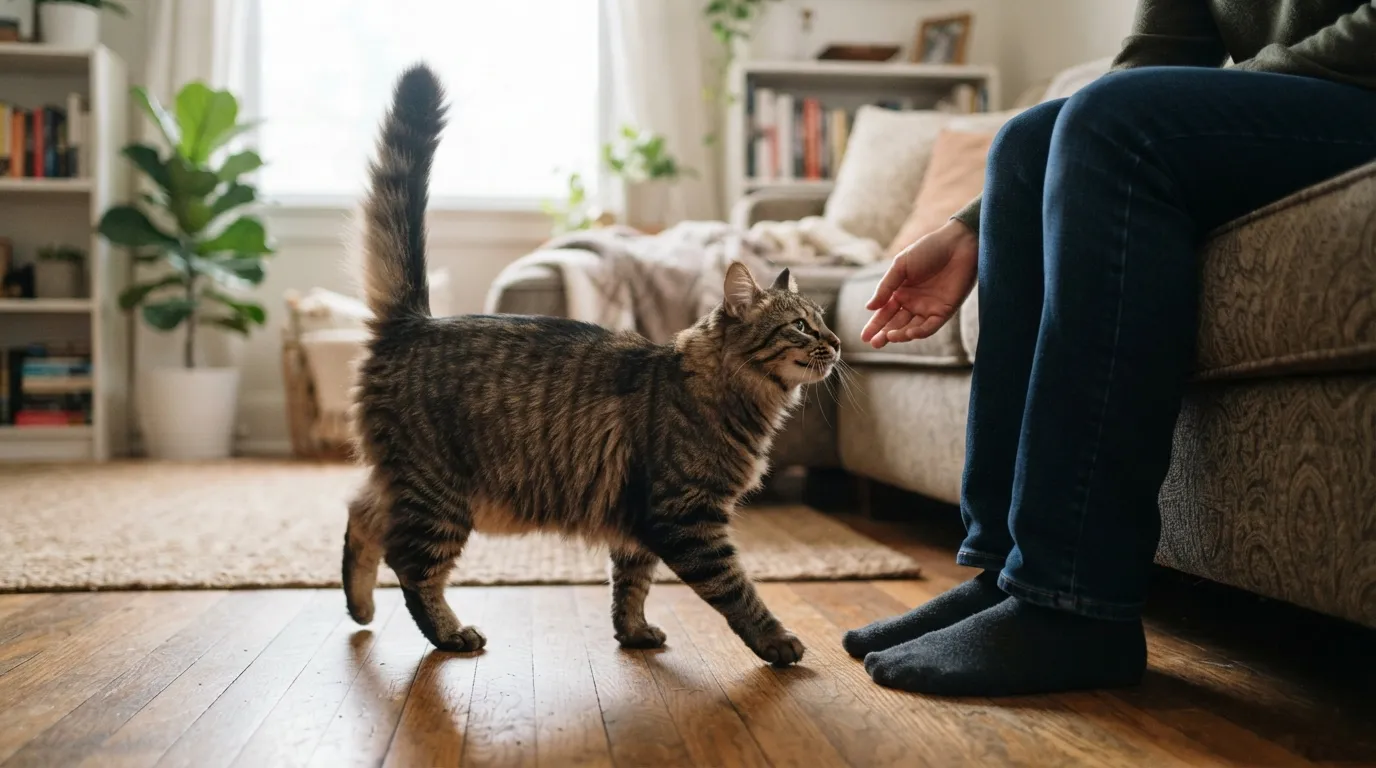
Every time your cat walks toward you with its tail pointing straight up, it's making a social declaration.
A tail held vertically as your cat approaches is the clearest feline greeting there is. It means: I'm happy to see you, and I'm coming in friendly.
This greeting was first documented cat-to-cat, as an invitation to social interaction. Wild and feral cats rarely use it - your indoor cat essentially built this one just for you.
The posture tells another creature there's no aggression coming, and a willingness to get close. In the animal world, that kind of open invitation is rare.
Then #12 gets almost uncomfortably intimate...
#12 - Sleeping in Your Space
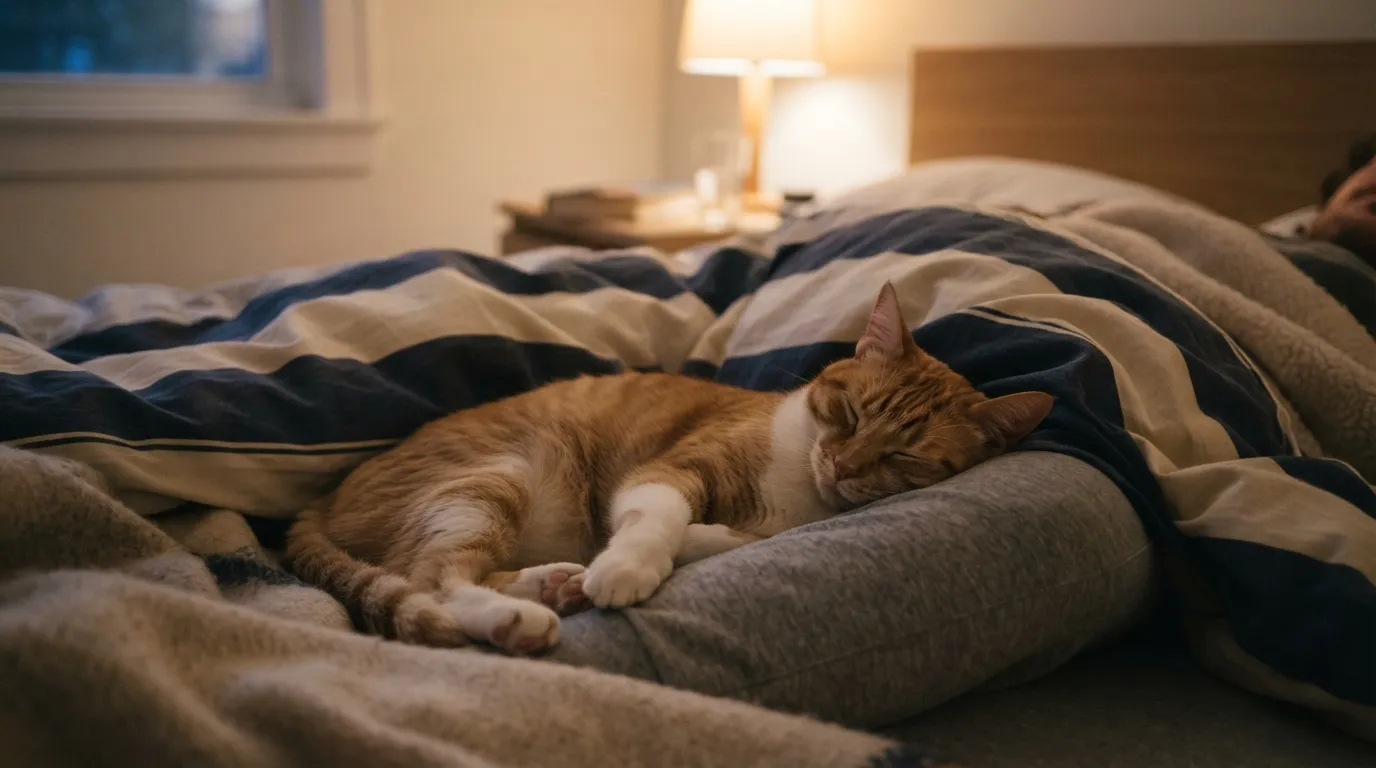
Cats are prey animals as much as they are predators. Where they choose to sleep is never random.
Cats stay acutely aware of their own vulnerability while asleep. Choosing to rest against you means overriding a survival instinct wired into them for thousands of years.
A cat that sleeps pressed against your legs or curled on your chest has filed you under "safe." That classification isn't handed out to strangers.
For cats, bonding often comes down to predictability and safety. The sleeping spot they pick is the most honest measurement of both.
Which brings us to #11, and an instinct older than domestication itself...
#11 - Kneading Your Lap
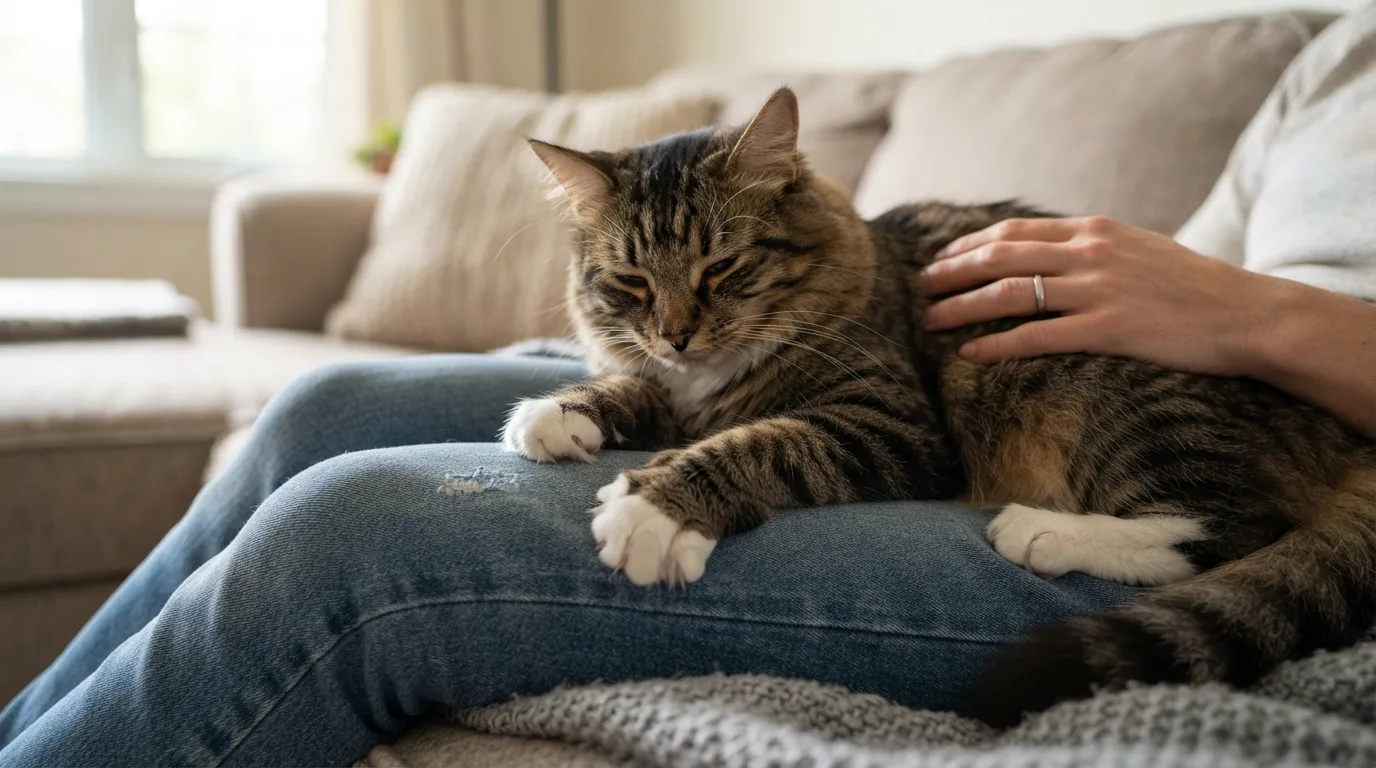
Your cat pushing its paws rhythmically into your thigh isn't a random quirk. It's a holdover from the very first bond it ever formed.
Kneading goes back to kittenhood, when cats pushed on their mother to stimulate milk flow. When your adult cat kneads you, it's reaching for that same nurturing and security.
The detail most owners miss: adult cats only knead things and people that make them feel safe. Your cat isn't doing this to the couch cushion - it's doing it to you.
Feline affection is influenced by hormones like oxytocin, the same "love hormone" that drives human bonding. Kneading is one of the behaviors researchers believe helps trigger it.
Wait until you see what #10 says about scent...
#10 - The Head-Bunt That Marks You as Family
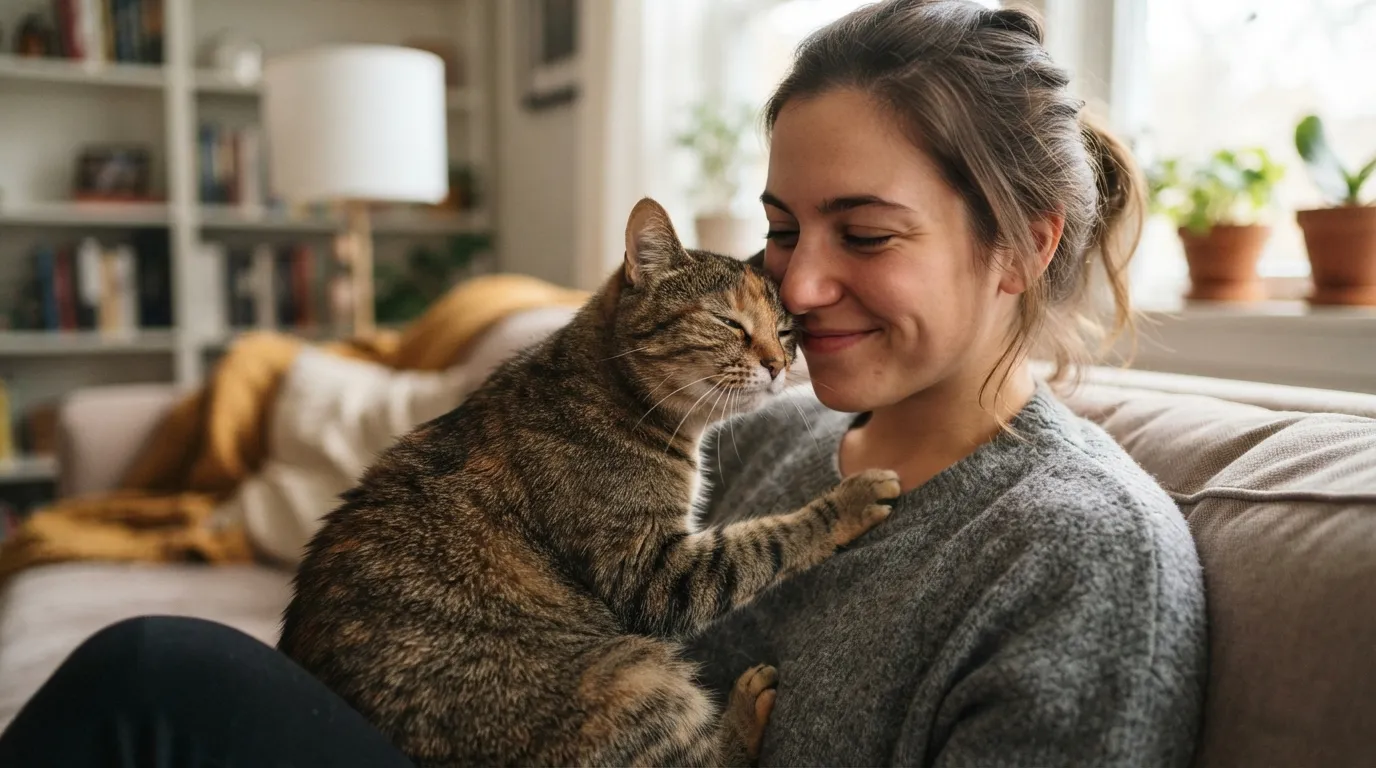
When your cat presses its forehead or cheek straight into your face or hand, it's doing something far more deliberate than it looks.
Cats carry scent glands in their cheeks, forehead, chin, and the base of their tail. Rubbing those spots on you tags you as part of its trusted inner circle.
This isn't passive contact - your cat is choosing to merge its scent with yours. That's a level of intimacy cats reserve only for individuals they want to claim.
In multi-cat households, bonded cats do exactly this to each other. The fact your cat extends it to you means it sees you as a companion, not just a food source.
But #9 takes intimacy even further...
#9 - Grooming You Like One of Its Own
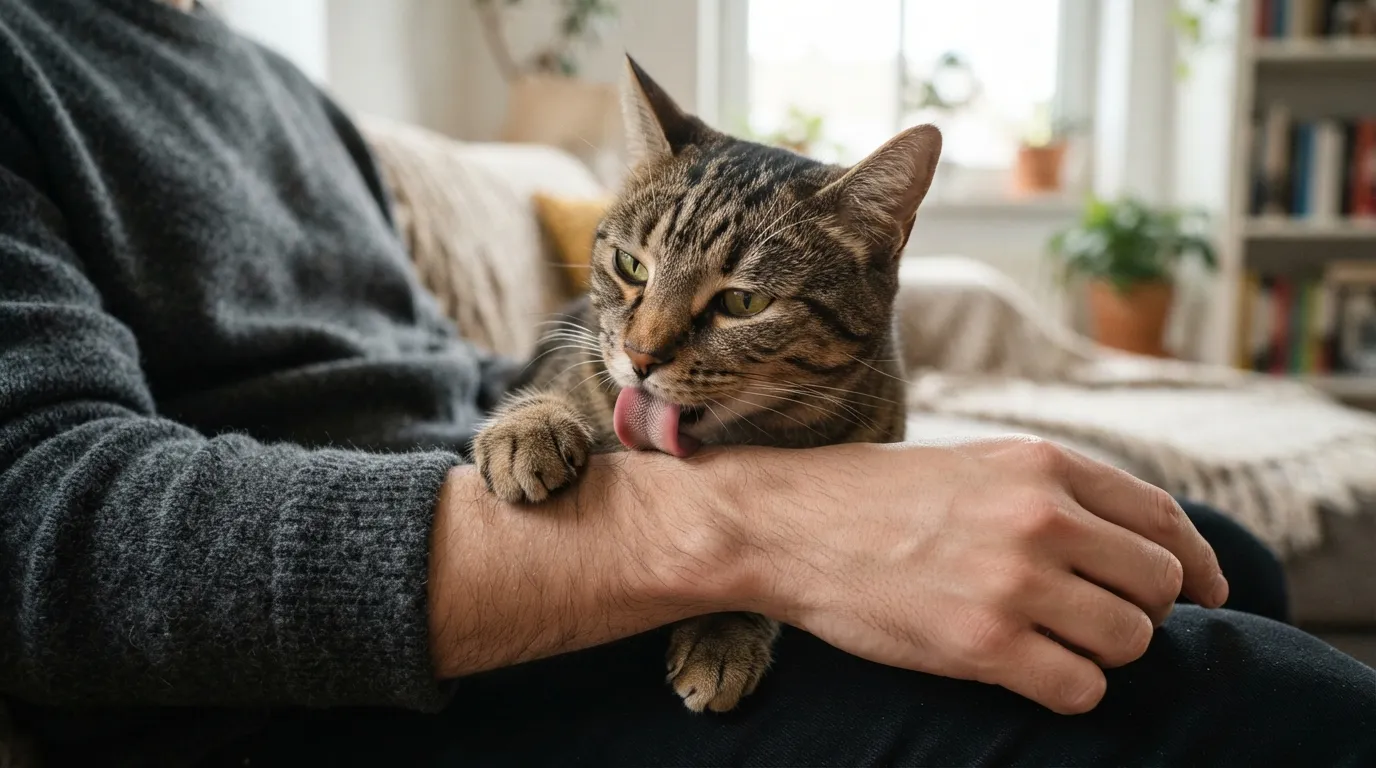
If your cat has ever licked your hand, arm, or hair, you've experienced something called allogrooming. And it means something very specific.
Grooming is a social activity for cats, and licking you is their way of showing love and trust. In feral colonies, allogrooming only happens between cats that share a real bond.
Your cat is extending a behavior it normally saves for its closest companions. It doesn't groom strangers, and it doesn't groom cats it merely tolerates.
Some cats treat being brushed as a bonding ritual too. When your cat grooms you, the right response is simple: let it happen.
Now for #8, and it isn't what you think...
#8 - Shadowing You Through the House
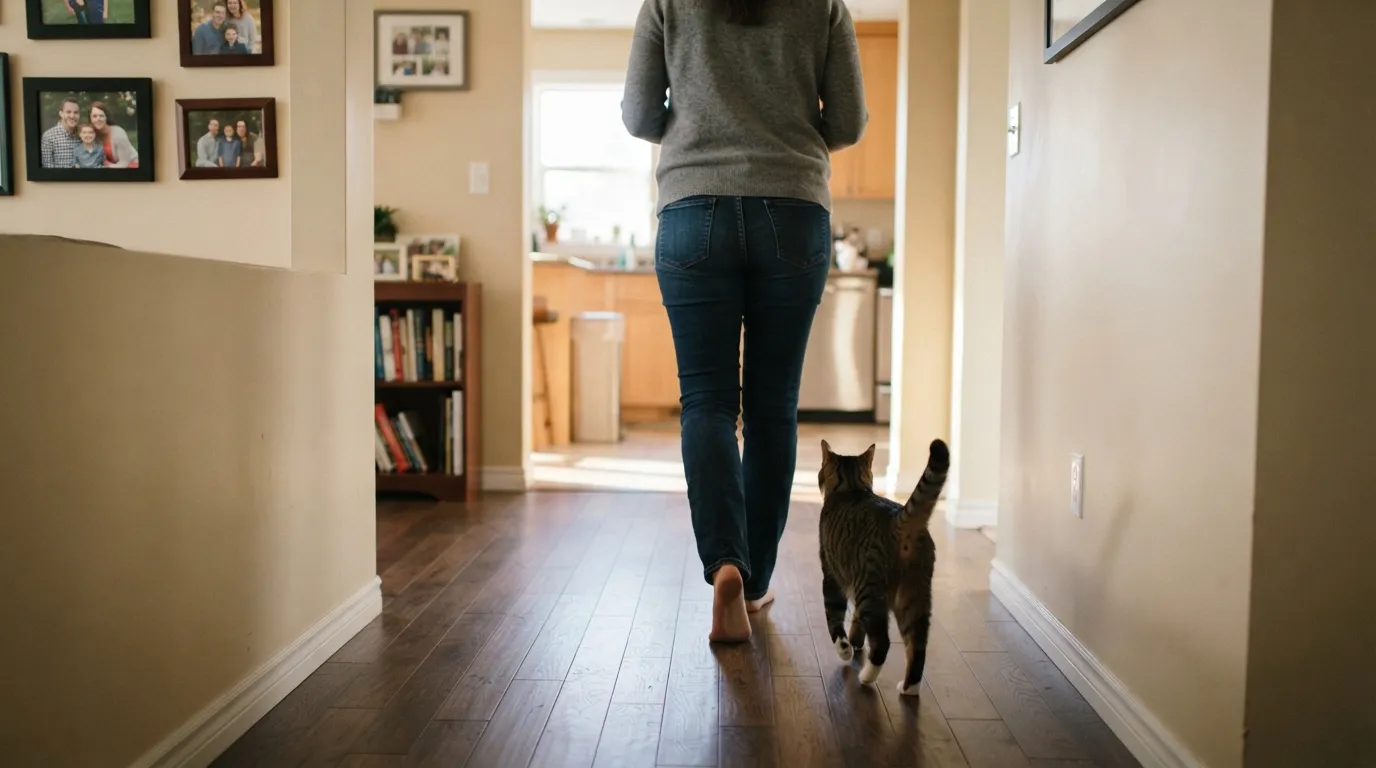
Most owners chalk this up to boredom or curiosity. Researchers see something else entirely.
Following you room to room, waiting outside bathroom doors, positioning itself where it can watch you - all of it points to attachment. Your cat isn't being clingy. It's maintaining a bond the way cats naturally do.
Cats study their important people, tracking routine, mood, and activity. When your cat watches you, you're one of its primary points of orientation in the world.
Cats that shadow one specific person in a multi-person household are making an unmistakable choice. They're not following the house - they're following you.
At a Glance
- In controlled preference tests, cats spent roughly 65% of the trial time positioned near their owner rather than away.
- Researchers use exactly this kind of proximity-seeking to score how attached a cat actually is.
- A cat that tracks one specific person in a busy household is showing the strongest version of this pattern.
But #7 might be the sound you've been missing every day...
#7 - The Chirp That's Made Just for You
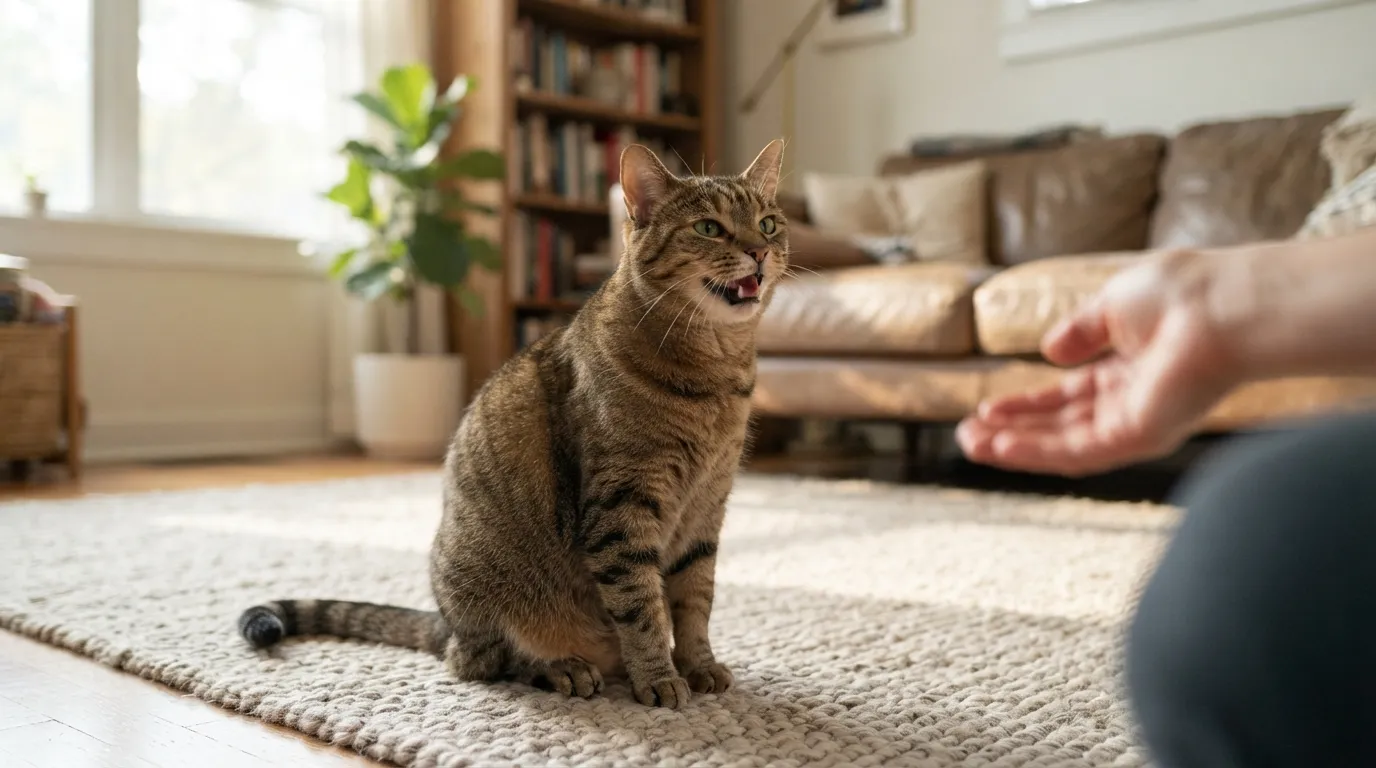
This is one that most cat owners have heard - and almost nobody has correctly interpreted.
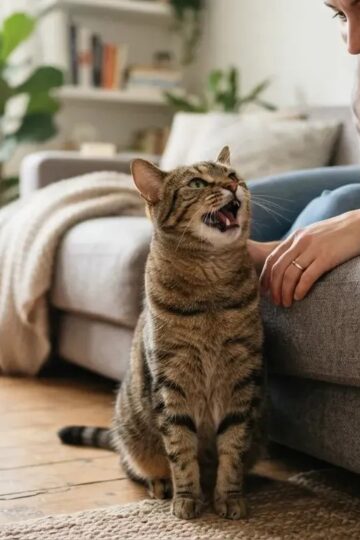
The chirp or trill is a short, melodic sound classified in the research as an affiliative vocalization, a friendly greeting call. It isn't a meow, and it isn't a purr - it's its own signal entirely.
When your cat trills specifically at the sight of you, it's repurposing a greeting normally used cat-to-cat. Researchers link the sound directly to positive social bonding.
Cats don't trill at people they're indifferent to. Research published in ScienceDirect found cats developed vocal signals specifically for humans, while relying on scent and visual cues with other cats - meaning that trill was made for you.
Then #6 - the one trick almost every owner gets wrong...
#6 - The Belly Roll Nobody Should Touch
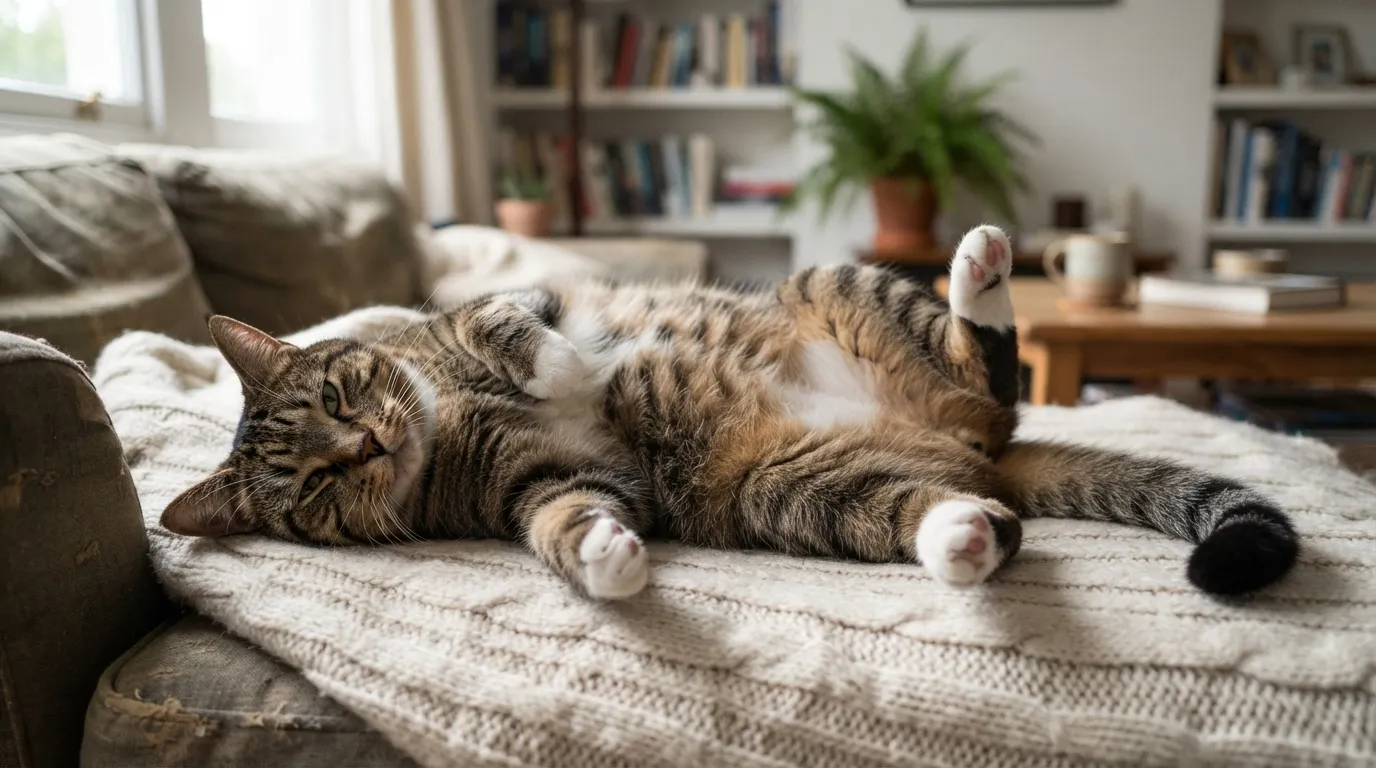
Every cat owner knows this one - and almost every cat owner gets it wrong.
A cat lying on its back with its belly exposed feels happy, safe, and comfortable around you. It is not, however, an invitation for a belly rub - your cat may grab your hand the moment you try.
The belly is the most physically vulnerable part of a cat's body. Exposing it requires complete trust in you and everything around it.
The better response is to acknowledge the gesture without touching the belly. A slow blink back, a gentle head scratch, or simply staying calm nearby usually lands better.
But #5 is where the real science kicks in...
#5 - Choosing You as Its Secure Base
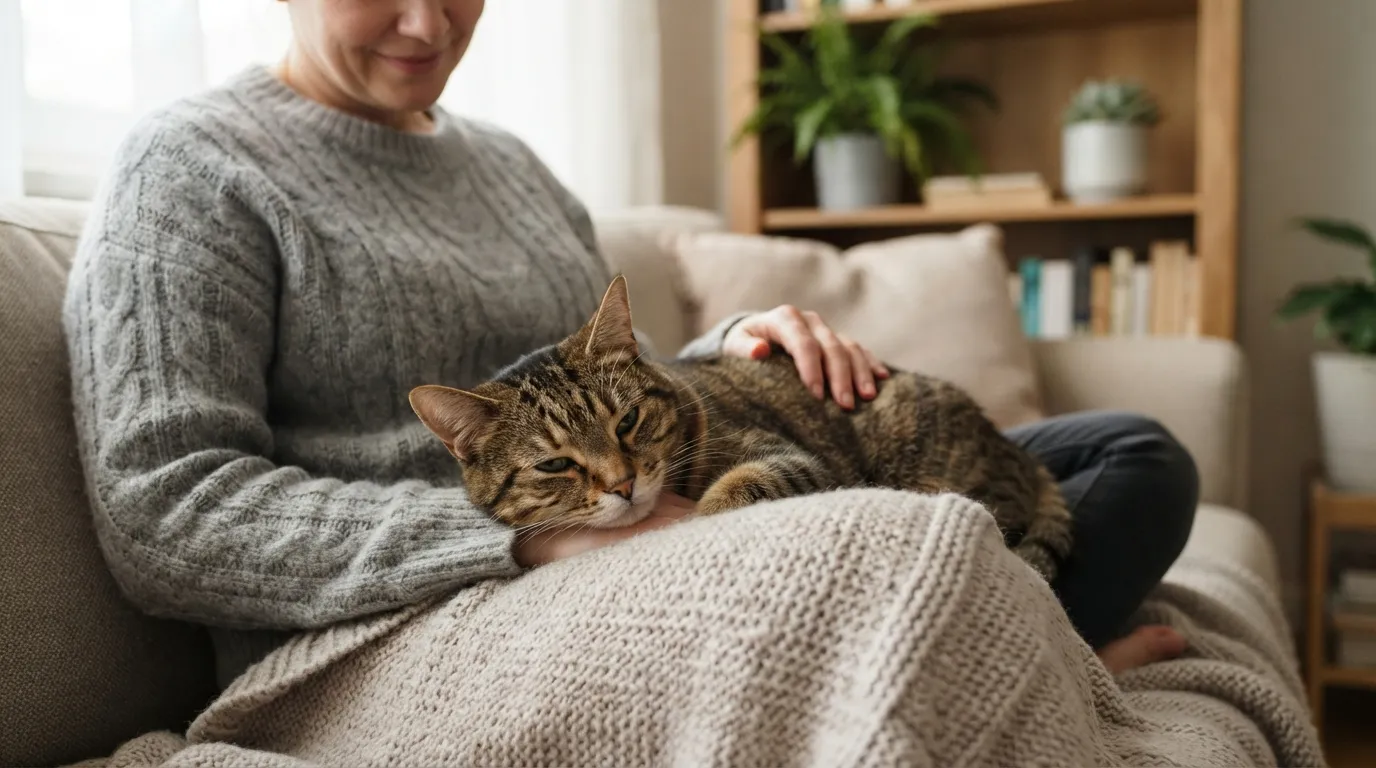
This is where the data gets genuinely striking, and it changes how you see everything your cat does.
That 2019 Current Biology study found cats show what's called the "secure base effect" - relying on their owner for comfort and safety. Most cats living in dependency with a human use that person as their emotional anchor.
Quick Compare
| Group | Secure | Insecure |
|---|---|---|
| Kittens (3-8 months) | 64.3% | 35.7% |
| Adult cats (1+ years) | 65.8% | 34.2% |
| Human infants | ~65% | ~35% |
When researchers retested the same kittens six weeks later, the numbers barely moved: 68.6% still showed secure attachment, 31.4% showed insecure attachment. That kind of stability means the bond isn't situational - it's structural.
After even a brief absence, securely attached cats calm down faster and split their attention between you and their surroundings. They relax because of you - that's what real attachment looks like.
Which leads to #4, and the sound only you can trigger...
#4 - The Purr That's Reserved for You
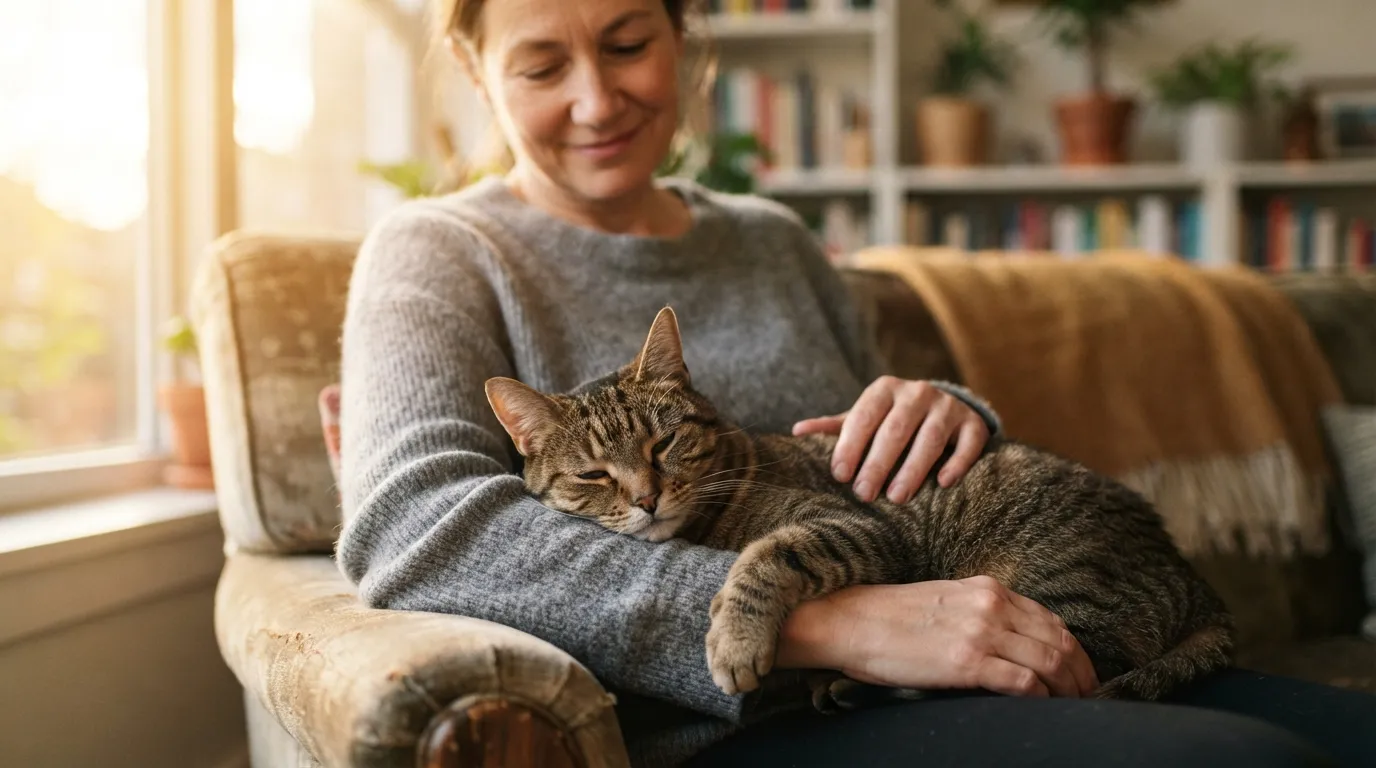
Purring is the most recognized cat behavior on earth, and also the most misunderstood.
Cats often purr when they're happy, but they also purr to self-soothe through stress, discomfort, or pain. Context changes everything.
Here's the detail that matters for bonding: a cat that purrs consistently only around one specific person is showing a conditioned comfort response. It settles into that low vibration the moment that person sits down.
That purr isn't background noise. It's a physical signal that your presence specifically triggers relaxation.
Research shows the human-cat bond benefits both sides - lower blood pressure for owners, fewer stress behaviors for cats. That purr is part of the mutual regulation, calming you both down at once.
But #3 is the moment your cat treats you like family...
#3 - The "Gifts" Left at Your Feet
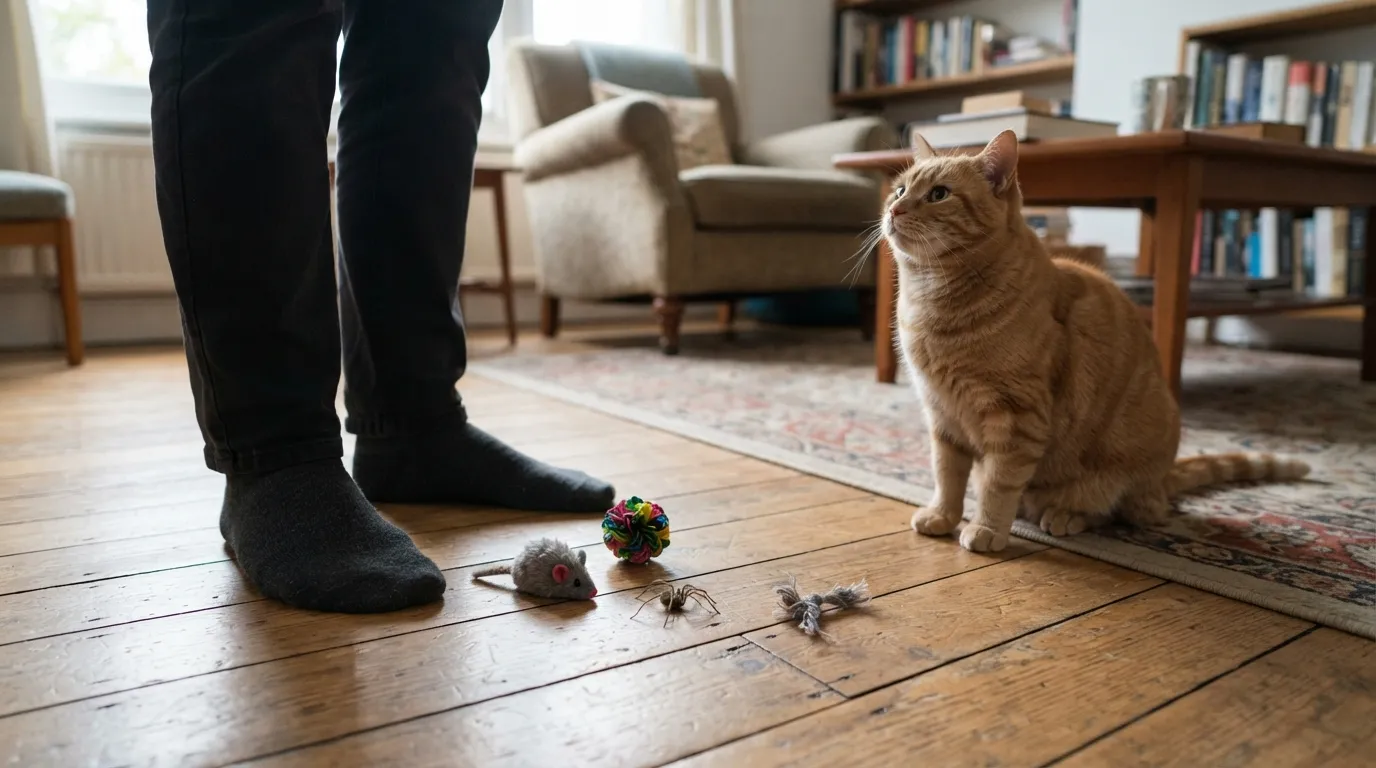
If your cat has ever dropped a toy - or something less welcome - at your feet, most people assume it's instinct misfiring. It runs deeper than that.
A high-energy cat brings "gifts" like toy mice or found objects as a social offering. It's the same pattern mother cats use to teach kittens, bringing prey back to the nest to share.
Cats that never bring gifts aren't loving you any less. But the ones that do are making an active, voluntary gesture.
These offerings are often a wool ball, a dead bug, or some random object dragged from across the house. Accept it gracefully - it is genuinely not nothing.
Now #2, and it's happening every time you speak...
#2 - Recognizing Your Voice in a Crowded Room
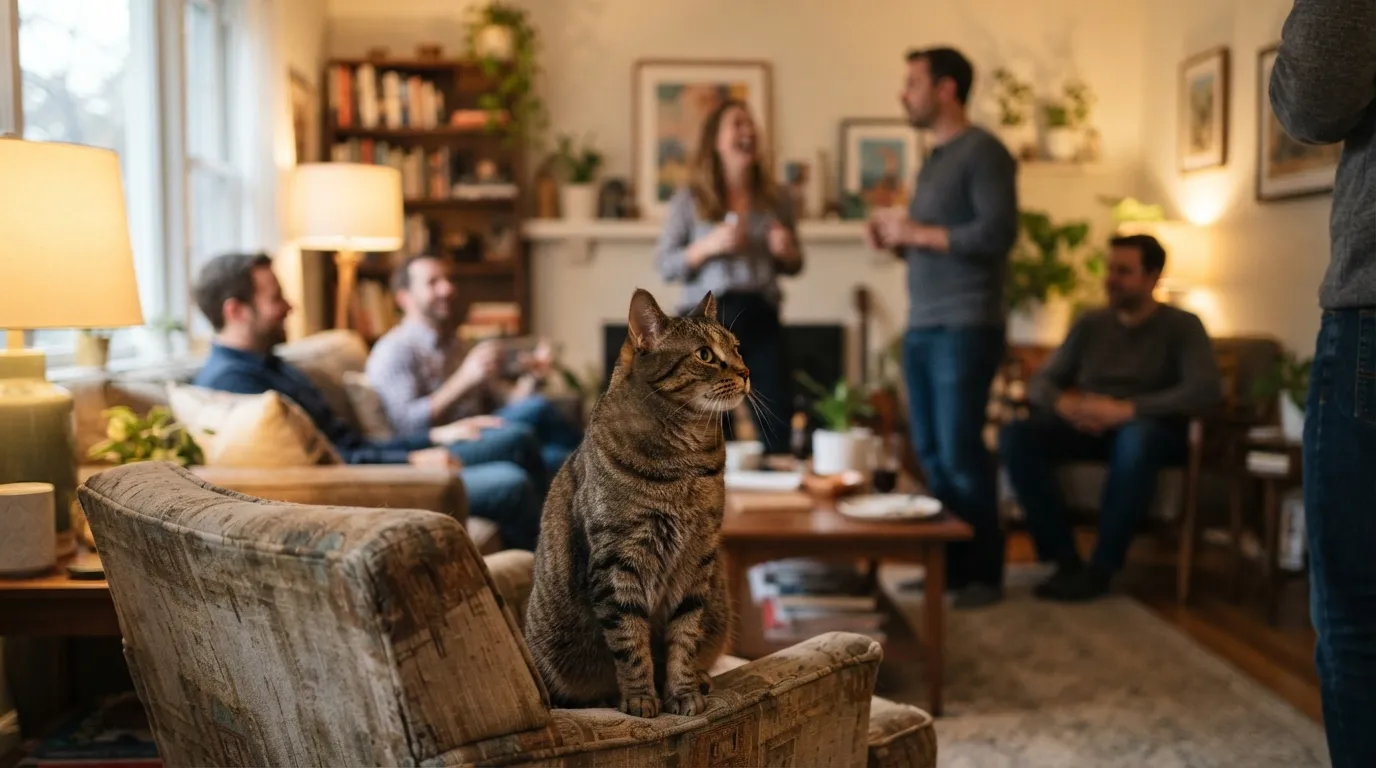
Your cat hears dozens of sounds every single day. It filters almost all of them out - except yours.
Studies show a cat's ear orientation, head turning, and even pupil dilation shift measurably when it hears its owner's voice versus a stranger's. That's true even when both voices say the exact same words at the same volume.
The cat that barely reacts to the TV but instantly looks up when you call from another room is showing selective auditory attention. It knows your specific acoustic signature, and no one else's.
That recognition is learned, not automatic. Your cat picked it up over time and kept it, using it specifically to locate the one person it's bonded to.
None of that prepares you for #1...
#1 - Staying Near You When Absolutely Nothing Is Happening
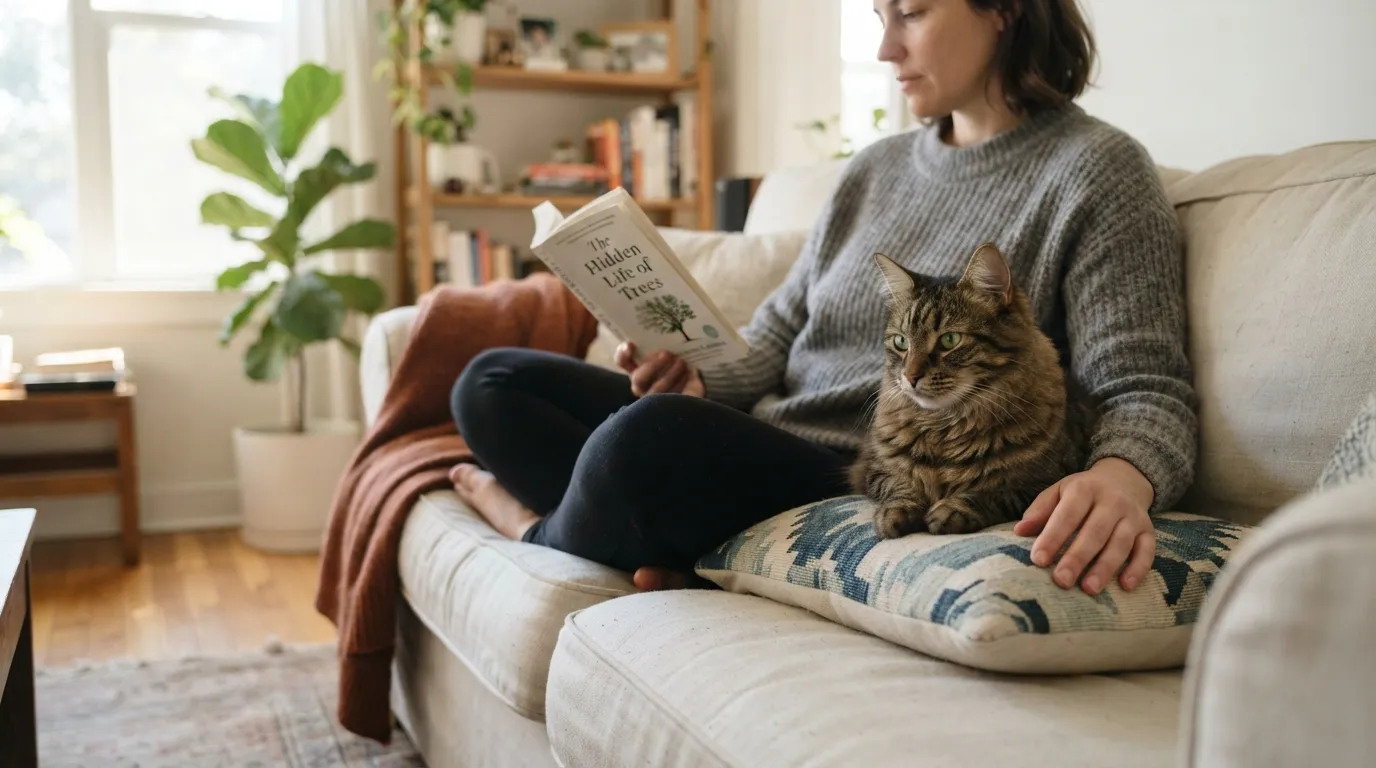
This is the quietest bond on the list. It's also the most honest one.
Attachment theory explains why cats seek comfort from humans during stress but seem independent the rest of the time. In secure relationships, a trusted presence brings reassurance even without any interaction at all.
The cat that wanders into whatever room you're in and just sits nearby - not on you, not demanding anything, simply present - is doing something researchers flag as meaningful. When cats were given a choice between human interaction, food, toys, and scent, most picked interaction with a person first, and food came in second.
Worth Knowing
- In a formal preference study, 50% of cats chose human social interaction over food, toys, and scent when given a free choice.
- Food came in a distant second, preferred by 37% of the cats tested.
- Only a small remainder picked a toy or a scent item as their top choice.
A cat that chooses your orbit when it has every option to be elsewhere has made a deliberate social choice. It isn't bored, and it isn't confused - it prefers you.
That quiet proximity, no agenda and no performance, is the purest form of feline affection researchers have documented. It doesn't announce itself - it just shows up, every day, in whatever room you happen to be standing in.
The Bottom Line
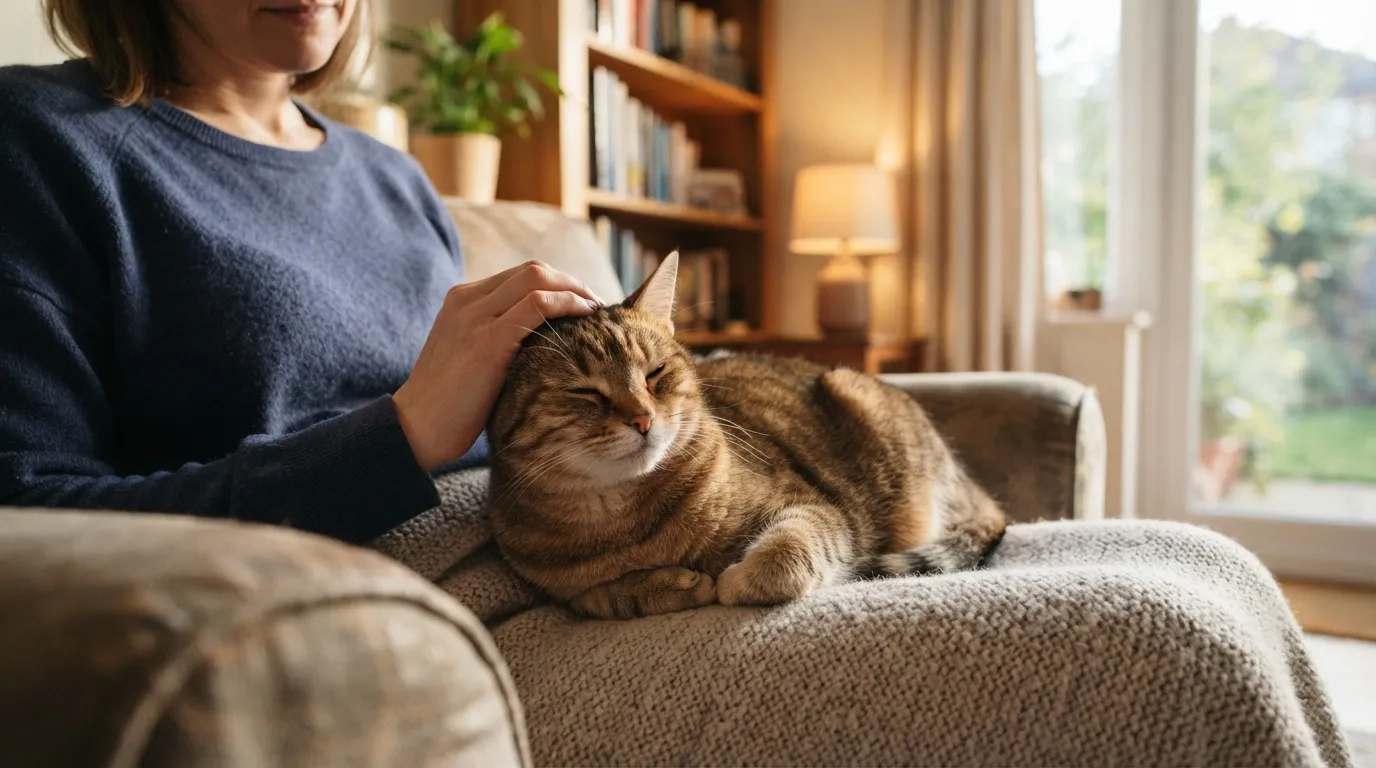
Most people spend years living with a cat and never learn its language. The data says otherwise: cats don't love like dogs, throwing affection at everyone who walks through the door.
Cat love is selective, earned, and expressed through signals most owners miss completely. The slow blink, the trill, the deliberate proximity - none of it is accidental.
Science is slowly proving what devoted cat people have always suspected: cats form real, chosen bonds with the humans they trust most. Your cat has been telling you it loves living with you this whole time - you just needed the translation.
Which of these did you already notice, and which one surprised you most? Drop it in the comments.