Most cat owners assume their feline barely tolerates them – a picky roommate who shows up for the food bowl and disappears the rest of the day. That assumption is backwards, and the science says so. Cats don’t tolerate their humans. They systematically claim them, using scent glands, body language, and instinct-driven rituals lifted straight from feral colony life.
Every headbutt, every kneading session, every dead mouse dropped on your pillow is a deliberate act of ownership, not a random quirk. Here’s what feline behaviorists actually say about the 13 unmistakable ways your cat has already decided you belong to it – starting with the one you probably felt this morning before you even had coffee.
#1 – The Head Bunt That’s Basically a Signature
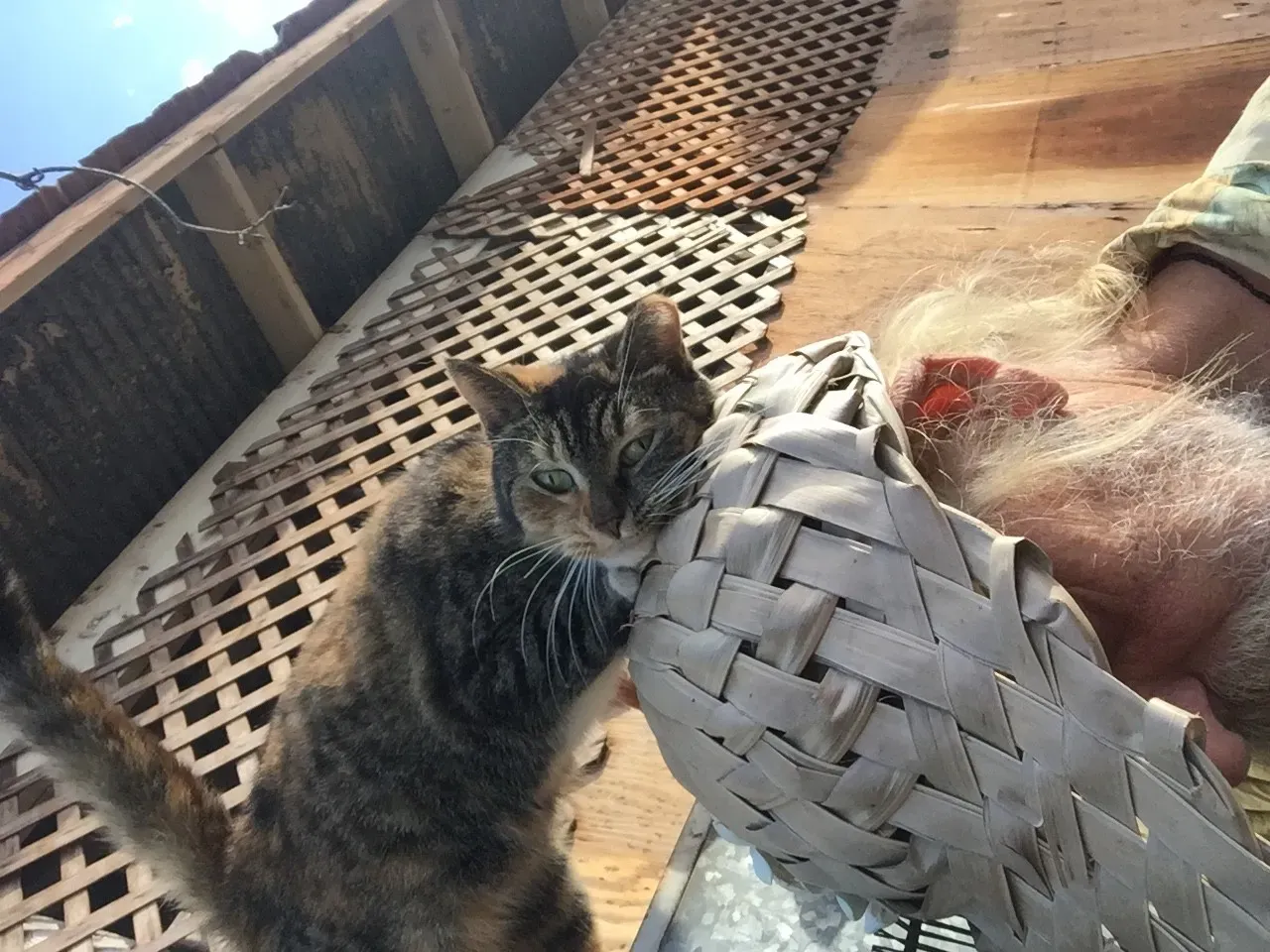
That gentle headbutt your cat gives your shin every morning isn’t a casual greeting. It’s a legal document written in pheromones.
Cats have scent glands around their head, and when they rub on people, objects, or other cats, they’re depositing pheromones believed to play a key role in feline social bonding. Researchers Shreve and Udell identified five distinct pheromones secreted from the glands in a cat’s cheeks back in 2017 – meaning that gentle bump against your leg is active chemical labeling, not affectionate accident.
This behavior, called bunting, traces further back than most owners realize. Dr. John Bradshaw of the University of Bristol’s Anthrozoology Institute has explained that the behaviors cats show toward humans are borrowed from the mother-kitten relationship – kittens rub on their mothers, and smaller colony cats rub on larger ones. So when your cat bunts you, it’s treating you either like a mother figure or a trusted senior in its personal hierarchy.
Fast Facts
- Cats carry scent glands concentrated around the head, cheeks, and chin.
- Five distinct pheromones have been identified from the cheek glands alone.
- Bunting mirrors how kittens greet their mother or how a smaller colony cat greets a dominant one.
- The gesture counts as active chemical marking, not passive affection.
#2 – Kneading You Like Bread Dough
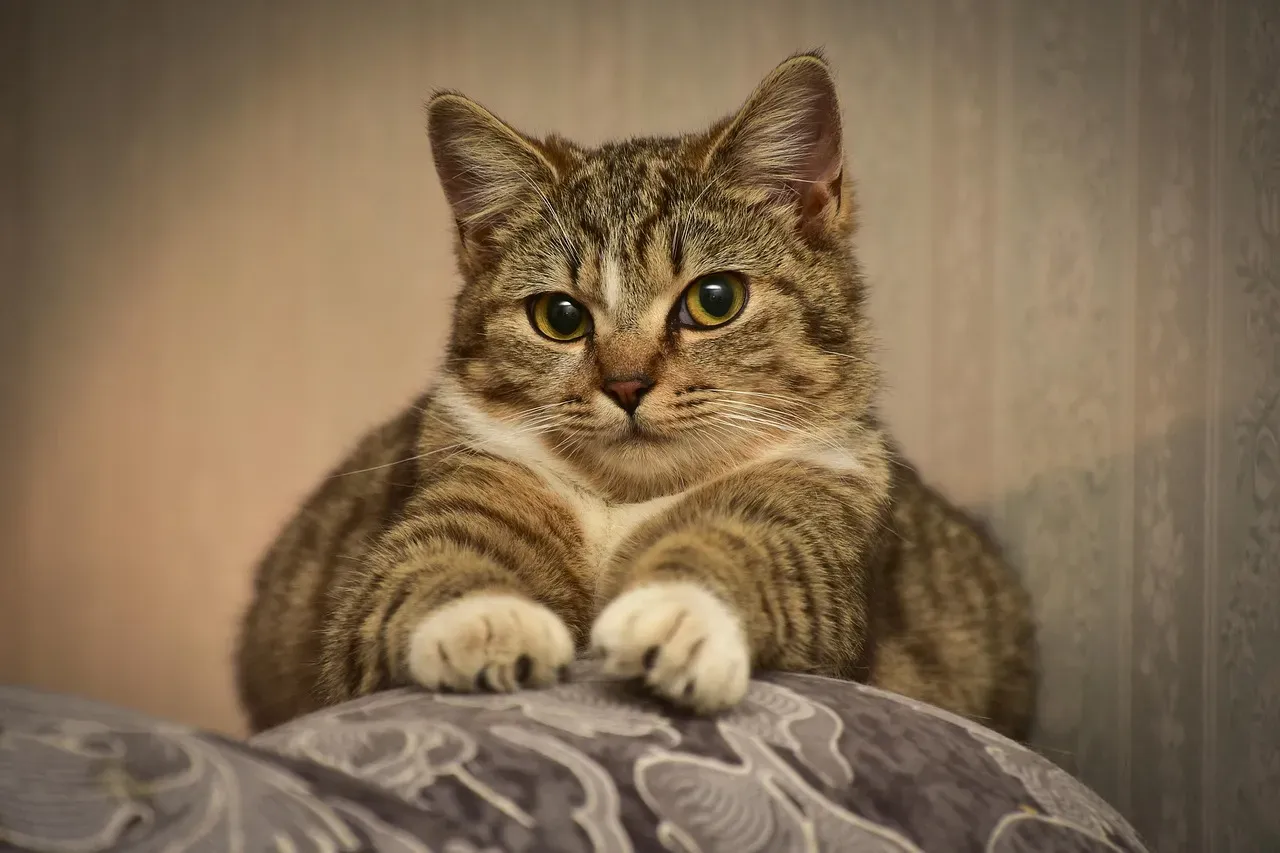
“Making biscuits” isn’t just adorable. It’s a leftover survival ritual your cat never grew out of.
Kneading is instinctive – kittens knead their mother’s mammary glands to stimulate milk flow. That paw-pushing motion on your lap is the exact same movement your cat once used to nurse. Most cats never outgrow the reflex; they just redirect it toward the nearest warm, soft human.
There’s more happening under the surface than comfort alone. Kneading triggers a release of dopamine, the same feel-good neurotransmitter kittens experience while nursing against their mother’s belly. And cats have scent glands between their toes, so every kneading session also deposits pheromones onto you. It’s comfort and ownership, delivered in the same motion.
#3 – Sleeping On You Instead of Beside You
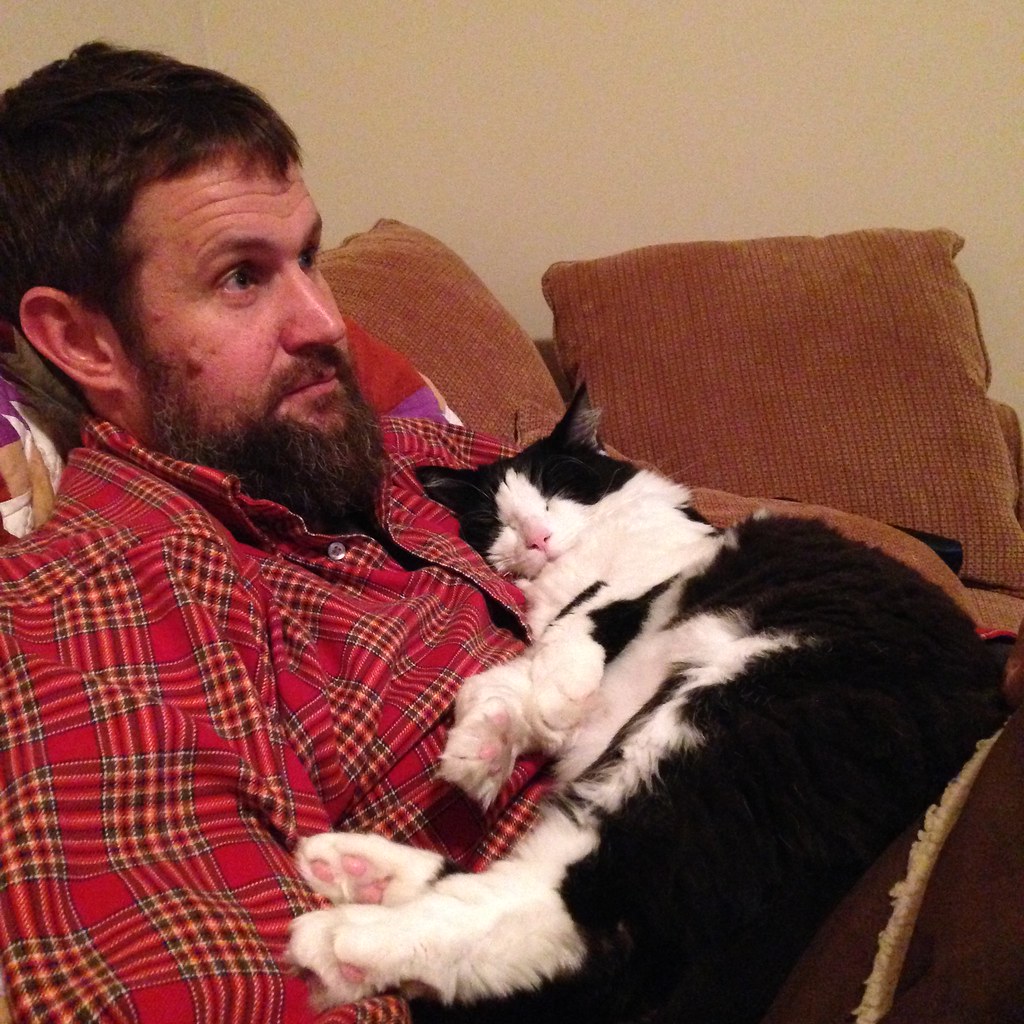
If your cat chooses your chest over the empty couch cushion three feet away, that’s not laziness. It’s a territorial ranking system playing out in real time.
Cats are hardwired to sleep only where they feel completely safe. Curled-up or stretched-out sleeping positions both signal relaxation, but choosing a human body as the mattress means your cat has ranked you above every other surface in the house as its single safest object.
This preference also feeds into a communication system researchers only recently started decoding. The old idea that cats are impossible to read has been steadily dismantled by behaviorists, who now describe a sophisticated, multi-modal system blending body language, vocalization, and chemical signaling. Sleeping on you fires two of those channels at once – physical contact and scent transfer – reinforcing the same claim your cat makes while it’s awake.
#4 – The Slow Blink “Cat Kiss”
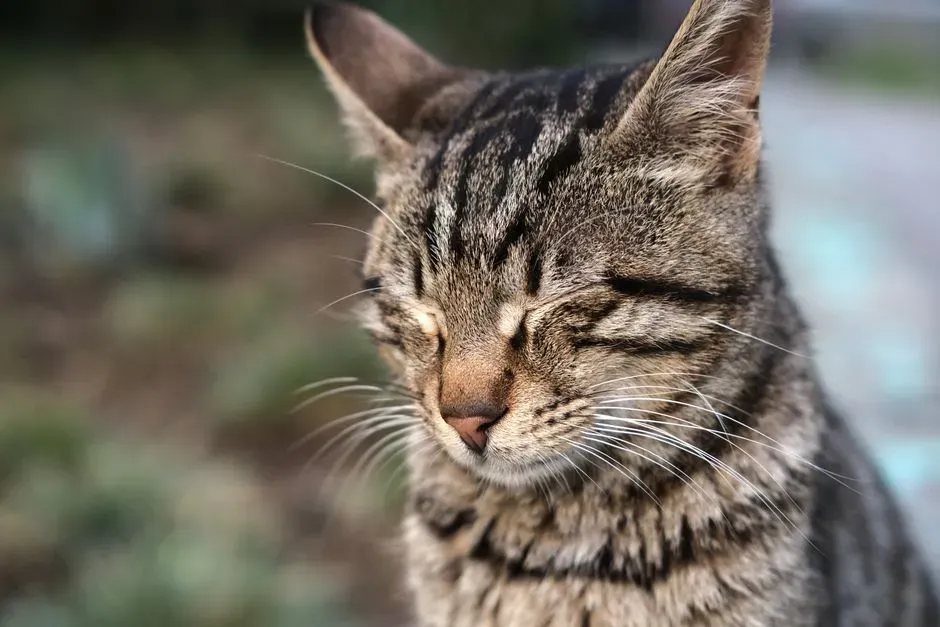
A slow blink from across the room might be the closest thing to “I love you” a cat is biologically capable of saying.
Researchers at the University of Sussex ran controlled experiments on this exact behavior and found it functions as genuine positive communication – cats were more likely to approach a previously unfamiliar person after slow-blink exchanges. That means your cat isn’t just relaxed. It’s actively choosing to signal trust to you specifically.
The implications reach beyond your living room. In shelter studies, cats that responded to human slow blinking with eye closures of their own were rehomed faster than cats that didn’t. That’s a measurable, adoption-affecting signal – not a myth invented by cat lovers. Every slow blink your cat gives you is a quiet vote of confidence that you’re not a threat worth watching.
At a Glance
- University of Sussex researchers ran controlled experiments on cat-to-human slow blinking.
- Cats approached unfamiliar people more readily after slow-blink exchanges with them.
- Shelter cats that returned slow blinks were rehomed faster than cats that didn’t.
- The behavior is now treated as a genuine trust signal, not simple relaxation.
#5 – Wrapping Its Tail Around Your Leg or Arm
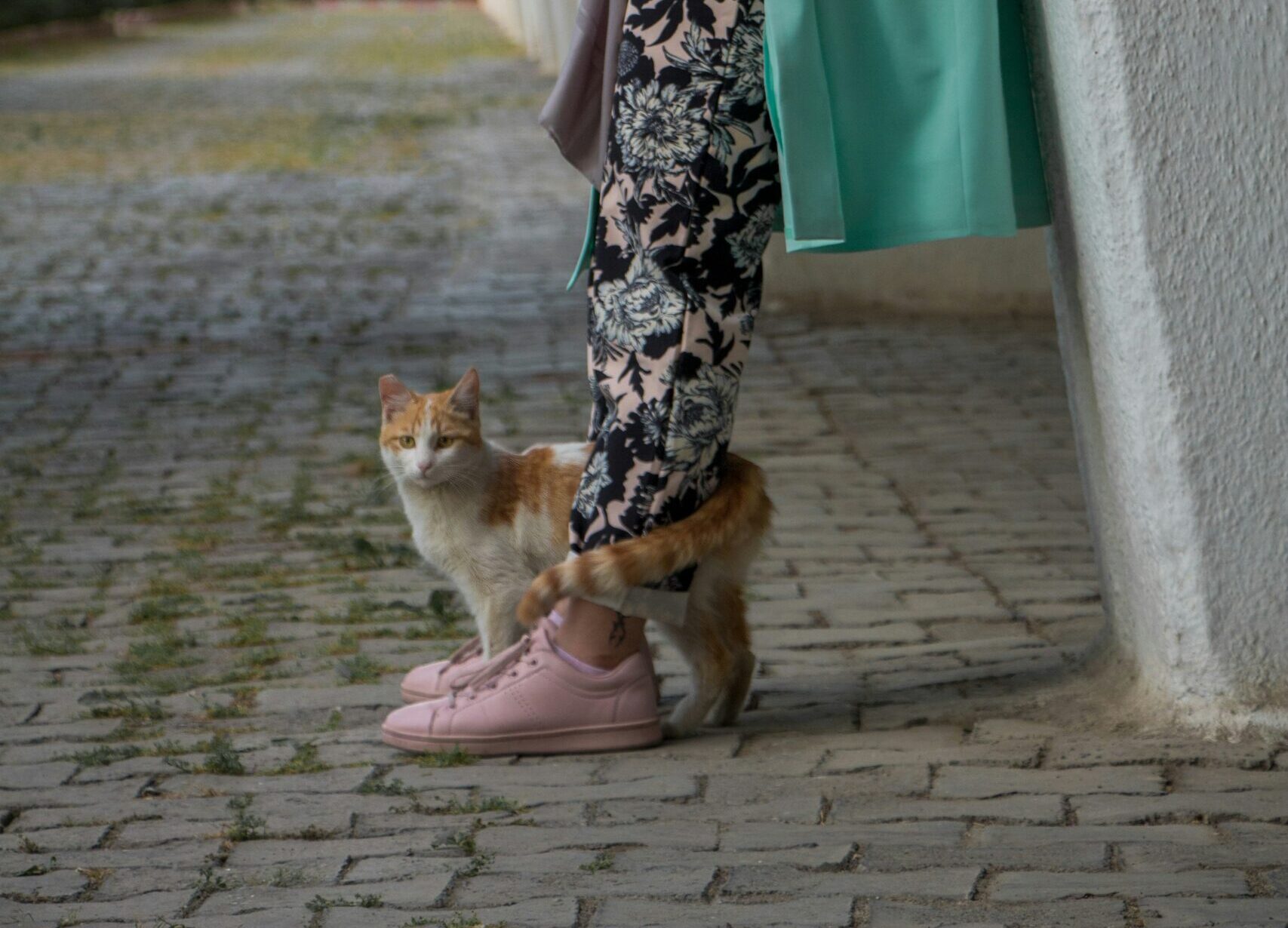
A cat’s tail is basically a mood ring with fur, and when it wraps around you, that’s a deliberate embrace, not an accident of anatomy.
Some cats rub their head against you; others rub their side and let the tail curl around your leg or arm at the same time. Both are positive signs, since the face and head carry scent glands that mark you as familiar and safe. This particular version is reserved almost exclusively for people a cat considers family.
Veterinarians describe the gesture in surprisingly possessive terms. By leaving scent on you this way, your cat is practicing a form of protective behavior – a silent announcement to other animals that you’re already claimed and under its watch. Most owners read tail-wrapping as cute. Behaviorists read it as a guard-duty announcement.
#6 – Grooming You With Its Tongue
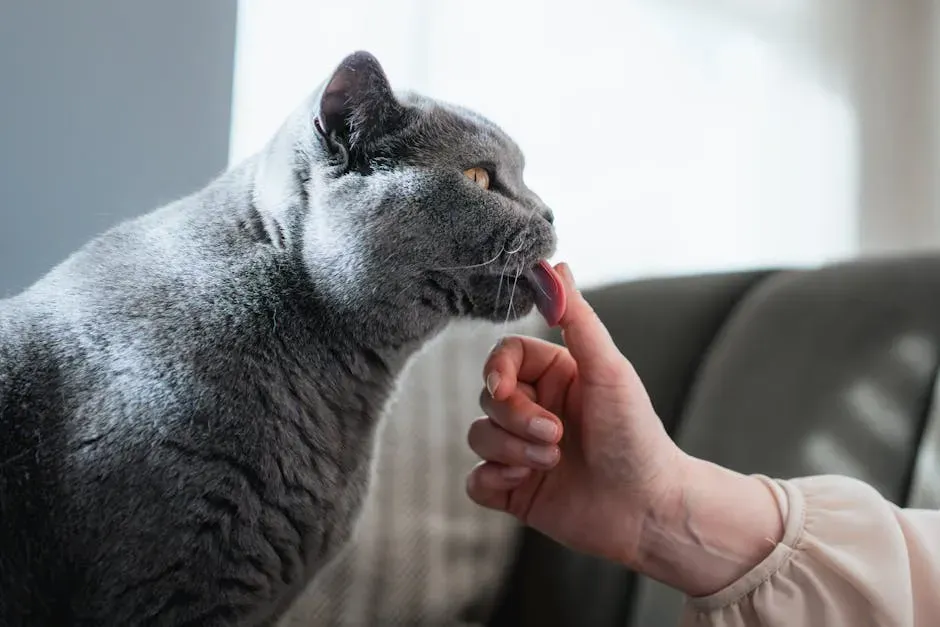
That sandpaper-tongue lick on your hand isn’t affection alone. It’s your cat literally editing your scent to match its own.
Allogrooming – the term for one animal grooming another – is reserved for close social bonds in the cat world. It sits in the same affiliative category as nose-touching and choosing to sleep in the same room as you, all behaviors that reflect a real inner sense of connection rather than pure hygiene.
Shelters actually use this behavior as a diagnostic tool for how well a cat has been socialized. A cat that grooms its human is displaying the same trust level it would show a littermate or parent – a strong signal of belonging, not a random grooming habit gone slightly overboard.
#7 – Leaving “Gifts” On Your Doorstep
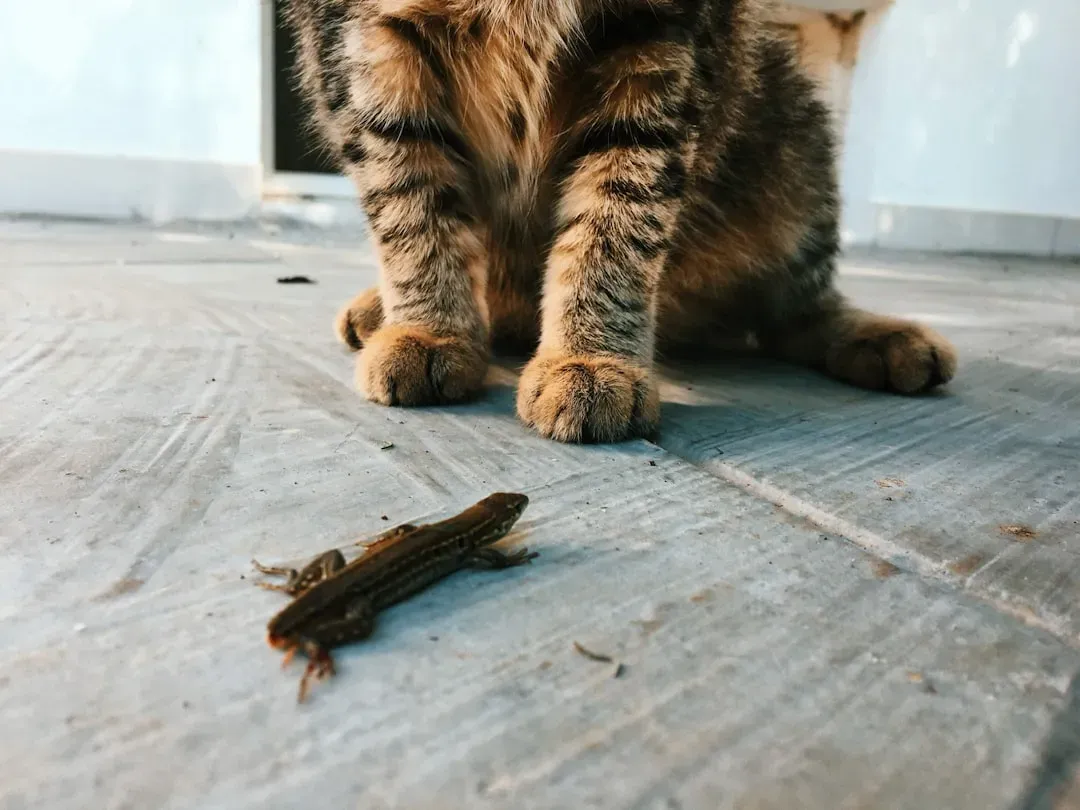
A dead mouse on your welcome mat is disgusting to you and a masterpiece to your cat – proof it considers you family enough to feed.
One theory holds that cats are practicing a skill their mother once taught them: stalk, pounce, kill, then bring the catch home to share with family. Your cat recognizes you as part of that family, so the porch becomes the drop-off point. This isn’t random destruction; it’s a resource-sharing ritual passed down from feral colony behavior.
Not every expert agrees it’s purely generous, though, and that’s where it gets interesting. Many researchers argue the “gift” is really about security – home is the cat’s core territory, the one safe place to stash a catch where nothing else can steal it. Either way, your porch has been designated the cat’s personal vault, and that’s its own quiet form of ownership.
Quick Compare
- Family-Sharing Theory: Your cat is repeating a mother-taught ritual, delivering prey to feed the family it considers you part of.
- Security-Stashing Theory: Your cat sees home as its safest territory and is simply hiding a valuable catch where nothing can steal it.
- The Takeaway: Either theory lands in the same place – your doorstep has been marked as the cat’s trusted storage zone.
#8 – Scratching Furniture Right Next to You
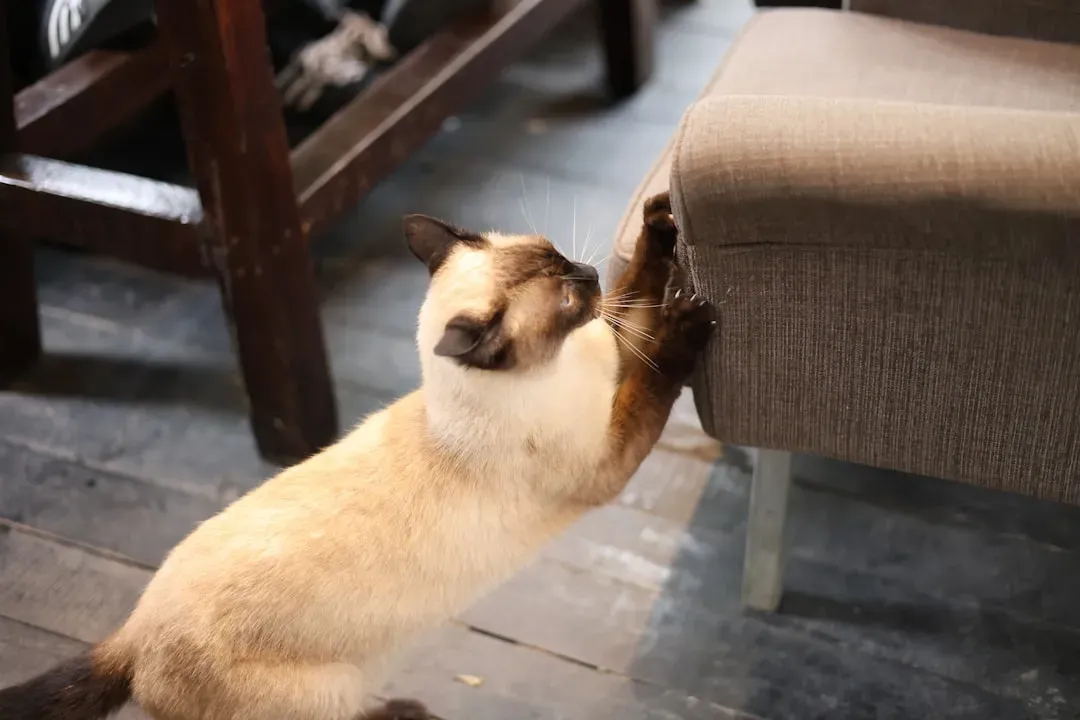
That shredded armrest beside your favorite chair isn’t spite. It’s a scent-and-visual billboard announcing exactly who lives here.
Scratching leaves both visible marks and invisible scent signals from glands in the paws, and vertical scratching near doorways or furniture corners maximizes how visible that territorial claim is. The furniture nearest your favorite seat is rarely a coincidence – it’s prime real estate in your cat’s mind.
Certified applied animal behaviorist Mikel Delgado, a researcher at UC Davis, has found that over 90% of vertical scratching in multi-cat homes happens at resource boundaries – entry points, sleeping zones, feeding areas. If your cat scratches near the door the second you walk in, that’s not destructive behavior. It’s a greeting and a scent-map refresh happening at the same time.
#9 – Following You From Room to Room (Yes, Even the Bathroom)
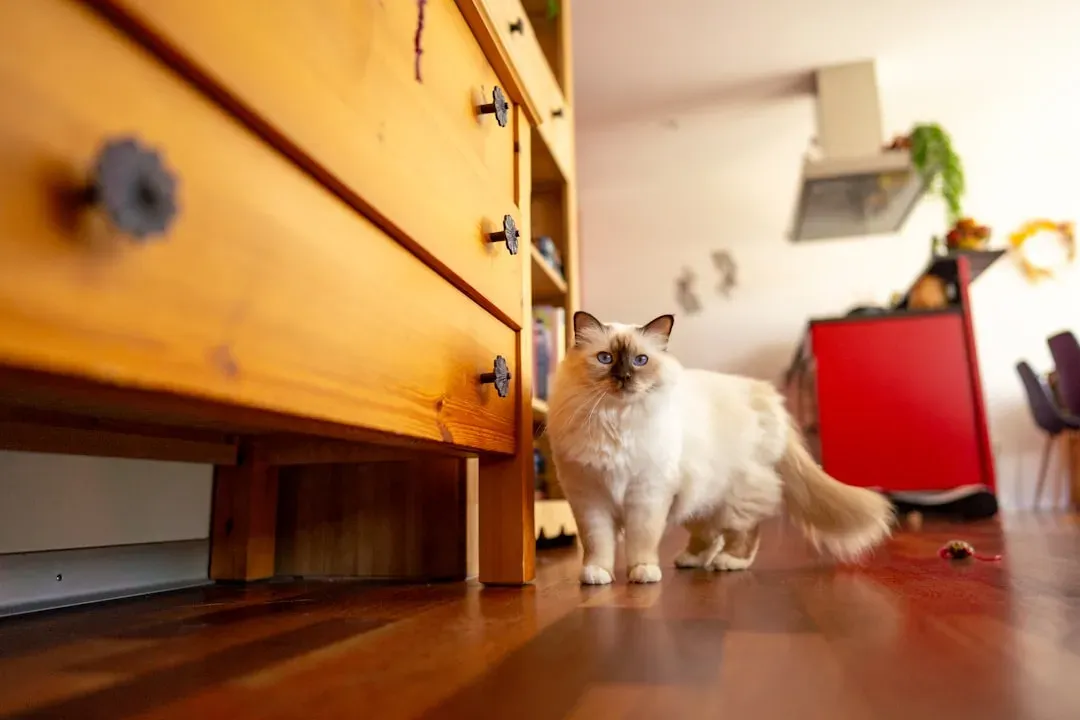
If your cat treats a closed bathroom door like a personal insult, that’s not neediness. That’s supervision.
Experts increasingly frame this shadowing as a guarding instinct rather than simple curiosity. Rubbing against you, curling up nearby while you work, or trailing you room to room are all signs your cat has claimed you as both companion and territory to keep an eye on.
This behavior also reveals something about trust that many owners overlook. Cats only expose their belly to beings they truly trust, since it’s their most vulnerable position. A cat that follows you into every room, then flops over to show its stomach, has effectively told you it considers you both territory and protector at once. That’s a two-way claim, not a one-sided demand for attention.
#10 – Rubbing Its Chin on Your Belongings
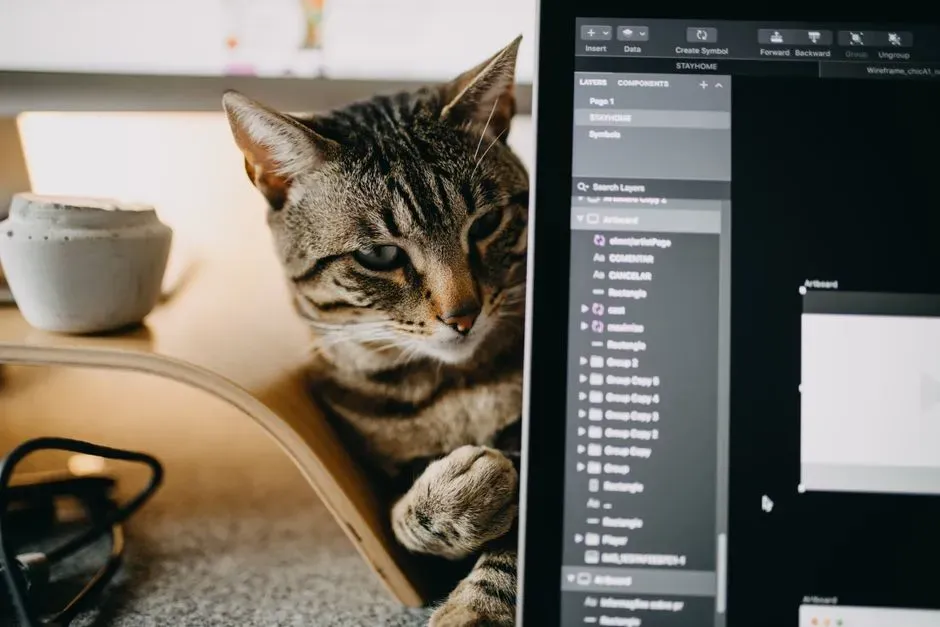
Ever notice your cat pressing its chin against the corner of your laptop, phone, or coffee mug before you even touch it? That’s a pre-emptive claim on your stuff.
Cats carry scent glands on the cheeks, chin, forehead, lips, and base of the tail, and rubbing against objects is a natural extension of the same territory-and-safety marking they do on people. Chin-rubbing specifically targets the smaller items you handle every day – the exact things your hands touch most often.
This isn’t just a casual habit; it builds a shared identity across the household. In multi-cat homes or outdoor colonies, cats develop a communal scent that helps members recognize each other and reduces tension. Your keys, your phone, your desk chair – none of it is really “yours” once your cat has chin-rubbed it into the colony scent pool.
#11 – Parking Itself on Your Laptop or Paperwork
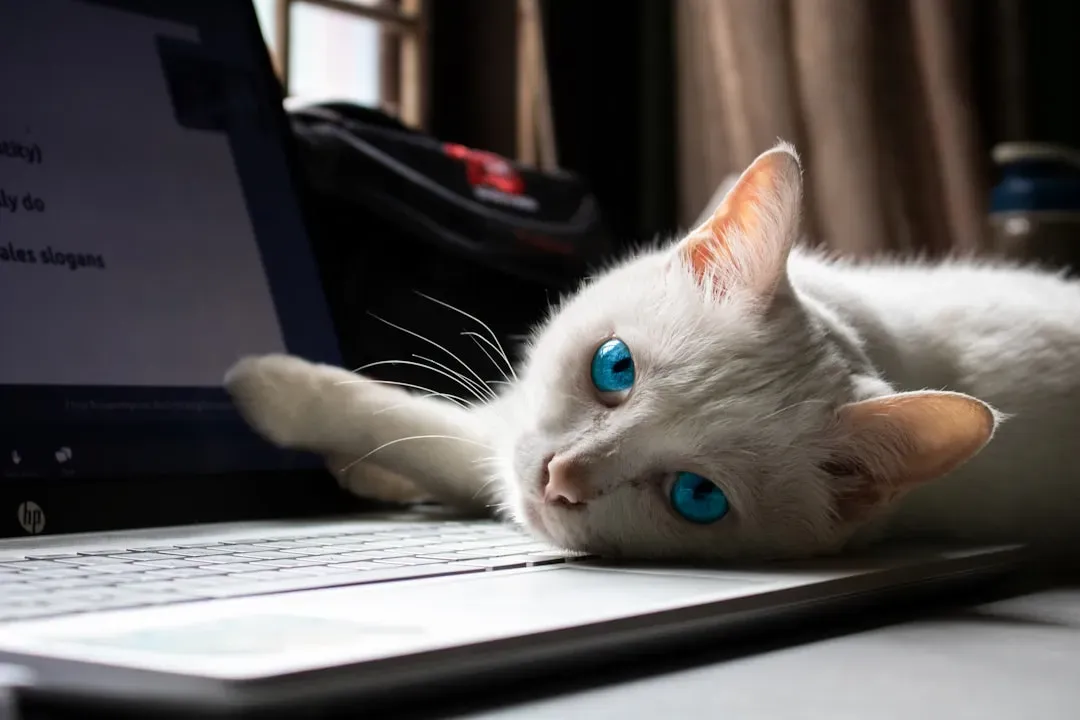
Nothing says “I own this human’s attention” quite like a cat sitting directly on the keyboard mid-Zoom call.
This sits at the intersection of two instincts: warmth-seeking and social interruption. Affiliative behaviors reflect a cat’s inner sense of connection to a person or object, and a laptop radiating heat while you’re actively focused elsewhere is an irresistible combination of comfort and competition for your gaze.
Many owners assume it’s purely about warmth, but the timing tells a different story – it almost always happens the second you’re deeply focused on something that isn’t the cat. This is less “the laptop is warm” and more “you were paying attention to the wrong thing.” Cats that repeatedly interrupt work sessions are asserting a specific hierarchy: their claim on your attention outranks your spreadsheet.
#12 – Chirping and Trilling the Moment You Walk In
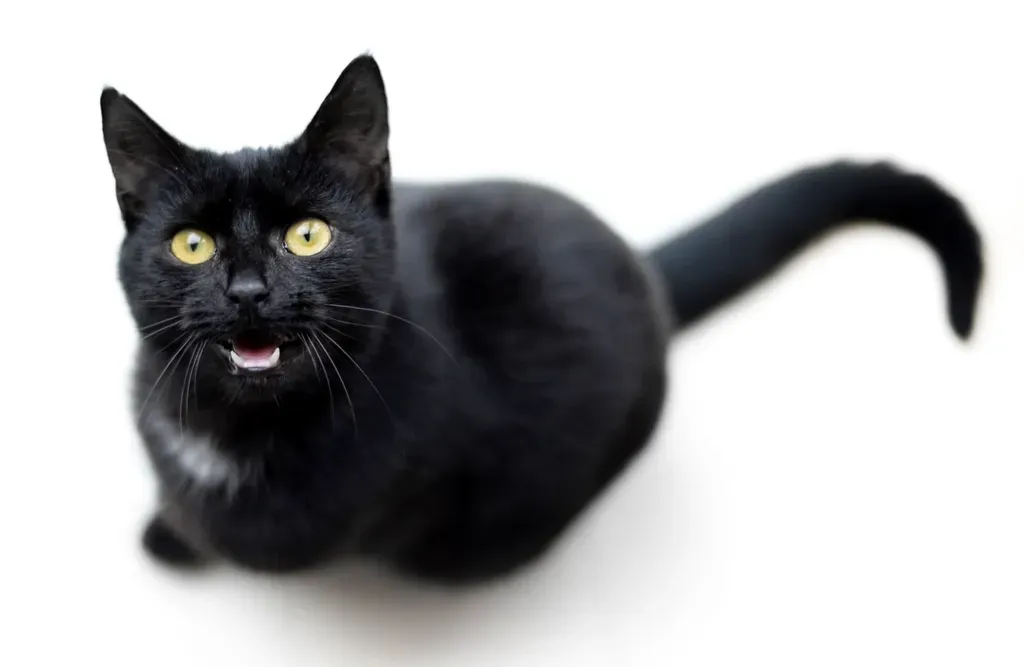
That odd little chirrup-trill sound your cat makes at the door isn’t random noise. It’s a greeting call largely reserved for trusted family.
Feline vocal researchers have long noted that trilling differs meaningfully from a standard meow, functioning almost like a mother cat’s call to her kittens. Most cats rarely direct it at strangers, saving it instead for the specific humans they’ve folded into their social circle.
Some behaviorists argue this greeting sound is actually a stronger bonding signal than purring itself, since purring can occur during stress or self-soothing, while trilling shows up almost exclusively during genuinely welcome reunions. If your cat trills when you walk in and stays dead silent for the mail carrier, that’s a curated response, not a coincidence.
Why It Stands Out
- Trilling is acoustically distinct from a standard meow and echoes a mother cat’s call to her kittens.
- Most cats reserve the sound for trusted family, rarely offering it to strangers.
- Purring can occur during stress or self-soothing, muddying its meaning as a bonding cue.
- Trilling shows up almost exclusively during genuinely welcome reunions, making it arguably the clearer signal.
#13 – Guarding You While You Sleep
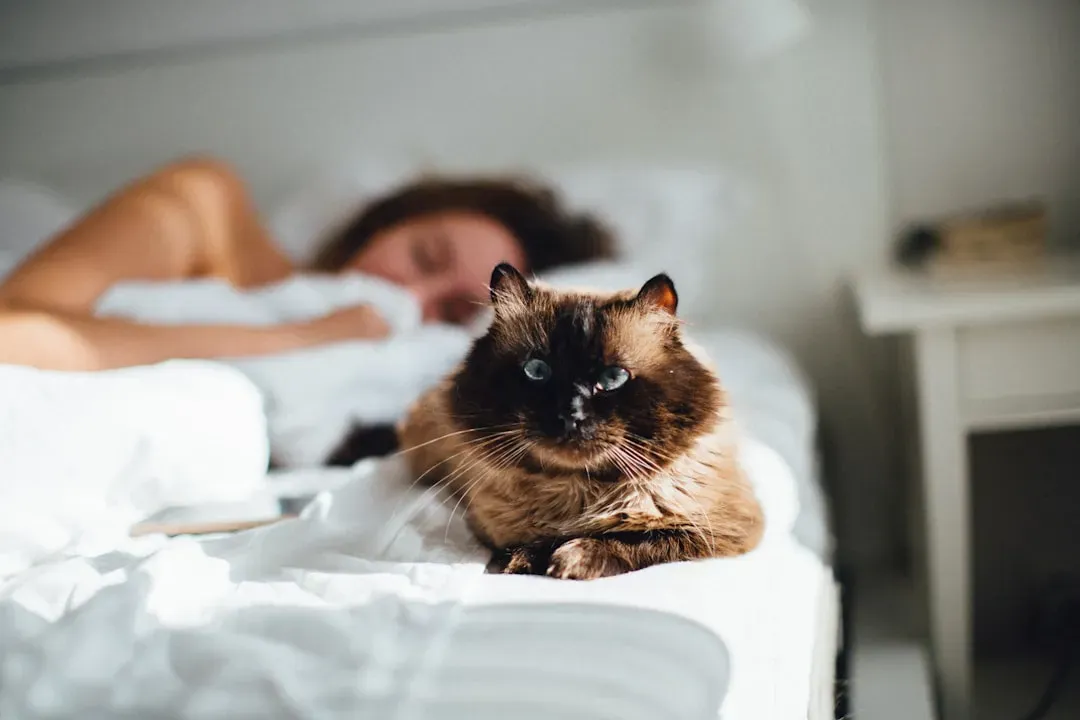
The ultimate claim a cat makes isn’t a headbutt or a scratch mark. It’s choosing to stand watch over you at your most defenseless moment.
Cats only sleep openly when they feel safe from threats, and both curled-up and stretched-out positions signal relaxation. But a cat that positions itself at the foot of the bed, ears swiveling toward every hallway noise, is doing something different from resting. It’s actively monitoring territory it has already decided includes you.
Vets increasingly describe this as a legitimate protective instinct rather than a coincidence of nap timing. By staying close and marking you with scent all day, your cat is quietly telling every other animal in range that you’re already spoken for. A cat guarding your sleep isn’t confused about who’s in charge – it has simply decided you’re valuable enough to protect. Scent, sound, posture, vigilance: every item on this list points to one conclusion. You belong to the cat, not the other way around.
The Bottom Line
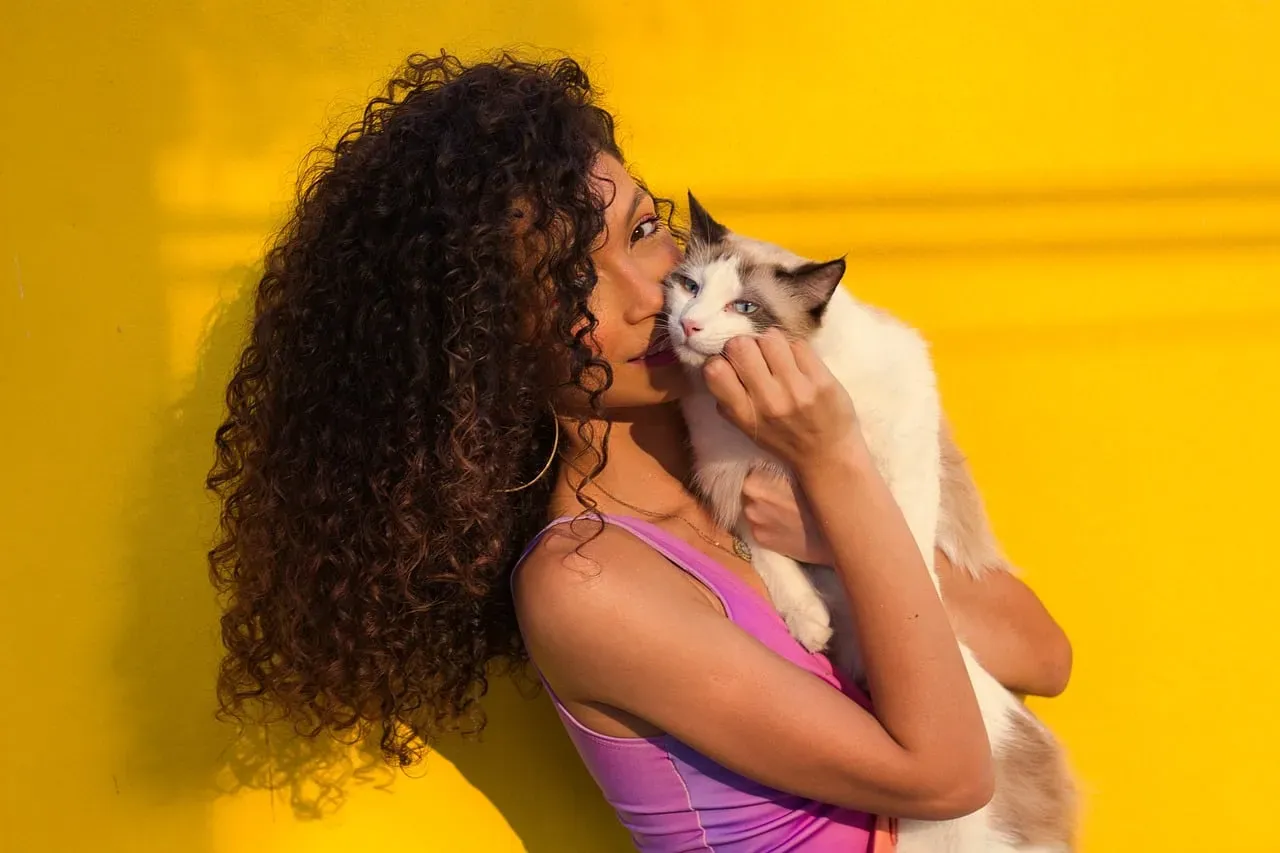
Cats never stopped being wild animals with a colony instinct. They just recruited humans into that colony. Every bunt, knead, scratch, and slow blink is part of a coordinated scent-and-trust system that most owners misread as random quirks instead of deliberate claiming behavior.
The uncomfortable truth is that cats don’t ask for ownership the way dogs do. They simply take it, one pheromone deposit at a time, until your entire scent profile matches theirs. Dogs perform loyalty out loud, tails and all. Cats engineer it chemically, silently, and never once pretend otherwise – which might just make them the more honest pet in the house.
Kristina is a young writer from India. An arts graduate and an avid content creator, Kristina is passionate about animals and wildlife. She enjoys exploring topics related to pet care, animal behavior, conservation, and nature, combining thorough research with engaging storytelling.