Most cat owners assume a slow, quiet senior cat is a cat that’s checked out – emotionally coasting toward old age, half-present in her own home. Turns out, that assumption is almost completely backwards.
Veterinary behaviorists say the real story is hiding in plain sight: many older cats are more attached to their people than they’ve ever been in their lives. They’ve just stopped shouting about it. If you’ve been reading your senior cat’s stillness as indifference, you’ve been misreading the clearest trust signals she has left to give – and there are fourteen of them worth knowing.
#1 – She Sleeps Wide Open, Not Curled in a Ball
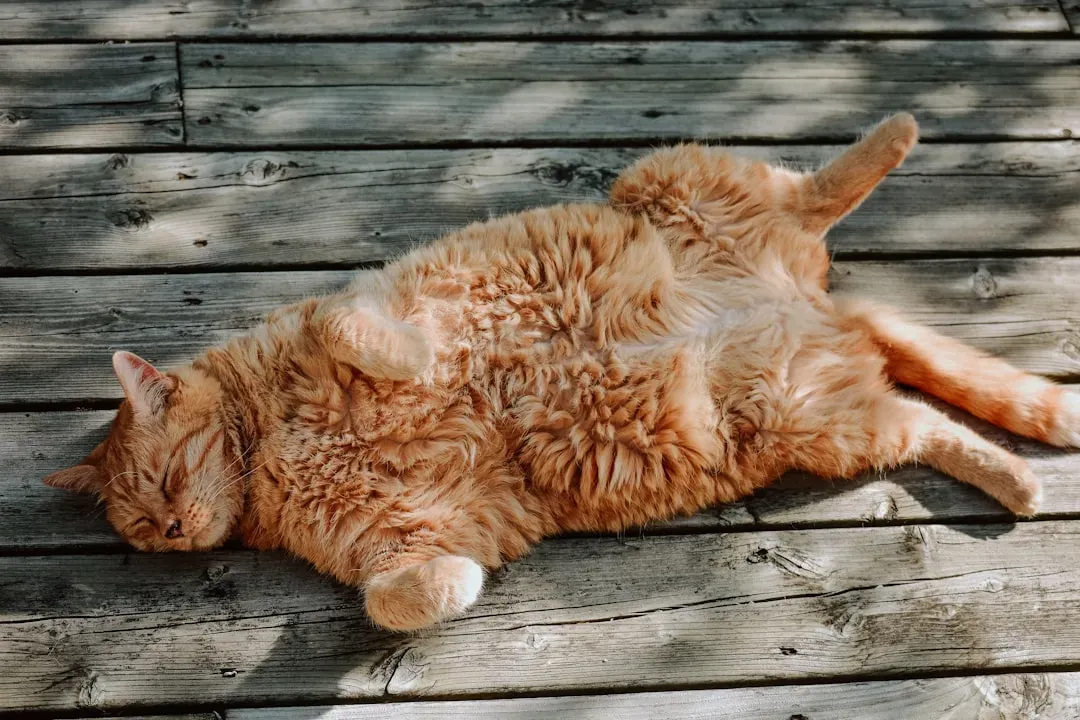
A senior cat sprawled belly-up in the middle of the living room floor isn’t being careless. She’s making a calculated statement about how safe she feels in that exact spot, at that exact moment.
Cats that feel nervous or unsafe instinctively hide or curl tight when they sleep, protecting their vital organs and staying ready to move. A cat who stretches out fully exposed, on her side, in the open, has already run the math on her surroundings and decided there’s nothing here worth guarding against. The open, vulnerable sleeping position isn’t laziness – it’s a survival calculation, and she’s decided the answer is safe.
#2 – She Sleeps Deeply With Her Back Turned to You
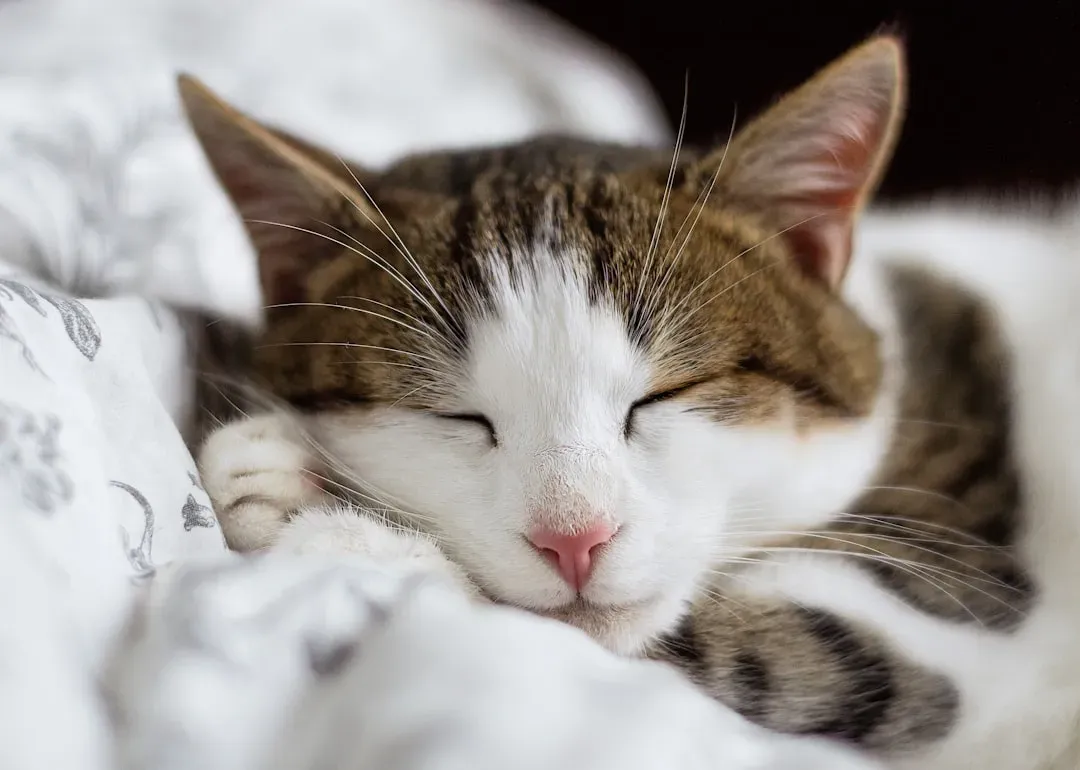
Turning her back on you while she sleeps sounds like rejection. It’s actually the opposite – it’s one of the most vulnerable positions a prey animal can choose.
Cats pick sleep spots for warmth, scent, and safety, not just comfort, and a cat who trusts nothing keeps an exit route and a line of sight to potential threats at all times. A senior cat who fully commits to deep sleep with her spine toward you has decided you’re not a threat worth watching. That matters even more in an aging cat, whose senses are already dulling – she’s choosing to rely on trust instead of vigilance to feel protected.
#3 – She Gives You the Slow Blink
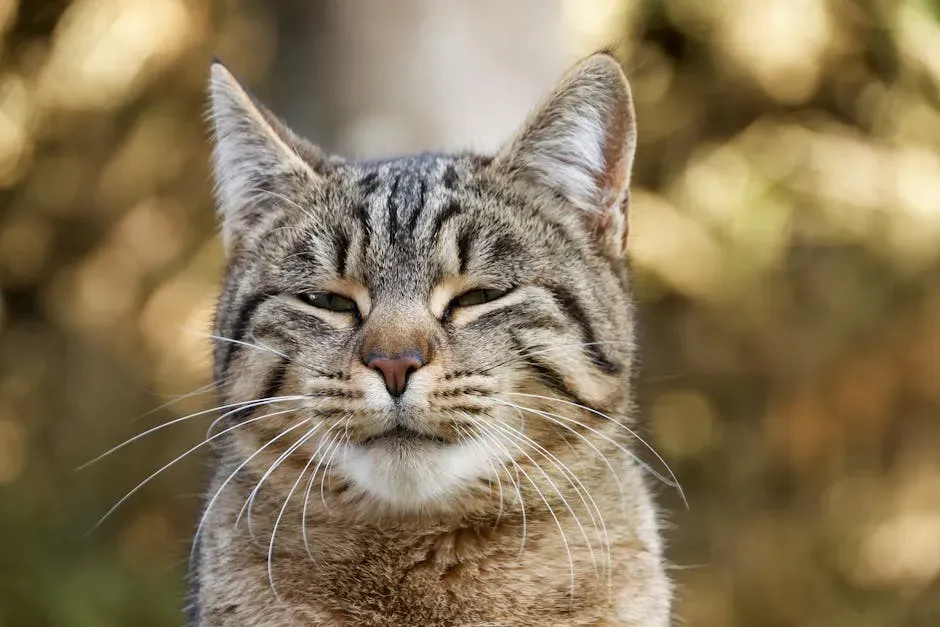
The slow blink isn’t a cute internet trend. It’s a documented feline trust signal that researchers studying cat-human bonds have actually measured, and cats really do respond to it from the humans they trust.
The sequence typically runs as a series of soft half-blinks followed by either a long, narrowed gaze or a full eye closure – and studies on cat-human interaction have found cats are more likely to slow-blink back at an owner who slow-blinks at them first. Closing your eyes in front of a potential threat is a real survival risk for any prey animal. In the wild, shutting her eyes near danger could get her killed – so doing it in front of you means she’s already ruled you out as one.
Fast Facts
- The slow blink is sometimes nicknamed the “cat kiss” by behaviorists who study feline communication.
- Cats are more likely to slow-blink back at a human who slow-blinks at them first.
- The gesture often pairs with a relaxed tail or a soft, half-lidded stare.
- Closing the eyes near anything perceived as dangerous runs directly against basic survival instinct.
#4 – She Purrs Even When You’re Not in the Room
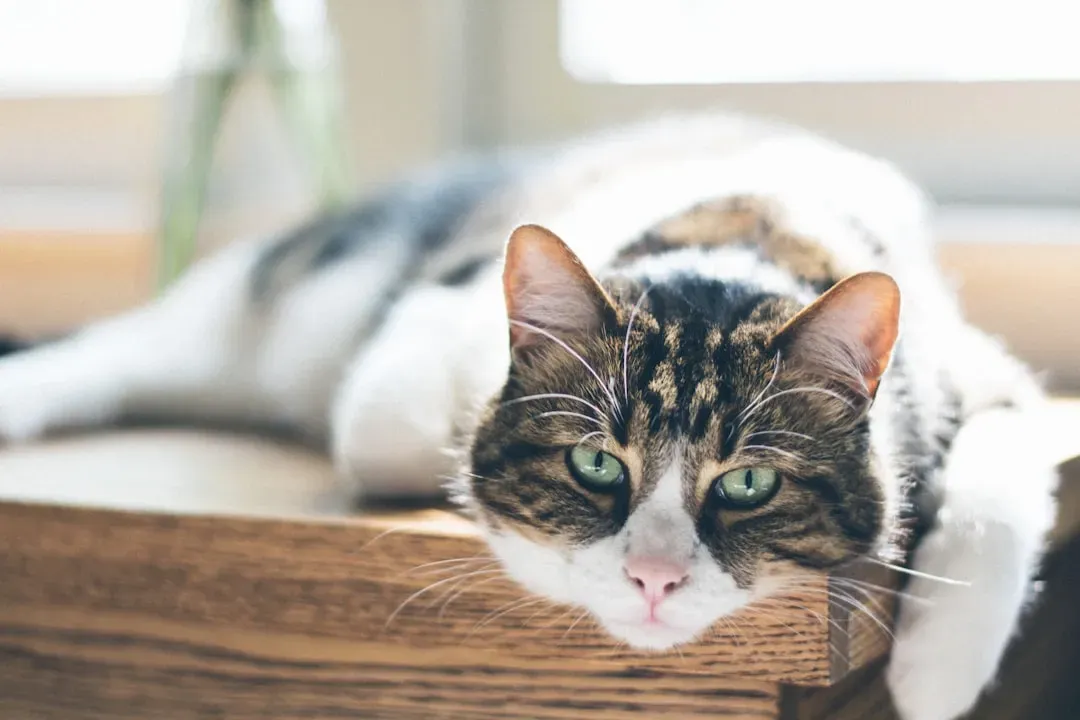
If you’ve caught your senior cat purring alone on a windowsill with nobody around, you haven’t imagined it, and it isn’t random noise.
Most people assume purring only happens during petting sessions, but senior cats often purr solo as a form of self-soothing – and that only shows up in an environment a cat has already decided is safe. A cat who feels threatened doesn’t relax enough to self-soothe; she stays alert instead. A senior cat purring to herself in an empty room is quietly telling you the whole house, not just your lap, has become her safe zone.
#5 – She Loafs With Her Paws Tucked Under Her Body
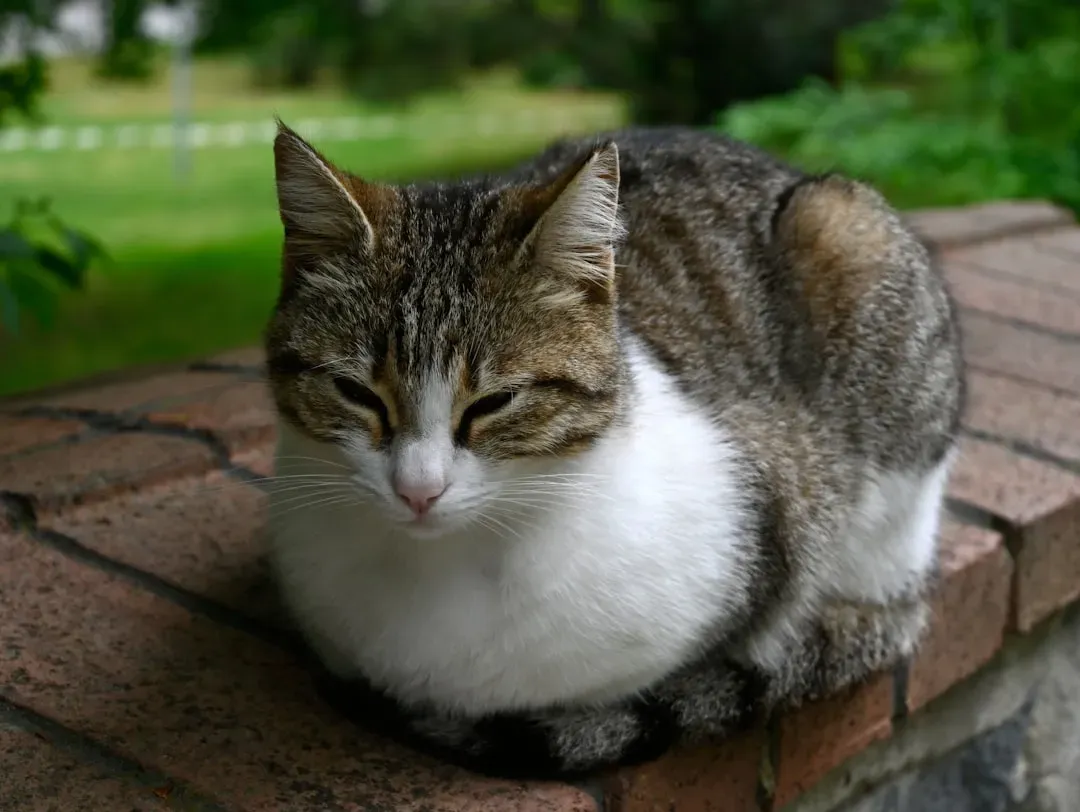
The classic cat loaf – paws neatly folded under the body like a little bread loaf – is one of the most misunderstood postures in the cat world.
Loafing is a relaxed resting posture where a cat can still move if she needs to, but she’s chosen comfort and energy conservation over staying on high alert. A cat on high alert keeps her paws free and ready to bolt; a loafing cat has voluntarily disabled her own quick getaway. For a senior cat specifically, this posture also takes pressure off aging joints, which means comfort and trust are working together in that one small shape.
#6 – She Kneads You or Her Blanket Like She’s Nursing
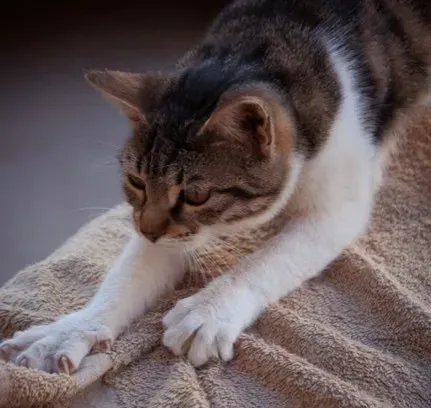
Kneading looks adorable, but it’s actually a leftover survival behavior from kittenhood that only resurfaces around people and places a cat trusts completely.
Kittens knead against their mother while nursing to encourage milk flow, and when grown cats do it – pushing their paws in and out on a blanket or your lap – it usually means they feel deeply safe and relaxed around you. This is essentially your cat’s brain reverting to the one moment in her life she felt total, unconditional safety. A senior cat who still does this hasn’t lost that association – she’s reinforcing it, right in front of you.
#7 – She Eats Slowly and Without Rushing
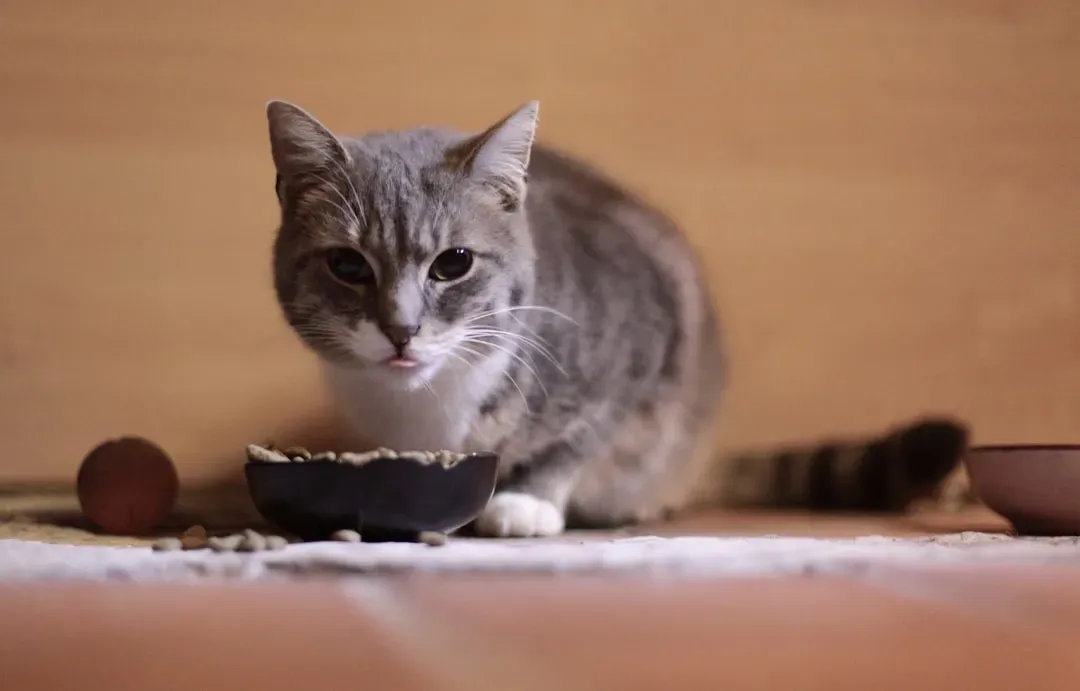
A calm, unhurried mealtime seems like a small thing, but it’s one of the most reliable everyday signals of feline security.
When a cat feels genuinely comfortable, she doesn’t rush or stay hyper-alert while eating, because relaxed eating shows she trusts her environment, her people, and any other pets around her. Rushed, anxious eating is a leftover survival habit from wild ancestors who had to eat fast before something bigger showed up. A senior cat who lingers over her bowl, wanders off, and comes back later has fully let go of that instinct – and it’s worth remembering, because a sudden shift back to frantic eating in an older cat is often one of the first quiet signs something’s wrong.
Quick Compare
- Relaxed eater: eats at an easy pace, wanders off mid-meal, returns later without concern.
- Anxious eater: eats fast, stays tense, guards the bowl, startles at nearby movement.
- Watch for: a sudden switch from relaxed to anxious eating, which can flag stress or discomfort.
#8 – She Follows You From Room to Room Without Being Called
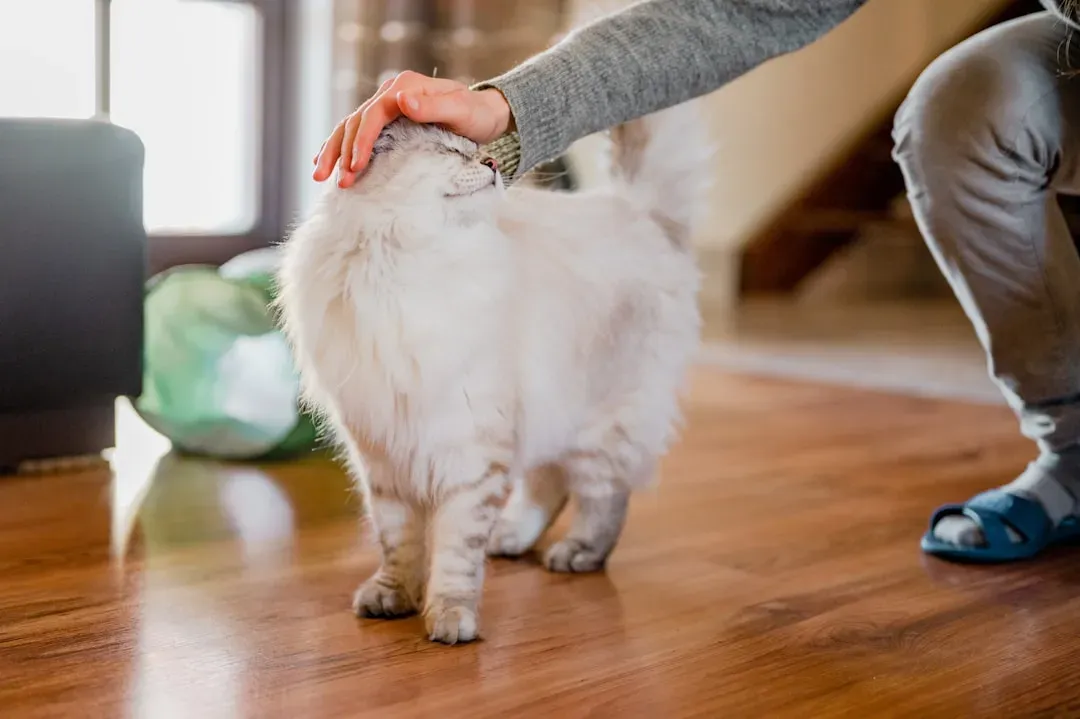
A senior cat quietly shadowing you through the house isn’t clingy or confused. It’s a calculated use of limited energy on the one thing she trusts most in the world.
This isn’t neediness – it’s comfort-seeking behavior rooted in years of bond-building, and most vets see new “clinginess” in older cats as a sign of security, not decline. An older cat has less stamina than she used to, so choosing to spend it trailing you room to room is a deliberate decision, not an accident. Compare that to a fearful cat, who spends her limited energy avoiding people instead of pursuing them.
#9 – She Lets You Groom the Spots She Can’t Reach
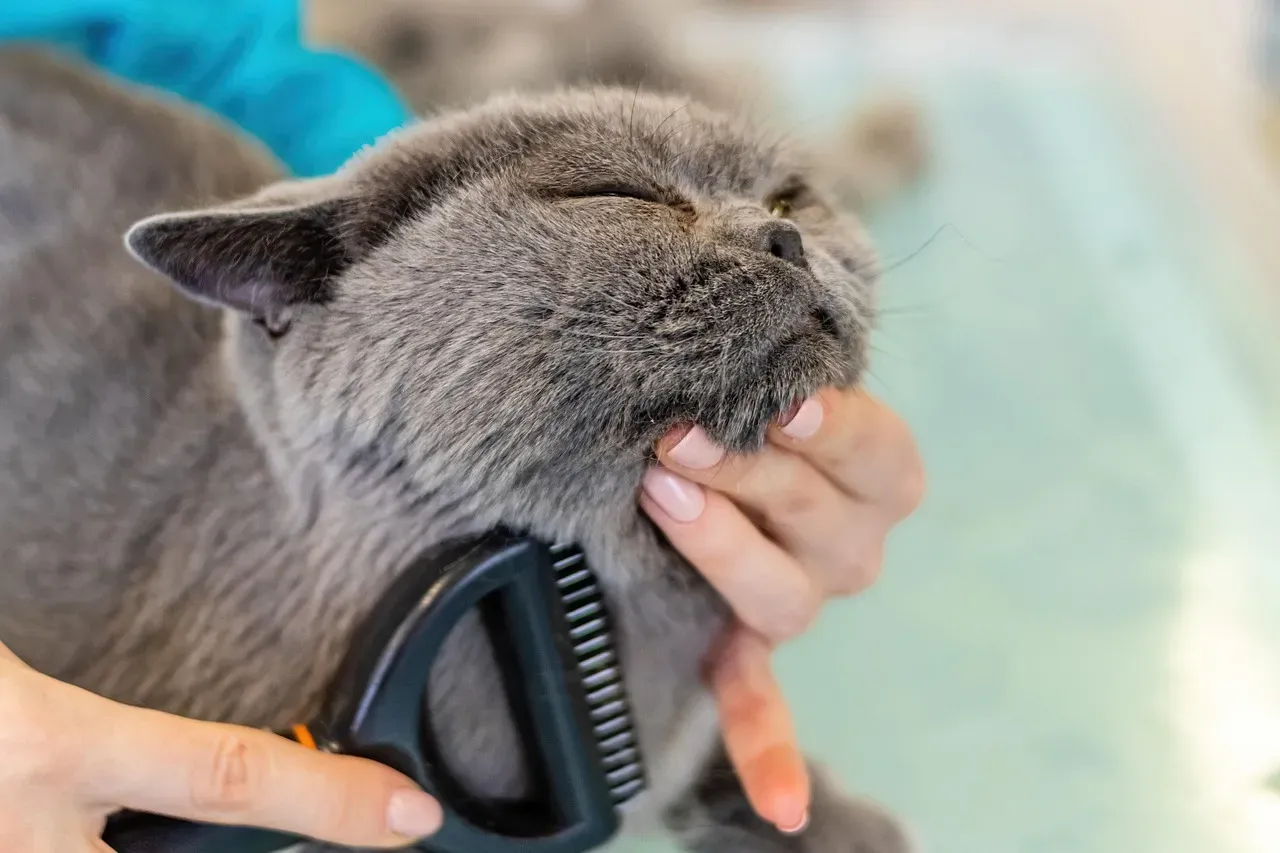
Letting you into her personal grooming routine is one of the most physically vulnerable things a senior cat will ever permit.
Grooming is a deeply private ritual tied to scent-marking and self-protection, so a cat leaning into your hand for help with a hard-to-reach spot, instead of tensing up or pulling away, is opening that ritual to you on purpose. A senior cat softening into your touch during grooming is telling you, in real time, that her guard is fully down. This matters even more with age, since stiff joints and arthritis make self-grooming physically harder – accepting help means choosing comfort over independence, and choosing you to provide it.
#10 – She Talks to You in a Voice She Doesn’t Use for Anyone Else
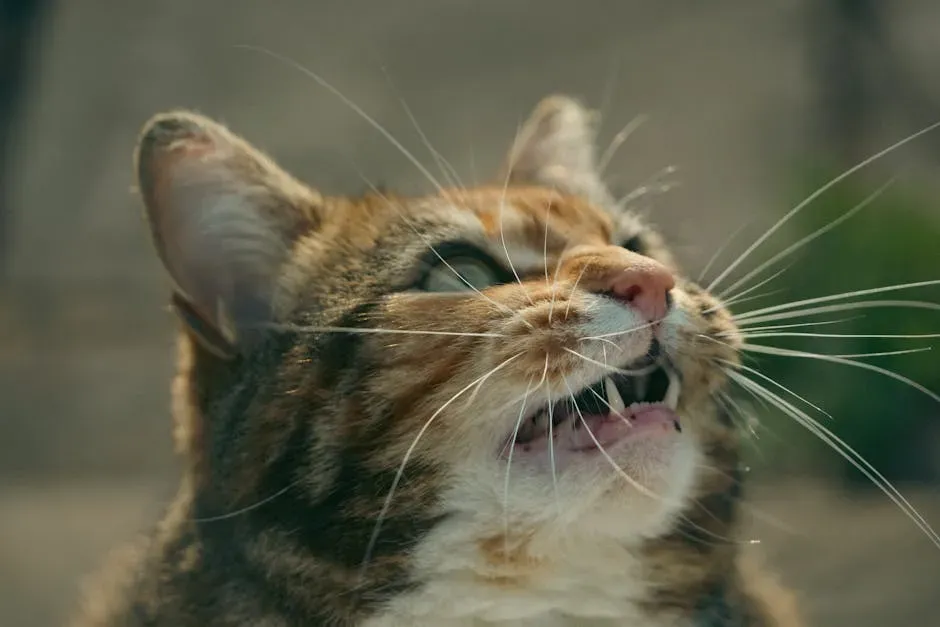
Senior cats often develop an entirely different vocal habit reserved specifically for the humans they trust.
Some cats get chattier with age, others go quieter, but the real signal isn’t volume – it’s whether your cat has built a distinct “language” she uses mainly with you. A cat doesn’t waste custom vocalizations on someone she’s simply tolerating. While plenty of owners assume a quieter senior cat has grown distant, the opposite is usually true – the volume drops because the trust no longer needs to be announced loudly.
#11 – She Claims the Same Sunny Spot Every Single Day
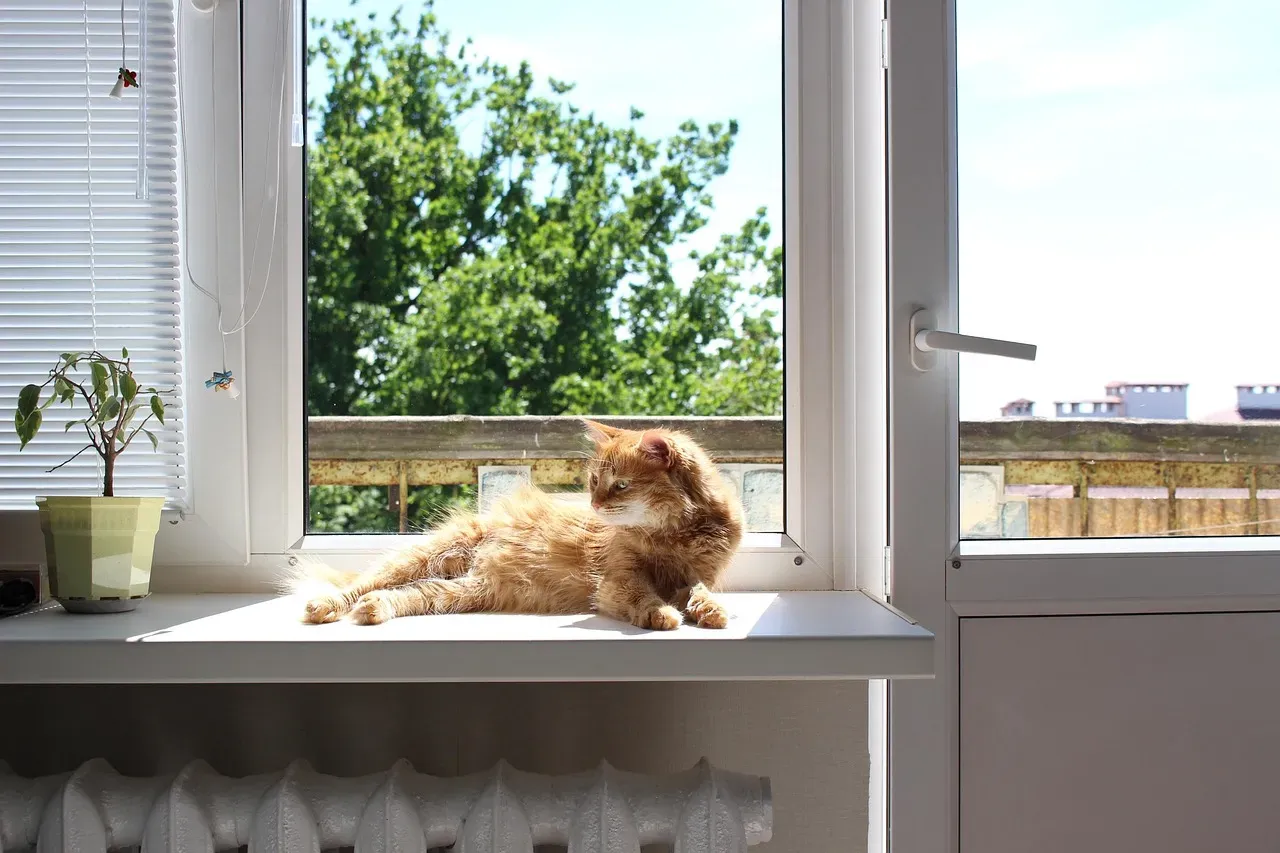
A predictable, sun-drenched napping spot isn’t just about warmth. It’s a sign your cat has fully mapped her territory as safe.
Cats build mental maps of security based on scent, sightlines, and warmth, and a senior cat who returns to the exact same windowsill day after day has decided that spot has zero threats. This isn’t a lack of options – it’s a territorial vote of confidence in your home. Routine like this becomes even more important with age, since older cats generally cope worse with sudden environmental change than younger ones.
Worth Knowing
- Older cats typically handle abrupt changes to their environment less easily than younger cats.
- A steady sunny spot also delivers gentle warmth that can ease stiff, arthritic joints.
- Cats reinforce their sense of security through repeated scent-marking of favorite resting spots.
- A sudden abandonment of a longtime favorite spot is worth noting, since it can hint at discomfort or anxiety.
#12 – Her Tail Stands Up and Quivers When She Greets You
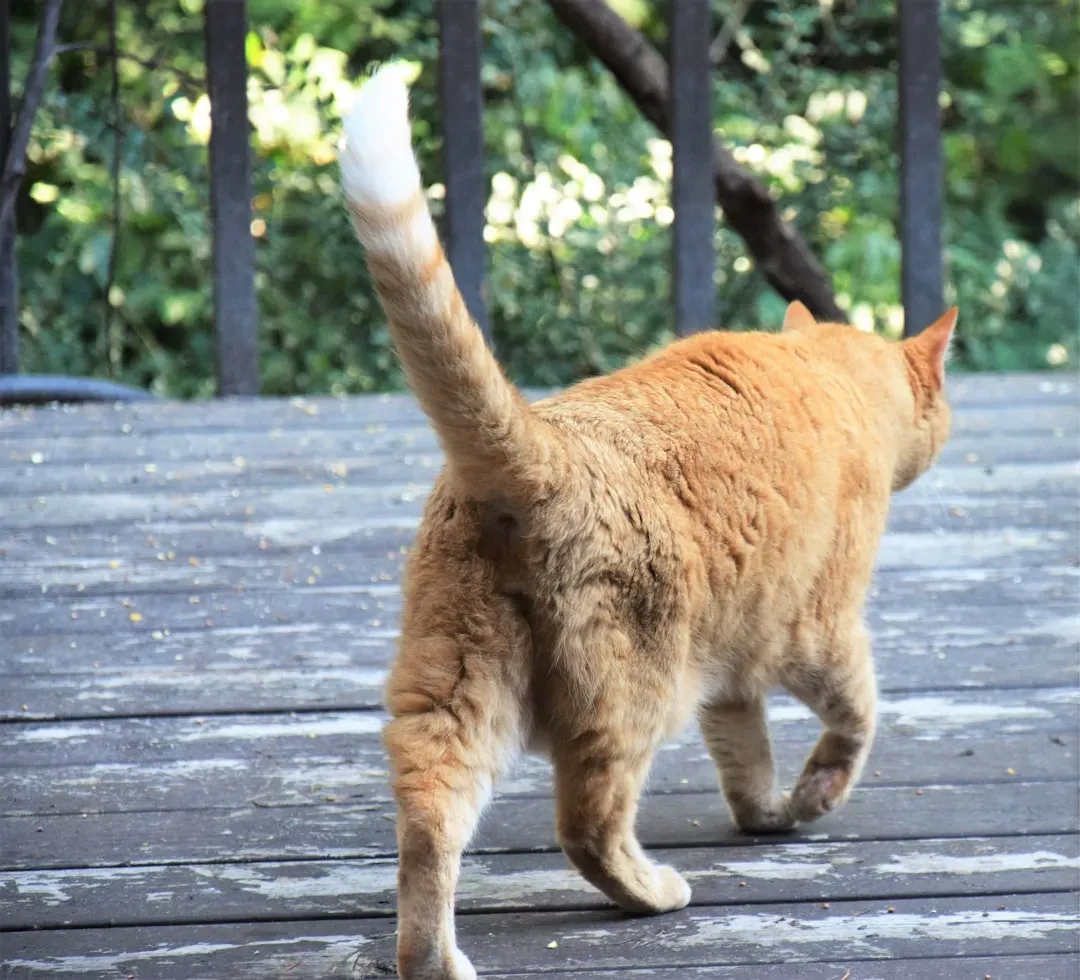
That odd little tail-quiver you’ve probably seen when you walk through the door isn’t a fluke. It’s a specific, well-documented greeting behavior tied to genuine excitement.
A tail that stands vertical and then quivers slightly is a classic greeting reserved for people a cat trusts, tied to real positive emotional arousal rather than nerves. A cat doesn’t physically light up with excitement for someone she’s wary of. This greeting tends to get subtler, not louder, as cats age – a slight tail flick instead of a full sprint to the door – which is exactly why so many owners miss it in their seniors and assume the excitement has faded when it hasn’t.
#13 – She Doesn’t Tense Up When You Pick Her Up
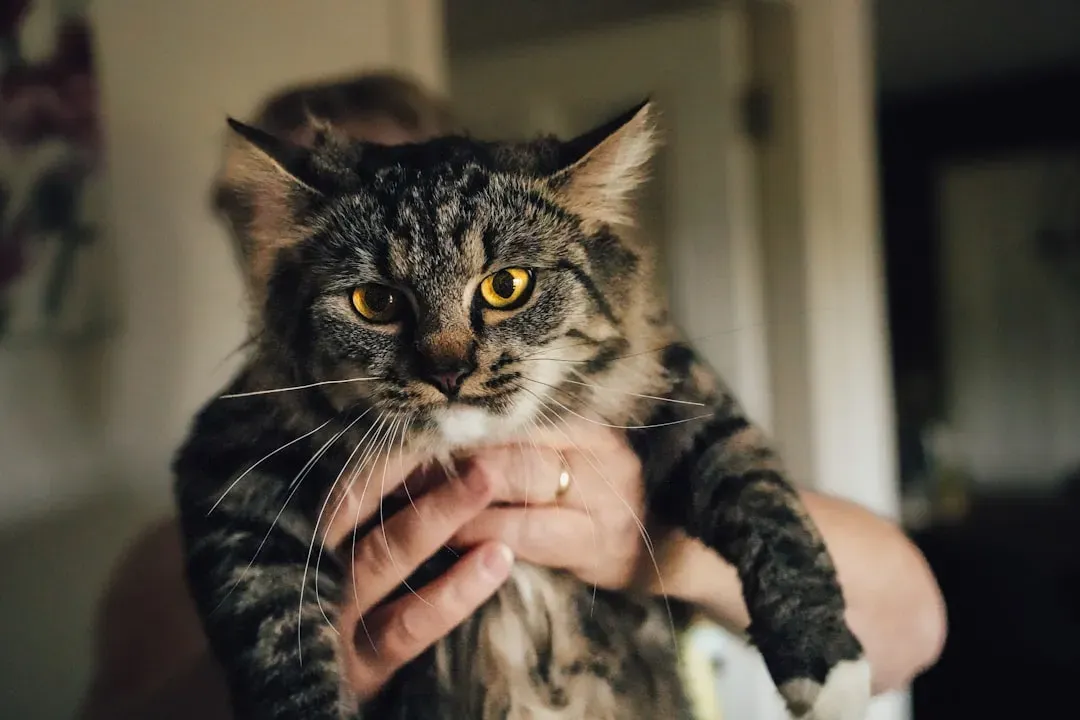
How a senior cat physically responds to being lifted or repositioned tells you almost everything about her comfort level with you.
A cat with any lingering distrust will brace, flatten her ears, or go rigid the second she’s picked up, because tensing is an automatic defense reflex. A senior cat who goes soft and pliable in your arms has overridden a hardwired instinct just for you. This sign matters even more in older cats, since arthritis and joint pain often make handling uncomfortable – so a lack of resistance usually means she trusts the process more than she fears the discomfort.
#14 – She Shows You Her Belly, Even Without Wanting It Touched
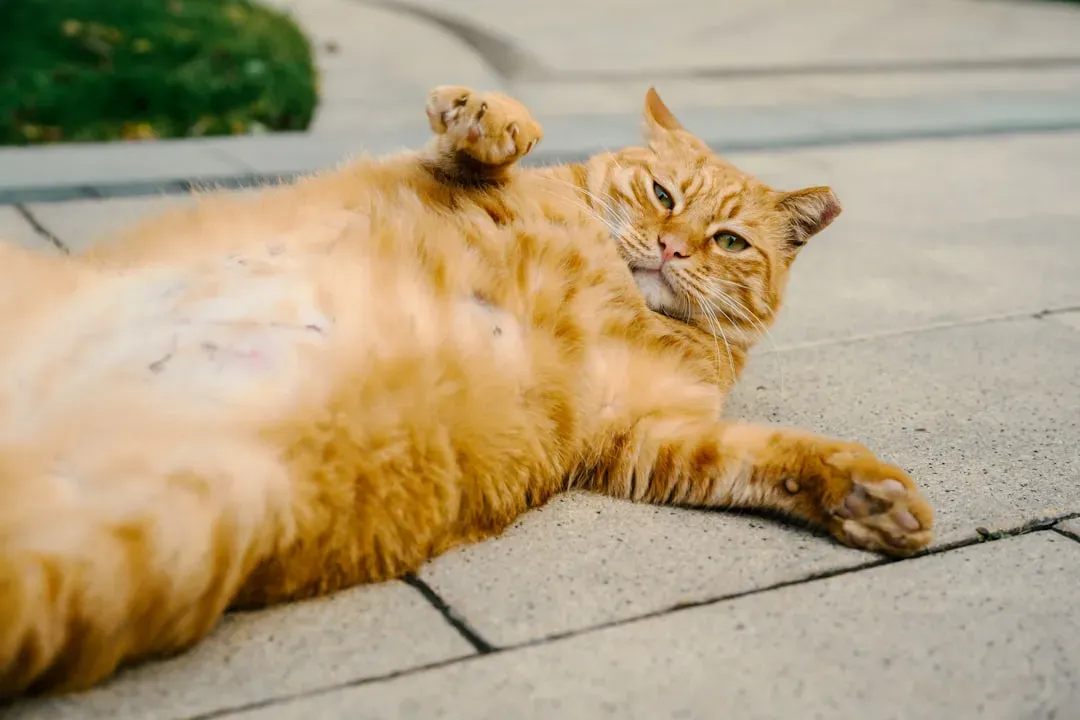
The belly-up flop is the single most vulnerable position a cat can offer, and it’s saved almost exclusively for the beings she trusts completely.
Most people assume a cat flipping onto her back is begging for a belly rub, and with seniors, that assumption gets you swatted. Exposing that soft underside – the exact spot where every vital organ lives – has almost nothing to do with wanting to be touched and everything to do with showing you deep, deliberate trust, because no prey animal flashes its belly to something it fears. Touching it can actually break that trust in the moment, even though the gesture itself is the highest compliment a cat can pay you. A senior cat repeating this move throughout her life with you isn’t asking for anything – she’s simply telling you, over and over, that she has never stopped feeling completely safe in your home.
Why It Stands Out
- Exposing the belly is arguably the riskiest posture in a cat’s entire body-language repertoire.
- It leaves every vital organ unguarded with no quick way to spring back to defense.
- Cats reserve this gesture almost exclusively for trusted humans, not strangers or unfamiliar animals.
- It signals trust, not necessarily a request for touch – the two get confused constantly.
The Bottom Line
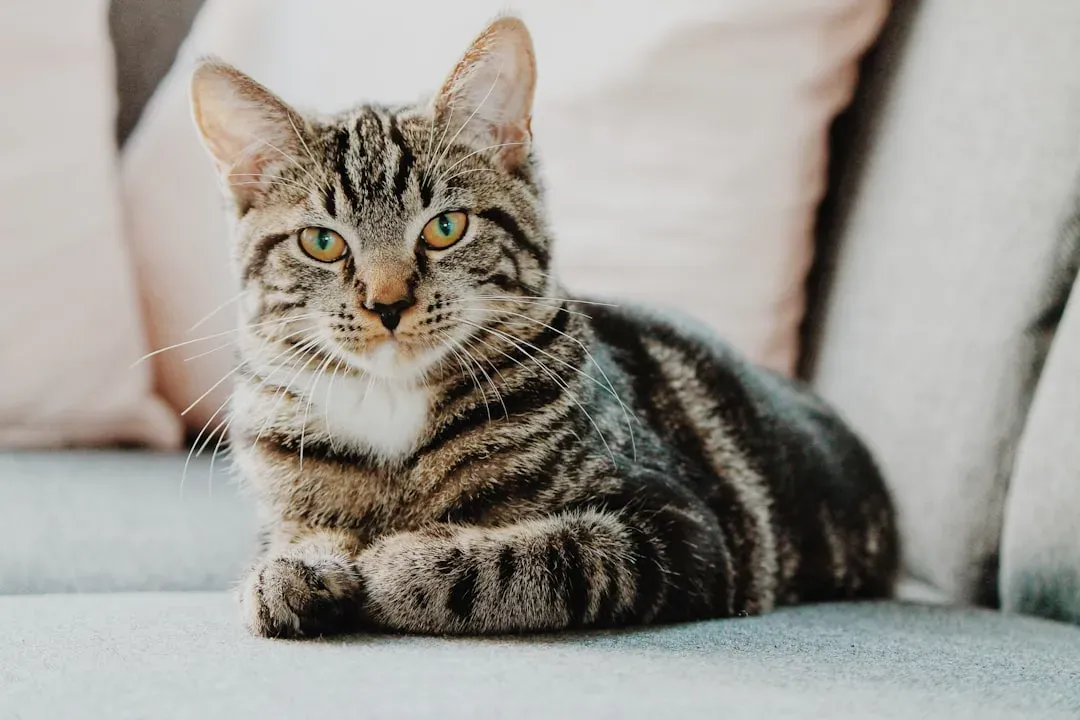
Here’s my honest take: the industry has spent years training owners to equate stillness with disinterest, and it’s simply wrong. A quiet senior cat is not a distant one – she’s a cat who’s finally stopped performing her safety and started just living in it.
The loudest declarations of trust in an aging cat are almost always silent: an exposed belly, a slow blink, a purr with nobody around to hear it. If your senior cat still does even four or five of these fourteen things, she isn’t tolerating your home – she’s telling you, in the only language she has left, that it’s the safest place she knows. Which of these did your own cat show today? Drop it in the comments – we want to know which one surprised you most.
Kristina is a young writer from India. An arts graduate and an avid content creator, Kristina is passionate about animals and wildlife. She enjoys exploring topics related to pet care, animal behavior, conservation, and nature, combining thorough research with engaging storytelling.