Most people assume a cat curling up on your lap the second you sit down is just “being cute.” It’s not random – it’s calculated. Veterinary behaviorists have spent years decoding this exact moment, and the science behind it is far weirder (and more flattering) than most owners realize. From body temperature tricks to scent-based territory claims, your cat has a whole checklist running the instant your body hits the couch. Here’s what the data and the experts actually say.
#1 – You’re Basically a Free, Self-Heating Cat Bed
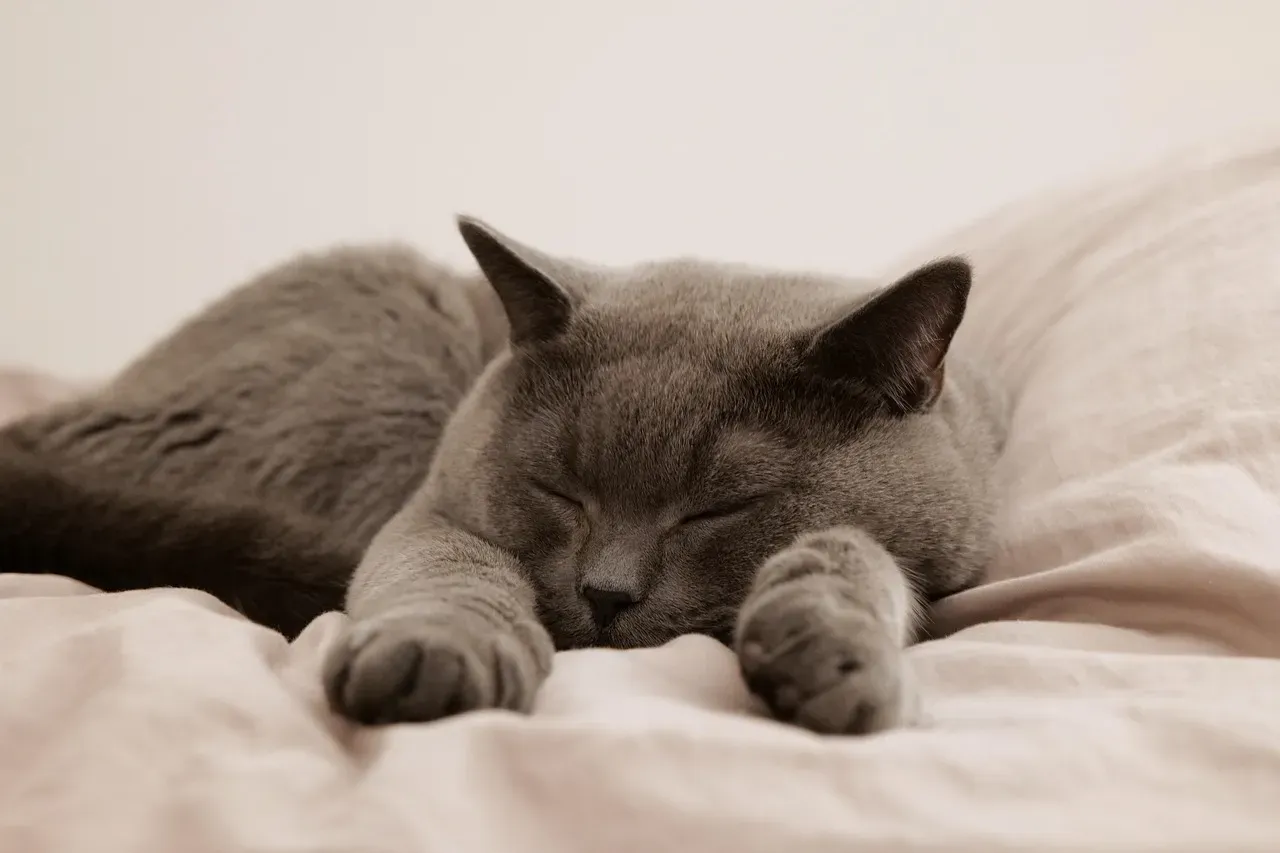
Your cat isn’t being sentimental when she jumps on your lap. She’s running a thermostat check, and you just won the contest.
Cats have a higher average body temperature, ranging from 100.5°F to 102.5°F (38°C to 39°C), compared to a typical human range. That gap matters more than most owners think. Cats have a higher resting body temperature than humans, typically ranging between 38–39°C, and maintaining this temperature requires energy – when a cat rests in a warm spot, it reduces the effort needed to stay warm, allowing the body to relax.
Your lap isn’t just warm – it’s efficient. Researchers studying feline housing environments found that the thermoneutral zone for domestic cats is 30–38°C, a range most human living rooms don’t hit on their own. That’s why your legs suddenly become prime real estate the moment you stop moving. But that’s nothing compared to what we found about #2…
#2 – Sitting Down Signals “Nap Time” to Their Brain
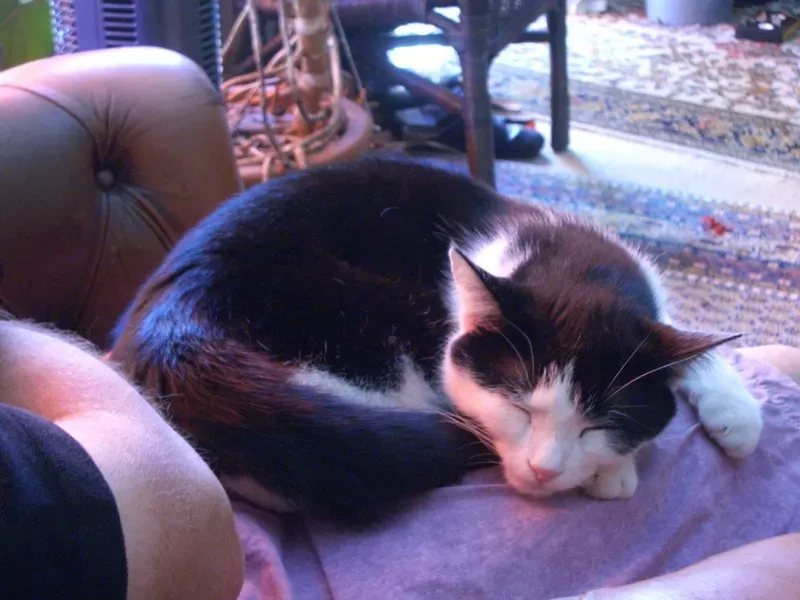
The instant your body stops moving, your cat’s internal calculator flips a switch.
Cats are wired to conserve energy whenever possible, and a still, seated human is basically a green light. Cats seek warm, soft surfaces because they conserve energy and feel secure, and your lap or chest provides a stable heat source and gentle support. The second you sit, you stop being “moving obstacle” and start being “resource.”
This is why cats who ignore you all day while you’re cleaning or cooking suddenly appear the moment the couch cushion compresses. They’re not tracking you – they’re tracking your stillness. Stillness means safety, and safety means it’s finally worth the energy cost of walking over and settling in. Most owners think their cat waits for attention. Actually, the cat is waiting for you to become a stable surface. But wait until you hear what #3 reveals about trust.
#3 – Your Cat Feels Most Exposed When Resting – So She Picks You
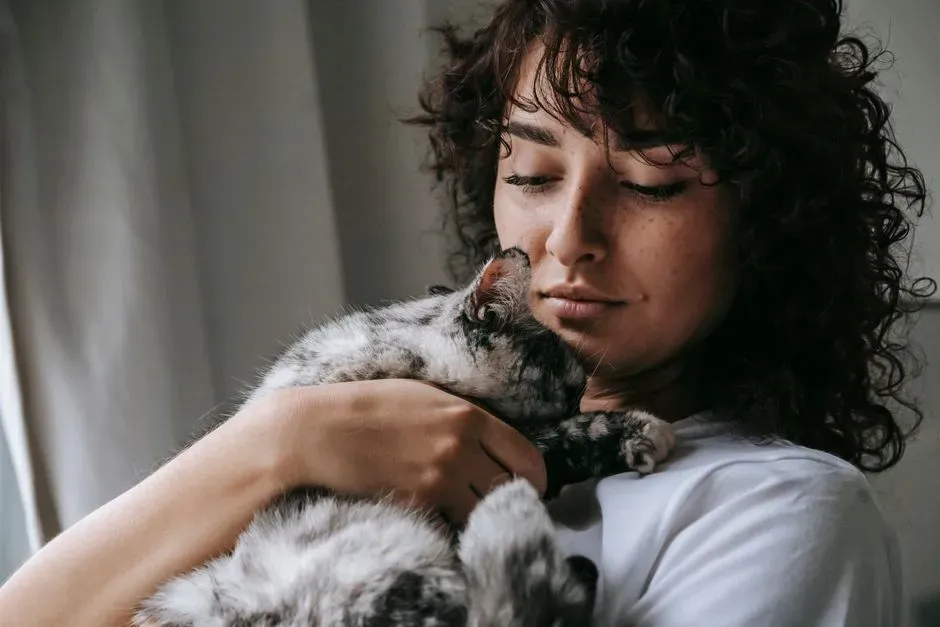
Here’s the part that flips the whole narrative: your cat isn’t relaxing despite being vulnerable. She’s choosing vulnerability specifically because of you.
Cats are vulnerable during sleep, and so they choose a safe, warm place to sleep where they are up high away from predators and in a position of trust. That’s not a throwaway line – it’s the core of the behavior. Cats are most vulnerable when resting or sleeping, and sitting on a trusted person means the cat feels protected and calm.
Cats don’t hand out this level of exposure casually. **Veterinary behavior sources note that cats specifically choose the people they trust most during rest periods**, not just whoever happens to be closest. That selectiveness is the whole point – your cat auditioned other spots first. But #4 explains why this gets even more personal.
#4 – She’s Literally Mixing Her Scent With Yours
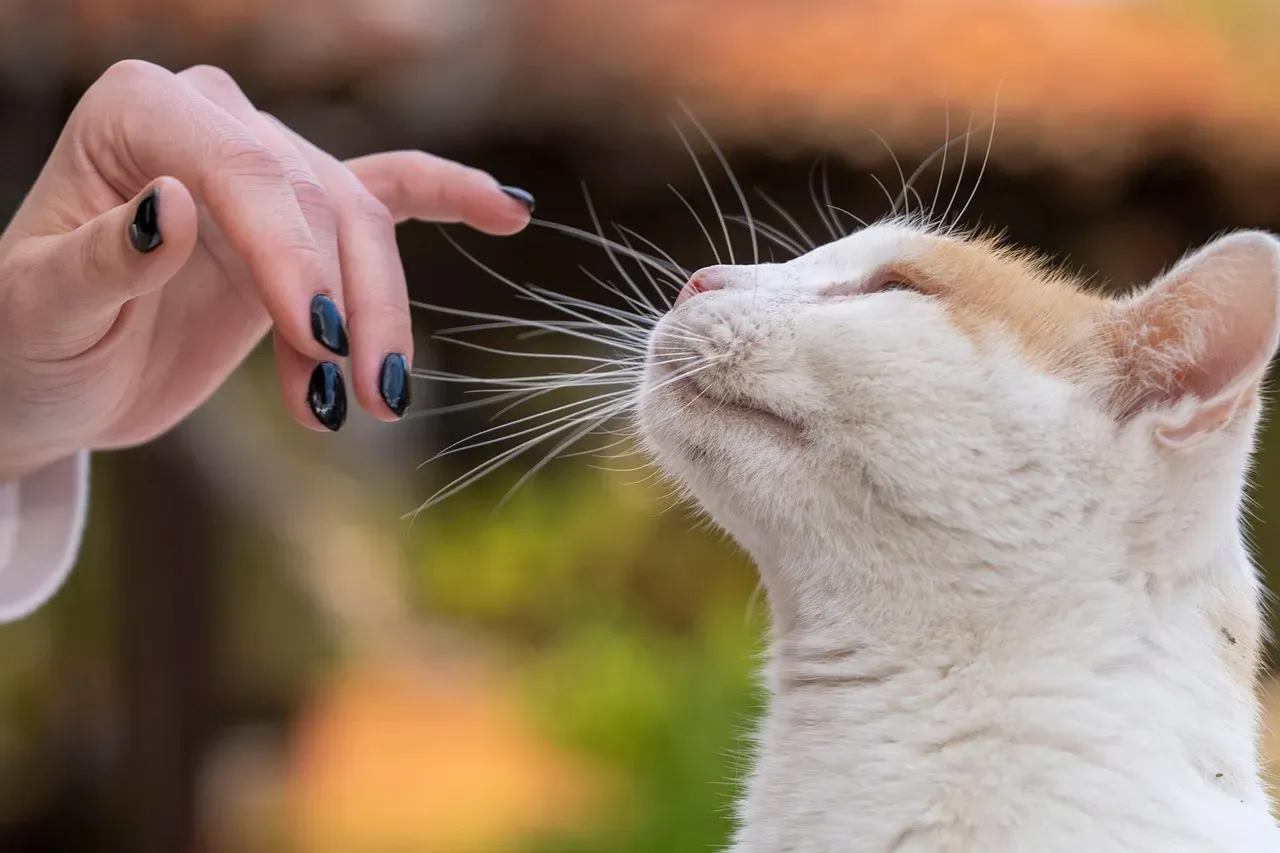
This is the reason most owners never see coming: your cat sitting on you is partly a branding exercise.
Cats rely heavily on scent for comfort, and sitting on you allows them to relax in a familiar smell while also gently mixing their scent with yours, which helps reinforce a sense of belonging in their environment and strengthens the bond. In feral cat colonies, this isn’t just cozy – it’s functional. In feral colonies, olfactory communication involves glands on the head being rubbed against objects and other cats, and observation suggests molecules are deposited that identify aspects of the colony and label specific individuals.
So when your cat plants herself on your lap and rubs her face against your arm first, **she’s not just getting comfortable – she’s claiming you as part of her territory.** That claim gets more aggressive with #5, especially in multi-pet homes.
#5 – In Multi-Pet Homes, It’s a Territorial Power Move
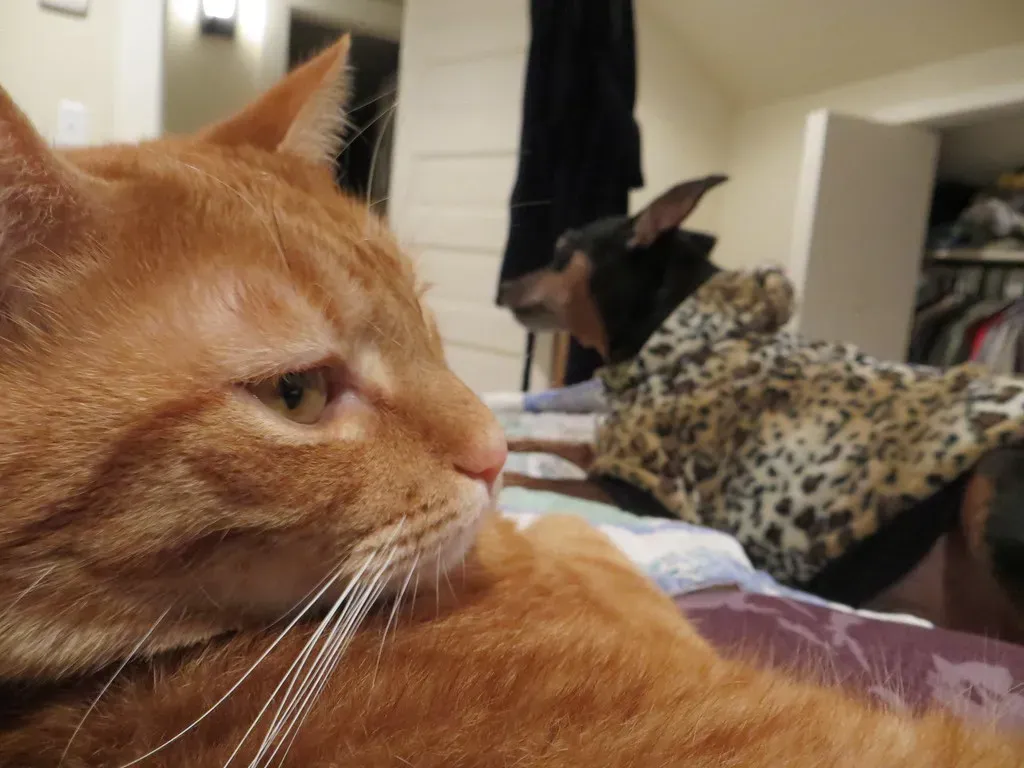
If you have more than one animal in the house, this behavior isn’t just about comfort anymore – it’s strategy.
Your cat also marks her territory when she sits on you with pheromones, letting other pets know that you’re taken. This is far more common than people assume, and it’s rarely accidental. When your cat sits on your lap, she deposits her scent-marking pheromones on you, so other cats will know that you’ve already been marked as somebody else’s territory – notably, cats that live in multi-pet households love to mark their owners just in case another pet tries to claim their owner.
**This is the controversial part most cat parents don’t want to admit: your “affectionate” cat might actually be jealously guarding you.** It’s not always pure love – sometimes it’s possessiveness dressed up as cuddling. Either way, #6 shows why some breeds take this to another level entirely.
#6 – Some Breeds Are Basically Wired to Be Velcro Cats
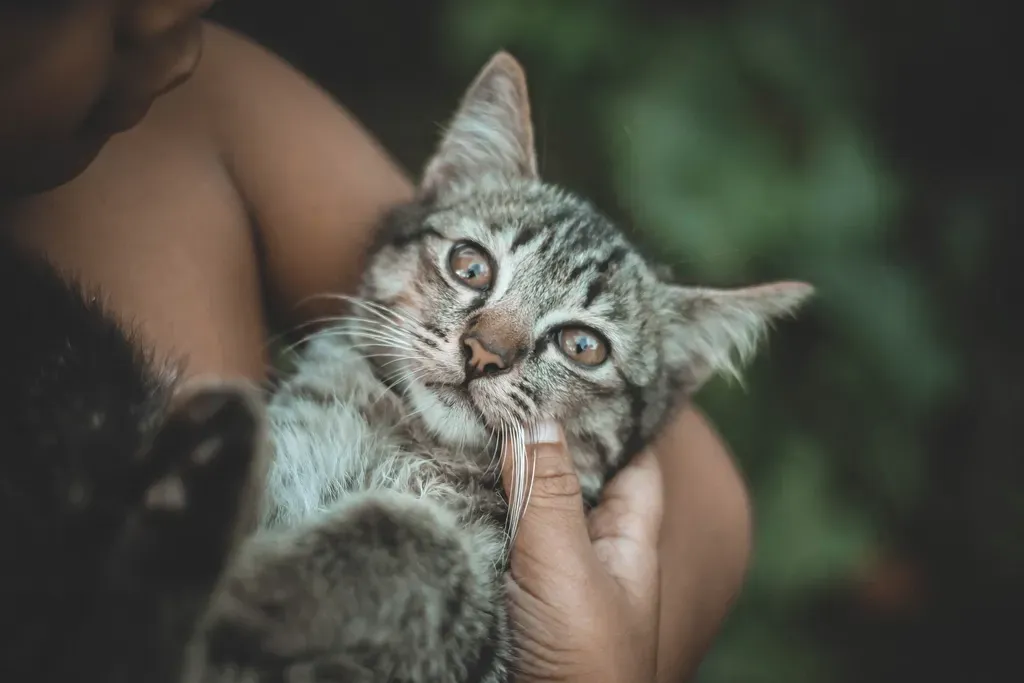
Not every cat does this – and that’s not a personality flaw, it’s genetics.
There are several reasons some cats sit on laps far more than others, including their breed, their history, and even their unique personality. Certain breeds have a documented reputation for this exact behavior. Affectionate cats such as Ragdolls, Persians, and Maine Coons are known to seek attention in this way.
If your cat isn’t a lap-sitter, that’s not rejection – it’s just wiring. Some breeds that are not known to be overly affectionate may become the lap cat you’ve always wanted, while common lap-loving breeds may prefer their own space. **Breed stereotypes about “aloof cats” are actually far less predictive than most people think.** But personality isn’t the only variable – #7 covers the physical sound that seals the deal.
#7 – Your Heartbeat and Breathing Are Doing More Than You Think
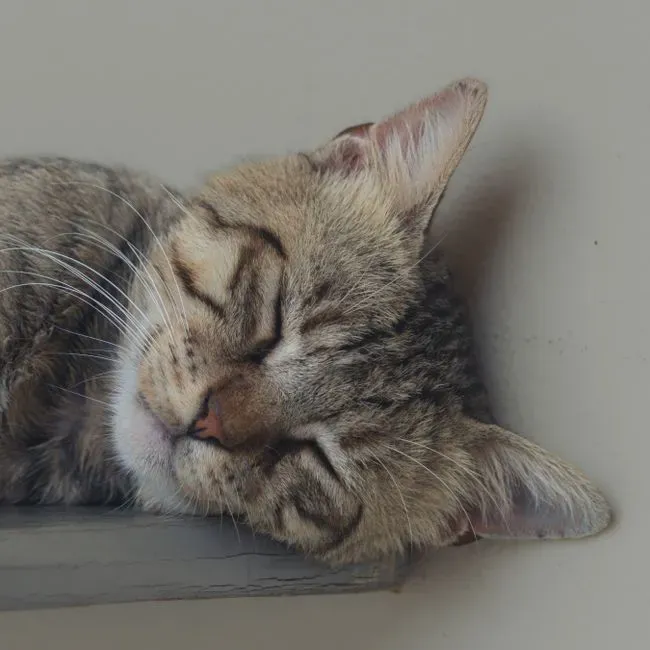
This one sounds almost too simple to be true, but it’s backed by consistent behavioral observation: your body’s background noise is a sedative.
Your cat loves the natural rhythm of your heartbeat and your steady breath – the inhaling and exhaling sound you make when breathing makes your cat feel relaxed and soothes her to sleep, while your chest also provides warmth, comfort and security. This isn’t a one-time effect either. When sleeping, you produce calm and slow respiratory sounds that your cat finds relaxing, and your cat enjoys your natural body sounds as well as the warmth you give off.
**This is why your cat picks the exact moment you finally sit still – not while you’re pacing around the kitchen.** Movement kills the effect; stillness activates it. Once she’s settled into that rhythm, #8 explains the paw-kneading that usually follows.
#8 – The Kneading Isn’t Random – It’s a Leftover Nursing Instinct
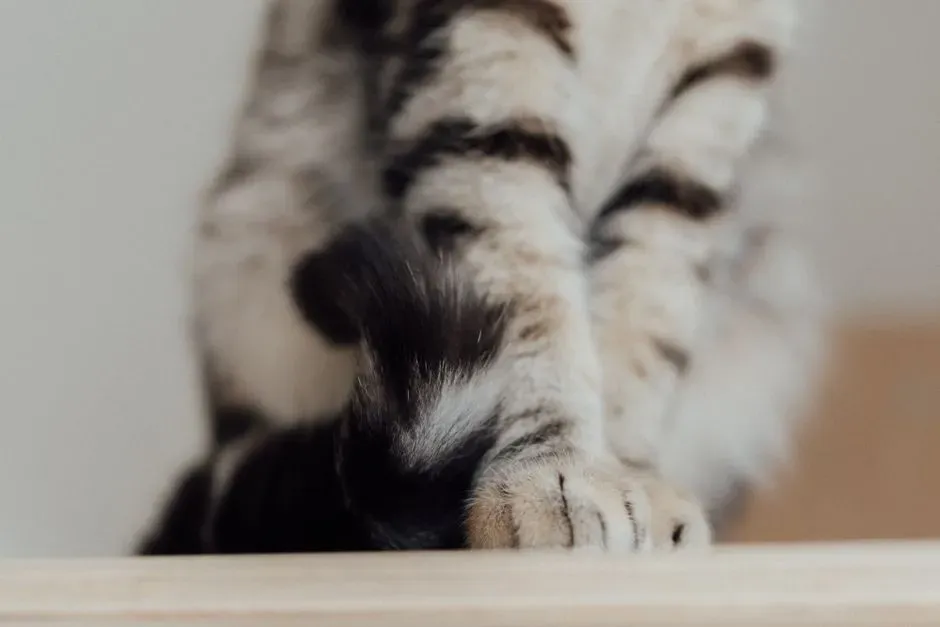
If your cat sits on you and immediately starts kneading with her front paws, that’s not a quirky habit. It’s muscle memory from kittenhood.
Kittens knead their mother while nursing to stimulate milk flow, and many cats never fully outgrow the behavior. When paired with sitting on your lap, it becomes a comfort ritual tied directly to your presence. **Most owners find it endearing without realizing it’s technically an infantile reflex resurfacing in adulthood.**
This behavior tends to intensify with purring, another self-soothing signal. Purring commonly happens when a cat feels content and relaxed, and when a cat sits on you and purrs, it usually means they are calm and comfortable – vets also explain that purring can be self-soothing, which is normal and not a sign of illness unless paired with other unusual symptoms. But #9 reveals a less flattering possibility behind the sudden lap visits.
#9 – Sometimes It’s Just Loneliness, Not Devotion
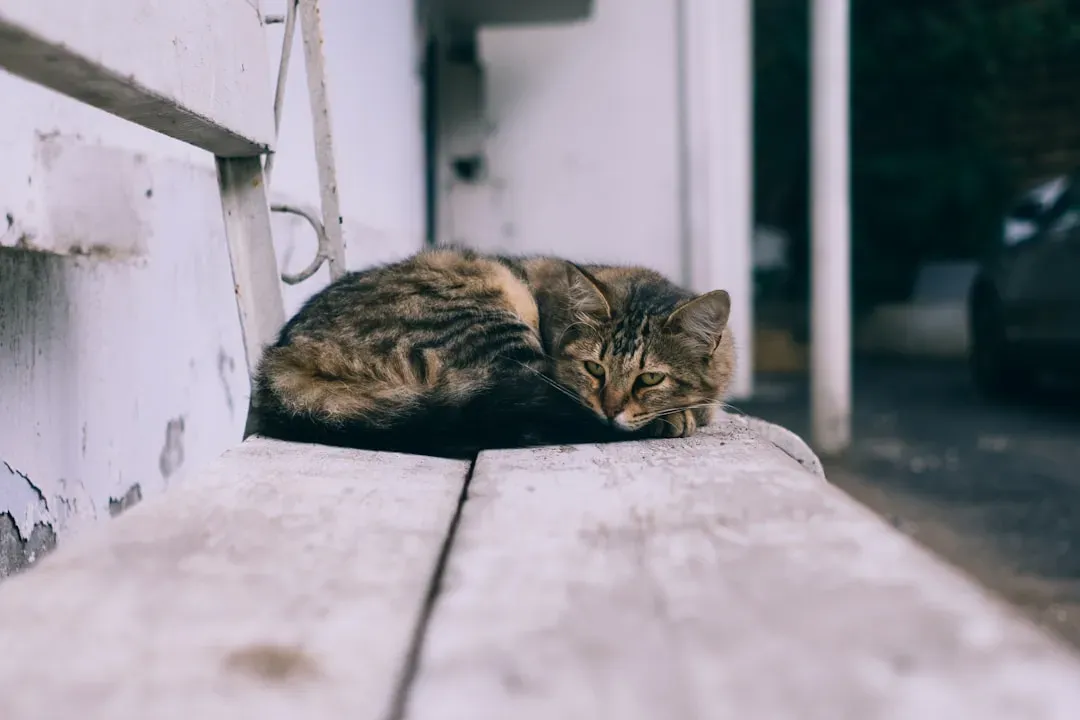
Here’s the slightly less romantic truth: your cat may be sitting on you because she’s been bored out of her mind all day.
Your cat gets lonely, especially if you’ve been away from her for some time, and that’s why when you return, your cat will probably follow you around to climb and sit on you the very first chance she gets. This isn’t necessarily deep affection – it’s often simple deprivation of social contact. After all, you can’t ignore her when she is sitting on your lap.
**Some experts argue this reframes “clingy” cats less as loving and more as understimulated** – a controversial take, but a fair one. If your cat is glued to you the second you’re home, it might say more about her day than her personality. Still, #10 shows why the moment you actually sit down matters just as much as when.
#10 – Sitting Down Is the Universal “I’m Available” Signal
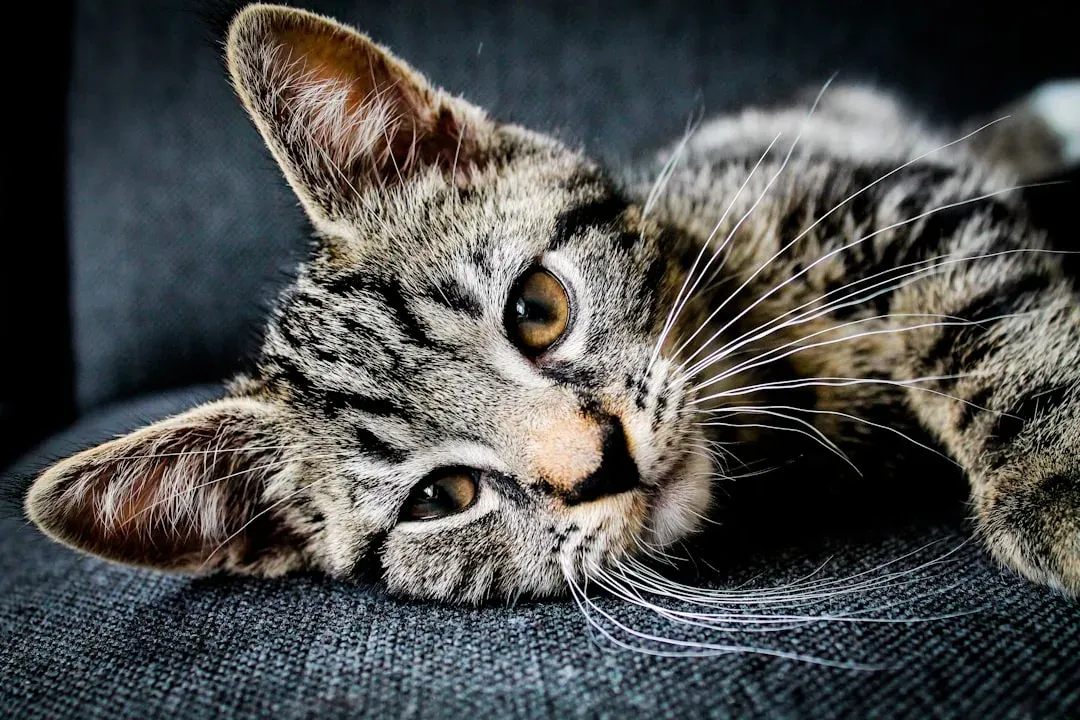
Cats read human posture more precisely than most owners give them credit for, and sitting is a specific green light.
Standing, walking, and cooking all signal “busy” to a cat. The moment your knees bend and you drop onto the couch, you’re broadcasting availability – no more moving target, no more obstacles, just an open lap. This is part of why the behavior feels so instant; it’s not coincidence, it’s pattern recognition built from repetition.
Your cat hopping onto your lap every time you sit down is not only normal but is also a common way for cats to show affection and seek warmth and comfort, and this behavior is typical in cats who have a strong bond with their owners. **The predictability of your sitting-down routine is exactly what makes it so reliable a trigger.** But #11 gets into the psychology of why she picked you specifically.
#11 – Out of Everyone in the House, She Chose You
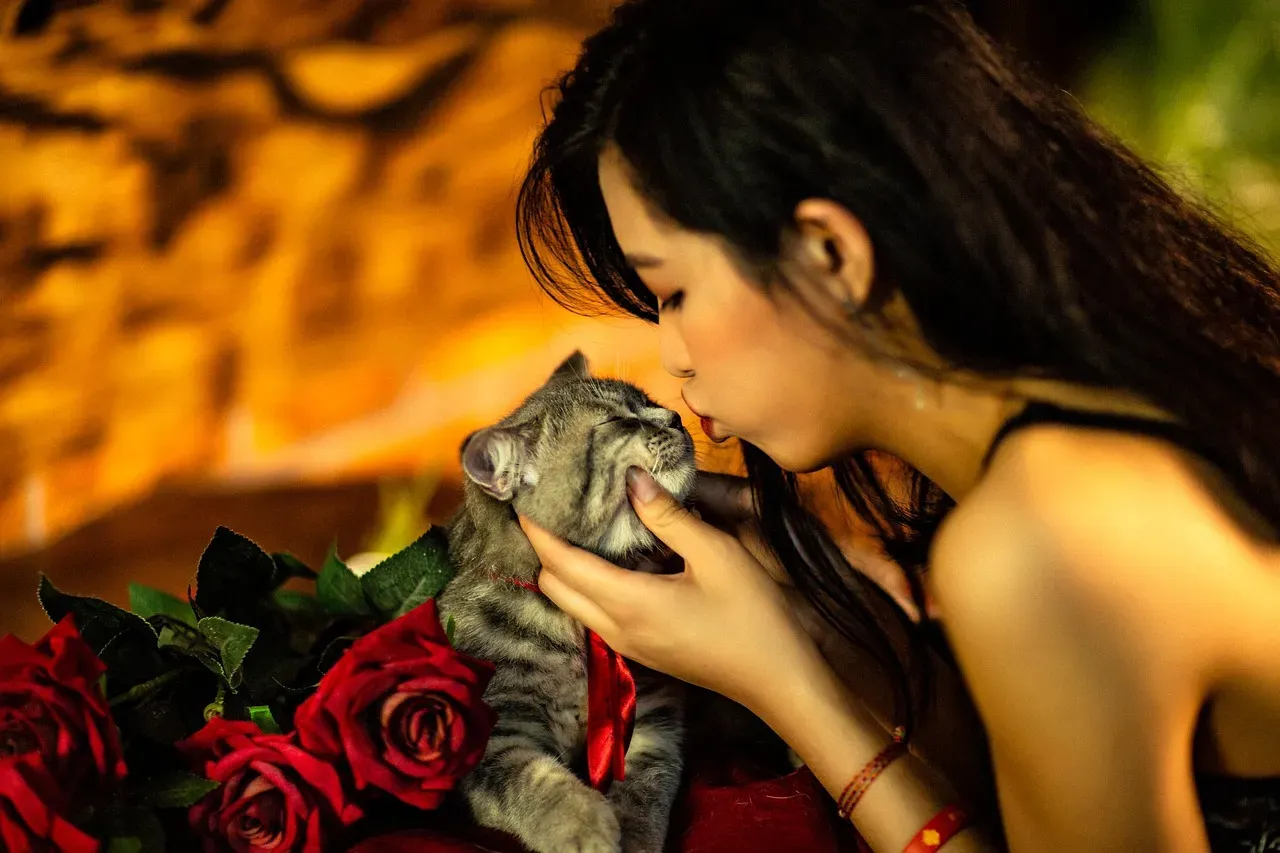
If you’re the designated lap in a multi-person household, that’s not an accident – it’s a documented behavioral pattern with actual research behind it.
Cats are selective about where they rest, and choosing a human is intentional and based on comfort and security. One behavioral study went further, categorizing owner-cat bonds into distinct types. One study investigated principal component analyses reducing owner-cat relationships into groups, identifying cats that sit on their owner as falling into “co-dependent” and “friendship” categories, characterized by an emotionally invested owner but differing in the cat’s acceptance of others and need to maintain owner proximity.
**This means the lap-sitting isn’t just habit – it’s a measurable relationship style**, on par with how researchers classify human attachment patterns. If your cat only does this with you and nobody else in the house, that selectiveness is the compliment. But #12 explains what happens when this behavior suddenly increases.
#12 – A Sudden Spike in Lap-Sitting Can Be a Warning Sign
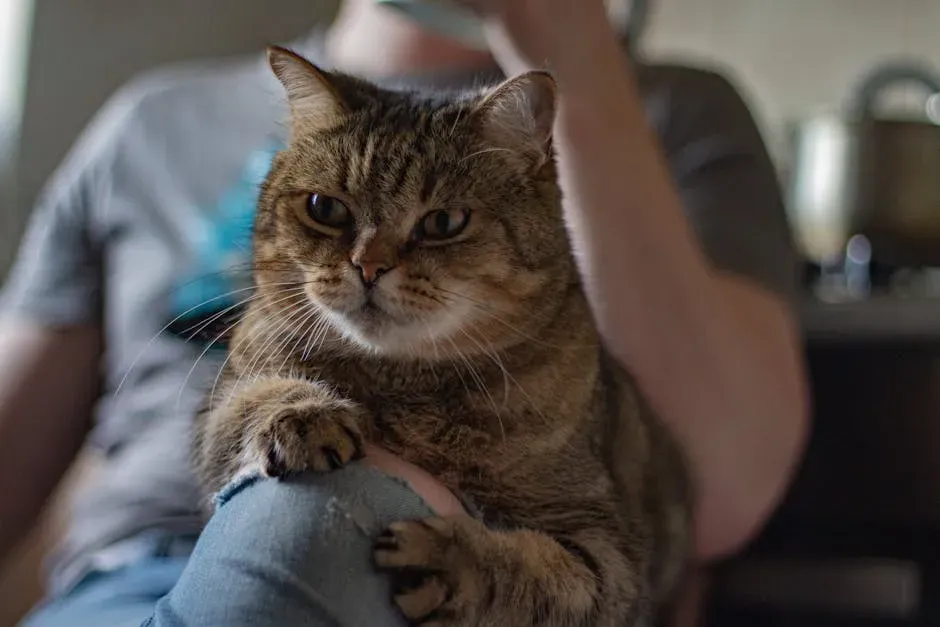
Most of the time, this behavior is harmless. But a noticeable increase deserves a second look.
A sudden increase in lap sitting does not always mean something is wrong – possible reasons include weather changes, routine shifts, or a need for comfort during mild stress. The key is watching for accompanying symptoms rather than the behavior alone. However, if this behavior appears along with appetite changes, hiding, or lethargy, it is wise to monitor closely or consult a vet.
Other sources echo this same caution. Other causes may be any stress or anxiety, such as a house move, a new pet or baby in the house, or a new cat in the neighborhood. **This is the one version of the behavior that isn’t purely a compliment – sometimes it’s a red flag wearing a cute disguise.** Still, #13 explains why for most cats, this is simply how they were raised.
#13 – Early Handling Basically Programs This Behavior for Life
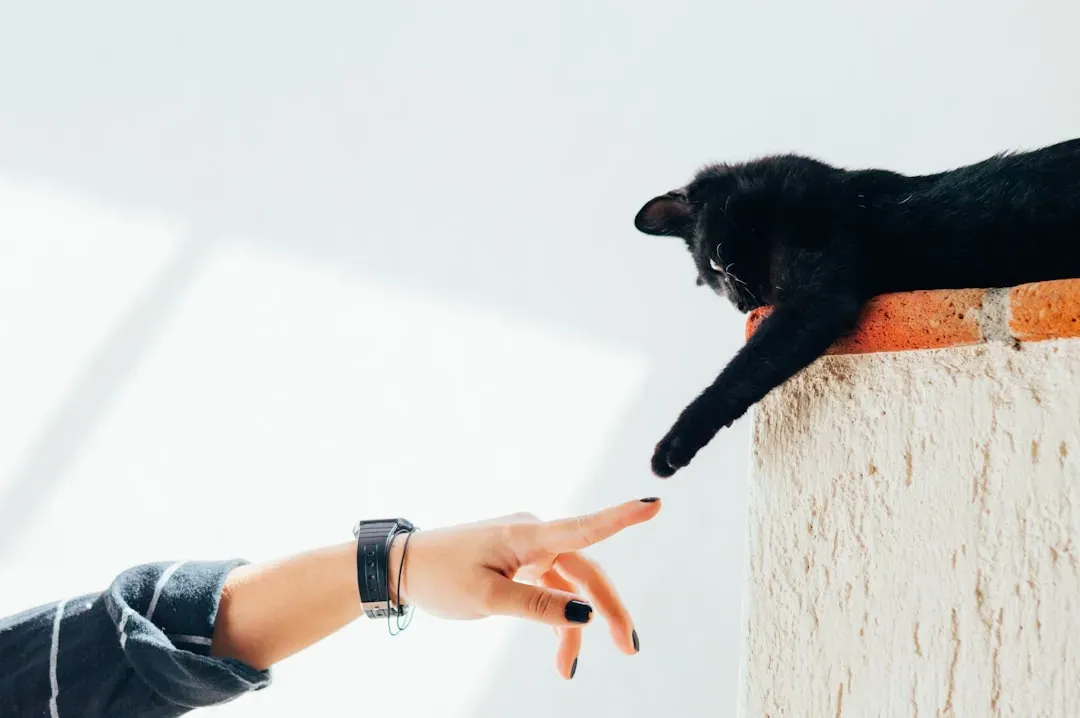
Whether your cat grew into a lap-sitter often traces back to a critical window most owners never think about: kittenhood.
Kittens can be trained to become lap cats, no matter the breed, and all it takes is a bit of time and dedication. This means the behavior isn’t purely instinct – it’s partially learned through repeated, low-pressure positive contact early in life. Cats introduced gently and consistently to human laps tend to default to that behavior automatically as adults.
Trust also plays a continuing role well beyond kittenhood. According to certified cat behavior consultant Marilyn Krieger, a cat will only sit on you if she trusts you, and she’ll be more trusting if you don’t restrict her movement, so she knows she can comfortably sit on your lap or get up and leave when she wants to. **Forcing a cat to stay is the fastest way to undo years of this trust.** And finally, #1 on this list circles back to the single biggest reason behind all of it.
#14 – At the Core, It’s Just Attachment – Plain and Simple
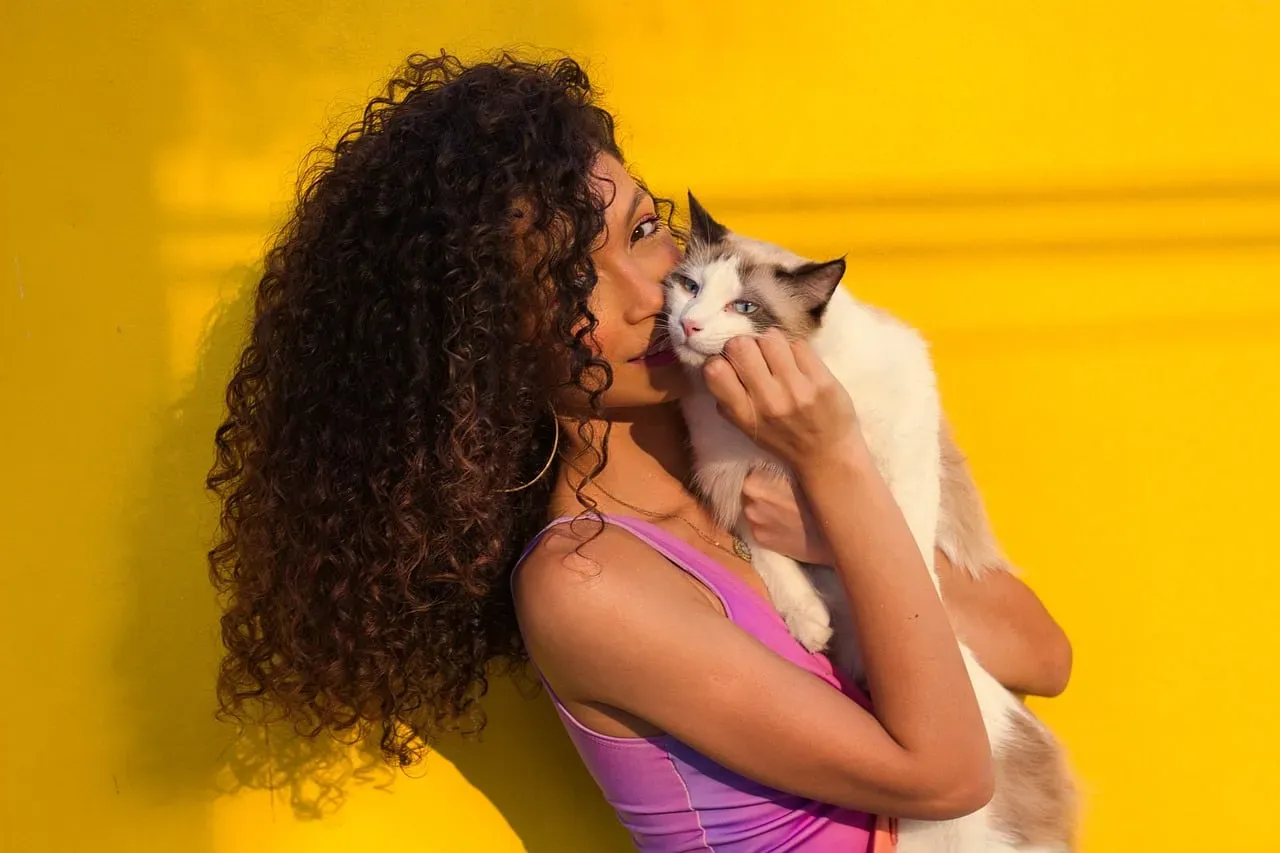
After all the science about heat, scent, and instinct, the final layer is the simplest one: your cat has decided you’re her person.
Any cat owner can tell you there’s no greater feeling than when their cat climbs onto their lap, and since cats are sometimes perceived as aloof and independent, when your cat sits on you, it can feel like you’re the chosen one. That feeling isn’t misplaced. Perhaps the most common reason cats sit on your lap every chance they get is because they want to give and receive affection – though cats have a reputation for being aloof, most owners know this isn’t the case, and your cat wants to get up close and personal to show she loves and appreciates you.
**This is the one item on the list that doesn’t need a scientific asterisk.** Warmth, scent, and safety all play supporting roles, but the headline reason is attachment. Your cat picked her favorite human, and she’s telling you so every single time you sit down.
The Bottom Line
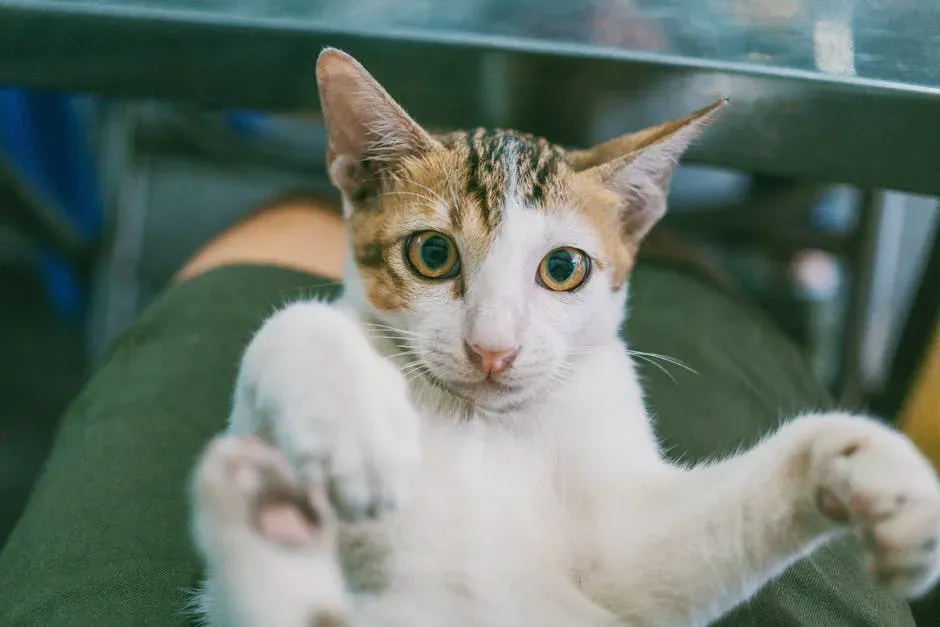
Strip away the myths, and the truth is more layered than “cats just like warmth.” **It’s a mix of thermoregulation, scent-marking, survival instinct, and genuine attachment – all happening at once, every time you sit down.** Some of it is flattering. Some of it, frankly, is territorial jealousy or boredom disguised as affection. And occasionally, a sudden spike in this behavior is worth watching closely rather than just enjoying.
Either way, the second your cat lands on your lap, she’s running a checklist most owners never knew existed. So which reason hits closest to home with your cat – warmth, trust, or straight-up territorial jealousy? Drop your theory in the comments.
Kristina is a young writer from India. An arts graduate and an avid content creator, Kristina is passionate about animals and wildlife. She enjoys exploring topics related to pet care, animal behavior, conservation, and nature, combining thorough research with engaging storytelling.