Most people picture indoor cat owners as quiet homebodies with a litter box to clean and not much else going on. Turns out, they’ve built an entire secret lifestyle around one small, judgmental animal – and the numbers back it up. Roughly 49 million U.S. households own a cat, and about 63% of those cats never set a paw outside.
That means tens of millions of adults are doing the exact same slightly unhinged things every day, then insisting to friends they’re “not that kind of cat person.” They are. Here are the 15 confessions every indoor cat owner recognizes instantly – even if they’d never say them out loud.
#15 – Talking to Your Cat Like It Fully Understands You
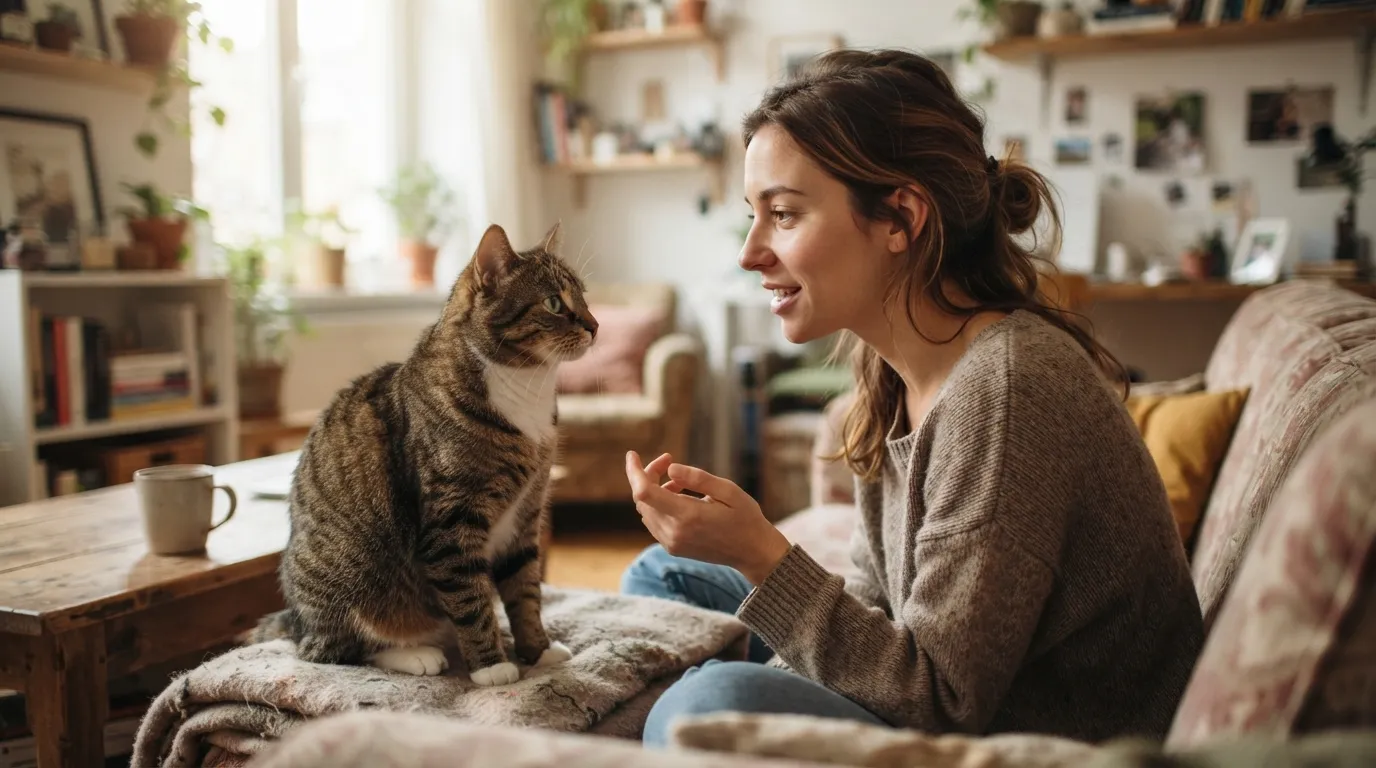
Every indoor cat owner does this. Not a quick “good kitty” – a full, detailed monologue about your day, your feelings, your five-year plan.
Turns out that’s not as irrational as it sounds. Cats who get real attention and conversation are far from aloof – they’re loving, responsive animals.
Cats also thrive on routine, and when it shifts, they use meows and trills to reconnect with you. So you’re not crazy. You’re just in a two-way conversation, and one party happens to speak a different language.
Section #14 is where it gets physically uncomfortable.
#14 – Rearranging Your Schedule Around the Cat’s Nap Spot
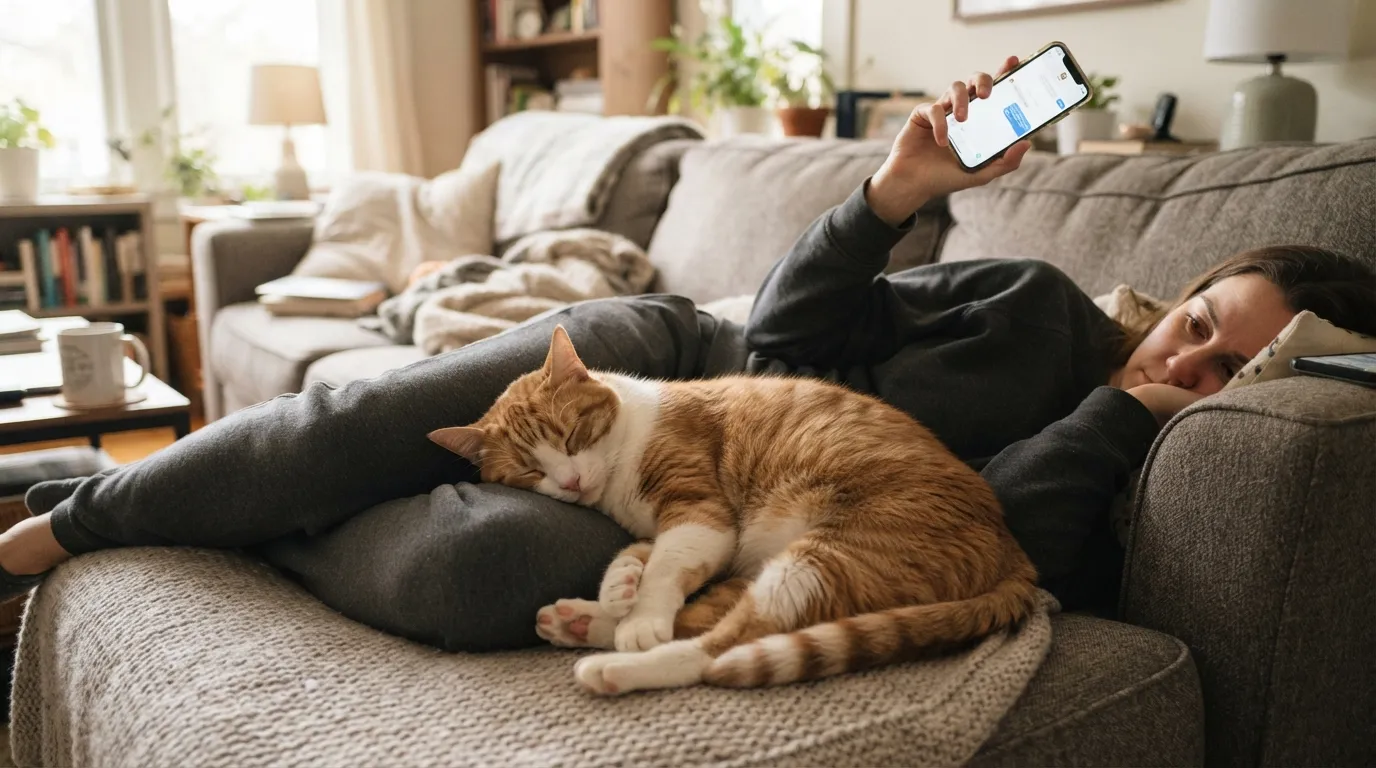
You sat down first. The cat joined you. Now you’ve been frozen in the same position for 45 minutes because moving would disturb them.
Indoor cat owners routinely sacrifice their own comfort to avoid waking a sleeping cat. It’s practically a personality trait at this point, and the justification never changes: “They looked so peaceful.”
Cats form real, strong bonds with their people, and unmet social needs can genuinely cause them distress. Deep down you know this – which is exactly why you’re pinned under ten pounds of cat, texting with your arm at an awkward angle.
Up next, #13 exposes a purchase you’d rather not think about.
#13 – Buying a Mountain of Toys That Get Ignored Immediately
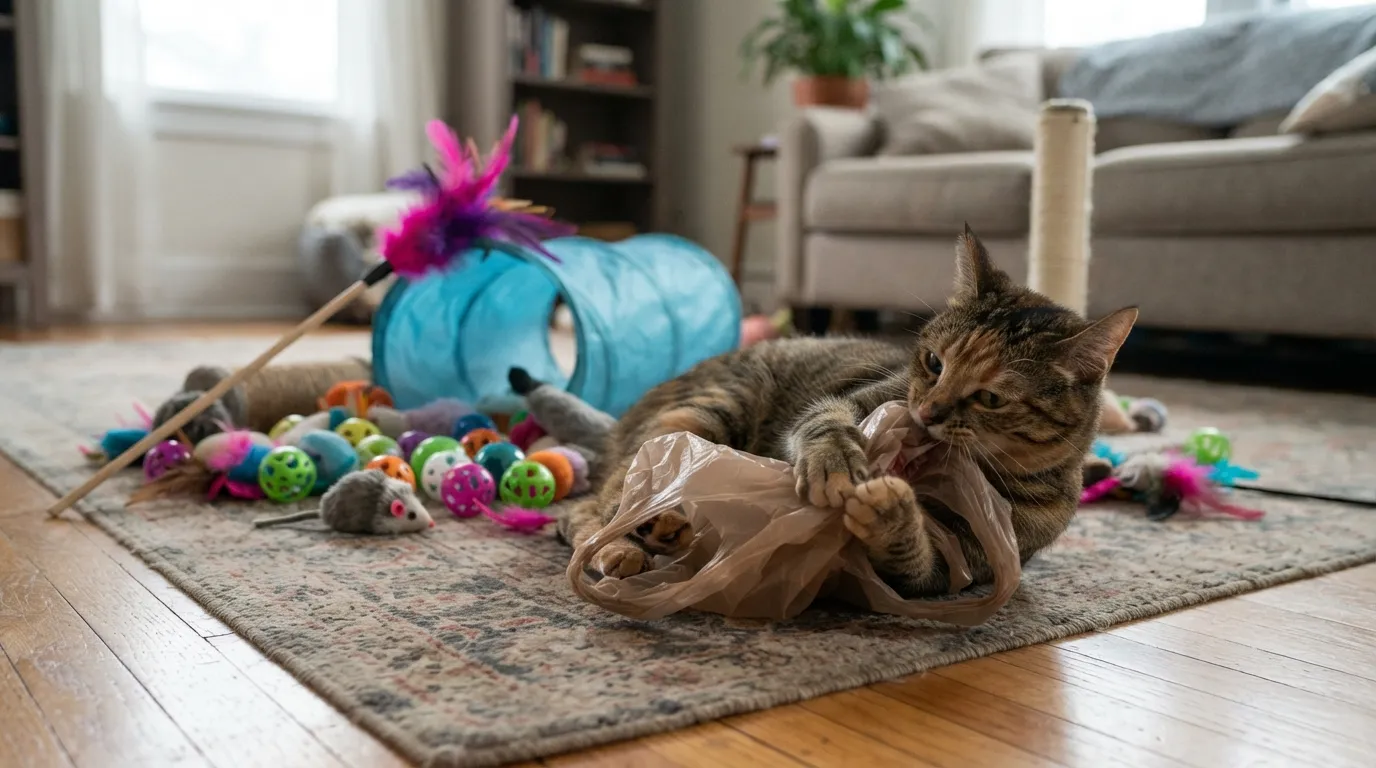
You spent $40 on a feather wand, a crinkle tunnel, and a motorized mouse. Your cat walked past every single one and played with the plastic bag instead.
This is universal. Studies show indoor-only cats actually engage in more predatory play than cats with outdoor access – meaning they genuinely want to hunt and pounce.
They just want it on their terms, not yours. And since enrichment matters even more indoors, all that “wasted” money technically counts as responsible ownership. That’s the story, and you’re sticking to it.
Fast Facts
- Indoor cats keep their full predatory drive even if they’ve never hunted real prey.
- Cardboard boxes and paper bags consistently beat store-bought toys in cat preference.
- Rotating toys every few days helps delay the instant “boring” verdict.
- Short, repeated play bursts mimic natural hunting rhythms better than one long session.
#12 is the one where you start apologizing for things that weren’t even your fault.
#12 – Apologizing to Your Cat Out Loud
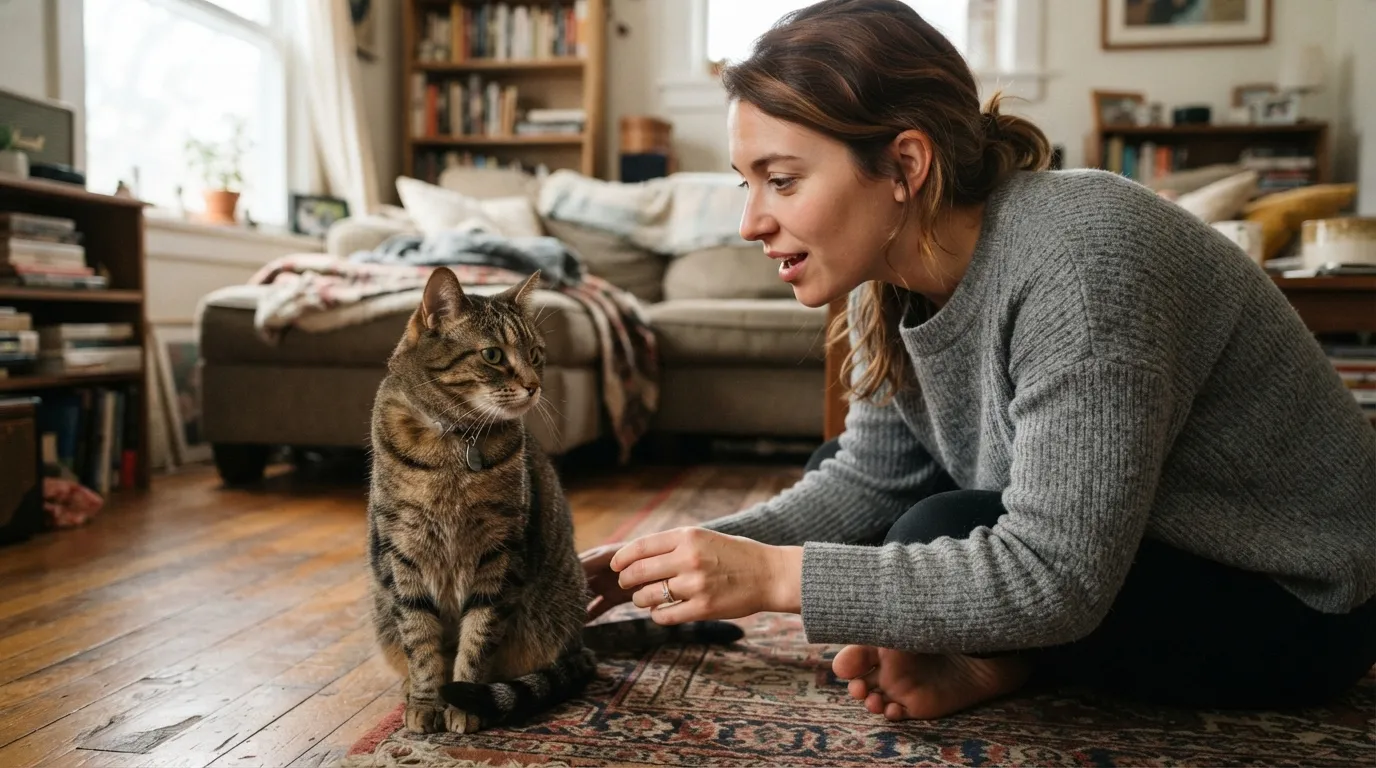
You stepped near their tail. You closed a door too fast. You sat in “their” chair. And you said sorry – sincerely, out loud, sometimes twice.
Some owners admit they apologize even when the cat clearly caused the incident. The cat walked directly under your feet, and somehow you’re the one saying sorry.
Cats are more sensitive than they let on, and what looks like aloofness can actually be quiet stress or careful attachment. So owners read every twitch and tail-flick as disappointment – a deeply one-sided guilt cycle the cat is completely unaware of and entirely unbothered by.
#11 turns that guilt into a full-blown panic.
#11 – Checking if the Cat Is Breathing When They Sleep Too Deeply
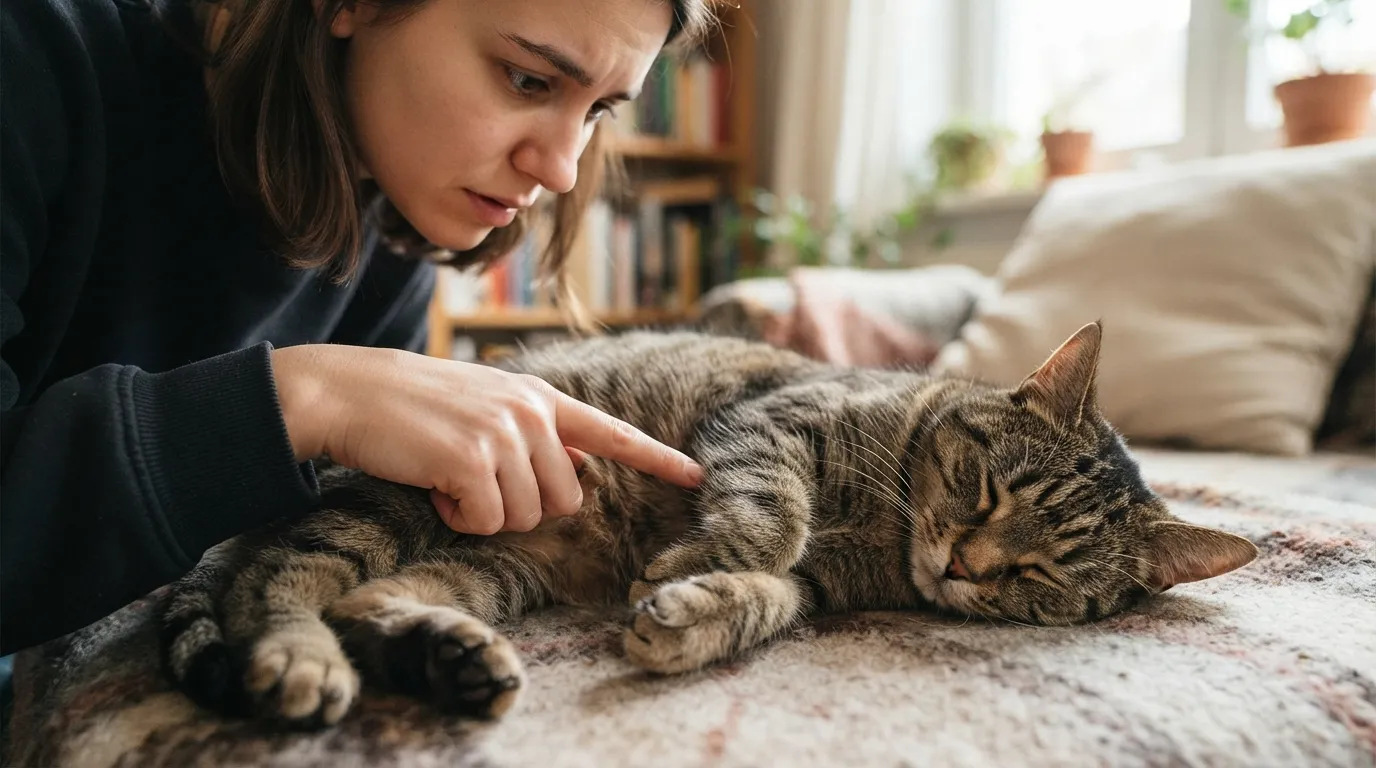
You spot the cat in a suspiciously still position. A chill runs through you. You lean in, watch for chest movement, then nudge them gently with one finger.
They wake up, look at you with pure contempt, and go back to sleep. This happens to almost every indoor cat owner at least once a month – it’s not paranoia, it’s love expressed through mild panic.
Indoor cats typically live 12 to 18 years and sleep 12 to 16 hours a day, which means you’ve got years of this ahead of you. Every check ends the same way: brief embarrassment, enormous relief.
#10 is the moment your privacy officially disappears.
#10 – Letting the Cat “Supervise” Everything You Do
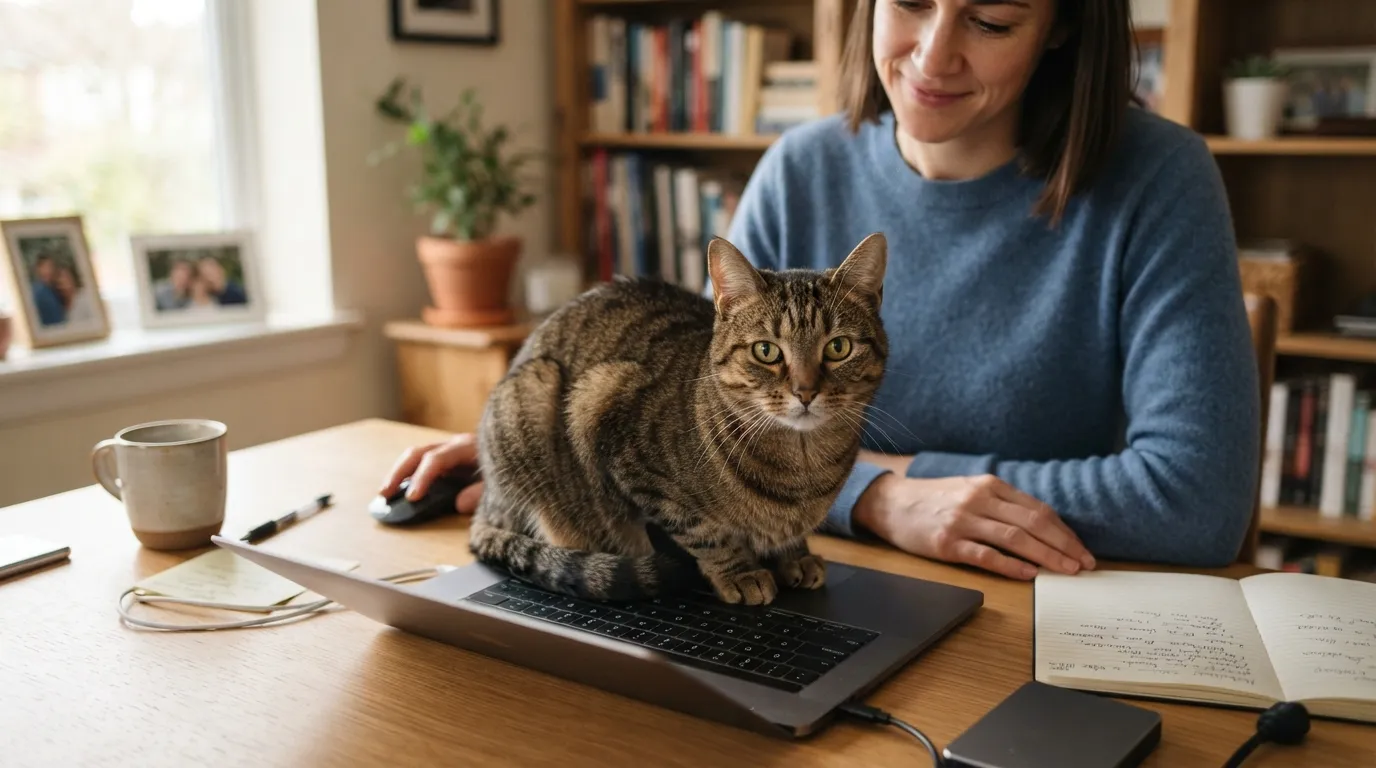
Cooking dinner? The cat’s on the counter. Working from home? The cat’s on the laptop. Wrapping a gift? The cat’s sitting inside the box.
Indoor cat owners don’t just tolerate this – they quietly enjoy it, because the presence of the cat makes mundane tasks feel less lonely. And it’s not accidental on the cat’s part, either.
Cats pick up on subtle sounds, smells, and even shifts in your mood that you’d miss entirely. Of course, none of that explains why they specifically need to sit on the one document you’re trying to read.
By #9, you’re saying something out loud that you’d never admit to a stranger.
#9 – Whispering “I Love You” Before Leaving the House
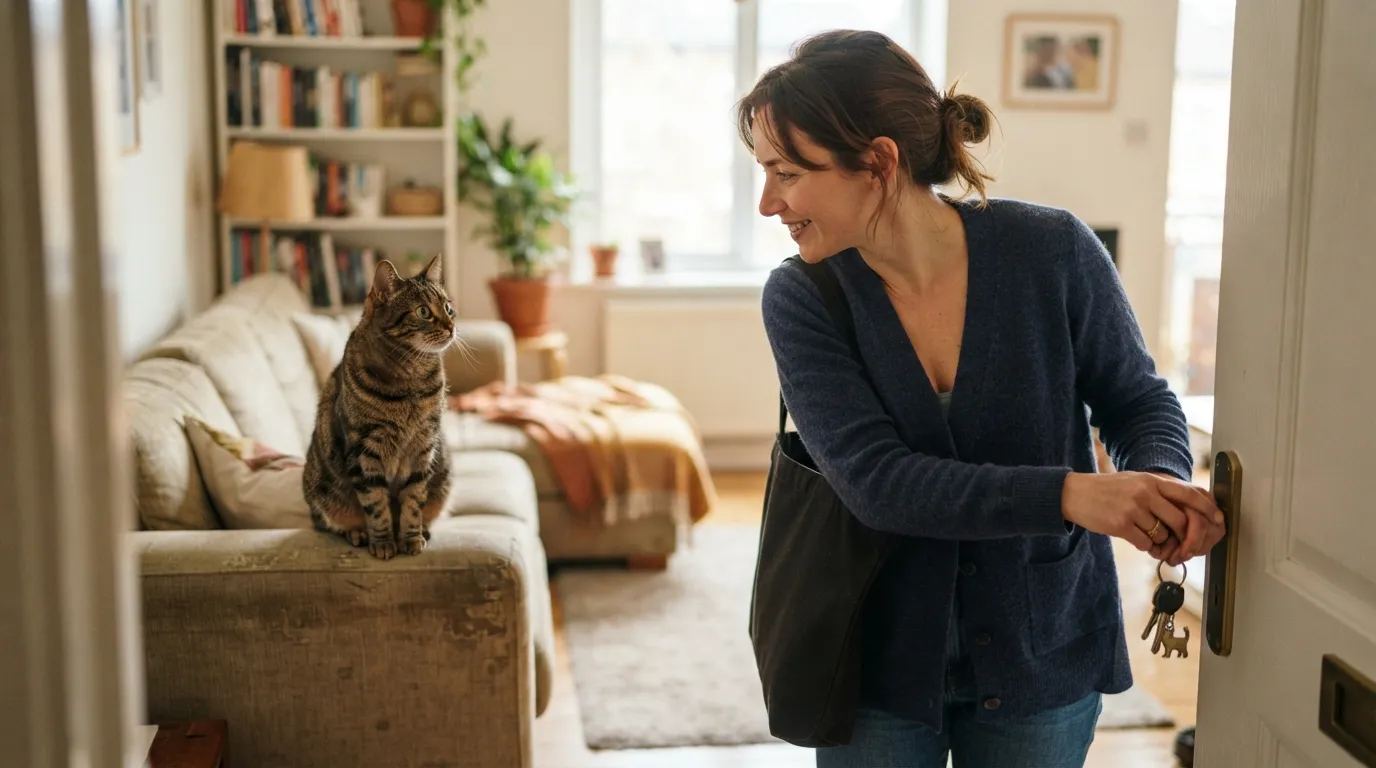
You grab your keys, glance back at the cat on the couch, and say it. Sometimes twice. Sometimes with full eye contact.
This is one of the most universal indoor cat owner habits – and one people feel weirdly embarrassed about admitting. The bond, though, is real and well documented.
It’s a myth that cats can be left alone for days without consequence; most actually feel distressed once they’re alone for more than 24 hours. So that little goodbye isn’t just sweet – it might matter to your cat more than you think.
#8 is a battle you’ve already lost and don’t even realize it.
#8 – Moving the Cat’s Food Bowl Millimeters and Getting Ignored
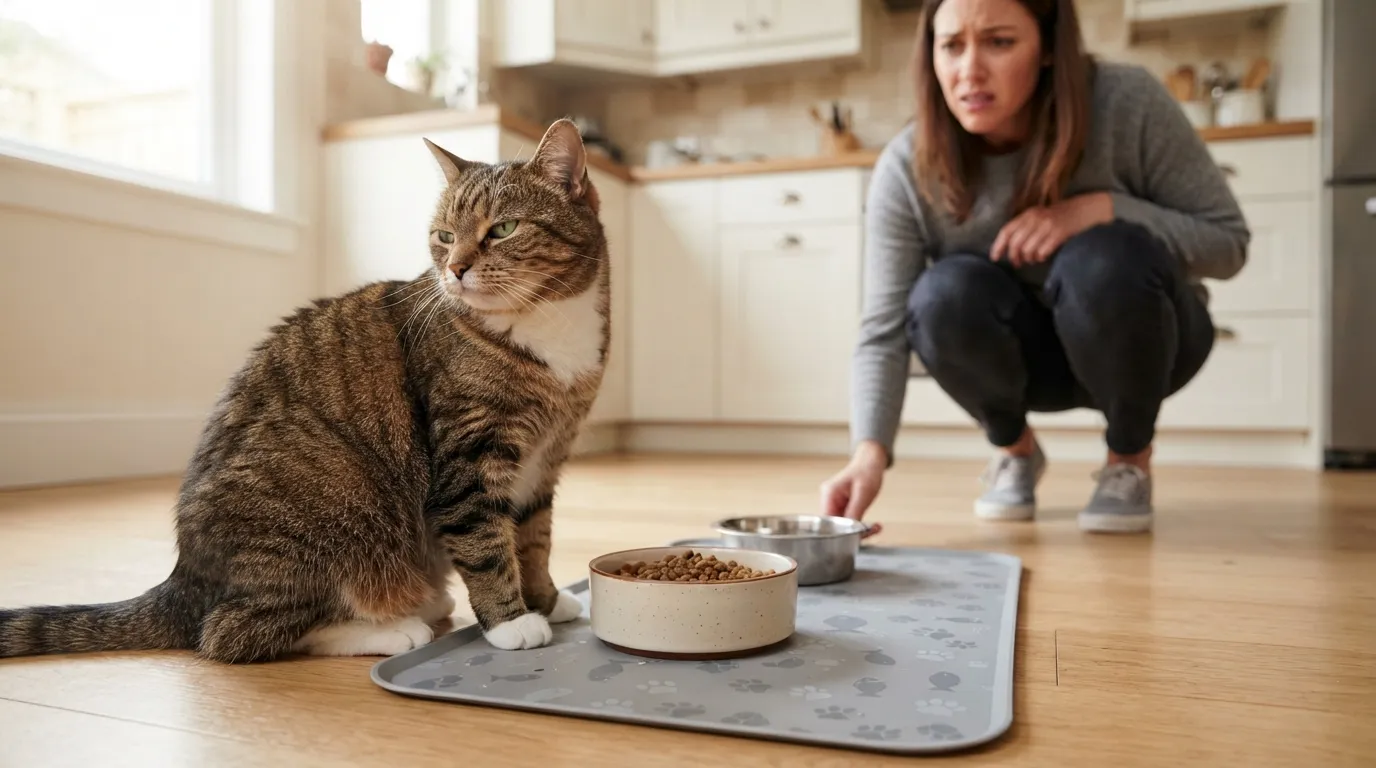
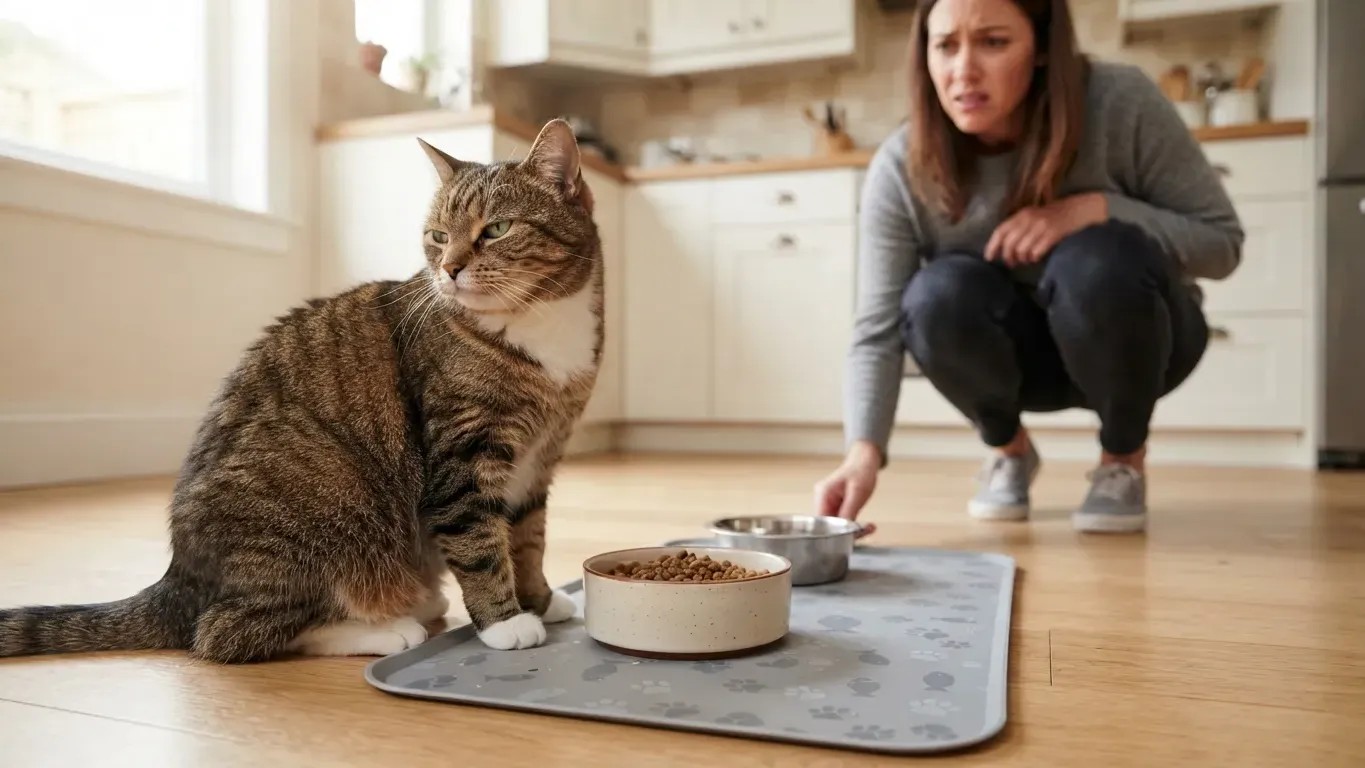
You switched brands, moved the bowl two inches, and added a new mat underneath. Your cat sat in front of it, looked at you, and walked away.
Indoor cat owners wage a quiet, endless war with feline food standards. Indoor cats tend to eat small meals throughout the day, which gives them plenty of time to develop opinions about freshness, placement, and presentation that rival a food critic’s.
Premium and grain-free cat food now makes up 35% of all cat food sales, up from just 12% in 2010. Nobody drove that trend by choice – owners were trained into it, one rejected bowl at a time.
#7 brings in an actual expert to explain why you talk in that voice.
#7 – Narrating the Cat’s Thoughts in a Different Voice
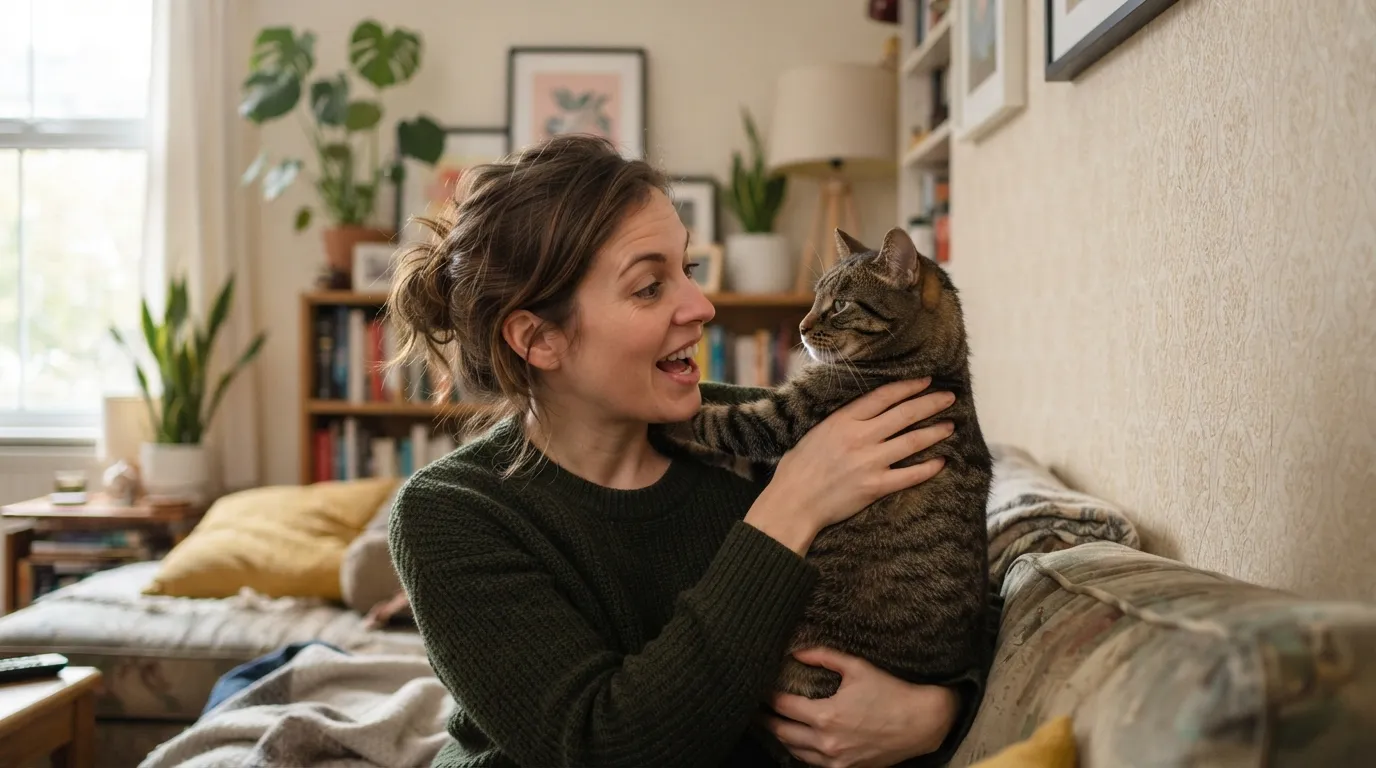
You picked up the cat, gave it a voice, and had a full two-sided conversation while it stared blankly at the wall. It usually involves a deeper tone, strong opinions about food, and a dramatic flair the cat has done absolutely nothing to earn.
And yet somehow, the voice is always exactly right. One feline behavior expert has pointed out that the idea of cats being aloof is a myth – like any relationship, what you put into it is what you get back.
Worth Knowing
- Adult cats rarely meow at each other – the sound is mostly reserved for humans.
- Kittens meow to get their mother’s attention; adult cats simply kept the habit for us.
- Many cats develop their own personal “vocabulary” of meows their owner learns to decode.
- Purring usually signals contentment, but cats also purr when anxious or in pain.
In other words, you’re not projecting. You’re bonding. It just happens to look completely unhinged from the outside.
#6 is the moment the cat officially wins the house.
#6 – Refusing to Use the Bathroom With the Door Fully Closed
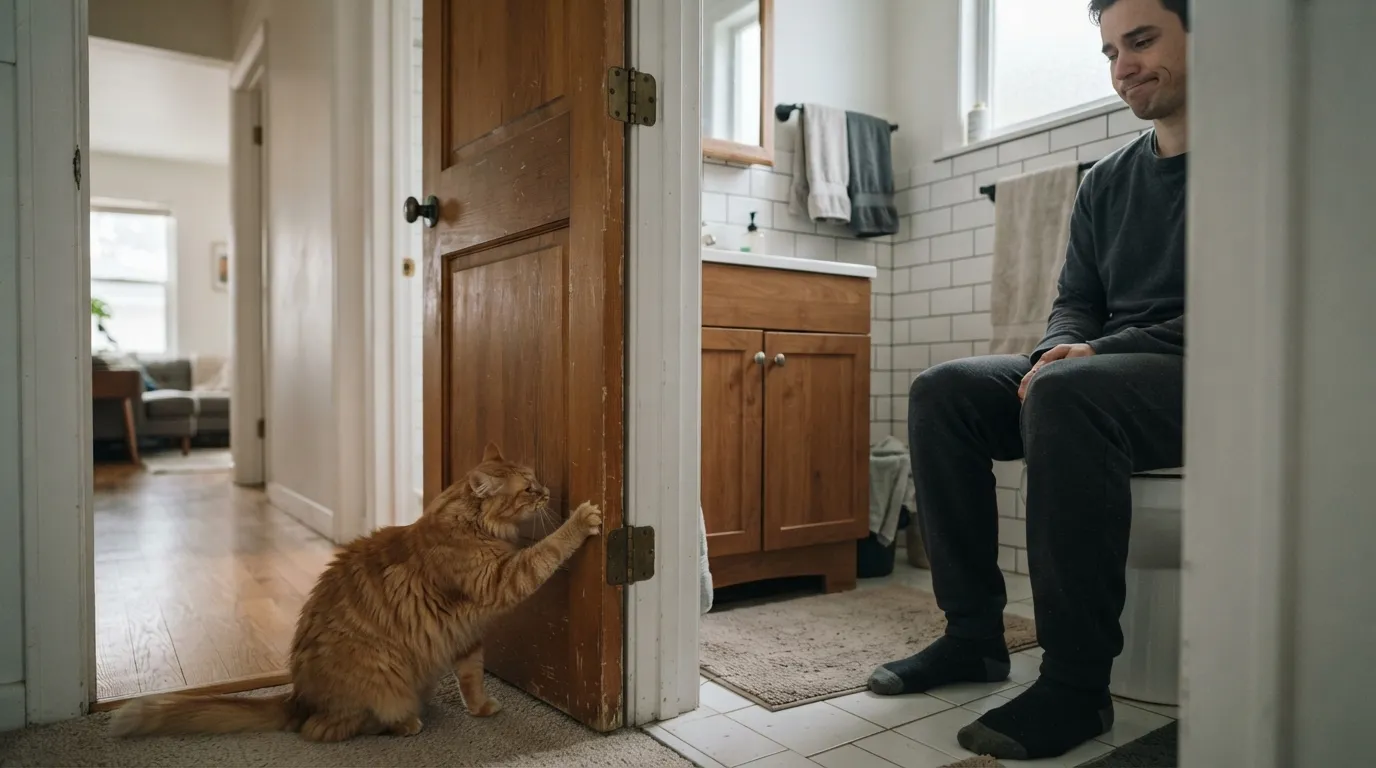
The cat will scratch. The cat will meow. The cat will slide one paw dramatically under the door. Eventually, you gave up and just left it open.
Indoor cat owners overwhelmingly surrender bathroom privacy within the first year of ownership. It’s not that the cat needs to be in there – it’s that five seconds of door-scratching simply isn’t worth the fight.
Some cats get more vocal in homes with irregular routines, because closing a door disrupts their mental map of the house. You’ve become unpredictable, so honestly, the meowing is a little bit your fault.
#5 is the reason your sleep schedule is a joke.
#5 – Waking Up at 3 AM Because the Cat Has the Zoomies
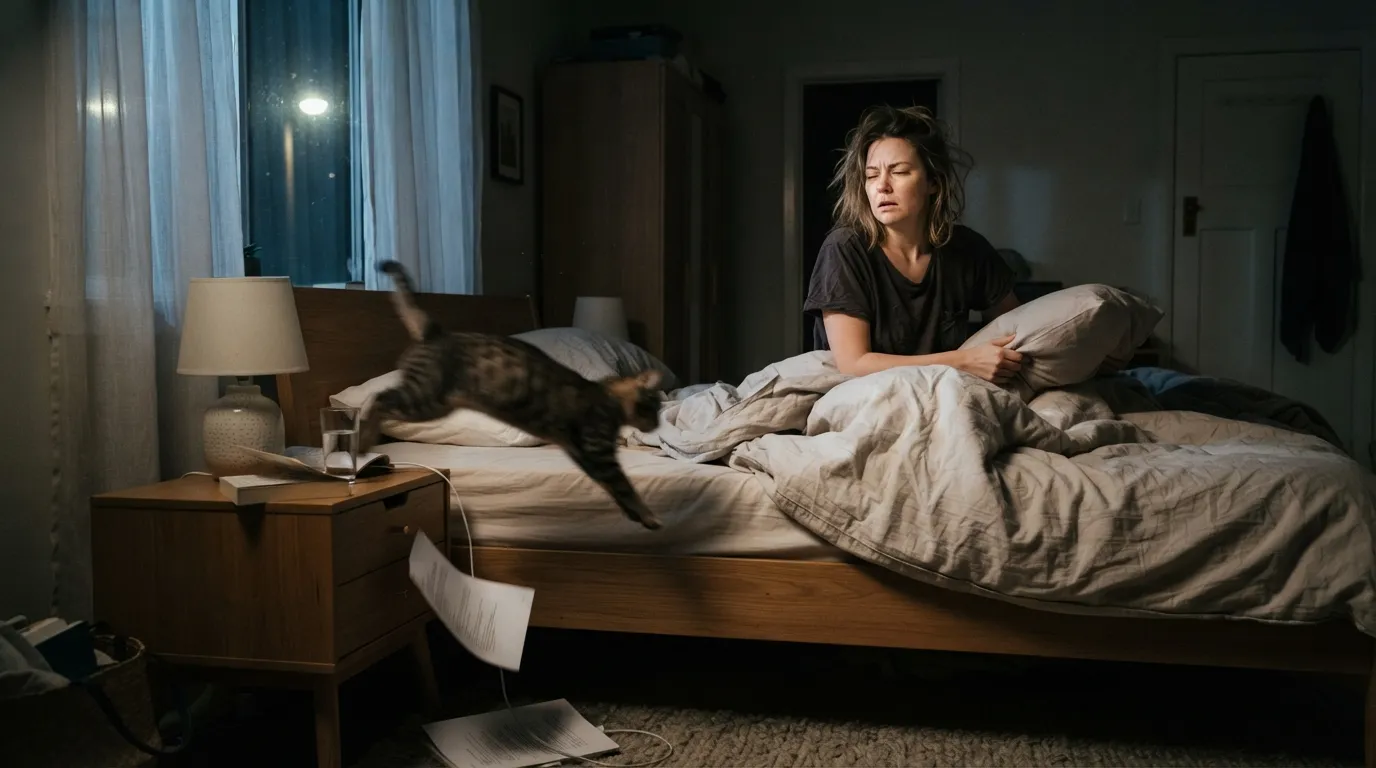
Without warning, full speed, from one end of the apartment to the other. Then silence. Then it happens again.
If you’ve never been jolted awake by this at 3 AM, you’re in the minority. These bursts help cats release stress built up from indoor living, and they’re often linked to too little vertical space or not enough hunting-style play during the day.
Cats commonly roam, knock things over, and try to get a reaction from their sleeping humans at night on purpose. Translation: it’s not random chaos, it’s a message – you’re just too tired at 3 AM to process it.
#4 explains why your last furniture purchase made zero sense to anyone but you.
#4 – Rearranging Furniture With the Cat’s Opinion in Mind
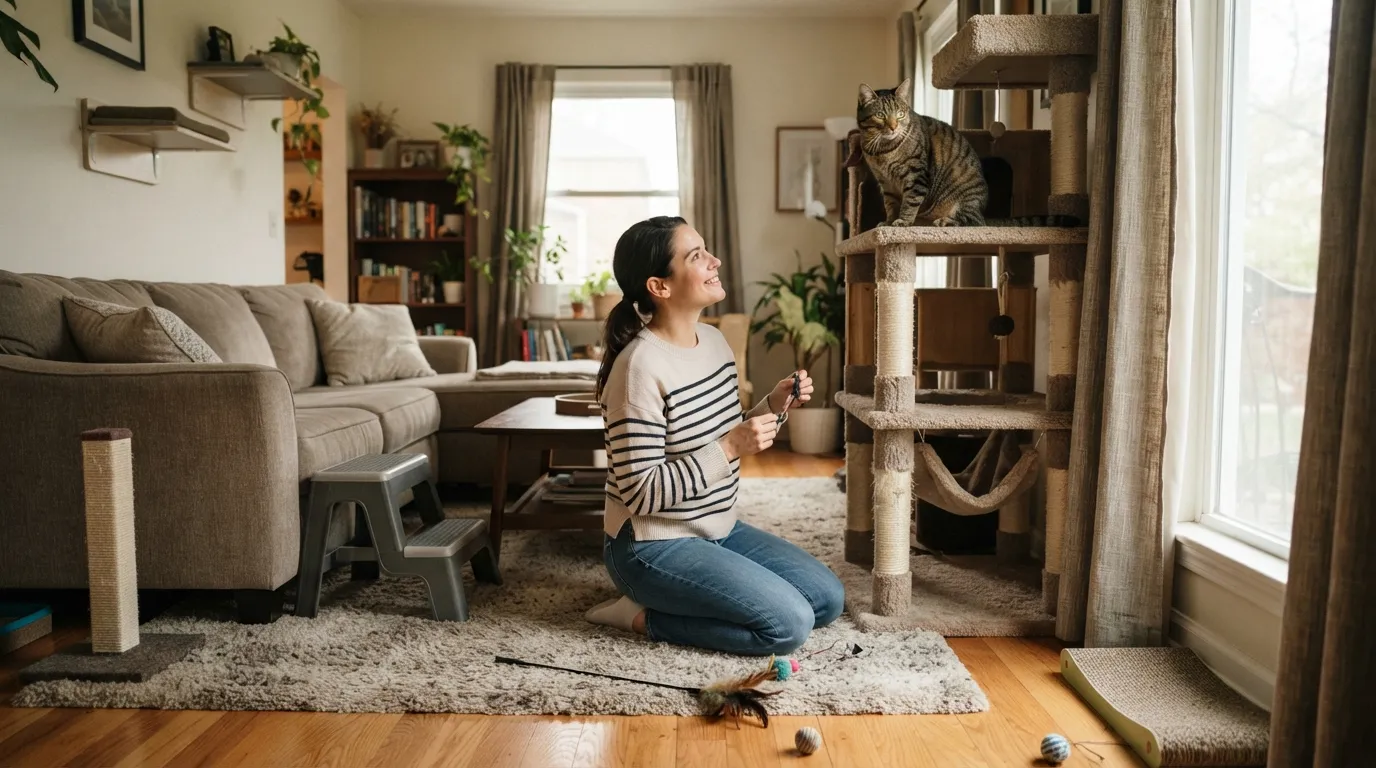
You considered a new couch and immediately thought, “But where will she sit?” You picked curtains based on how climbable they looked, and a rug partly because it hides fur.
Indoor cat owners don’t just share their homes with their cats – they quietly redesign them. Automatic litter boxes, interactive toys, and subscription treat boxes have built an entire accessories market that barely existed fifteen years ago.
Adding physical complexity to a cat’s environment genuinely improves their welfare, so technically, you’re not decorating – you’re enriching. The fact that the cat ignores all of it and sleeps on the bare floor is beside the point.
#3 is where your phone becomes a liability around strangers.
#3 – Showing Strangers 47 Photos of Your Cat in a Single Sitting

Someone asked if you had pets. Twenty minutes later, they’ve seen the cat in a box, the cat in a sunbeam, the cat looking confused, and seven blurry ones you kept “just in case.”
Indoor cat owners do not take a normal number of photos. The camera roll is basically a shrine – among younger pet owners, two out of every five say they genuinely think of their pets as their kids, and nearly half say pampering them makes them happy.
When your cat is also your housemate, coworker, and unofficial therapist, documenting every moment feels completely proportional. And technically, the stranger did ask.
At a Glance
- Cat cafés have spread to more than 100 U.S. cities over the past decade.
- Multi-cat households have been climbing steadily as more owners bring home a second or third cat.
- Younger pet owners are especially likely to treat cats as full family members, not just pets.
#2 is the guilt trip you didn’t know you signed up for.
#2 – Feeling Genuine Guilt Every Time You Leave the House

You’re already in the car. You turn back to check if you left enough food. You did – you left extra – and you’re still thinking about it at dinner.
Indoor cat owners carry a low-grade background guilt on every outing that non-cat-owners simply cannot relate to. It’s not irrational, either – most cats really do feel distressed once they’re left alone past the 24-hour mark.
Vets generally don’t recommend leaving a cat alone for more than 8 hours at a stretch, so the guilt is appropriately calibrated. You’ve just taken it to the level of cutting vacations short because you “miss the cat’s routine.”
And #1 is the confession every indoor cat owner makes but almost never says out loud.
#1 – Structuring Your Entire Day Around Not Disturbing the Cat’s Comfort
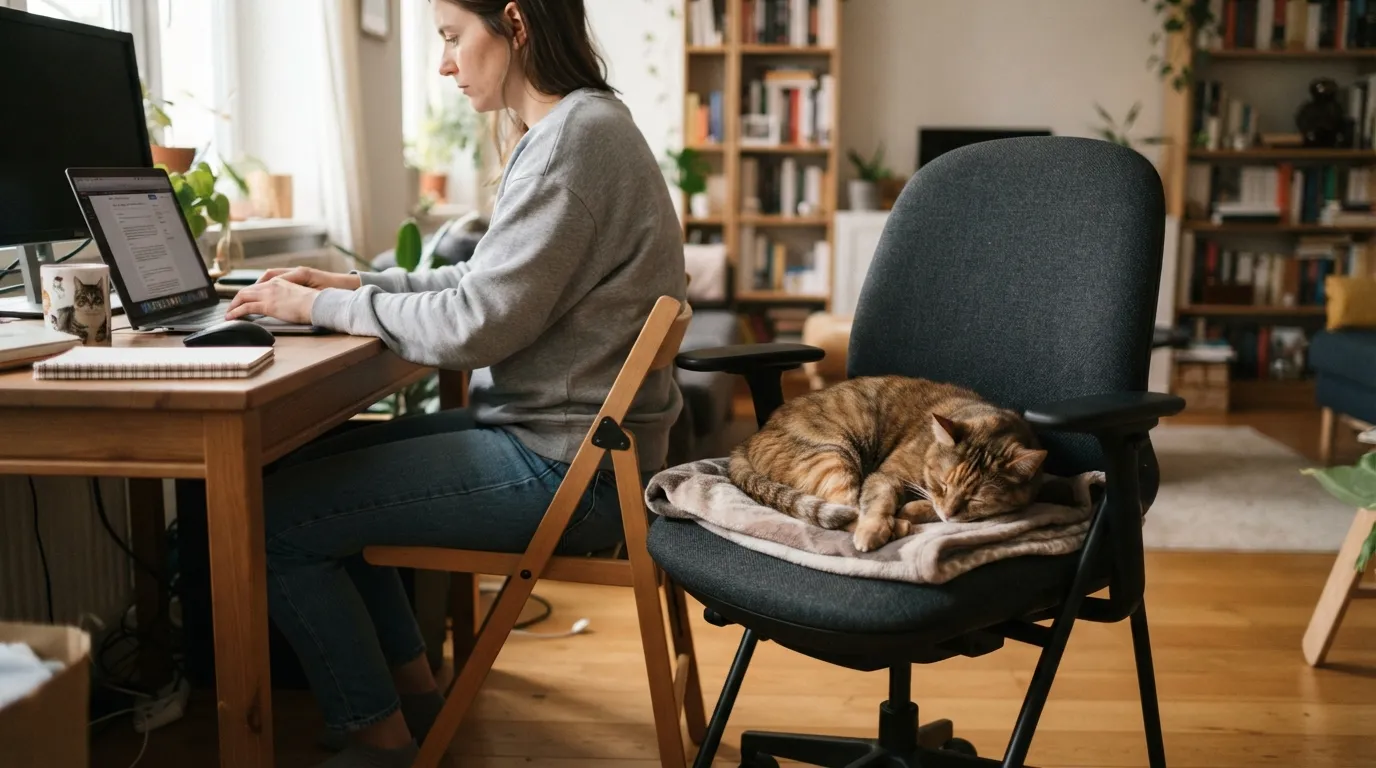
The cat is sleeping on your side of the bed, so you sleep on the edge. The cat claimed your work chair, so you sit somewhere worse for your back. The entire home quietly operates on the cat’s terms, and you’re fine with that.
Owners who go all-in on their cat’s comfort and enrichment report some of the strongest human-animal bonds ever observed – and multiple studies link cat ownership to lower blood pressure and reduced cardiovascular risk.
Like any relationship, what you put into it is what you get out of it.
Feline behavior expert, via Bored Panda
Turns out the cat isn’t just running your schedule – it’s quietly keeping you healthier. You gave up the chair. You got years added to your life. Seems fair.
The Verdict: You’re Owned, and You Know It
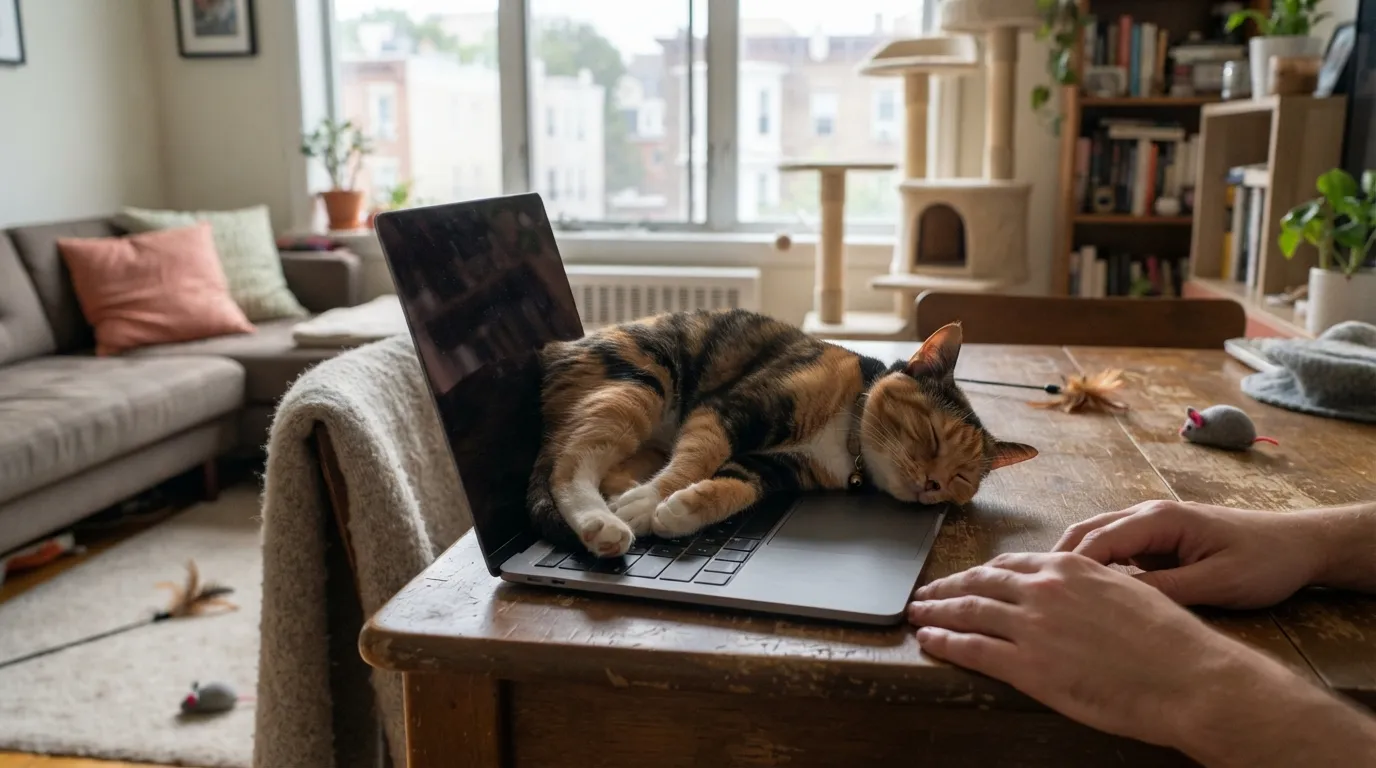
Indoor-only cats now make up about 63% of all pet cats in the U.S., and the owners behind them are all living some version of this exact same strange, wonderful life. From apologizing for closing a door to redesigning a home around a ten-pound creature with opinions, indoor cat ownership is its own lifestyle – and it turns out the science backs almost all of it.
Indoor cats live 12 to 18 years on average, compared to 5 to 8 years for cats that go outdoors, so every ignored toy, every 3 AM sprint, every guilt trip is arguably worth it.
Quick Compare
- 2004: Roughly a third of pet cats still had regular outdoor access.
- Today: About 63% of U.S. pet cats never go outside at all.
- 2010: Premium cat food was a niche 12% of sales.
- Now: Premium and grain-free options make up 35% of the market.
The real confession isn’t that you do these things. It’s that you wouldn’t trade a single one of them.