What began as a routine post-surgery recovery turned into a nail-biting rescue mission when a feral cat slipped into the inner cavities of a basement wall in Winnebago, Illinois. For nearly a week and a half the feline lived inside the narrow gaps without food or water, evading every effort to coax her out. Yet through persistence, ingenuity and community teamwork, rescuers finally brought her to safety — and the cat’s determined spirit became the heart of an unforgettable rescue story.
A Simple Recovery Turned Into a Monster Hide-and-Seek
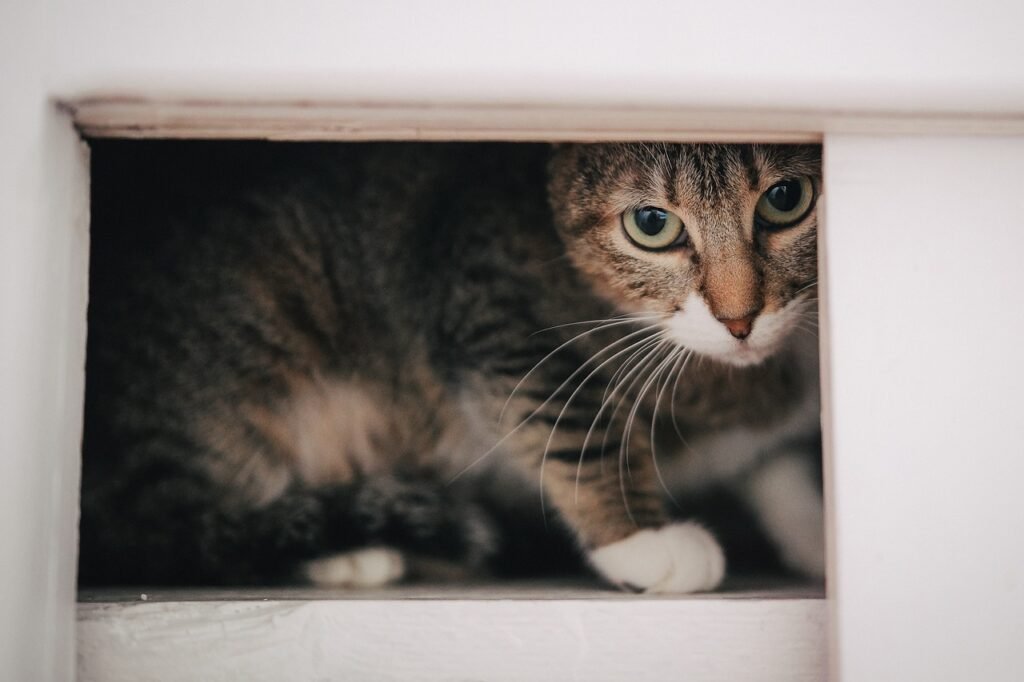
After being humanely trapped for a spay surgery, the feral cat — later named Luna — was brought to a volunteer’s home to recuperate. That should have been the end of the ordeal. Instead, shortly after arriving in the basement bathroom, Luna seized a moment of opportunity.
She slipped through an opening in the drywall and vanished into the maze of crawl spaces nestled within the home’s foundation. At first, her caregiver assumed Luna would return to the visible area once she felt secure, but as hours turned into days, it became clear she had vanished deeper into the walls.
Community members soon learned that feral cats often seek tight, secluded spaces after stressful situations. Unlike typical house cats comfortable with human presence, Luna’s instincts pushed her toward escape routes even her rescuers could barely follow.
Early Efforts to Lure Luna Out
Immediately after discovering Luna’s disappearance into the wall, volunteers launched their first plan: entice her out with food and water. Multiple traps were set around the interior of the wall space, and bowls were placed where rescuers hoped she might smell familiar scents.
But Luna wasn’t interested. Despite her hunger and discomfort, she remained tucked in deeper recesses, afraid to come into the open even for sustenance. What’s more, regular efforts to call or coax her only made the cat retreat further into the darkness.
These initial missteps underscored a key challenge in animal rescue: unlike domesticated cats, feral cats often view humans as threats and cling more fiercely to hidden enclaves, especially in unfamiliar indoor settings.
Technology and Teamwork Change the Game
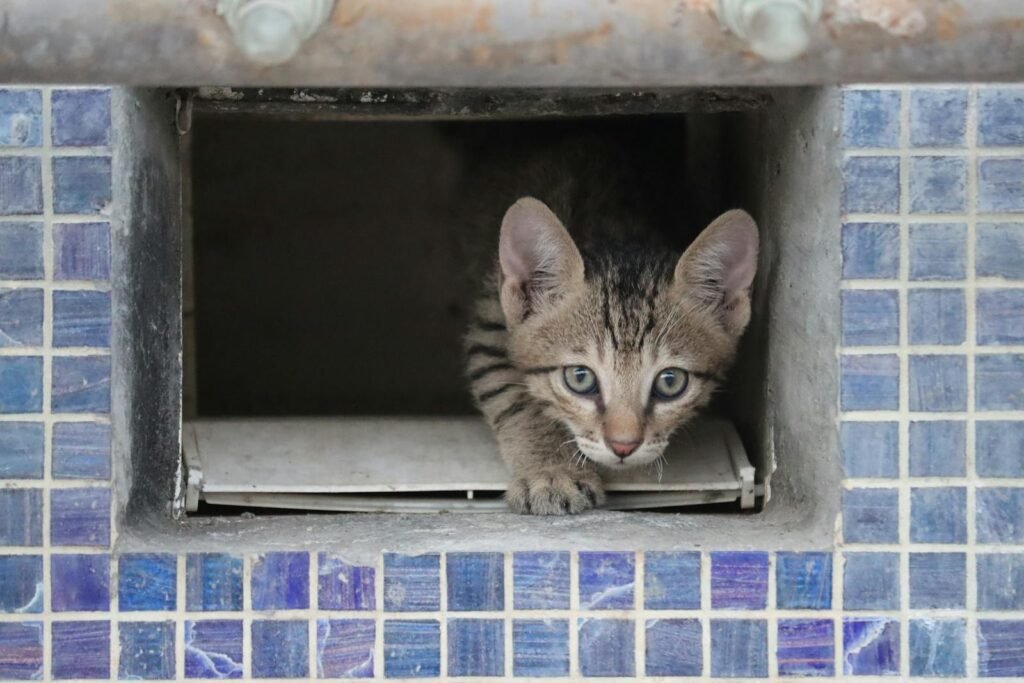
When simple traps and food failed, Luna’s rescue operation expanded. Friends, family members and volunteers gathered to bring tools, patience, and strategy to the effort.
Professionals and helpers used listening devices and small cameras inserted through drilled access points to try to pinpoint her position. After several days of effort, they finally saw eyes — blinking deep inside the wall — confirming that Luna remained alive and that they were closing in on her.
Rather than giving up, the group shifted from passive waiting to active locating, carefully cutting small inspection openings and listening intently. With each day, the communications among those involved became more methodical and hopeful, fueled by glimpses of the scared but steadfast cat.
The Long Wait: Eleven Days in Darkness
Eleven days passed before Luna’s rescuers finally reached a point where she could be physically retrieved from the wall. Throughout that time she survived without food or water — a testament to the innate resilience and survival instincts cats possess.
The situation was heartbreaking but hopeful: Luna’s spirit seemed intact, even as uncertainty about her health grew. As rescuers finally breached a cavity reachable enough to pull her out, emotions ran high among those who had invested hours of labor, worry and care into the mission.
A Feisty Rescue and Aftermath
When Luna was finally cornered within the wall, she didn’t go quietly. In a dramatic moment underscoring her feral nature, she bit one of her rescuers during extraction — a harsh reminder of her lifelong instinct to fend for herself. The volunteer required medical treatment, including antibiotics and monitoring for complications.
Meanwhile, Luna was examined by veterinarians and, despite her ordeal, was found to be surprisingly healthy. The months of stress and isolation had not left her broken. After receiving a clean bill of health, she was returned to her outdoor colony — the community where she was happiest and best suited to live.
What This Rescue Teaches Us
Luna’s story is more than just an odd event. It highlights the unseen complexities of caring for feral animals and the patience required when dealing with creatures that are not accustomed to humans. Volunteers emphasized that Luna’s behavior was typical, not bizarre: many feral cats seek shelter in enclosed spaces when they feel threatened or overwhelmed.
The entire episode also underscores the power of collective effort. From family and friends to local helpers and professionals, this rescue succeeded because people worked together, pooling skills and empathy to solve a problem that might otherwise have ended tragically.
A Story of Grit and Compassion
The rescue of Luna the feral cat is a remarkable tale of survival and human kindness. Trapped without food or water for more than a week, she defied expectations and lived to return to her colony. Her rescue showcased both the challenges and rewards of animal welfare work, reminding us that persistence, compassion and cooperation can make all the difference in even the most daunting situations.
Kristina is a young writer from India. An arts graduate and an avid content creator, Kristina is passionate about animals and wildlife. She enjoys exploring topics related to pet care, animal behavior, conservation, and nature, combining thorough research with engaging storytelling.