You’ve probably seen it a hundred times. You open a delivery, set the box on the floor for just a moment, and before you’ve even reached for the scissors, your cat has claimed it. It doesn’t matter that you spent forty dollars on a plush cat bed last month. The cardboard wins every time.
This isn’t some quirky personality trait unique to your particular cat. It’s a behavior that shows up in virtually every feline, from pampered house cats to wild-born cats in shelters, and it’s backed by real science. The cardboard box taps into something far older than domestication itself, a set of survival instincts still quietly running in your cat’s brain right now.
The Wild Ancestry That Never Went Away
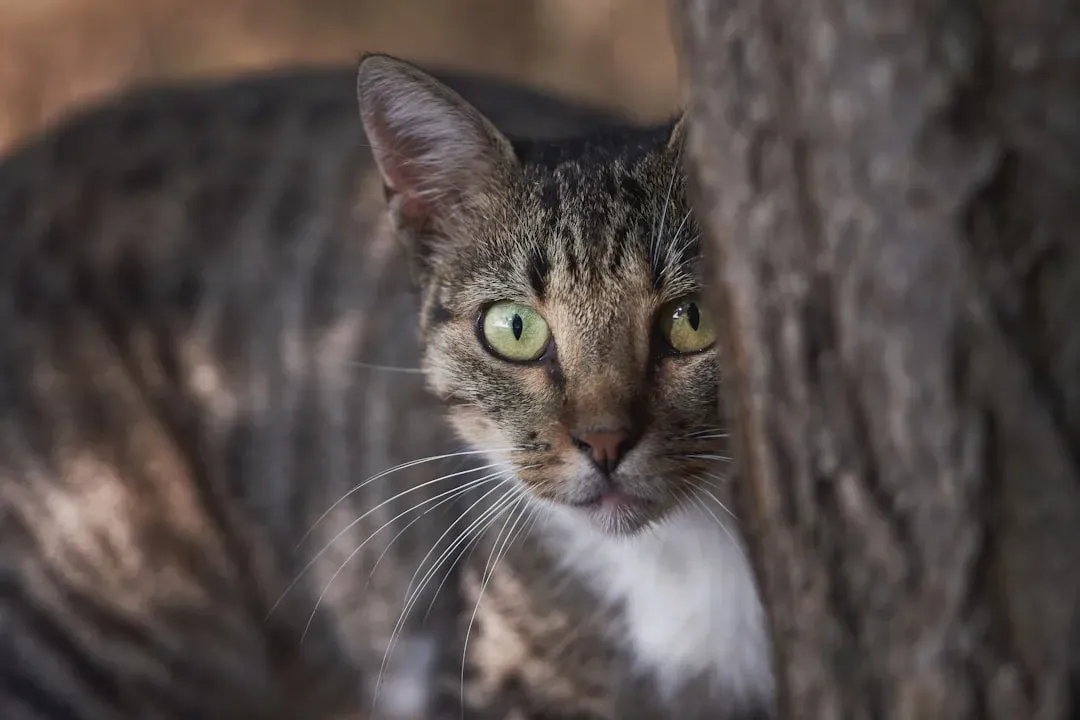
Cats are descendants of solitary hunters, and their wild relatives often seek out small, hidden spaces for shelter and safety. In the wild, these small hideaways protect them from predators and serve as a strategic vantage point for stalking prey. That connection to their wild past doesn’t disappear just because your cat has a heated home and a full food bowl.
This survival instinct is deeply ingrained in the feline psyche. Boxes, with their enclosed spaces and limited access points, offer a modern-day equivalent to the hiding spots and concealed shelters that wild cats would have utilized. Every time your cat crawls into that Amazon box, they’re essentially recreating a behavior that once kept their ancestors alive.
The Ambush Predator Still Lives Inside Your Cat
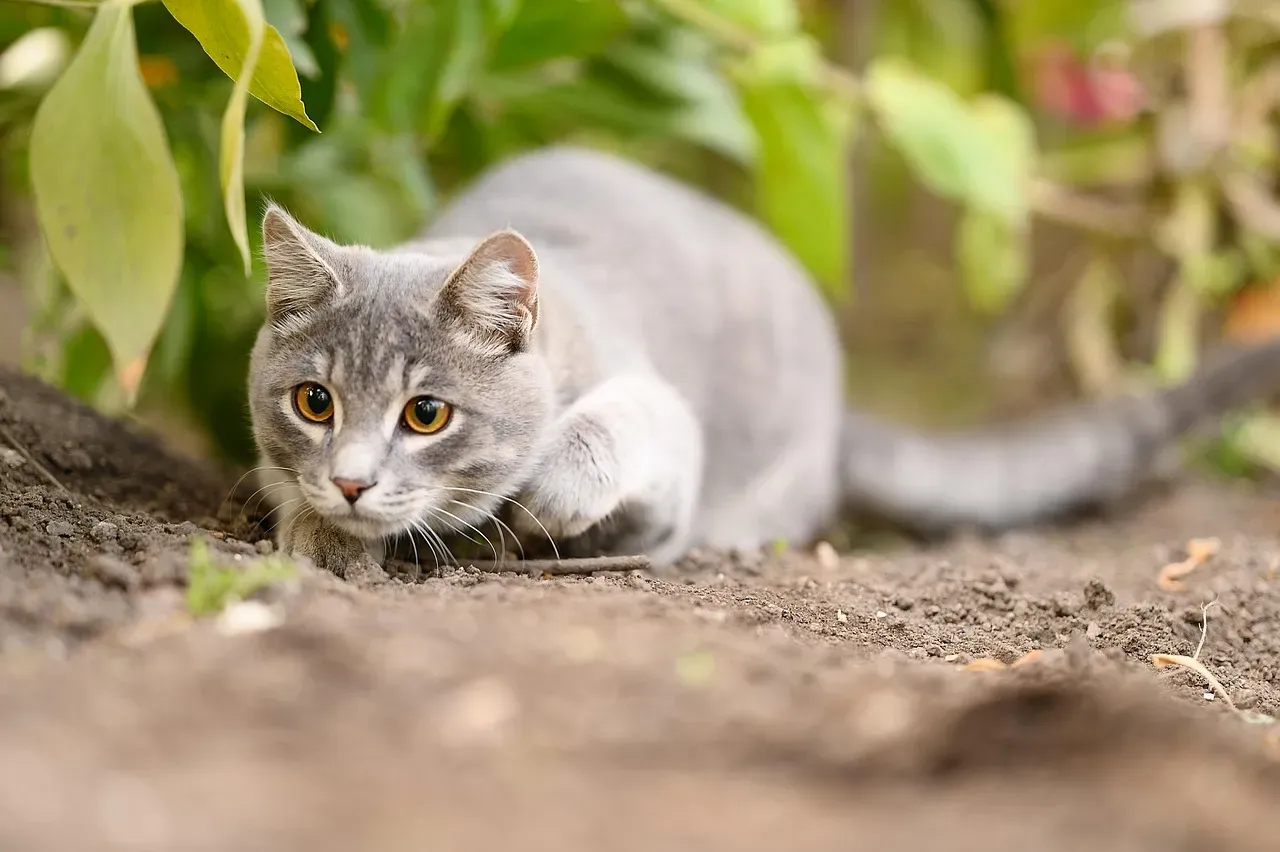
Even though your cat may be a pampered pet, their hunting instincts are still alive and well. Cats are ambush predators, which means they hide until their prey passes by. Boxes provide a confined place where they can pretend they are in the wild, hiding while they prepare to pounce on their prey.
Cats are natural hunters, and boxes serve as perfect ambush spots. The confined space allows cats to hide and then pounce on their target, whether it’s a toy or an unsuspecting family member walking by. This type of play mimics hunting behaviors in the wild, providing both physical exercise and mental engagement. So when your ankles get swatted from behind a flap, that’s not mischief. That’s instinct doing exactly what it was built to do.
A Safe Zone Born From the Very First Moments of Life
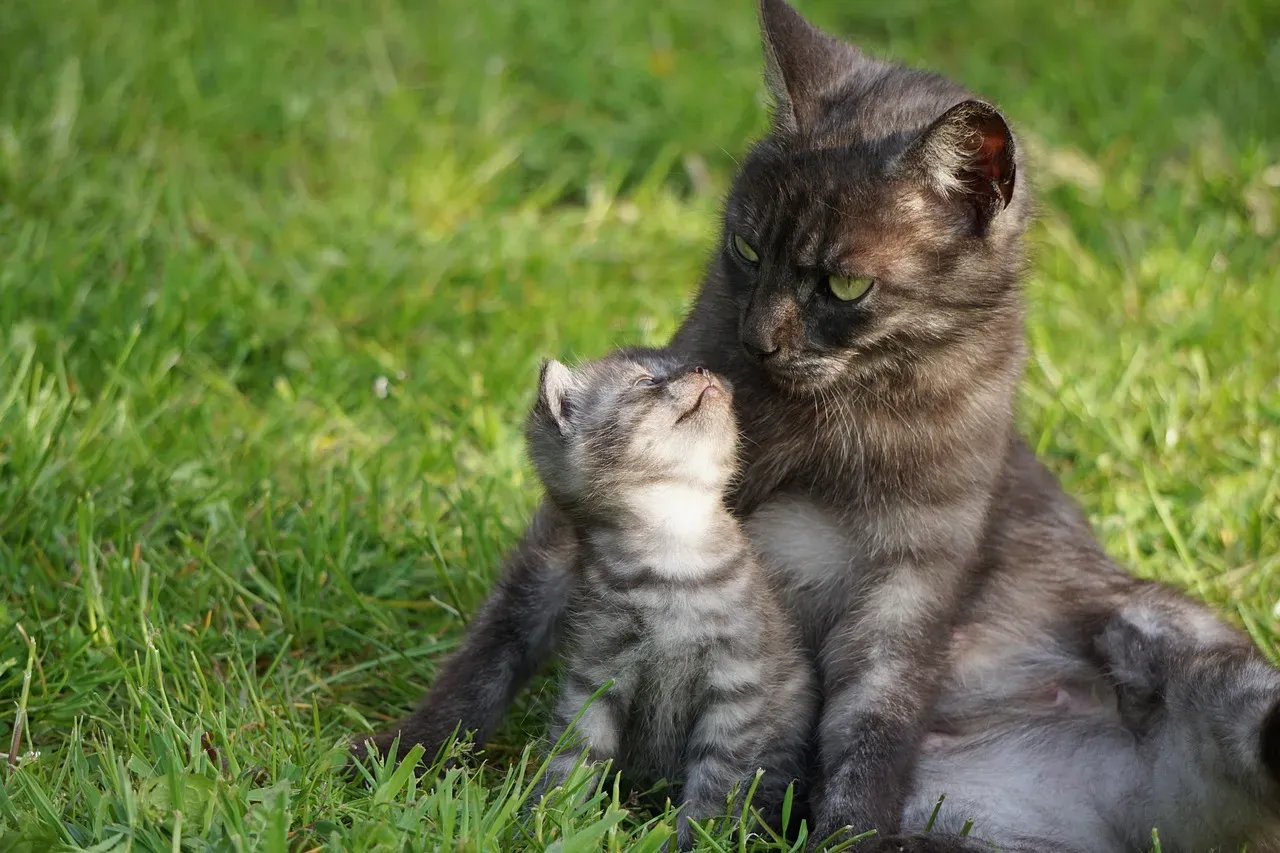
This instinct begins from the cat’s earliest moments. A mother cat will seek out a quiet area to birth her kittens. Their first experience will be a safe, enclosed space, says Danielle Gunn-Moore, a professor of feline medicine at the University of Edinburgh.
This need for a secure spot begins early in a cat’s life. When a mother cat gives birth, she seeks out a quiet, enclosed space to nurse her kittens. That early neurological imprint, the association between enclosed spaces and safety, doesn’t fade. It follows your cat straight into adulthood and straight into whatever box you leave on the kitchen floor.
The Science of Stress and What Boxes Actually Do to the Brain
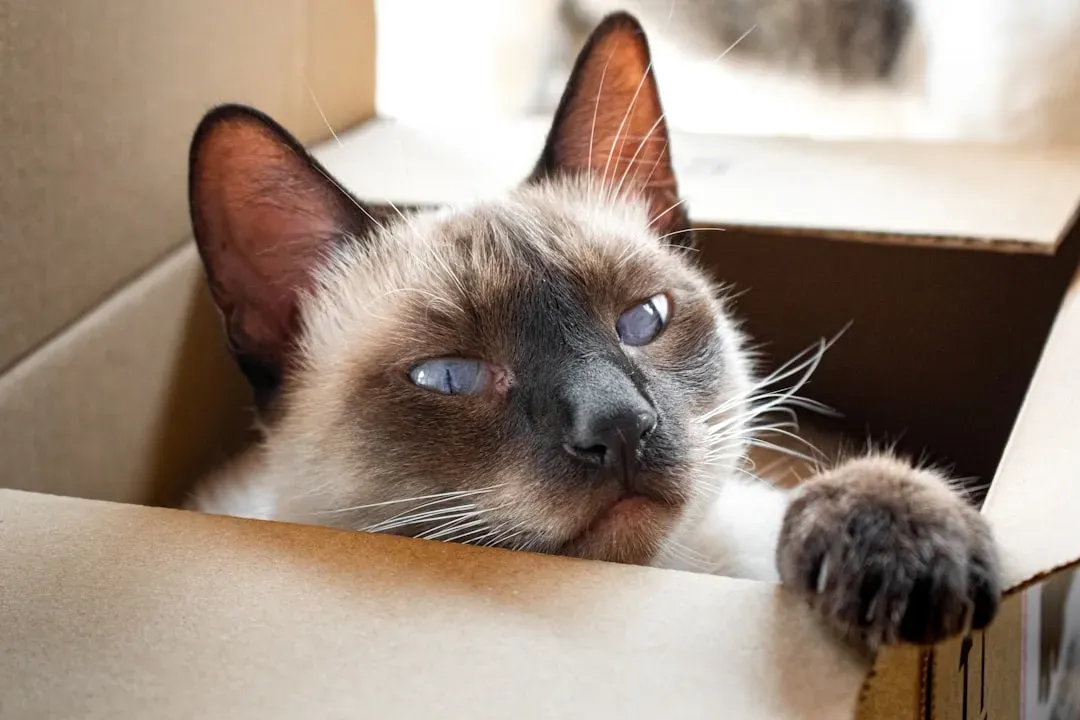
Studies have found that cats provided with hiding spaces like boxes exhibit lower stress levels, faster adaptation to new environments, and an increased sense of security. Research published in Applied Animal Behaviour Science found that shelter cats with access to boxes adjusted to their new surroundings faster and showed fewer signs of anxiety compared to those without boxes. This means that beyond just being a fun hiding spot, boxes serve an essential purpose in feline well-being.
Cats with a hiding box showed a significantly faster decrease of behavioural stress compared to the control group, which was most prominent during the first observation days. These results were in line with studies where the mean Cat-Stress-Score of cats without positive human interaction was higher. The research provides more detail about reaching a behavioural steady state, indicating that hiding boxes accelerate the recovery of stress by as much as seven days. That’s a meaningful difference, not a minor one.
Cardboard as a Thermostat: Why Warmth Is a Factor
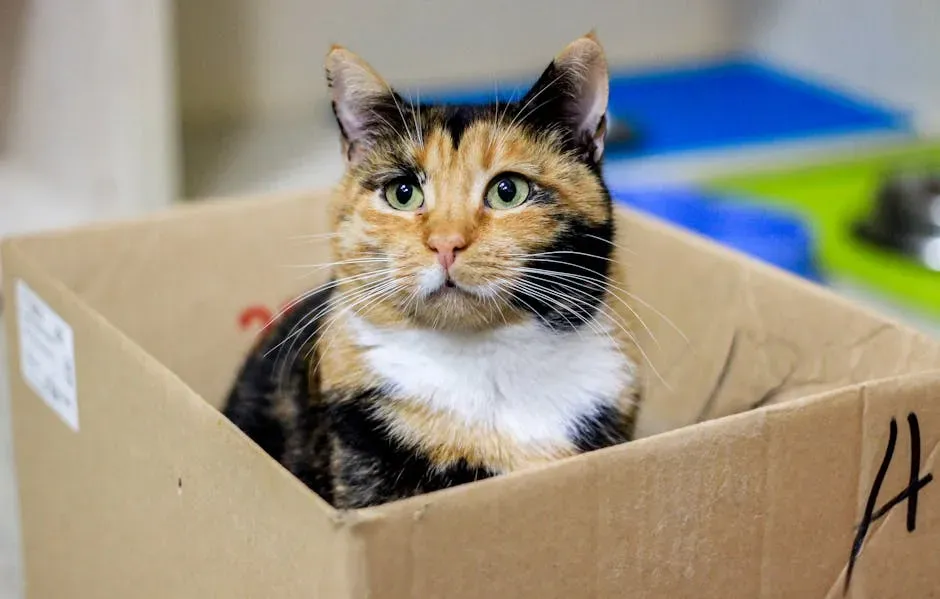
Cats love warmth. According to a 2006 study by the National Research Council, cats are most comfortable in temperatures between 86 and 97 degrees Fahrenheit. The same group also found that most cats live in environments maintained at roughly 72 degrees, which is significantly cooler than their preferred temperature zone.
Boxes help to keep things toasty for our feline friends. The cardboard acts like a cozy blanket, trapping the cat’s body heat and acting as an insulator. Cats are heat-seeking creatures, drawn to warm and cozy spots for relaxation and rest. A box, with its enclosed space and insulating properties, provides an ideal environment for a cat to conserve body heat. This preference for warmth is a deeply ingrained behavior rooted in the cat’s evolutionary history as a desert-dwelling species.
Territory, Scent, and the Art of Claiming What’s Yours
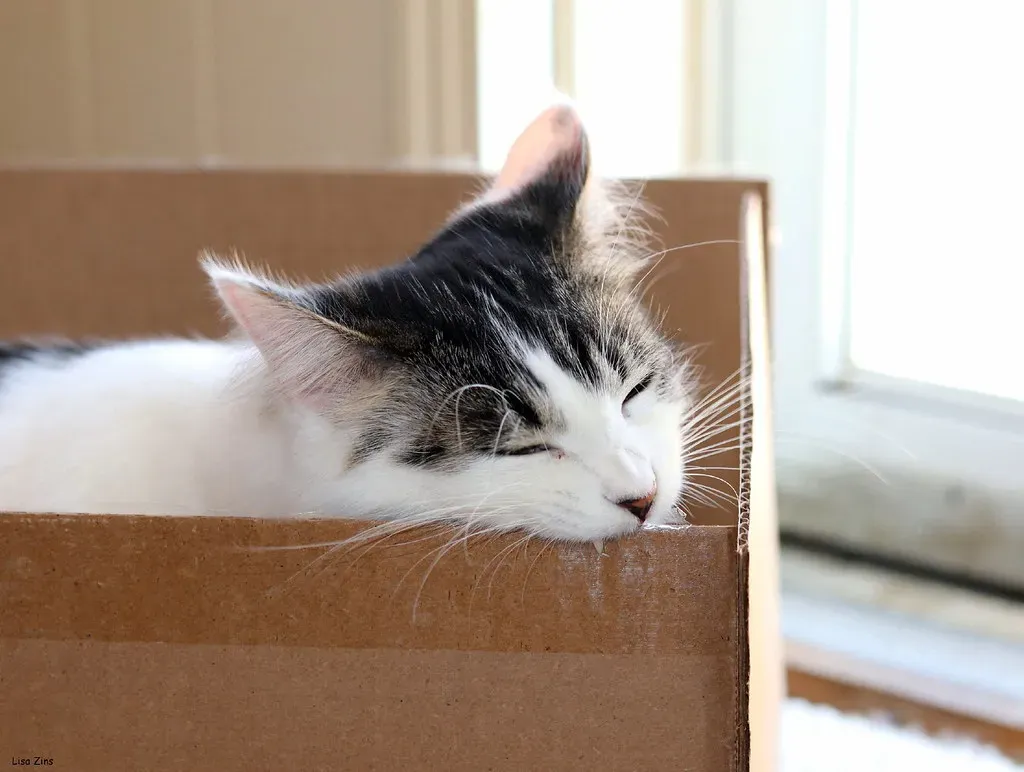
Cats have scent glands on their faces. When they rub their faces on the sides of a box, they leave behind their scent. This marks the box as their own special domain. It’s a deliberate act of ownership, even if it looks like your cat is simply rubbing their chin on cardboard for fun.
When a cat enters a box, it leaves its scent behind, effectively claiming the box as its own territory. This behavior is a way for cats to assert control over their environment and create a familiar, secure space within their territory. Another common occurrence is when a cat chews on the flaps or the side of the box, it is their way of scent-marking the box with their pheromones. Your cat isn’t destroying the box. They’re decorating it.
Curiosity and the Novelty Effect of a New Box
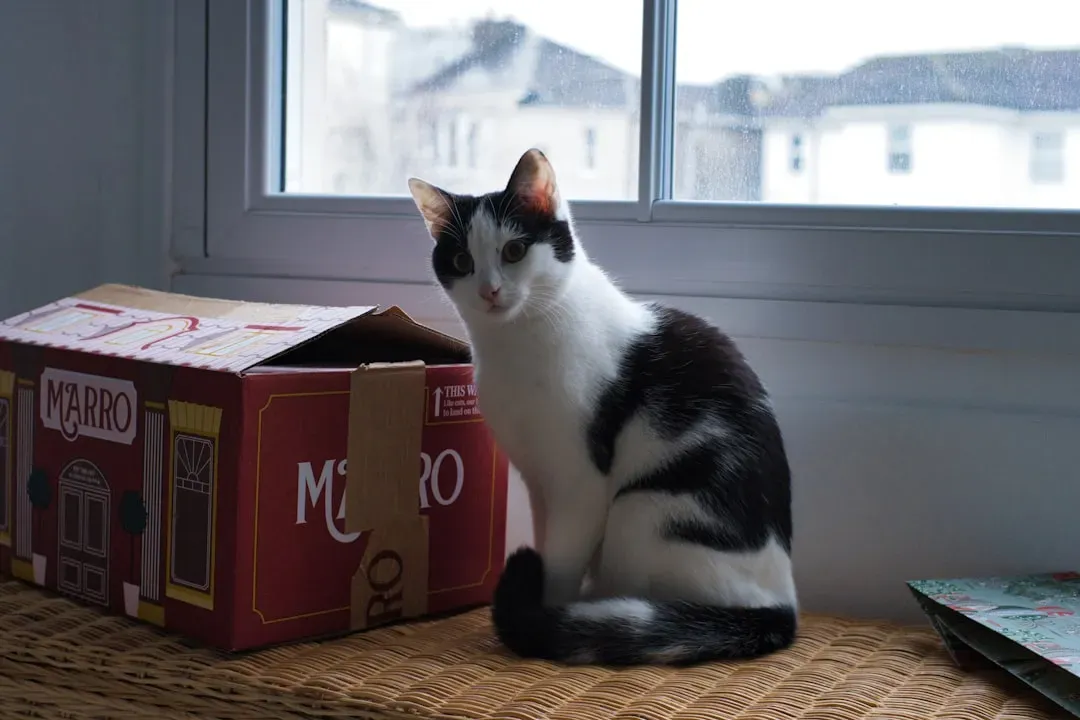
Cats that live indoors know every inch of their kingdom and immediately notice any changes. For a curious cat, the box is something fun and novel to investigate. This is part of why your cat leaps into a fresh delivery box before you’ve even unpacked it. The new smells, textures, and shapes all register as meaningful information that needs to be assessed.
Cats are naturally curious creatures, and boxes stimulate their desire to explore. Introducing new boxes into their environment can trigger their investigative instincts, encouraging them to sniff, paw, and climb inside to discover what the box contains. This exploration can keep them mentally engaged and satisfied. You might notice your cat approaching a new box with caution at first, then gradually becoming more adventurous as they investigate every corner, demonstrating their innate curiosity.
The Kanizsa Illusion: When Even a Fake Box Is Enough
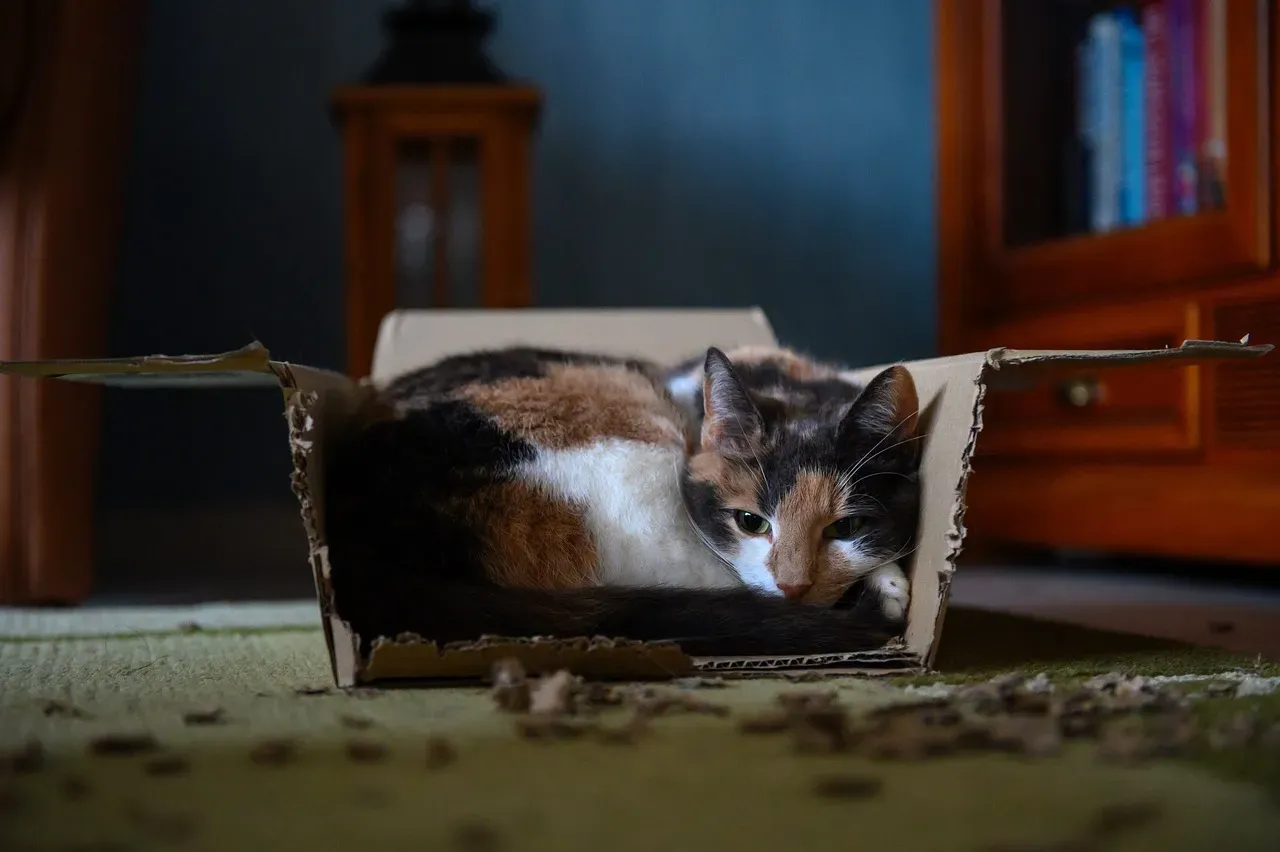
A research paper looked into the cat’s obsession with the enclosed, square shape of objects like cardboard boxes, laundry baskets, and simple outlines on the floor. The researchers confirmed the cats have “illusory contour susceptibility,” which means they perceive contours that do not exist in reality. In the experiments, cats sat on a square-shaped illusion, known as a Kanizsa square, just as often as a real square.
Out of the 16 times a choice was made, cats sat on the square eight times and the square-like illusion seven times. The major takeaway is that cats are susceptible to the Kanizsa illusion in a human-like way, and are most likely attracted to 2D shapes for their contours, or sides, rather than solely novelty on the floor. In other words, your cat doesn’t even need the physical walls. The idea of a box is compelling enough.
When Box Hiding Becomes a Signal Worth Paying Attention To
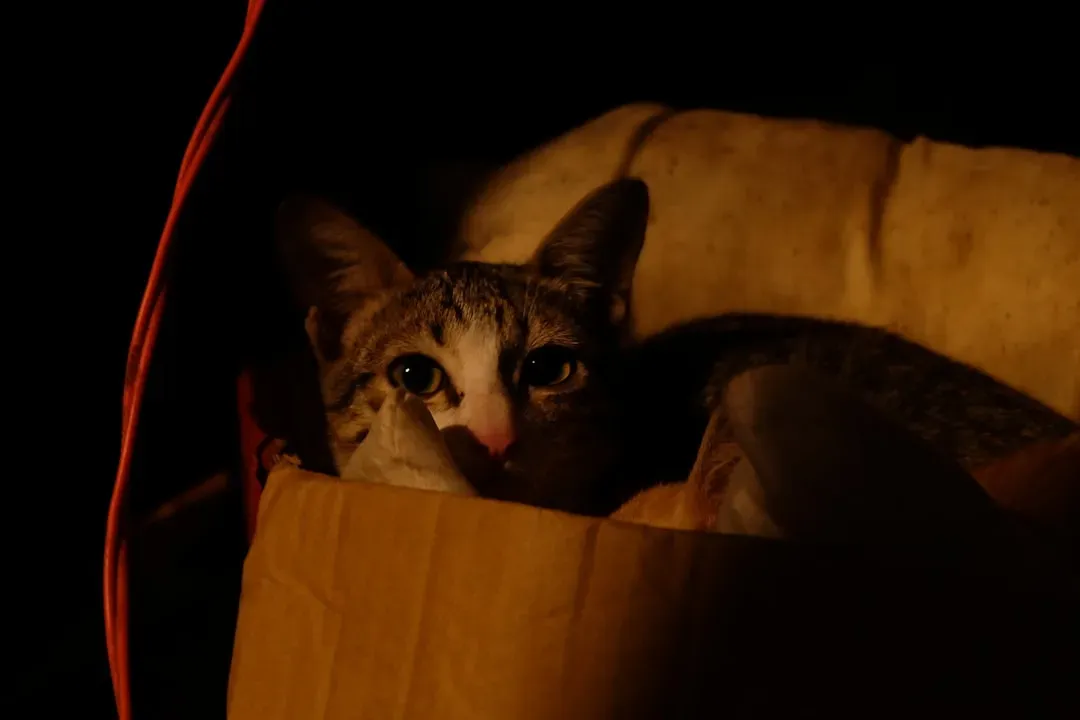
Whether your cat’s time spent in a box reveals something about their emotional state depends on the context. A cat who is hiding at the back of the box with wide, fearful eyes is using it for safety, unlike one who is happily snoozing inside or hopping in and out to play. Context matters more than the behavior itself.
Hiding behavior in a box or enclosed space might just be what a cat needs to feel safe. It can also be a sign that something is stressing them out in their home. Cats need a safe spot to hide when they can’t control their environment. If a cat is constantly hiding, it’s a cause for concern, and consulting a veterinarian is a reasonable next step. A box is a healthy retreat in most cases, but when it becomes the only place your cat feels safe, that’s a different conversation.
Conclusion
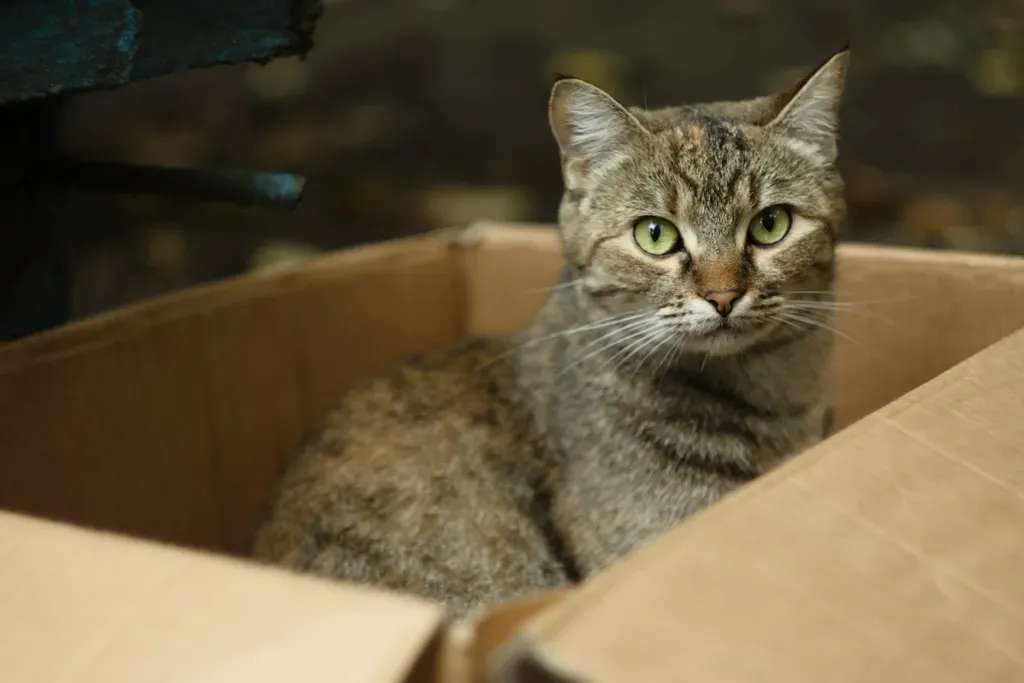
The cardboard box your cat loves so fiercely isn’t just packaging waste. It’s a survival tool, a thermostat, a hunting blind, a territory marker, and a stress buffer all rolled into one unremarkable rectangle. The behavior connects your living-room companion directly to the wild cats of centuries past, with the same neurological wiring still fully intact.
Understanding why your cat does this doesn’t make the behavior any less endearing. If anything, it makes it more impressive. The next time a delivery arrives and your cat is in that box before you’ve closed the front door, you can appreciate that you’re not watching a quirk. You’re watching millions of years of feline evolution do exactly what it was designed to do.
Kristina is a young writer from India. An arts graduate and an avid content creator, Kristina is passionate about animals and wildlife. She enjoys exploring topics related to pet care, animal behavior, conservation, and nature, combining thorough research with engaging storytelling.