Most cat owners assume a long, unblinking stare from their cat means one of two things: love or hostility. The truth is far weirder. Feline researchers have identified more than a dozen distinct messages hiding behind that glassy-eyed gaze, and most have nothing to do with affection at all.
Some of these stares are warnings. Some are outright demands. One is a diagnostic red flag your vet would genuinely want to know about, and one comes straight out of a peer-reviewed study that reshaped how scientists talk about cat-human bonding. By the time you reach #14, you won’t be able to look at your cat’s face the same way again.
#1 – “I’m Running a Full Background Check on You”
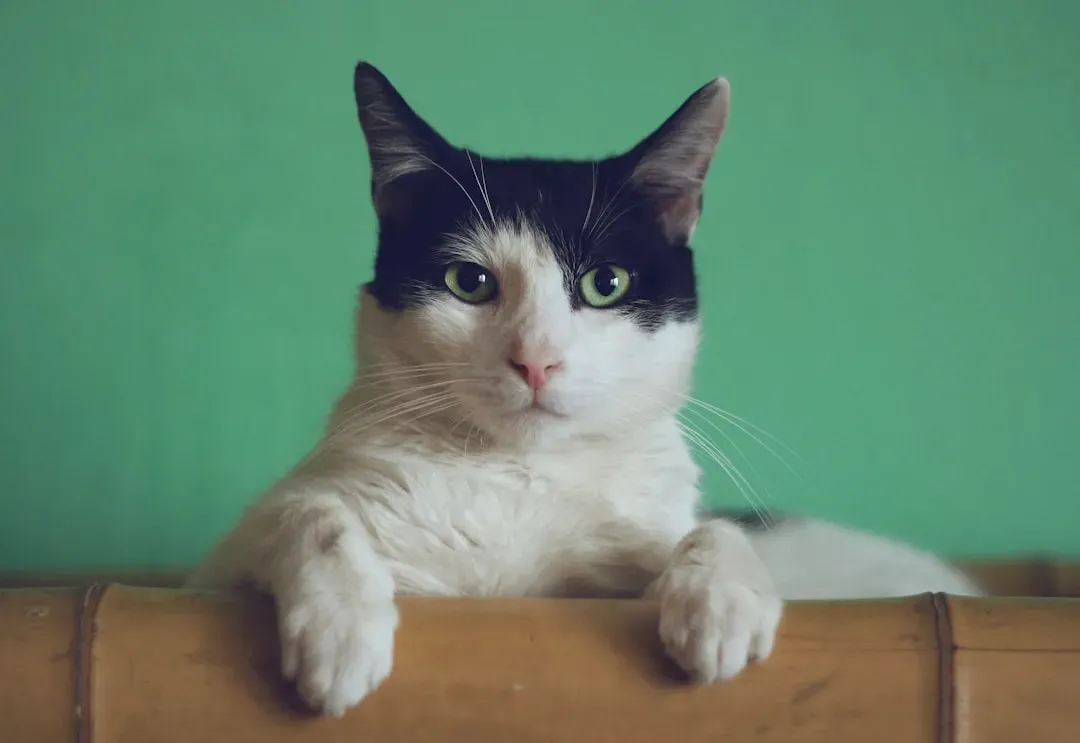
That blank, unblinking stare isn’t empty – it’s active surveillance. Cats are wired to track every movement in their environment, and you are the single biggest variable in their world. Even something as small as typing on a laptop or stirring a pot on the stove can lock in their attention.
This isn’t random curiosity. Cats are constantly calculating whether your behavior affects them directly – a change in routine, a new smell, a shift in your tone of voice. That includes clocking you walking toward the treat drawer or grabbing your keys to leave. It’s less “affection” and more “surveillance footage,” running quietly whether you notice it or not.
#2 – “I Need Something From You, Right Now”
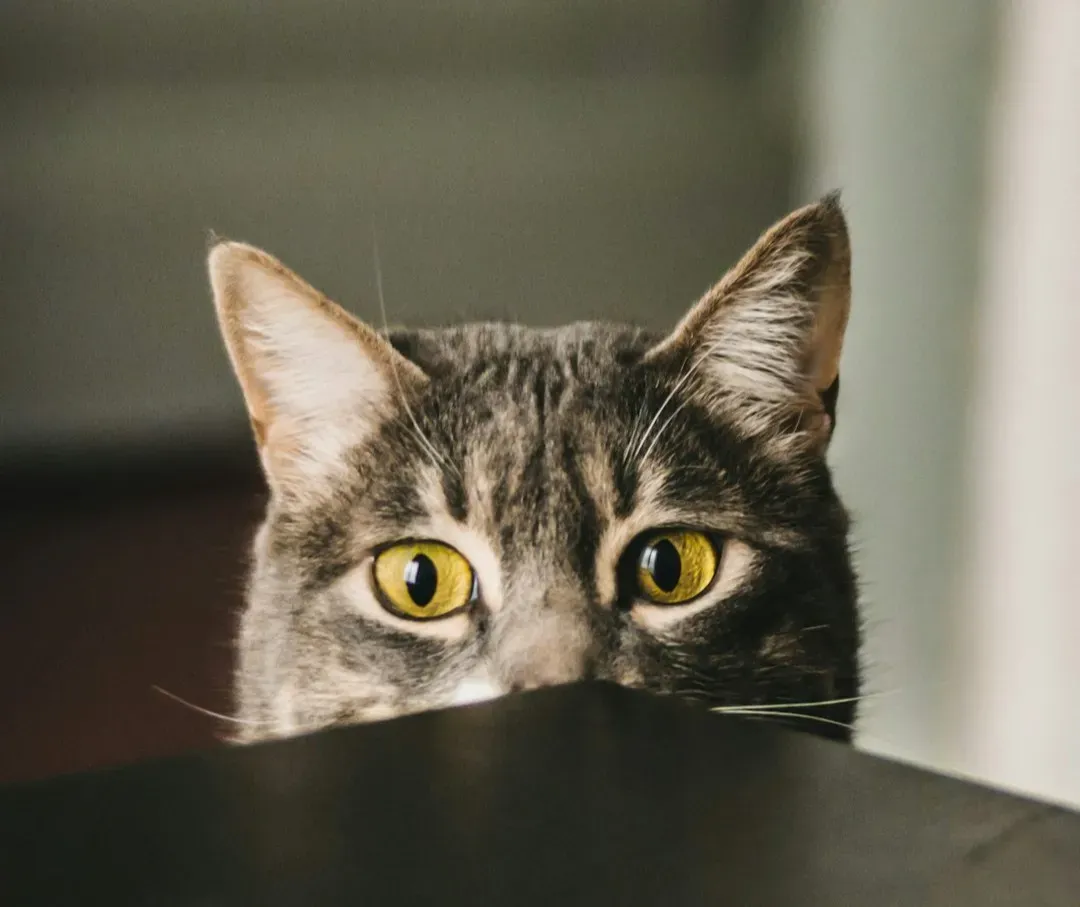
Not every stare is philosophical. Sometimes it’s a demand. A direct, unblinking stare may simply be your cat’s way of asking for food, playtime, or attention – this is arguably the most common eye-contact scenario cat owners report, and the least mysterious once you know the pattern.
The stare intensifies specifically when a need is unmet: an empty bowl, a dirty litter box, a boring afternoon. Add a meow to the mix and there’s no mistaking it. The gaze often escalates with pawing, tail flicking, or vocalizing – not subtle once you’re actually looking for it.
Fast Facts
- Empty bowls are usually the number-one trigger behind a persistent, demanding stare
- A dirty litter box often triggers pointed eye contact right before a scratch at the door
- Boredom stares tend to cluster around normal play or feeding windows
- Tail flicks and pawing typically show up within seconds of an unanswered stare
#3 – “I’m Waiting for You to Wake Up”
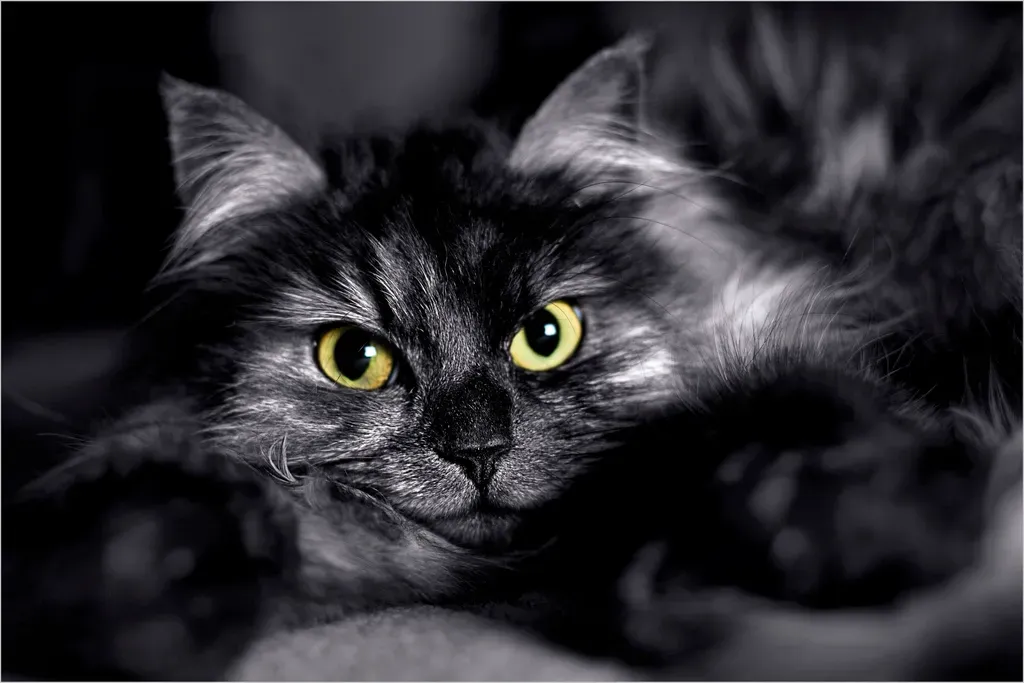
Ever opened your eyes to find your cat already staring directly at your face? That’s not a coincidence – it’s a routine. Cats sometimes stare at sleeping owners out of curiosity or habit, waiting for you to wake up, anticipating breakfast, or simply keeping watch.
Your cat has essentially built an internal clock around your habits, and morning eye contact is often the trigger mechanism for feeding time. Once a cat learns that staring plus proximity equals a response from you, it repeats the trick relentlessly. It’s proof that your cat has quietly trained you just as much as you’ve trained it.
#4 – “You Live Here, But I Run This House”
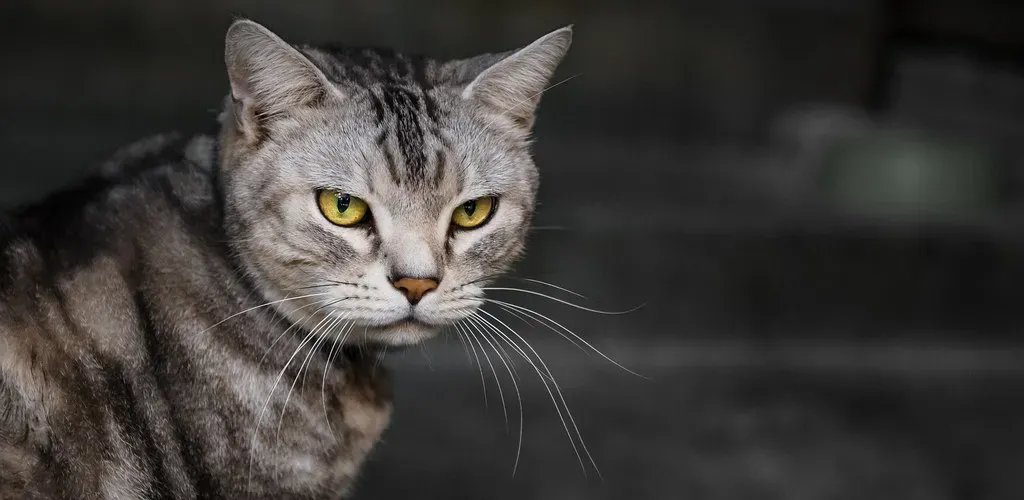
This one stings a little, but the behavior backs it up. Some feline behaviorists read sustained eye contact as a subtle territorial marker, especially in multi-pet households or homes with frequent visitors.
This habit is rooted deep in instinct – as natural predators and territorial animals, cats are constantly wired to monitor their surroundings for change. The stare isn’t necessarily hostile, but it is proprietary. Your cat isn’t asking permission to exist in the space; it’s confirming the space still belongs to it, with you as a well-managed tenant.
#5 – “I’m Quietly Testing the Social Hierarchy”
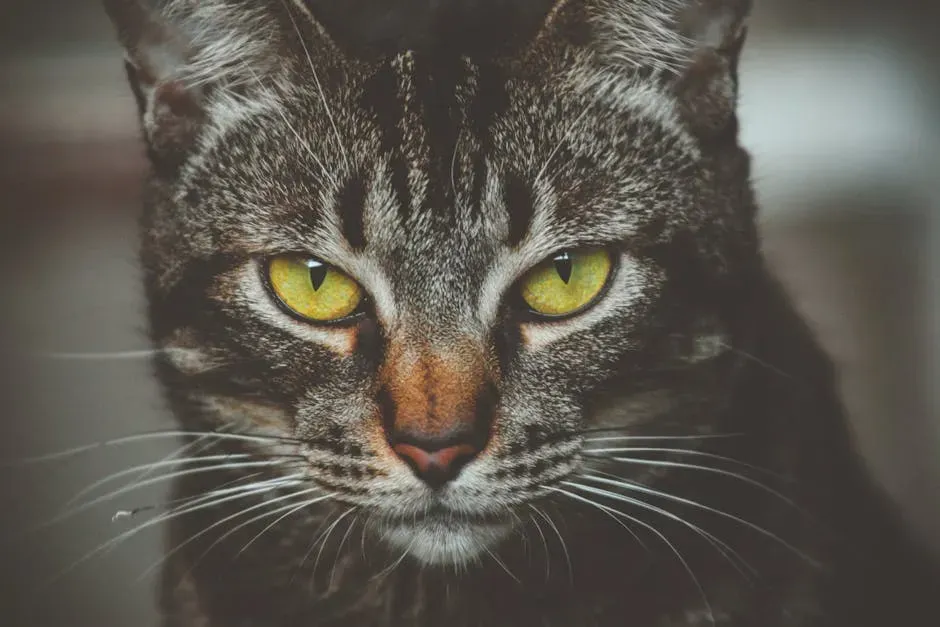
Cats don’t just stare at humans this way – they do it to each other, and the meaning transfers directly. Intense staring helps cats assess potential threats or competitors, a behavior crucial to establishing and maintaining social hierarchies.
When your cat locks eyes with you like this, it’s essentially running the same social calculation it would run on a rival cat – sizing up whether you’re dominant, submissive, or somewhere in between. The overall body language matters more than the stare itself: a relaxed body means low stakes, while tension changes everything. It’s less about affection and more about feline politics playing out in silence.
#6 – “You’ve Just Triggered My Hunting Instinct”
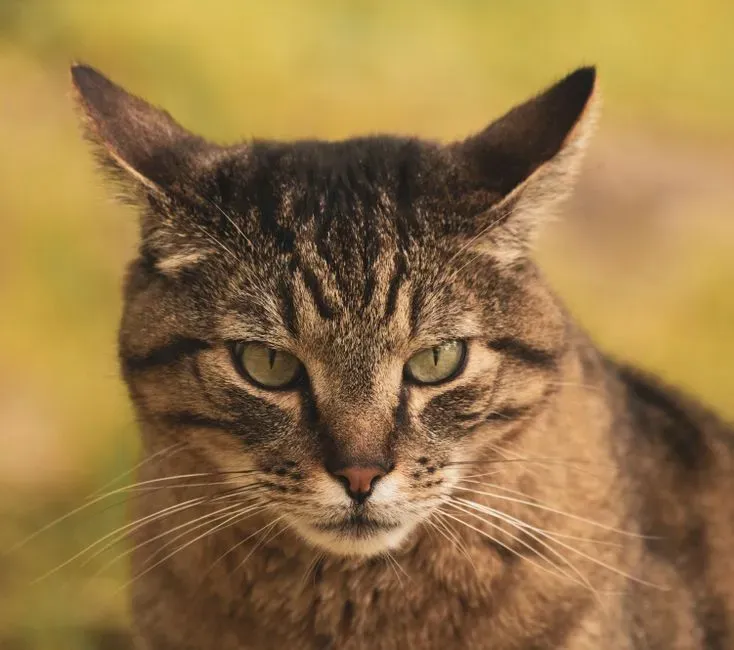
Sometimes the eyes aren’t about you at all – they’re about the ancient wiring underneath the fur. Staring is part of natural hunting behavior, and even indoor cats never fully lose that instinct just because dinner comes from a bag.
A moving hand, a twitching foot under a blanket, even fast blinking eyelids can flip the switch from “relationship” to “prey drive” in an instant. That’s why sudden, intense staring sometimes appears out of nowhere during otherwise calm moments – your cat’s brain briefly reclassified you, or something near you, as a target worth tracking. It’s not personal. It’s simply proof that the “sofa predator” stereotype is more literal than most owners want to admit.
#7 – “I’m Genuinely Scared Right Now”
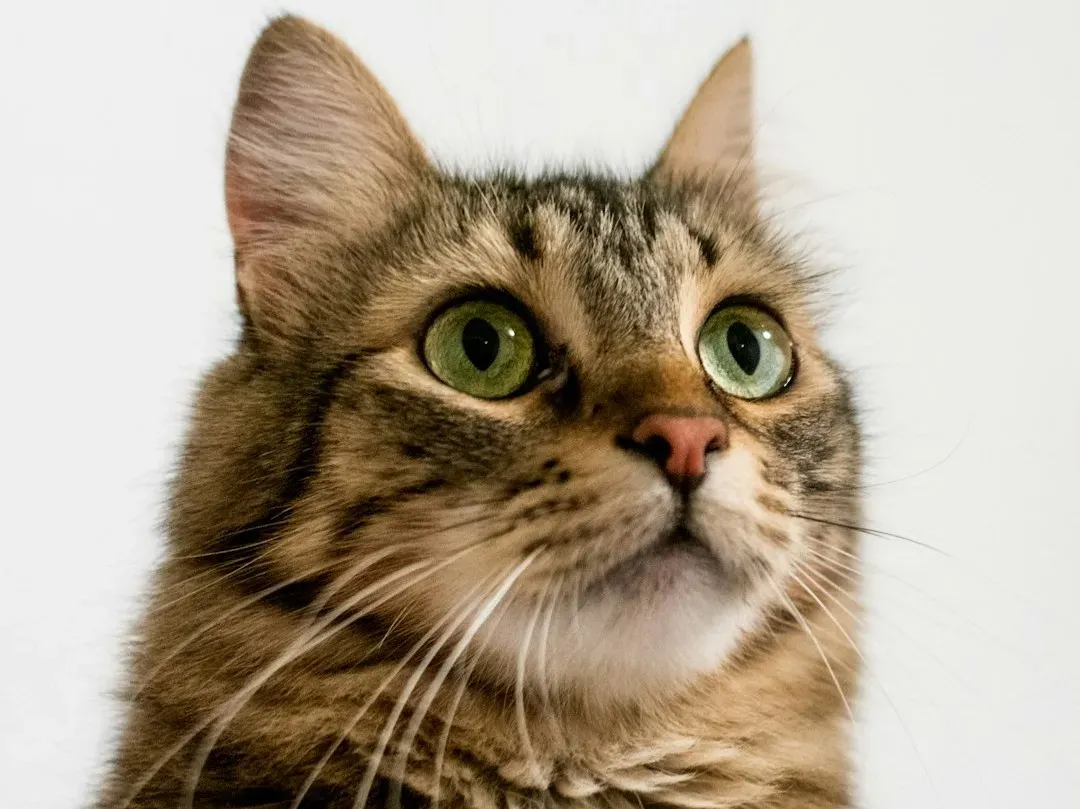
This is the stare most owners misread as anger, when it’s actually fear. A cat may stare at a person, another animal, or an object because a loud noise or quick movement startled it, or because it remembers a past negative experience with that exact stimulus.
The eyes stay locked because, in a fear state, looking away feels riskier than watching the threat. It may crouch down and hold your gaze, either watching for danger or searching for reassurance. The fix isn’t more eye contact – it’s less. Backing off, lowering your voice, and giving space resolves this far faster than any amount of comforting talk.
#8 – “Back Off. I Mean It.”
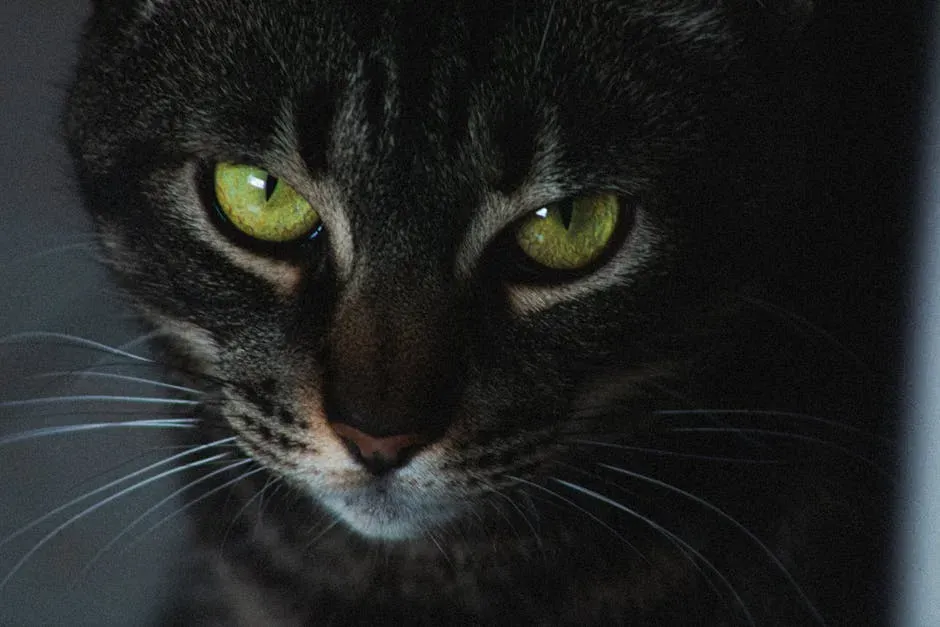
This is the stare that should never be mistaken for anything sweet. A fixed, unblinking stare can be a warning sign that a cat feels threatened or challenged, and it often arrives alongside hissing, raised fur, or a puffed-up tail.
This is arguably the single most dangerous eye-contact signal to misread, because it’s easy to confuse with harmless curiosity if you aren’t watching the rest of the body. Paired with stiff posture and piloerection along the back and tail, the message is simple: back off, or there will be a confrontation. The correct move is to break eye contact first and give the cat a clear exit. Staring back only escalates it.
Worth Knowing
- A fixed stare paired with hissing or growling signals immediate escalation risk
- Raised fur along the spine is a reliable sign of a threat stare, not curiosity
- A puffed tail combined with stiff, low posture rarely means “playful”
- Breaking eye contact first, not staring back, is the fastest way to de-escalate
#9 – “Something Might Be Wrong With Me”
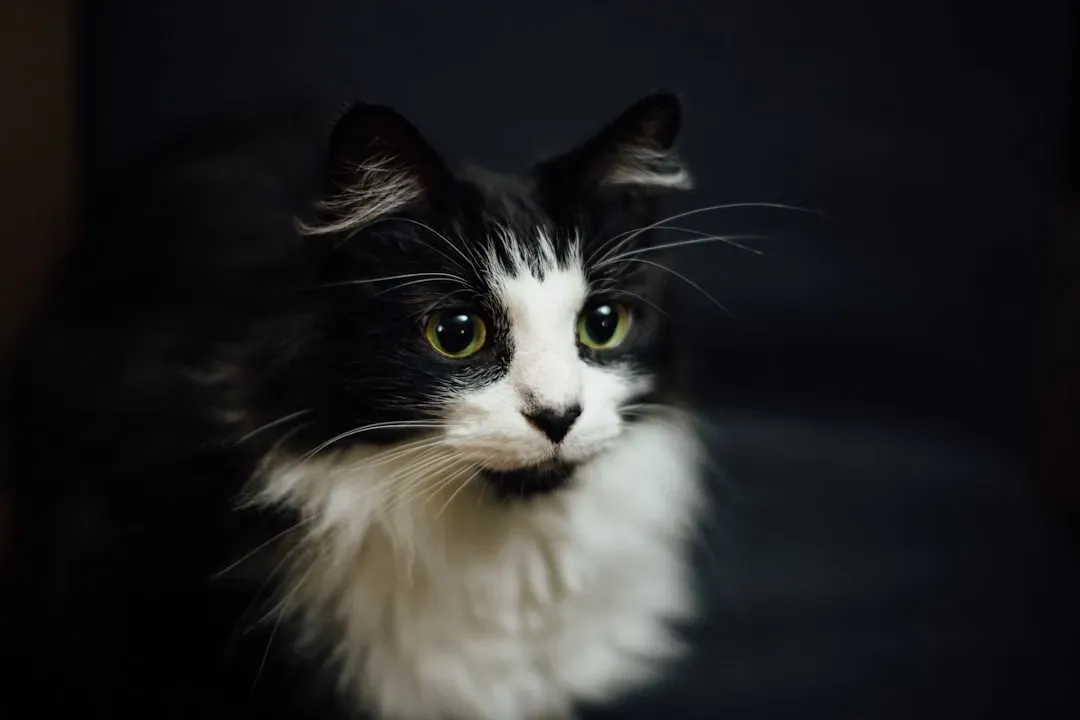
This is the stare that deserves a phone call to the vet, not a caption on social media. Persistent, unusual staring can sometimes be an early symptom of pain or illness rather than a quirk of personality.
If your cat’s eyes are wide, pupils dilated, and body tense, watch for other unusual behaviors – hiding, limping, aggression, or avoiding touch – which could mean it’s time for a checkup. A sudden change in a previously normal cat is the real red flag, far more than the staring itself. Context is everything here.
#10 – “Sometimes… It Means Absolutely Nothing”
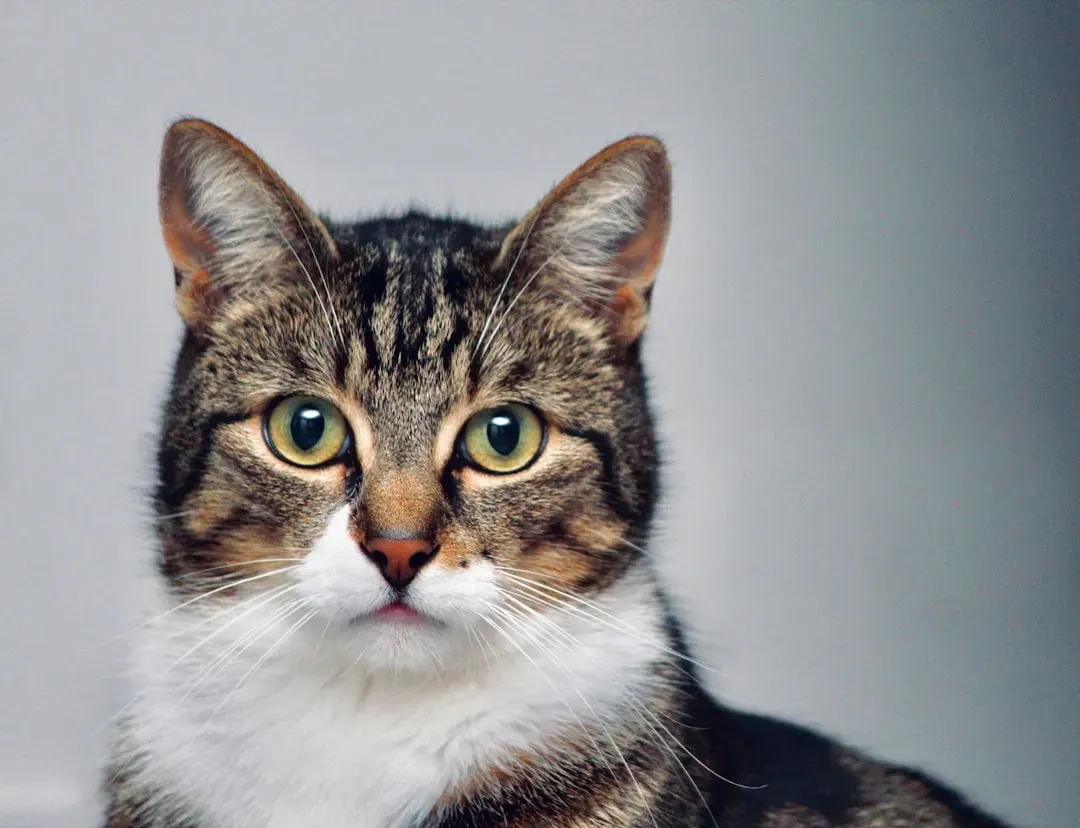
Here’s the unpopular opinion: not every stare is a secret message. Cats are wonderfully eccentric creatures, and their behavior often walks the line between mystifying and hilarious. Sometimes intense eye contact is just one of those quirky things cats do.
It belongs in the same category as sprinting down the hallway at 3 a.m. or squeezing into a box three sizes too small. Not every gaze deserves a deep psychological breakdown. Sometimes your cat is simply looking at you because you happen to be in its line of sight.
#11 – “I Feel Safe Enough to Be Vulnerable”
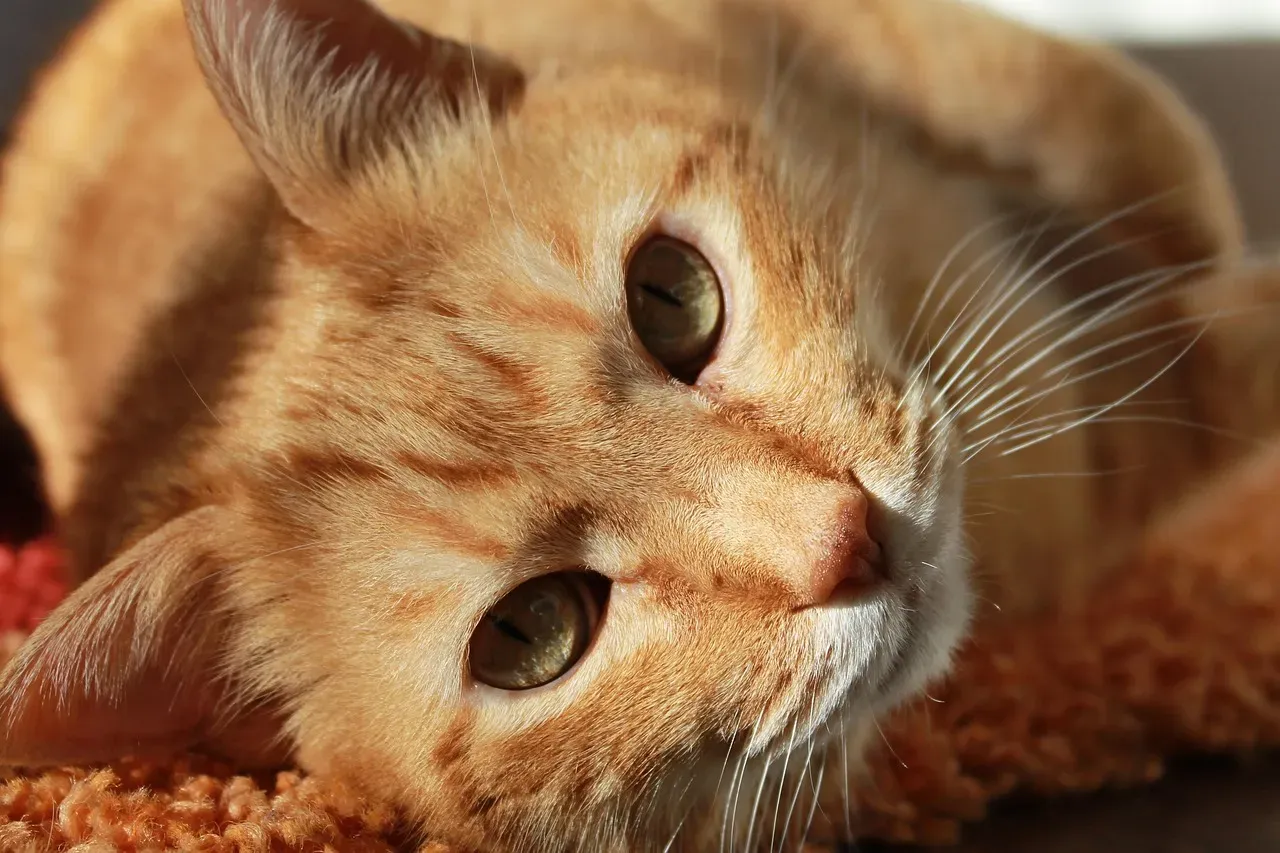
This is where the science gets genuinely touching. Cats open their eyes wide when alert and assessing their surroundings, and exposing wide-open eyes to potential injury can be a real sign of trust.
Wide, relaxed eye contact without tension in the body is functionally the opposite of the threat stare, even though the two can look similar to an untrained eye. If your cat holds your gaze with half-closed eyes, it’s telling you it feels comfortable being vulnerable around you. In a species built around predator-versus-prey instincts, voluntarily softening the eyes in front of another creature is a rare concession – your cat isn’t just tolerating you, it’s choosing not to defend itself.
#12 – “I’m Actually Trying to Bond With You”
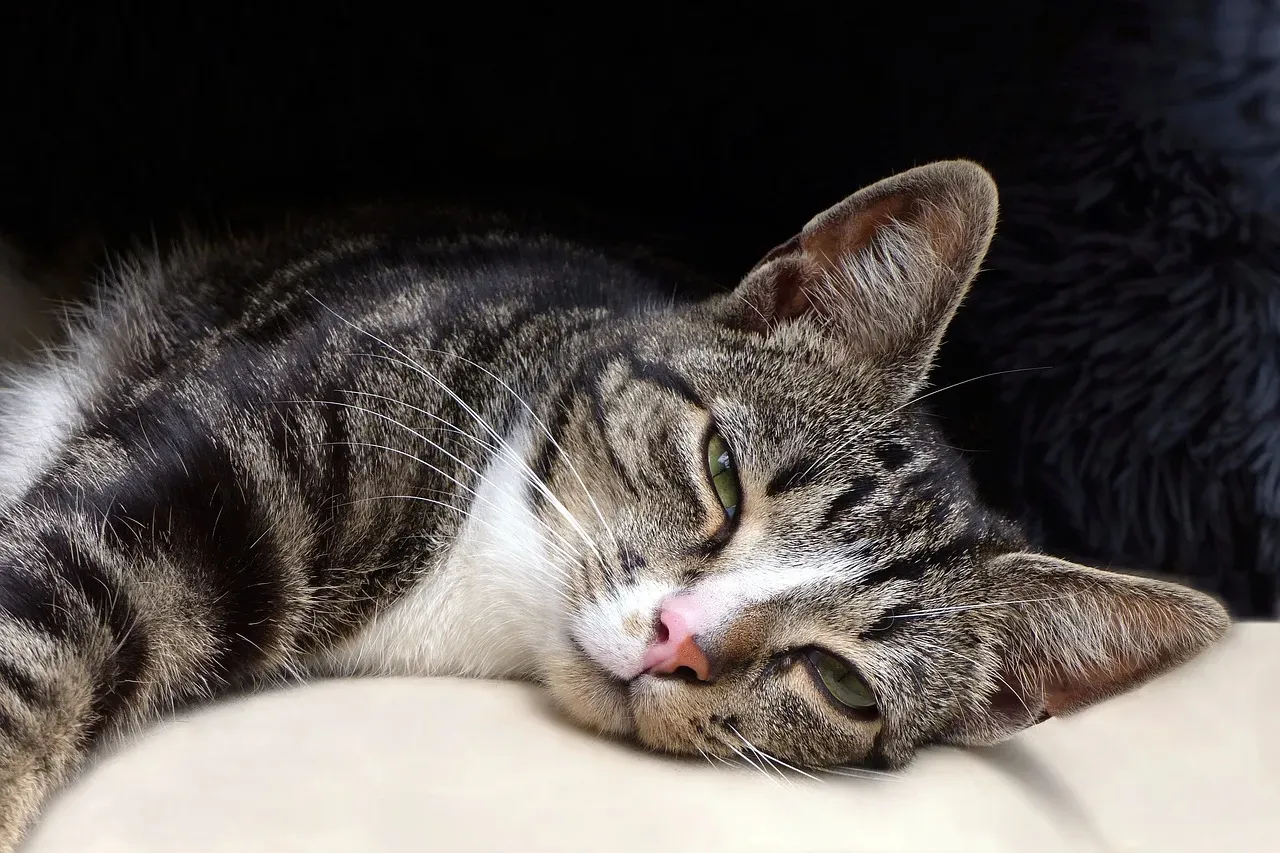
This one comes straight from a peer-reviewed study, not internet folklore. Researchers at the University of Sussex ran controlled experiments to test whether cats respond to human eye contact as a genuine bonding signal. Their first experiment found that cats’ half-blinks and eye narrowing happened more often in response to an owner’s slow blink than to a neutral face, and in a second experiment, cats were more likely to approach the researcher after a slow blink than after no expression at all.
The effect was strong enough to show up in real-world outcomes: cats that responded to human slow blinking with their own eye closures were rehomed faster in shelter environments than cats that didn’t. That’s a measurable behavioral pattern with real consequences, not folklore.
Quick Compare
- Experiment 1: owners slow-blinked at 21 cats from 14 different households
- Experiment 2 included a total of 24 additional cats, with the final analyses drawn from eight different households
- Cats were more likely to slow-blink at their humans after their humans had slow-blinked at them, compared to the no-interaction condition
- Cats were more likely to approach the experimenter’s outstretched hand after a slow blink than after a neutral expression
As someone who has both studied animal behaviour and is a cat owner, it’s great to be able to show that cats and humans communicate in this way, and it’s something many cat owners had already suspected.
Dr. Karen McComb, University of Sussex
#13 – “This Is My Version of a Kiss”
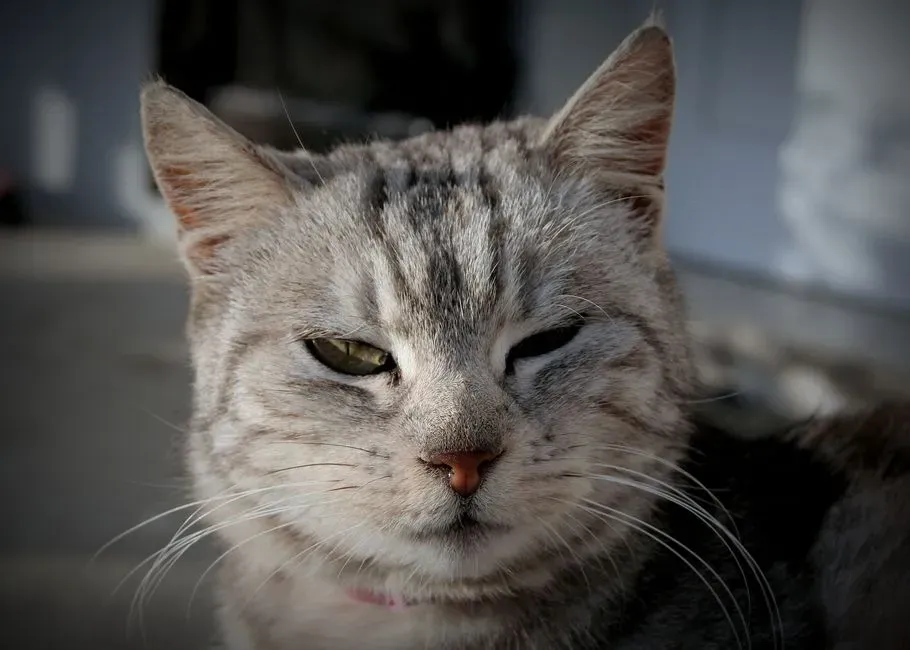
If your cat has ever slow-blinked at you, congratulations – you’ve been kissed, feline-style. Not the human way, by baring teeth, but the cat way: narrowing the eyes and blinking slowly. By observing cat-human interactions, researchers confirmed this expression makes cats, both familiar and strange, more likely to approach and be receptive to humans.
The technique works even on cats you’ve never met before, which is what separates it from simple familiarity or habit. Sustained staring can register as threatening, while soft eyes and slow blinks signal safety instead. Try it yourself: soften your gaze, close your eyes slowly for a beat, then open them gently. If your cat blinks back, that’s not a coincidence – that’s a documented, replicable conversation.
#14 – “I Trust You Completely”
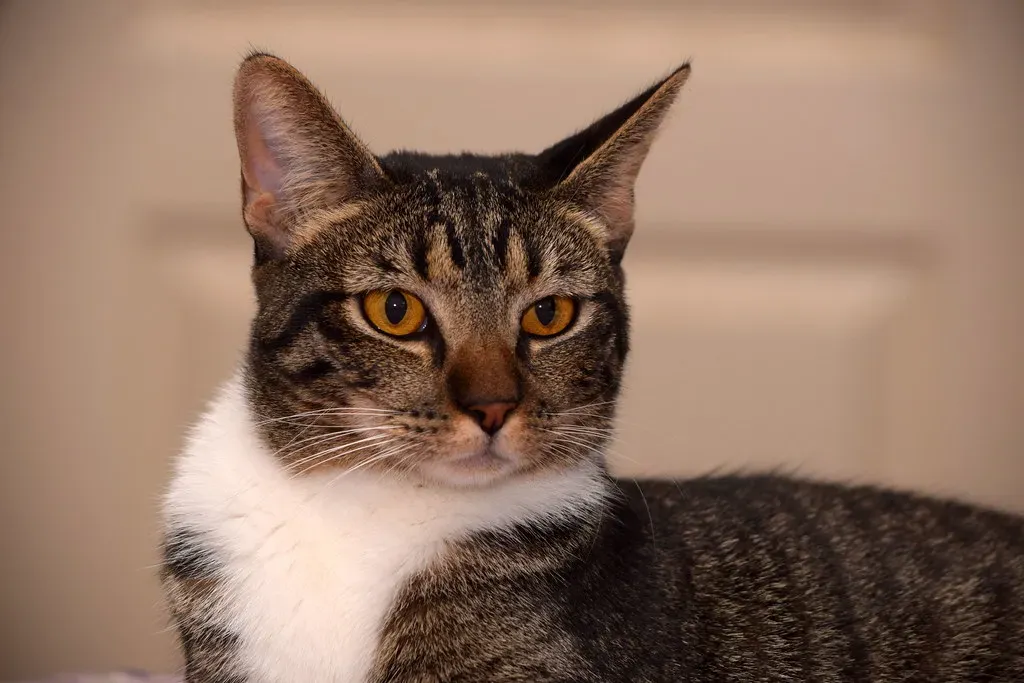
And here’s the deepest signal of all – the one every cat owner is secretly hoping for. A cat staring at you without blinking can be a sign of trust and affection, because in the wild, closing the eyes or blinking makes an animal briefly vulnerable. Holding steady eye contact without flinching signals that your cat feels genuinely secure in your presence.
This is the ultimate contradiction in cat body language: the same unblinking gaze that can mean “back off” in a tense context can mean “I feel completely safe” in a relaxed one. Cats also show affection through soft blinks, and the act of voluntarily closing the eyes in front of you is its own quiet compliment. There’s no bigger endorsement in the feline language than a relaxed, sustained gaze followed by a slow, deliberate blink. It’s the closest thing to “I love you” a cat will ever say out loud.
The Bottom Line
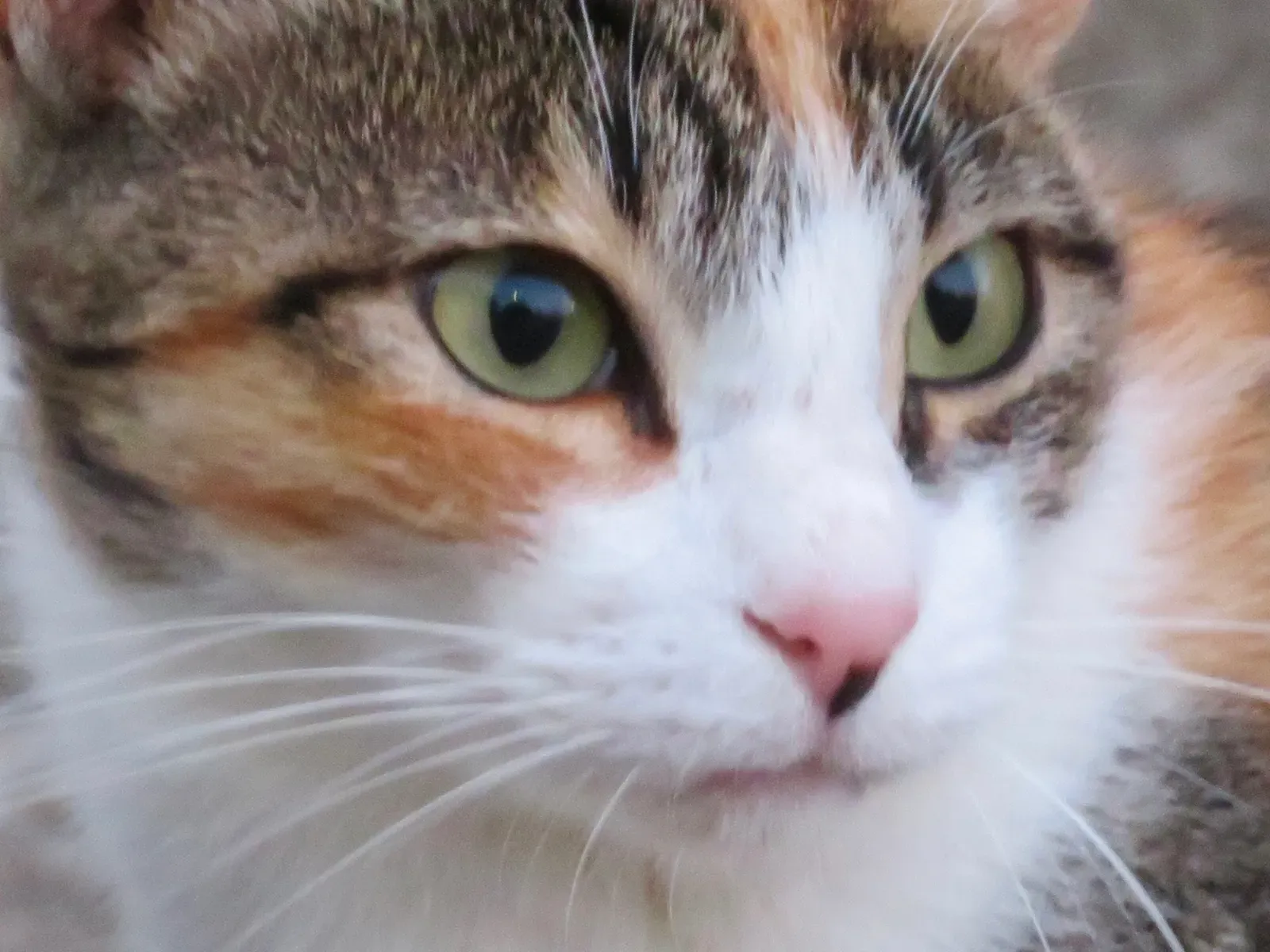
Here’s the uncomfortable truth: your cat’s stare is never just one thing, and anyone who tells you otherwise is oversimplifying a genuinely complex signal. The same unblinking eyes can mean trust, hunger, fear, dominance, illness, or nothing at all – and context, not the stare itself, is what separates them.
The real mistake most owners make is treating every gaze as either “love” or “aggression” when the science says feline communication is far messier than that. The slow blink, though, stands apart. It’s the one signal with actual peer-reviewed backing as a genuine cross-species bonding tool – which means it’s also the one worth practicing on purpose. Everything else your cat’s eyes are saying, you’ll only catch by watching the rest of the body first and the stare second.
At a Glance
- Trust signals: soft slow blinks, half-closed eyes, relaxed body
- Warning signals: fixed stare, hissing, puffed tail, stiff posture
- Practical signals: hunger, boredom, litter box needs, morning routine cues
- Health signals: a sudden change in staring paired with hiding, limping, or appetite loss
Kristina is a young writer from India. An arts graduate and an avid content creator, Kristina is passionate about animals and wildlife. She enjoys exploring topics related to pet care, animal behavior, conservation, and nature, combining thorough research with engaging storytelling.