Picture the joke everyone thinks they know: the lonely older woman, cats piled on her lap, punchline already written before she even gets a name.
Now picture the actual data quietly dismantling that joke. Researchers studying attachment, hormones, and trauma recovery keep landing on the same surprising pattern – and it centers on women over 50 and the rescue cats they bring home.
This isn’t a soft feel-good story. It’s brain chemistry, life-stage psychology, and something scientists are only starting to map about how two damaged nervous systems – one human, one feline – can heal each other on contact.
Here’s what the research actually shows, one layer at a time.
#7 – Cats Actively Choose Women. Science Confirms It.
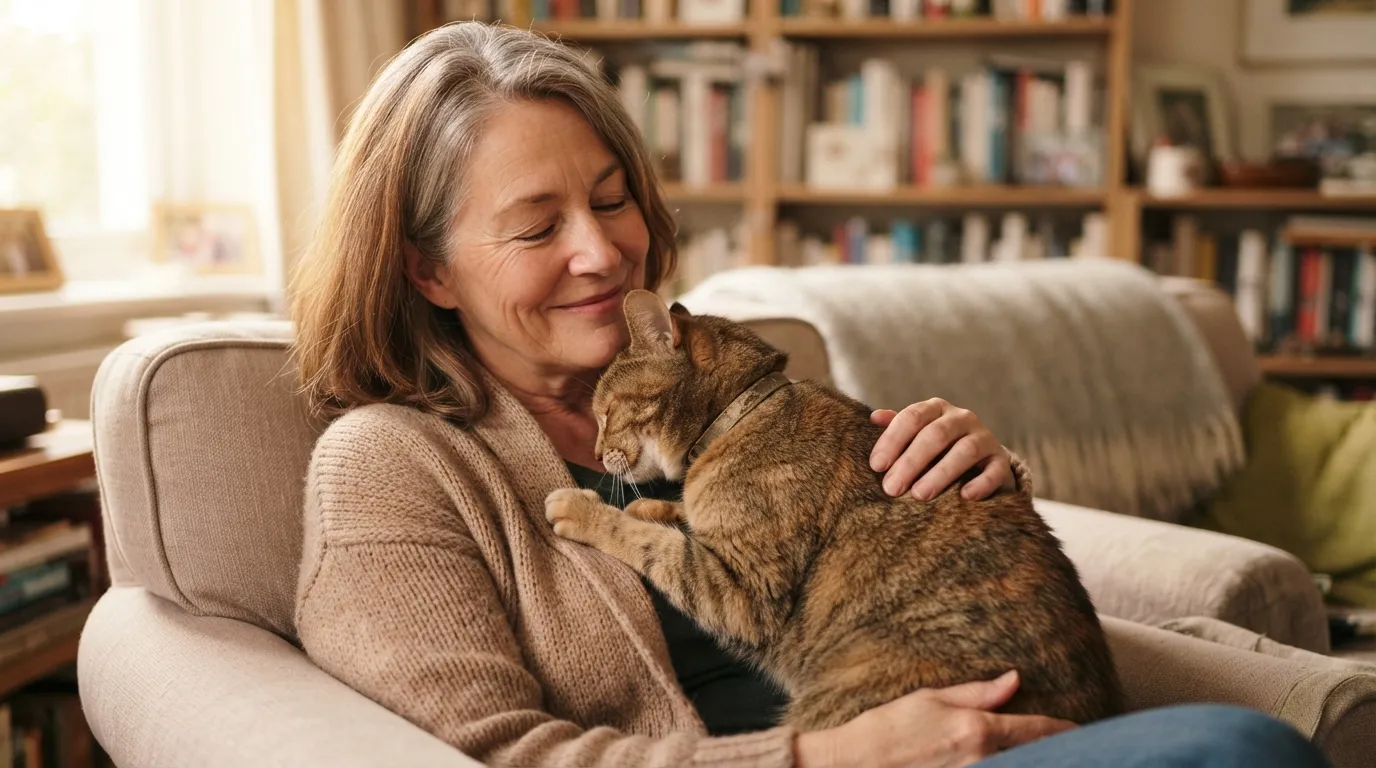
This isn’t projection. Cats genuinely prefer female company, and researchers have the behavioral data to prove it.
Cats treat humans – especially women – as real social partners, not just walking food dispensers. Female owners report more intense relationships with their cats, and the cats reciprocate: more lap-jumping, more head-butts, more deliberate closeness.
Here’s the part that caught researchers off guard. The bond between a cat and its female owner doesn’t just resemble friendship – it behaviorally mirrors the bond between a mother and child.
That’s not a warm metaphor. It’s an actual behavioral classification.
But that’s nothing compared to what happens inside a woman’s brain the moment that bond activates.
#6 – The “Love Hormone” Is Quietly Running the Show
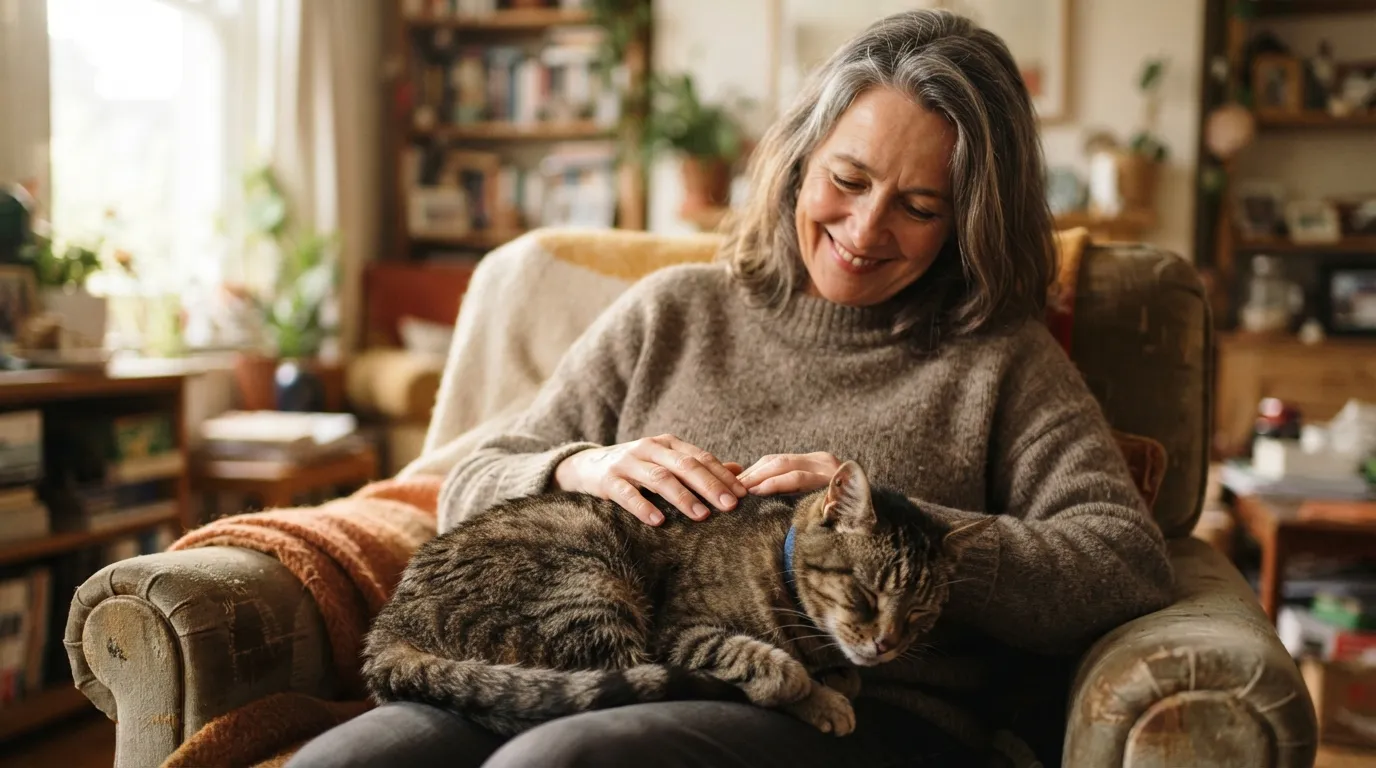
When a rescue cat finally climbs into your lap after weeks of keeping its distance, something chemical fires off – and scientists have caught it happening in real time.
The chemical is oxytocin, the same neurohormone that surges when a mother holds her newborn or friends embrace. Studies now confirm it spikes during cat-human bonding too.
In 2021, Japanese researchers found that just a few minutes of petting boosted oxytocin levels in many cat owners, women included.
But a 2025 follow-up study revealed the real trigger: the surge only happens at full strength when the cat initiates the contact. Being chosen, not choosing, is what lights up the chemistry.
For a rescue cat, that first moment of trust hits differently – because you both know what it took to get there.
But that’s nothing compared to what happens during the menopause years specifically.
#5 – Menopause Creates the Exact Emotional Conditions for This Bond to Deepen
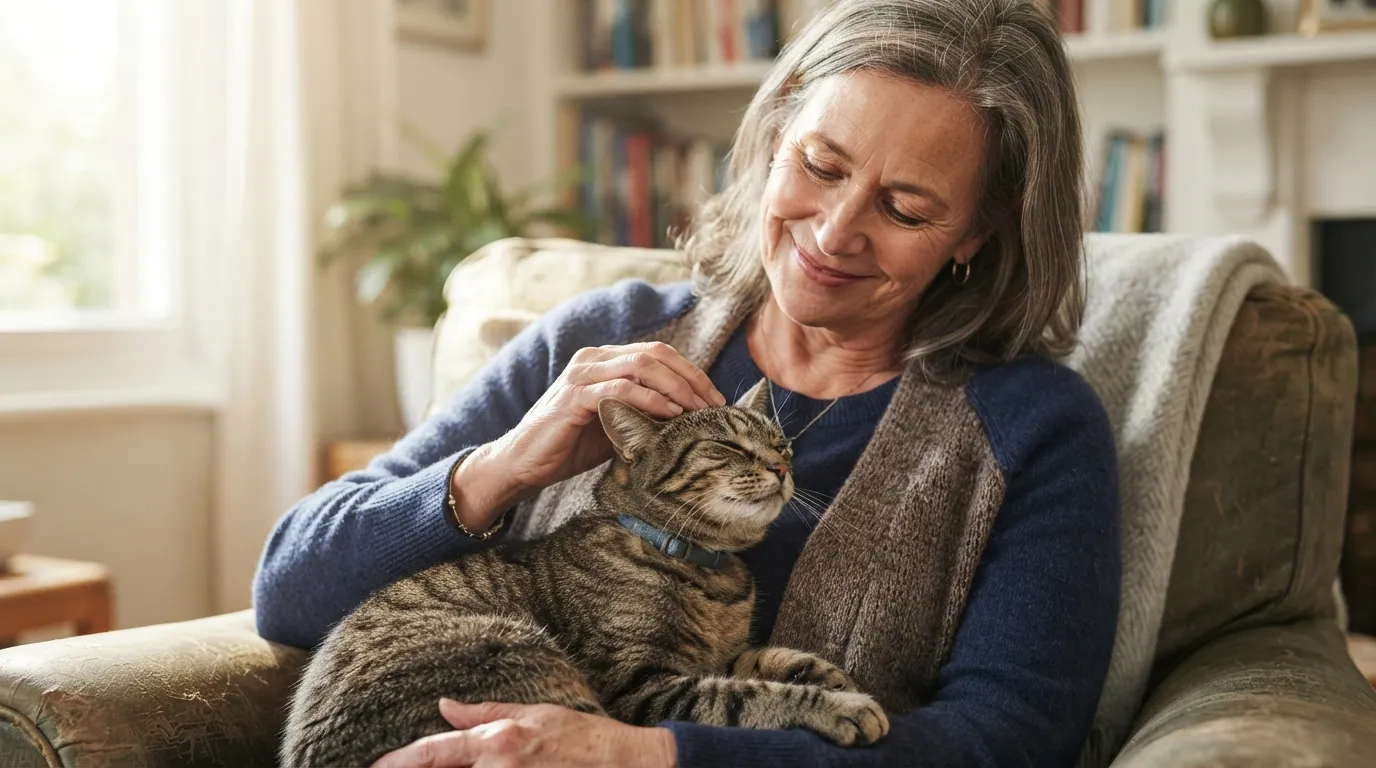
Here’s what most people miss entirely: women over 50 aren’t “cat people” by personality quirk. Their biology and life stage quietly set the table for this bond.
Research published in the Journal of Affective Disorders found that women in perimenopause face significantly higher rates of depression than premenopausal women. That’s a real vulnerability window, and cats step into it in a specific way.
Fast Facts
- Perimenopausal women face a 40% higher risk of depression than premenopausal women, per a 2024 meta-analysis of more than 9,000 women.
- That elevated risk drops back down once women reach full menopause.
- The perimenopause window can last four to eight years – plenty of time for a bond to take root.
Pet ownership has been linked to lower blood pressure, reduced anxiety, and improved mood – benefits that land squarely on the psychological turbulence of menopause. Researchers studying pets and midlife women have pointed to one thing animals offer that people often can’t: presence without judgment or unsolicited advice.
A cat doesn’t weigh in on your hormone therapy. It just stays.
In that context, a cat’s companionship stops being a comfort and starts functioning like a health resource.
But that’s nothing compared to what a cat’s purr is actually doing to your body.
#4 – A Cat’s Purr Is Literally Therapeutic. Measured in Hertz.
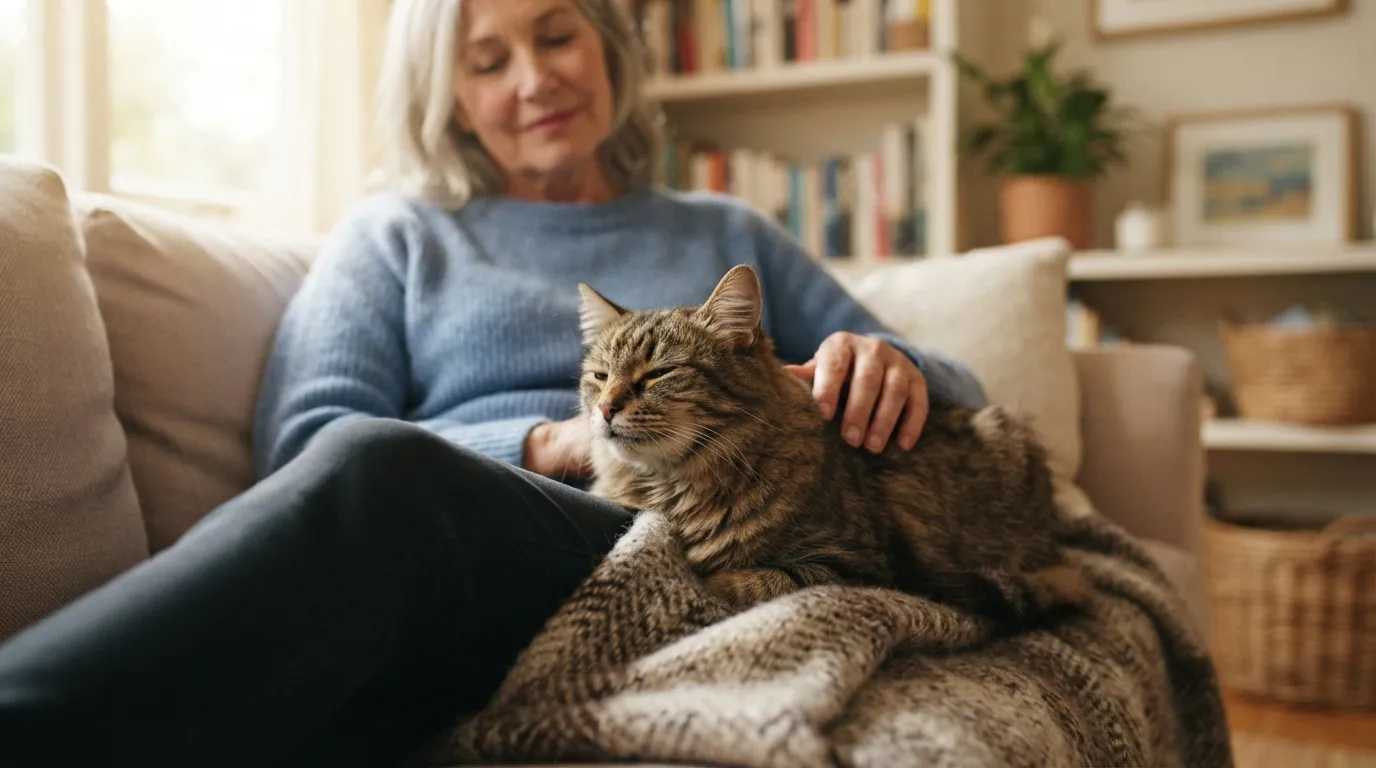
Most people assume purring just means a happy cat. It’s actually one of biology’s most underrated healing tools – and women over 50 sharing a couch with their cat are absorbing it daily.
A cat’s purr sits in a frequency range of 20-50 Hz, a range shown to have therapeutic effects in humans. It’s been linked to lower stress, eased breathing, reduced blood pressure, and even support for bone and tissue healing.
Worth Knowing
- 25-50 Hz: the range linked to bone growth and fracture healing.
- Around 100 Hz: associated with soft-tissue and wound repair.
- Above 120 Hz: tied to pain reduction and lower inflammation.
Oxytocin adds a second layer, suppressing cortisol and activating the body’s parasympathetic “rest and digest” response. The purr and the hormone work together like a two-part relaxation system running quietly in the background of daily life.
That matters even more after 50, when cardiovascular health becomes a real concern. A 2022 study found cat owners saw a greater reduction in cardiovascular risk factors than other pet owners.
But that’s nothing compared to what happens when the cat in question is a rescue.
#3 – Rescue Cats Bond Differently – and It Goes Both Ways
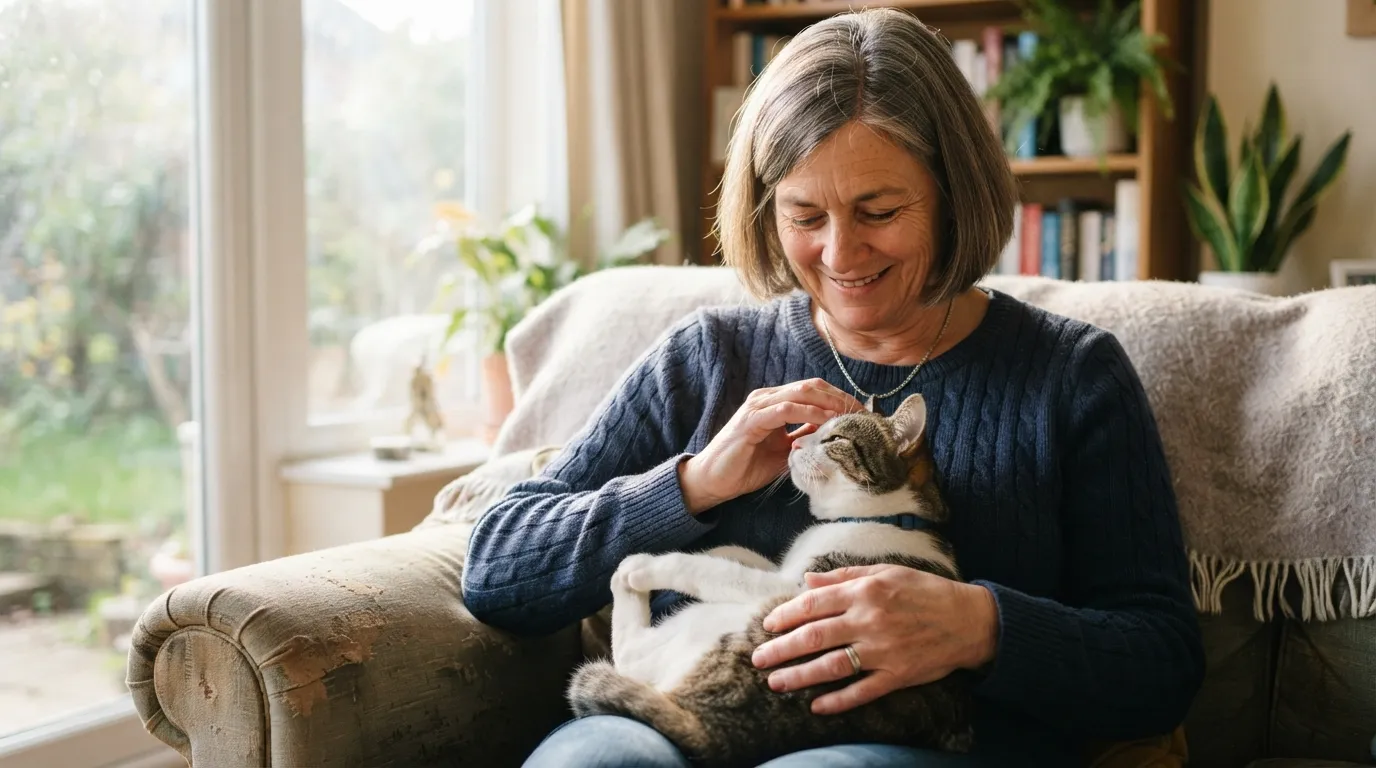
Here’s what separates a rescue cat bond from any other pet relationship. It isn’t just care – it’s witnessing recovery. And watching something fragile learn to trust again changes a person.
Cats rescued from shelters or abusive situations often form intensely strong bonds with their new owners, built on the safety they finally receive. For many adopters, that connection becomes a lifeline in both directions.
Adopting a traumatized animal tends to teach patience and empathy fast. Watching a cat that once knew only fear slowly choose to trust again can be quietly transformative, especially for someone carrying their own emotional history.
Researchers are clear that the healing isn’t one-sided. While the cat recovers from its past, the human caregiver often experiences real emotional growth alongside it.
But that’s nothing compared to what this bond does to one of the most underestimated health risks in midlife.
#2 – Loneliness in Midlife Is a Real Health Risk. Rescue Cats Counter It Measurably.
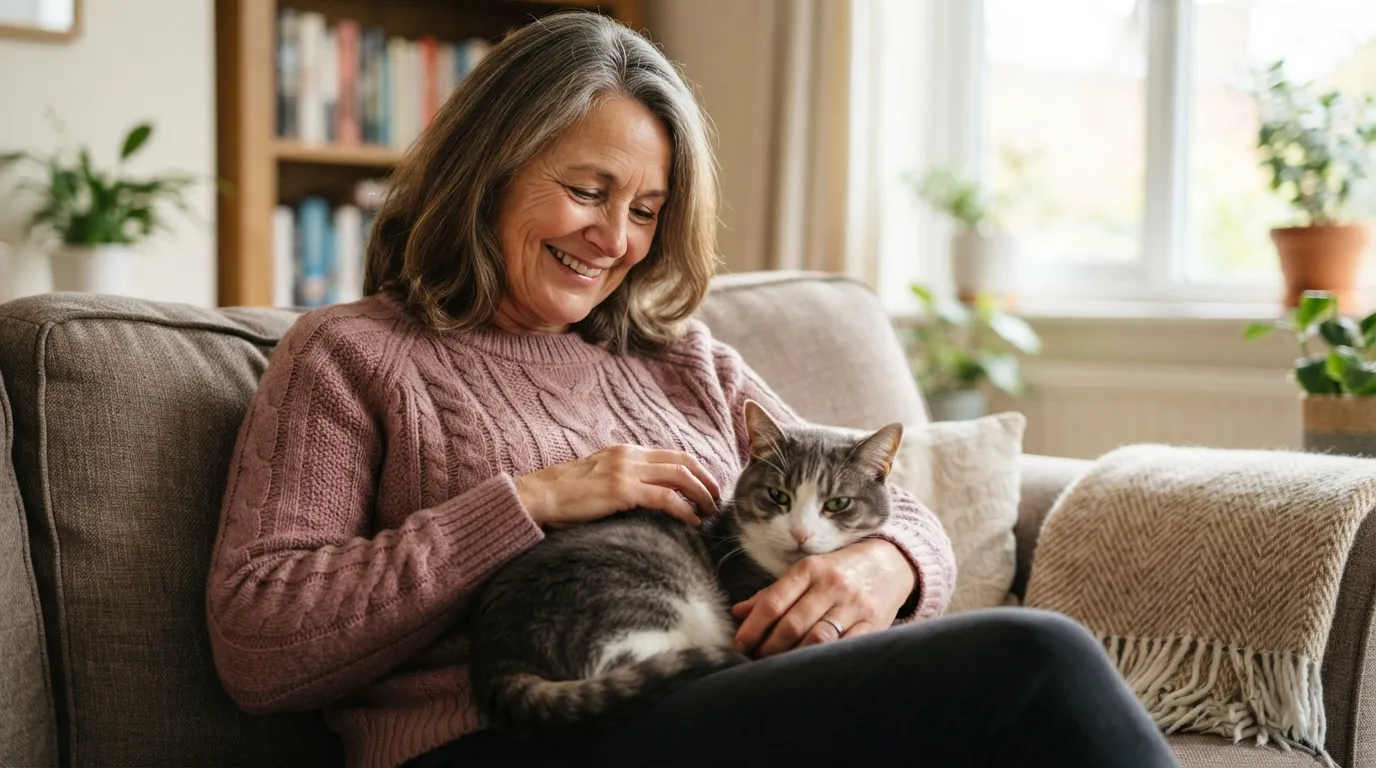
Loneliness after 50 isn’t just an emotional inconvenience – it’s a documented health hazard. A rescue cat counters it at a level most people underestimate.
Research from the British Red Cross links loneliness to depression, anxiety, and weakened immune function – all risks that already spike during the menopause transition.
At a Glance
- Seniors with pets are 36% less likely to report loneliness than non-pet owners.
- The U.S. Surgeon General has compared the health toll of chronic loneliness to smoking 15 cigarettes a day.
- In one HABRI-funded foster study, 95.7% of participants chose to adopt their foster cat permanently.
A study funded by the Human Animal Bond Research Institute found that after four months of fostering a cat, older adults showed significant drops in loneliness and measurable gains in mental health.
Here’s the detail that says it all: almost nobody gave the cat back. By the end of the study, nearly every participant chose to formally adopt their foster cat.
The bond didn’t just help. It became permanent, fast.
But that’s nothing compared to the deepest layer of this story – the one that ties everything together.
#1 – The Mother-Child Attachment Blueprint Is Reactivated – and That’s the Real Secret
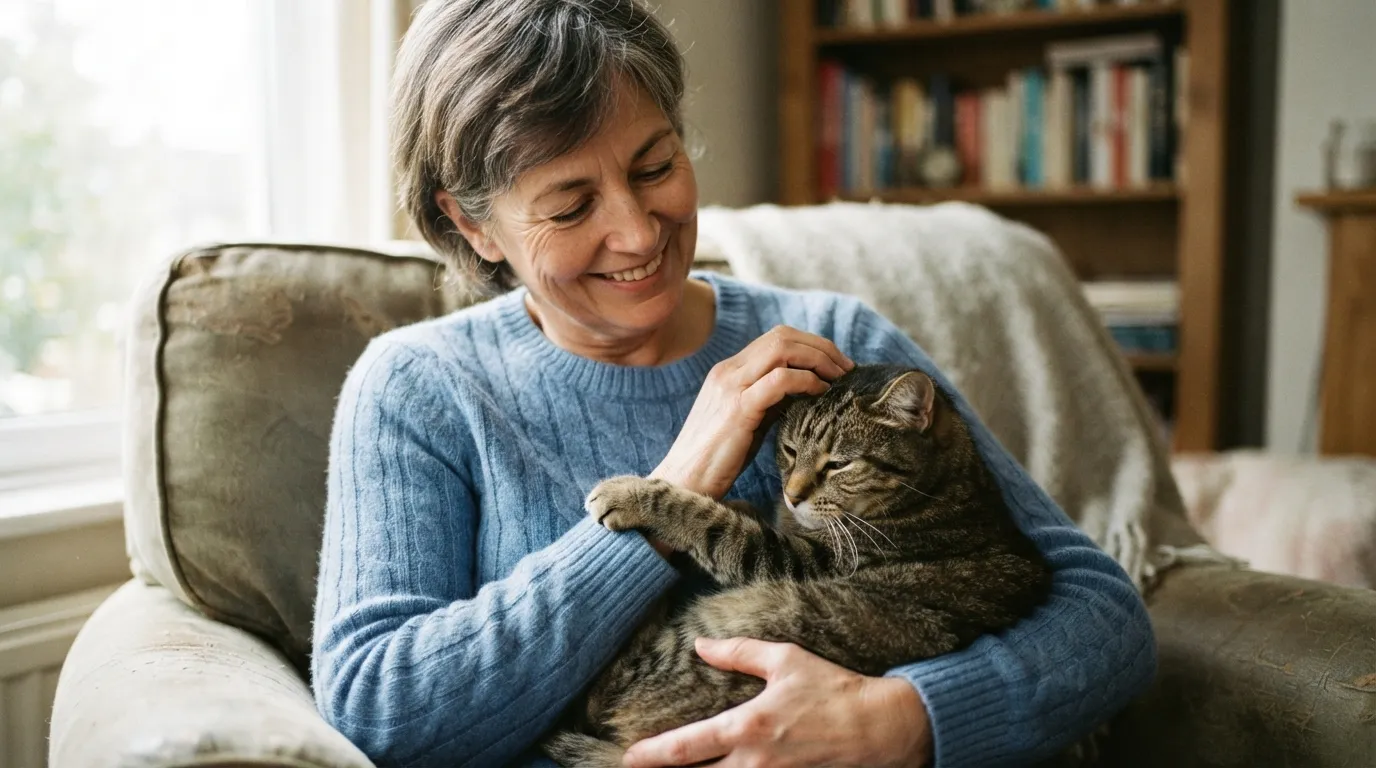
This is the finding that reframes everything else. Women over 50 don’t just like rescue cats more – their brains appear neurologically primed to bond with them at one of the deepest levels attachment science recognizes.
Studies on how domestic cats respond to caregivers suggest their social-cognitive abilities have been badly underestimated. Much like children and dogs, cats form clearly secure or insecure attachments to their human caretakers.
Research published in Current Biology confirms cats show secure attachment behavior nearly identical to human infants, treating their caregiver as a “secure base” that measurably lowers the cat’s own baseline stress hormones.
In both dogs and cats, attachment to humans may represent an adaptation of the offspring-caretaker bond.
Kristyn Vitale, animal behavior researcher, Oregon State University
Here’s the critical piece: the dynamics of cat-human bonds turn out to be nearly indistinguishable from human-only attachment bonds. In nurturing homes, cats can genuinely function as a furry stand-in child.
For women over 50 navigating empty nests, retirement, or major identity shifts, that caregiving circuitry doesn’t switch off. It redirects – and a rescue cat learning to trust again activates it completely.
The Bottom Line
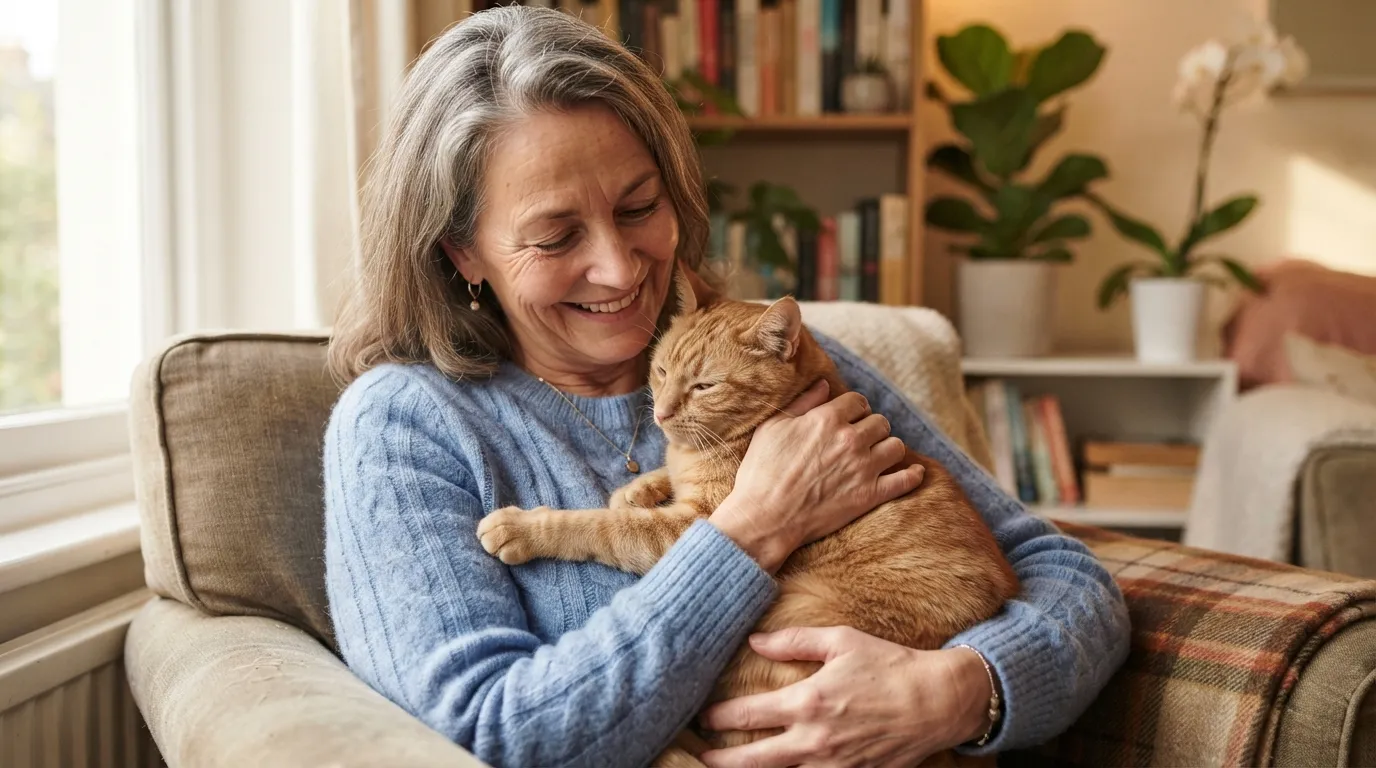
This isn’t sentimentality. It’s biology stacking on top of psychology stacking on top of life stage, until the conditions line up almost perfectly.
Oxytocin surges when the cat initiates contact. The purr suppresses cortisol in real time. The rescue dynamic forces genuine empathy and mutual healing. And the cat’s own attachment behavior mirrors the mother-infant bond already wired into the female brain.
The “crazy cat lady” joke doesn’t just miss the point – it gets it exactly backwards. These women aren’t filling a void. They’re running one of the most scientifically validated bonding systems researchers have found.
Has a rescue cat ever surprised you with how deep the bond went? Tell us about it in the comments.
Growing up traveling and experiencing new cultures and wonders, I have had a passion for nature, adventuring, photography, and videography. I am currently working towards a BSc in Biodiversity and Ecology at Stellenbosch University, and I hope to specialise in Marine Sciences one day.
Please send any feedback to Feedback@animalsaroundtheglobe.com