
Most people assume better mental health comes from meditation apps, therapy, or sleep trackers.
Turns out something a lot simpler might already be curled up on your pillow.
A 2023 American Psychiatric Association poll of 2,200 adults found that 86% of pet owners said their pets have a mostly positive impact on their mental health, and 69% said their pets help reduce stress and anxiety.
Cat owners specifically have been building morning habits that tap into real, documented psychological effects – and most people have no idea how powerful they are.
Here’s what the science, and the cat owners living it, actually say.
#10 – Waking Up to a Warm Presence (Instead of a Cold Screen)
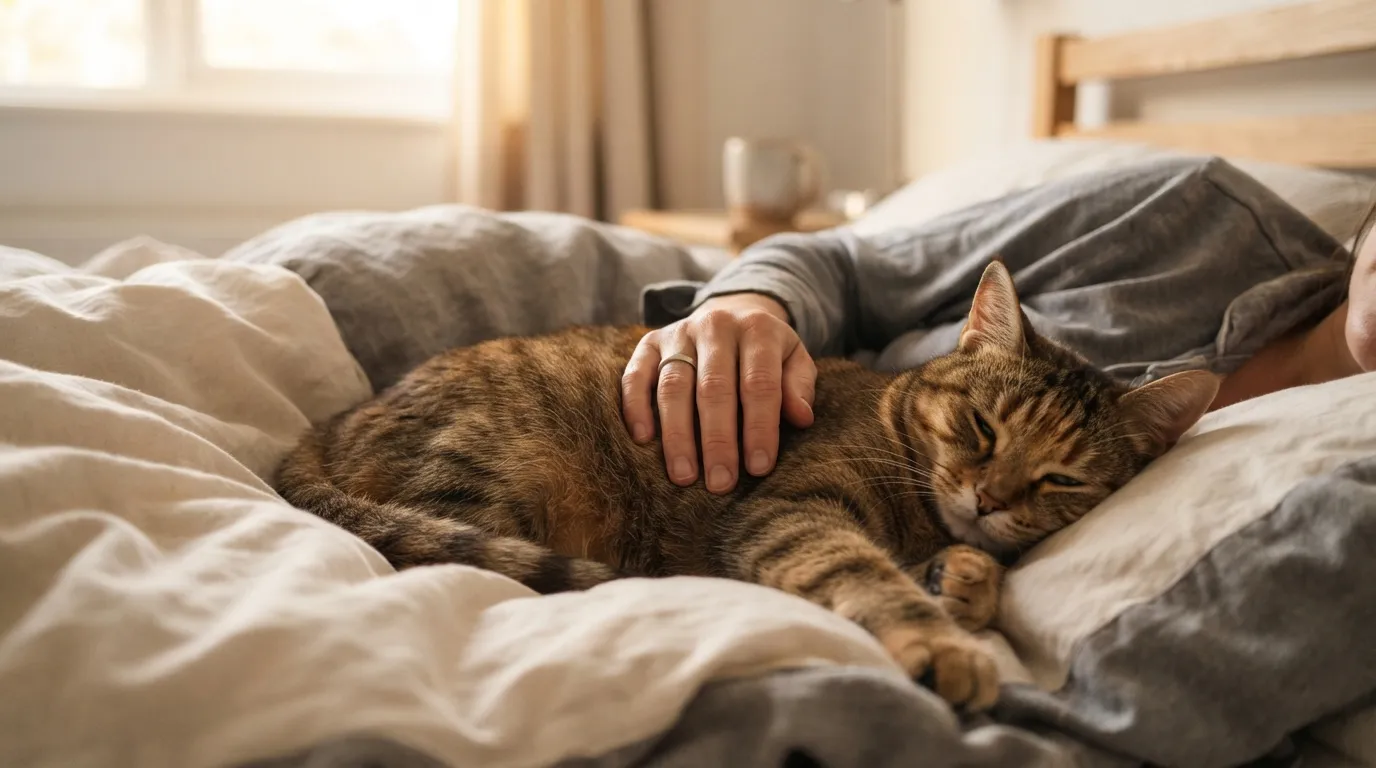
Most of us reach for our phones within seconds of waking. Cat owners who reach for their cat instead are onto something real.
Petting a cat engages tactile sensation, warmth, and rhythm. That sensory input works like a grounding exercise, pulling attention away from anxious thoughts and back into the present moment.
Starting the morning with touch instead of a screen skips the cortisol spike that comes from reading news or notifications. Focusing on the rhythmic sound and feel of a purring cat creates present-moment awareness, similar to meditation or deep breathing.
- Replace the first 5 minutes of scrolling with petting your cat in bed.
- It costs nothing, requires zero willpower, and your cat demands it anyway.
But #9 is where the science gets almost eerie.
#9 – Listening to the Purr as a Biological Stress Reset
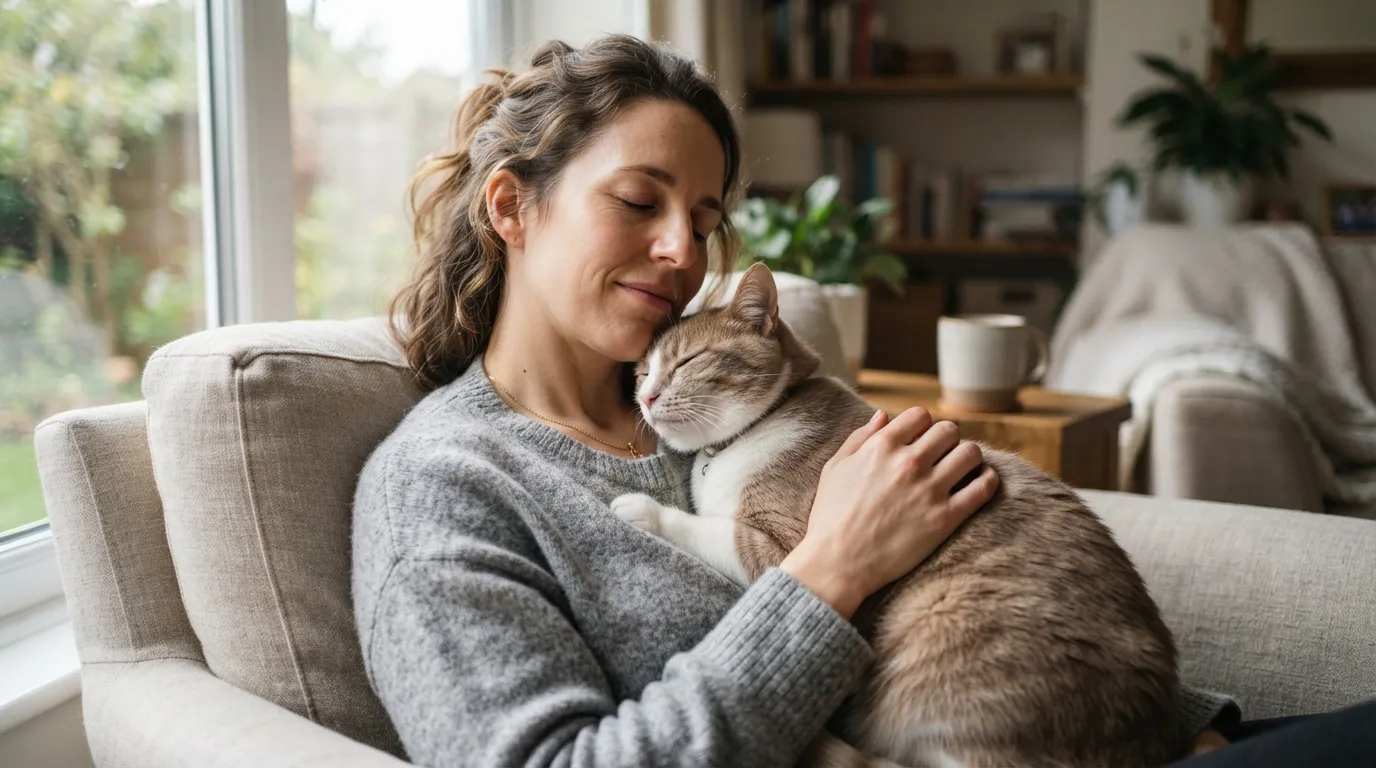
Here’s the one that surprises even skeptics: your cat’s purr isn’t just cute. It’s operating on a frequency your nervous system physically responds to.
Cat purring happens when a cat vibrates its vocal cords at a frequency between 25 and 150 Hertz. That range isn’t just soothing to the ear – it has measurable therapeutic effects on the body.
The rhythmic sound of a purring cat can lower cortisol, the hormone responsible for stress. That calming effect helps you unwind and can noticeably improve your mood.
Petting a purring cat also releases oxytocin – the “love hormone” – deepening feelings of connection and well-being.
- Just sitting near a purring cat in the morning triggers measurable physiological changes.
- You don’t need to do anything – just be present.
Fast Facts
- The dominant frequencies for most feline purrs fall between 25 Hz and 150 Hz.
- 25–50 Hz is optimal for strengthening bone and promoting bone density.
- 100–120 Hz is frequently used in therapeutic medicine to help repair soft tissues.
- Frequencies above 120 Hz are associated with reduced pain and inflammation.
Still, #8 might be the ritual you’re already doing wrong.
#8 – The Morning Feed Ritual as an Anxiety Anchor
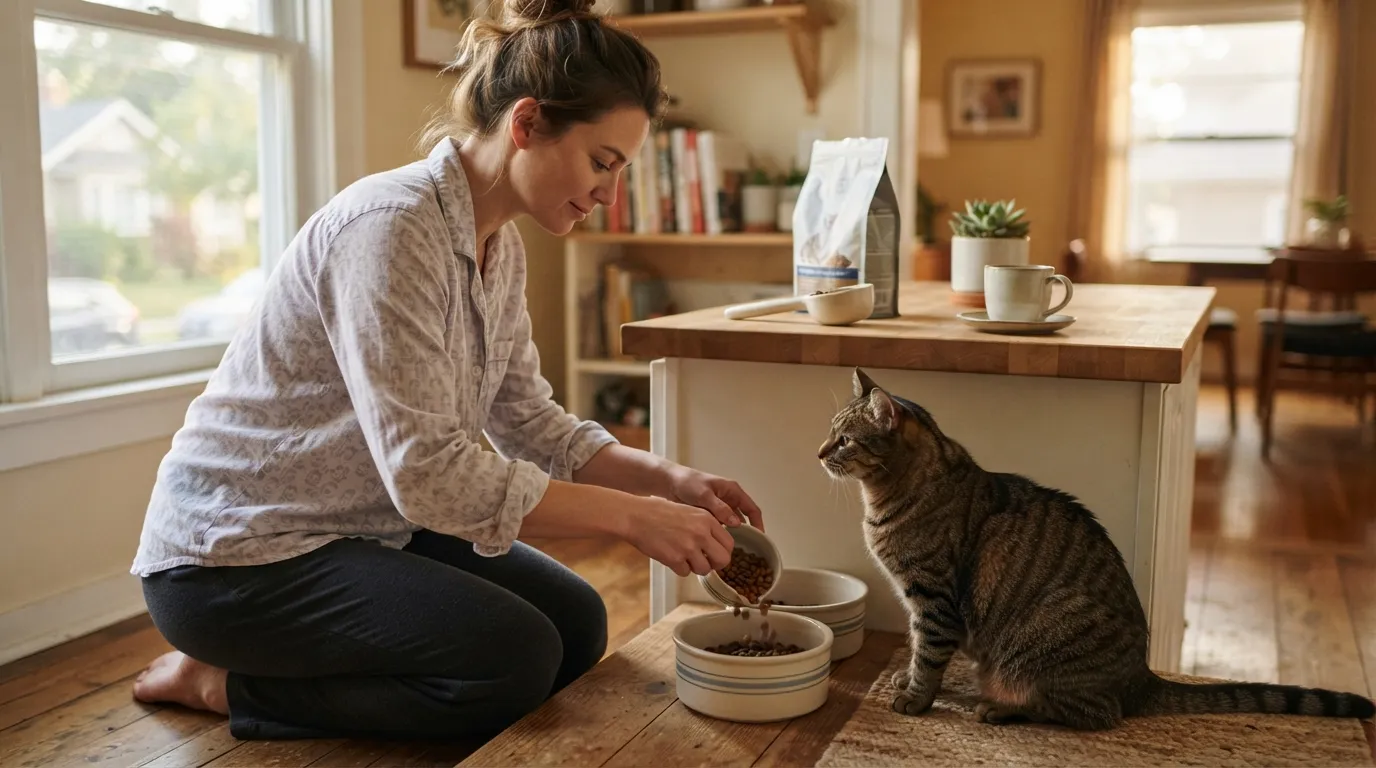
Cat owners swear feeding their cat is one of the calmest parts of their morning. Turns out that’s not just habit – there’s a structural reason it works.
Cats thrive on routine – feeding schedules, litter maintenance, and playtime all create a predictable daily structure. For someone living with anxiety, that predictability alone can provide stability and reduce mental overwhelm.
Structured caregiving anchors your day and hands you a built-in sense of purpose. Instead of sitting with internal worry, you’re engaging with a tangible task that produces a clear result.
- Feed your cat at the same time every morning – this anchors your own body clock too.
- Your cat’s hunger is a built-in alarm that gets you out of bed with a reason.
And #7 flips everything you think you know about petting your cat.
#7 – Morning Petting Sessions That Chemically Bond You to Calm
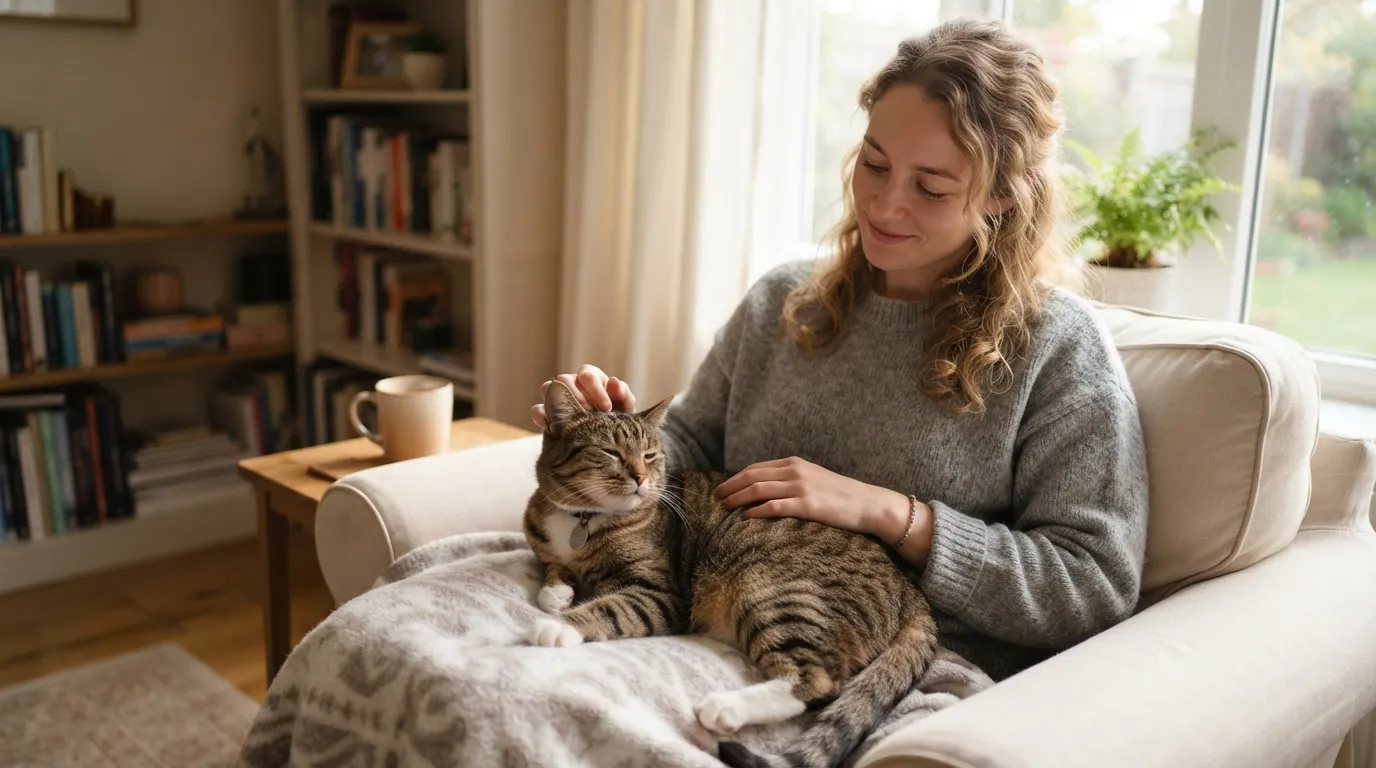
Most people pet their cats absentmindedly. The ones who do it intentionally in the morning – even for just a few minutes – get something biochemically different out of their day.
A February 2025 study found that owners who spent 15 relaxed minutes petting, hugging, or quietly holding their cats experienced higher oxytocin levels, and the cats showed a parallel rise as long as they were free to walk away. Saliva samples taken before and after each home session confirmed that the longer a cat voluntarily stayed near its person, the larger the hormone spike for both.
The key word is “voluntarily.” Forced hugs or attempts to corner an evasive cat produced no oxytocin surge – sometimes even a drop.
Let the cat come to you in the morning. That’s when it actually counts.
- Set aside 10–15 quiet minutes after feeding.
- No chasing. No forcing. Just open space and presence.
Wait until you see what #6 replaces entirely.
#6 – Using Cat-Time as a Real Mindfulness Anchor
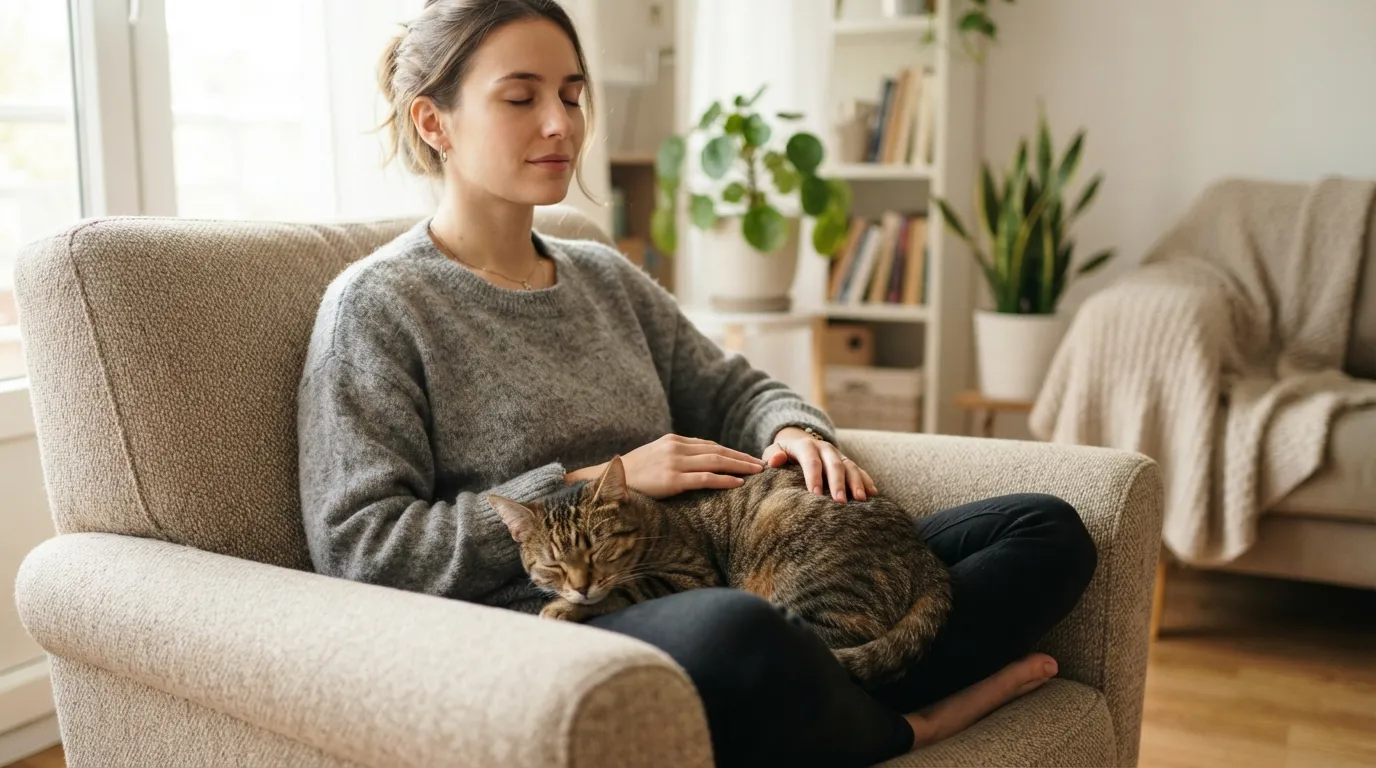
Mindfulness apps have a 70% abandonment rate within a week. Your cat doesn’t let you quit.
Some call it “cat meditation”: using your cat’s rhythmic breathing, warmth, and purring as a sensory anchor that keeps you locked into the present moment.
Animals naturally exude calmness, helping ground us right where we are. Their presence can dissolve stress and let your mind settle without any real effort.
- Sit still with your cat for 5 minutes. Watch their breathing. Match it slowly.
- The steady sound of a purr signals safety to the human brain, activating the “rest and digest” parasympathetic nervous system.
Quick Compare
- Meditation apps: require daily discipline, and most people quit within days.
- Cat-time mindfulness: requires no discipline – your cat initiates it for you.
- Apps: ask you to imagine a calm state.
- Cats: physically induce that state through touch, warmth, and sound.
This costs zero dollars and works on the first try – which is more than most apps can claim.
But #5 takes three seconds – and changes everything.
#5 – The “Slow Blink” Exchange That Sets an Emotional Tone
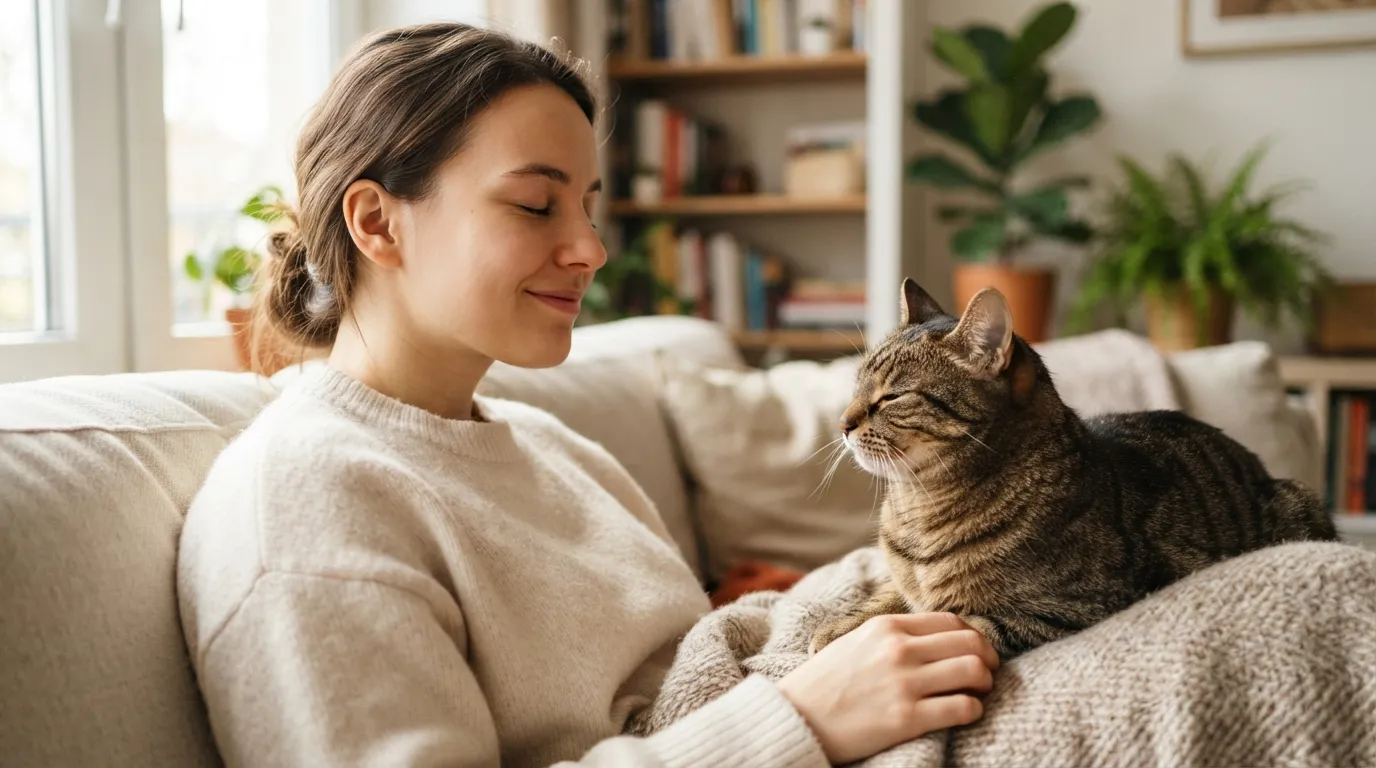
This one sounds trivial until you understand what it actually does. Cat owners who exchange a slow blink with their cat in the morning are kickstarting a specific emotional circuit.
The slow blink – closing your eyes softly, then opening them – is a documented trust signal in cat body language. When you return it, you’re telling your cat “you’re safe here.”
That bond runs both directions: a strongly bonded cat is calmed by your presence, and that calm reads right back to you.
When interactions respect a cat’s comfort, oxytocin flows – but when a cat feels cornered, that bonding hormone stays out of reach. The slow blink is the lowest-effort, highest-trust move in the cat owner’s toolkit.
- Practice it across the room before you even get out of bed.
- It takes 3 seconds and costs nothing.
Most people skip #4. That’s the mistake.
#4 – Short Morning Play Sessions That Regulate Your Own Energy
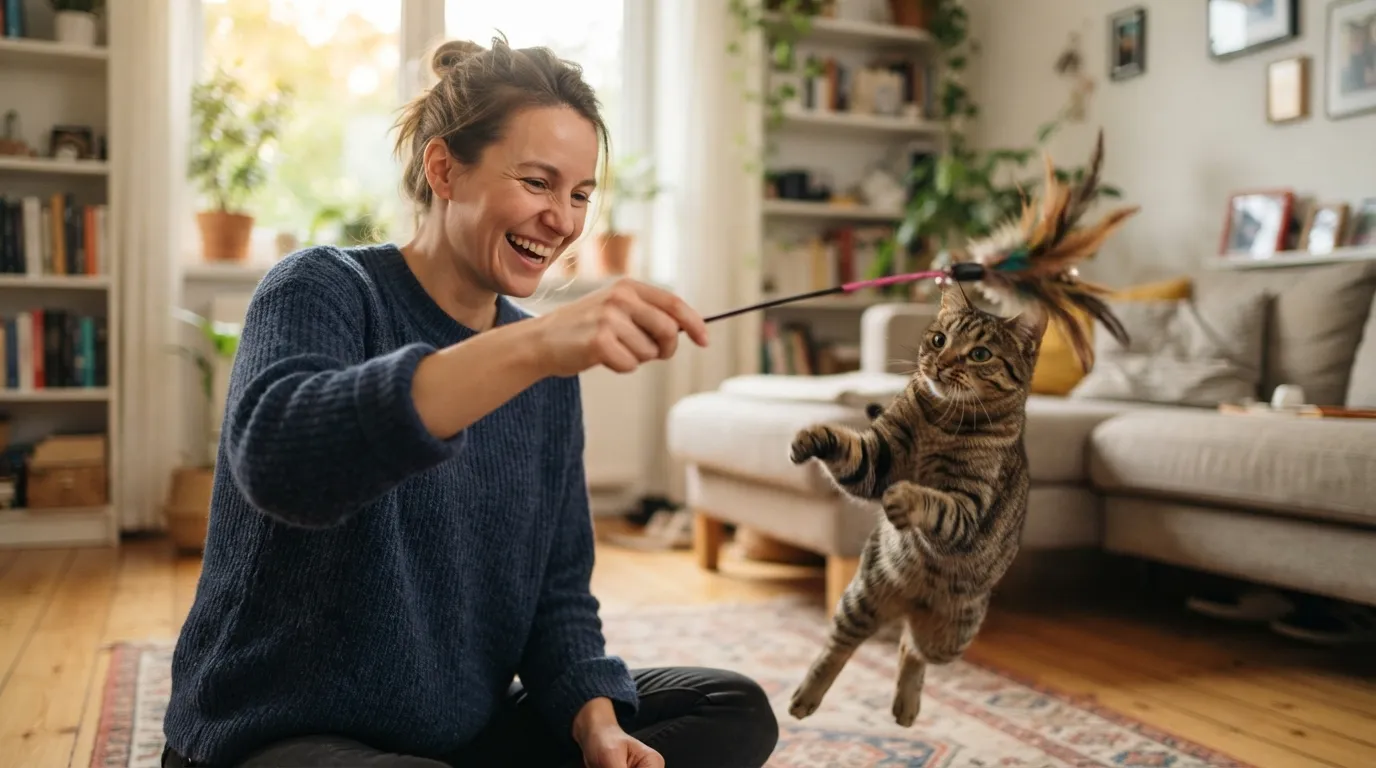
Here’s the one most cat owners skip – and it’s a mistake.
A quick play session before work doesn’t just tire out your cat. It regulates you too.
Consistent playtimes are crucial for stress management. Scheduling interactive sessions in the morning and evening, when cats are naturally most active, benefits both of you.
Play boosts a cat’s confidence and deepens your bond – and just five to ten minutes a day makes a measurable difference. For you, it replaces doomscrolling with movement and laughter, two things that actually shift your morning mood chemistry.
- Use a wand toy or feather – 5 minutes is enough for the benefit to register.
- Morning play burns off your cat’s dawn energy, meaning fewer chaotic interruptions during your work hours.
#3 sounds ordinary. It isn’t.
#3 – Journaling Next to Your Cat (The Presence Effect Is Real)
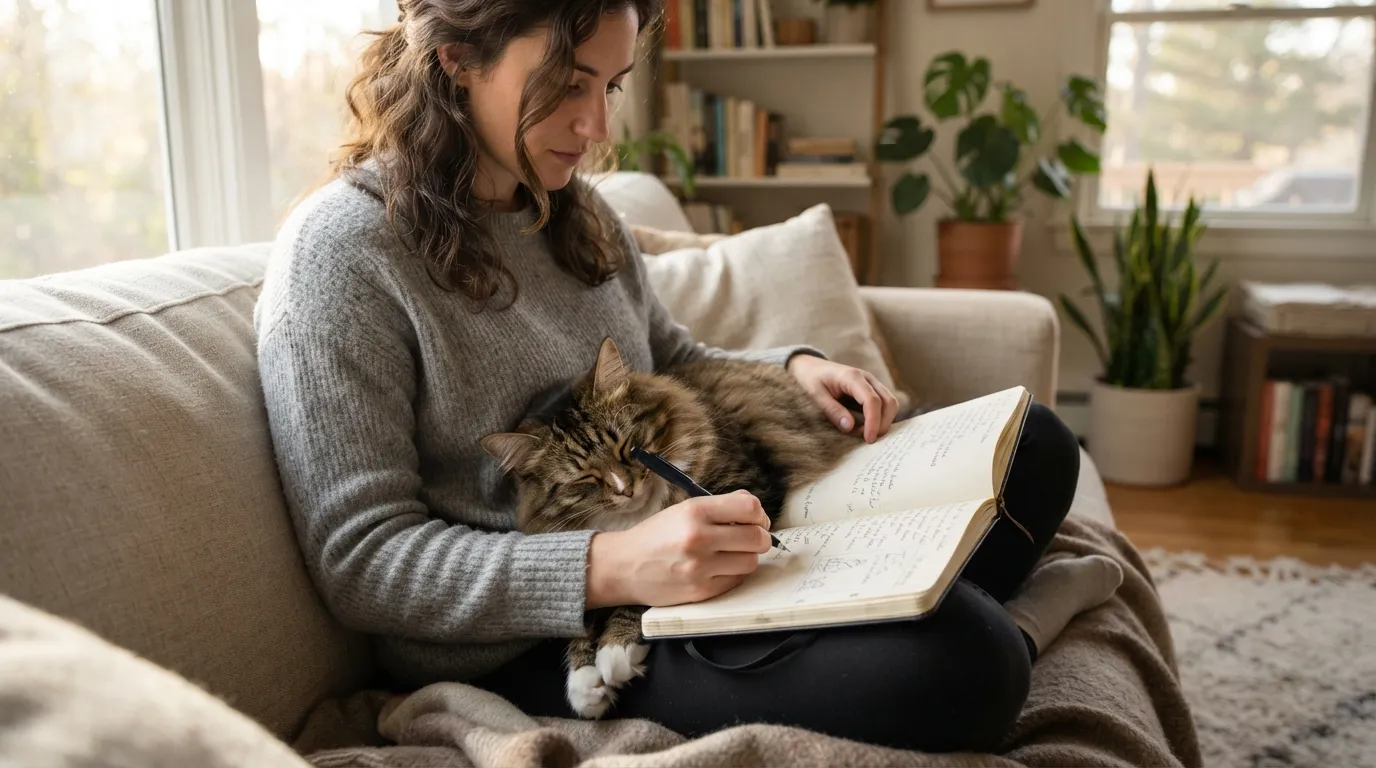
You’ve heard about journaling for mental health. But cat owners who do it with their cat nearby get a compounded benefit most solo journalers miss entirely.
Regular mindfulness practice is already linked to lower stress levels. Add a calm, breathing cat to the mix, and that effect seems to amplify.
The gentle rhythm of their breathing settles alongside yours, deepening the sense of peace.
Pet ownership has been linked to a stronger sense of purpose, better emotional management, and greater ability to cope with hard situations. Journaling externalizes that – and doing it with a purring cat in your lap lowers the activation energy needed to just start.
- Keep a notebook on the couch, not at a desk – make it as frictionless as possible.
- Even 3 sentences written next to your cat counts. Consistency beats perfection.
Now here’s the one hiding in plain sight – #2.
#2 – Building a No-Phone Morning Window Around Cat Care
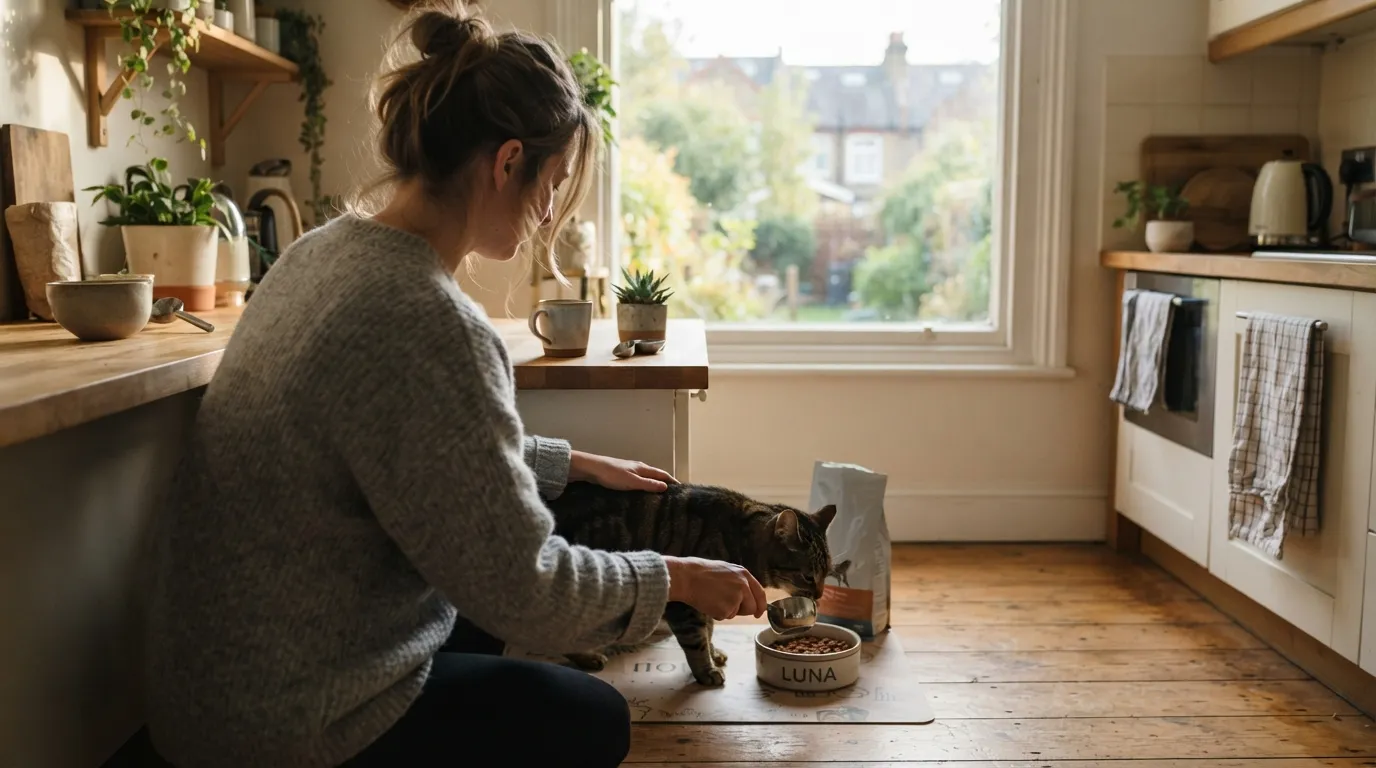
The most effective mental health move cat owners make isn’t about the cat directly – it’s about what the cat replaces. Cat care tasks create a natural, mandatory phone-free window every morning.
Caring for something other than yourself builds a sense of responsibility and purpose while adding structure to your day. Having a cat to care for quite literally gives you a reason to get up.
In a survey of cat owners, 87% felt their cat had a positive impact on their well-being, and 76% felt they coped with everyday life much better because of their cat’s presence. Many credit that structured morning window – feeding, cleaning, engaging – as the reason their mornings feel less reactive and more grounded.
At a Glance
- 86% of pet owners report a mostly positive mental health impact from their pets.
- 69% say their pets help reduce stress and anxiety.
- 87% of cat owners felt their cat positively affected their well-being.
- 76% said they cope with daily life better because of their cat.
- Declare the first 20 minutes of your day phone-free. Use cat care to fill it.
- This isn’t about discipline – the cat enforces it for you.
But none of this compares to the ritual at #1.
#1 – The Consistent Morning Routine Itself (This Is the Real Mental Health Tool)
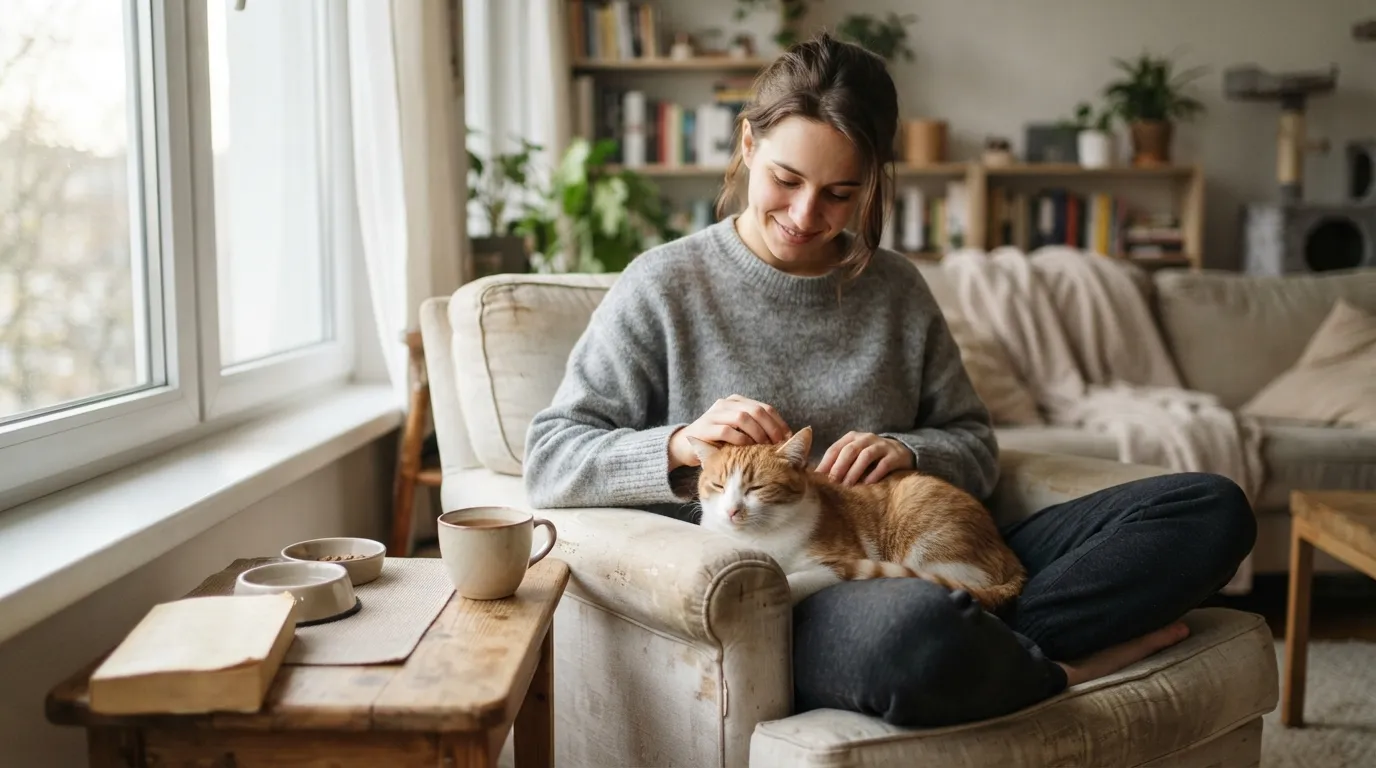
Everyone expects #1 to be something clever. It isn’t.
It’s the most unsexy, most research-backed truth on this whole list: the routine is the ritual.
Every ritual on this list – the purring, the play, the slow blink – only works because it happens inside a predictable structure. Structure is what turns a nice moment with your cat into an actual mental health tool.
In a cat’s mind, routine means control – a predictable morning makes them feel secure, which lowers anxiety-related behaviors. That security runs both ways.
Cat owners who build a consistent sequence – feed, pet, play, quiet time – report lower baseline anxiety, not because of any single step, but because predictability itself is the medicine.
- The cat doesn’t care if you’re motivated. It needs feeding anyway – that forced consistency is the gift.
- Maintaining a normal routine matters for decreasing not just your cat’s stress and anxiety, but also yours.
The Bottom Line
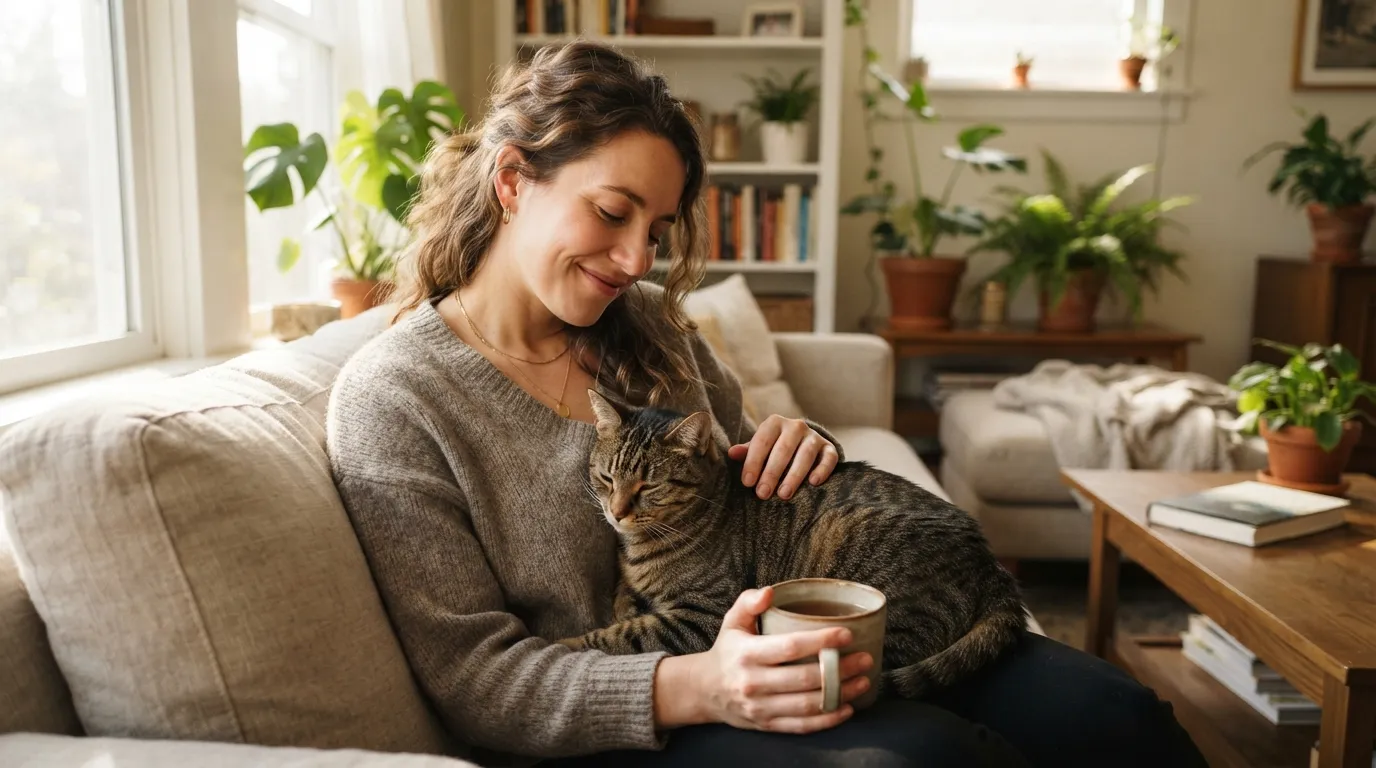
Cat ownership isn’t a guaranteed path to better mental health – the research is nuanced, and it isn’t right for everyone.
But there’s growing evidence that a cat’s presence can support and calm us, reduce loneliness, lower stress and anxiety, and boost overall well-being.
The cat owners who actually benefit aren’t just owning cats – they’re building structured, intentional morning habits around them.
The purring triggers oxytocin. The feeding anchors the day. The presence enforces a phone-free window.
Put together, these ten rituals form something no wellness app has cracked: a living, breathing morning routine that shows up even when your motivation doesn’t.
Which of these do you already practice – or think is most underrated? Drop it in the comments.
Growing up traveling and experiencing new cultures and wonders, I have had a passion for nature, adventuring, photography, and videography. I am currently working towards a BSc in Biodiversity and Ecology at Stellenbosch University, and I hope to specialise in Marine Sciences one day.
Please send any feedback to Feedback@animalsaroundtheglobe.com