16 Quiet Comforts Vets Say Mean the Most to a Senior Cat in Its Final Months
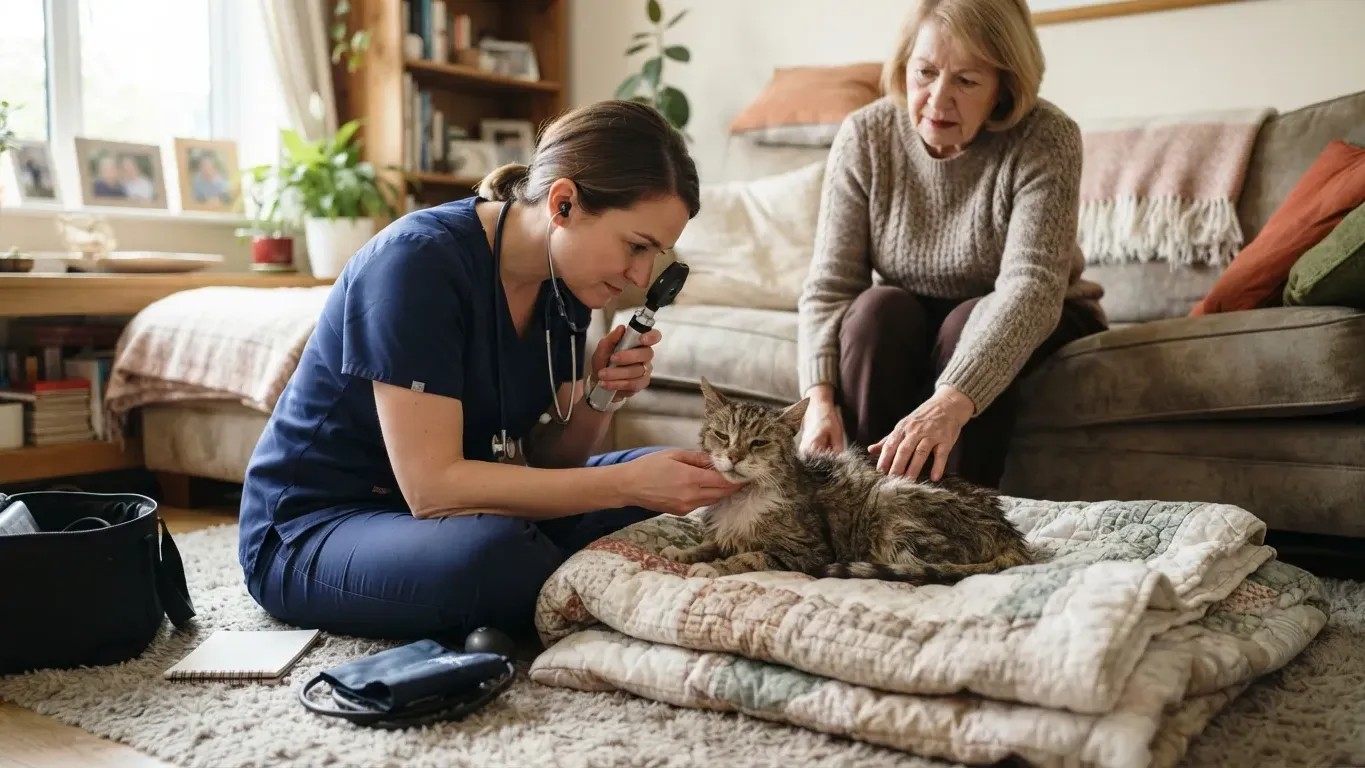
Most cat owners think the final months of a senior cat's life come down to medication schedules and vet appointments - the hard clinical stuff. Hospice vets who specialize in feline end-of-life care say otherwise.
What actually shapes those months is something smaller than any medical decision - the smell of a room, the tone of your voice, whether the litter box is asking too much of a body that can barely walk. Most of these comforts cost nothing and take five minutes to set up, and here's what the experts actually say.
#16 - A Room That's Calm but Not Silent
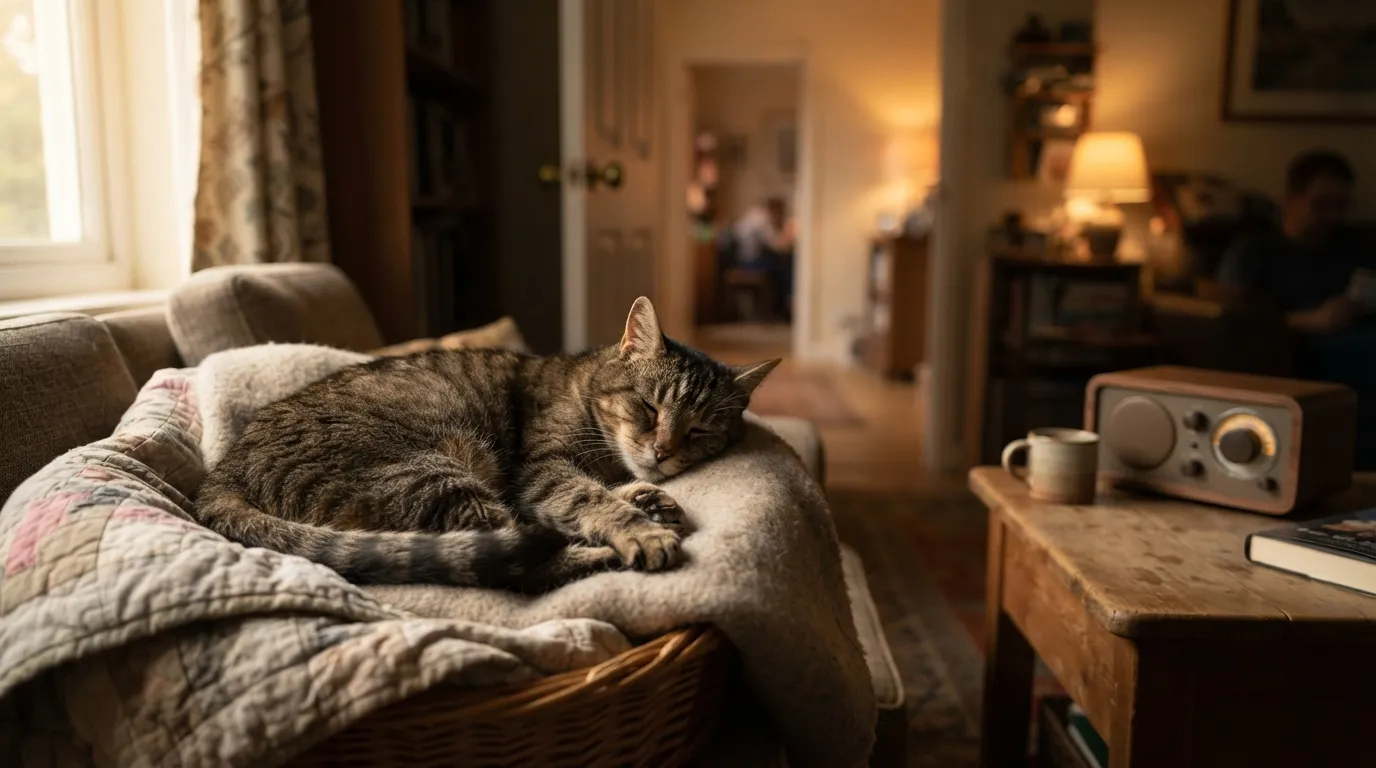
Vets say terminal cats don't want chaos, but they also don't want to feel cut off from the world. The sweet spot is a calm, low-stimulus space where the cat can still hear normal family life without being stuck in the middle of it.
Soft background sound - a quiet radio, white noise, familiar TV voices - is genuinely comforting. Sudden noise, like a phone alarm or a laugh right above their bed, is a real stressor.
A senior cat is more likely to be stressed by unexpected noises, or anxious about new people or pets in the household, and stress can make existing health problems worse. Keep the door slightly ajar, voices at a normal volume, and surprising sounds out of the equation entirely.
But the room itself is only part of the picture - what #15 reveals about temperature will genuinely catch most owners off guard.
#15 - Targeted Warmth (Not Just a Warm House)
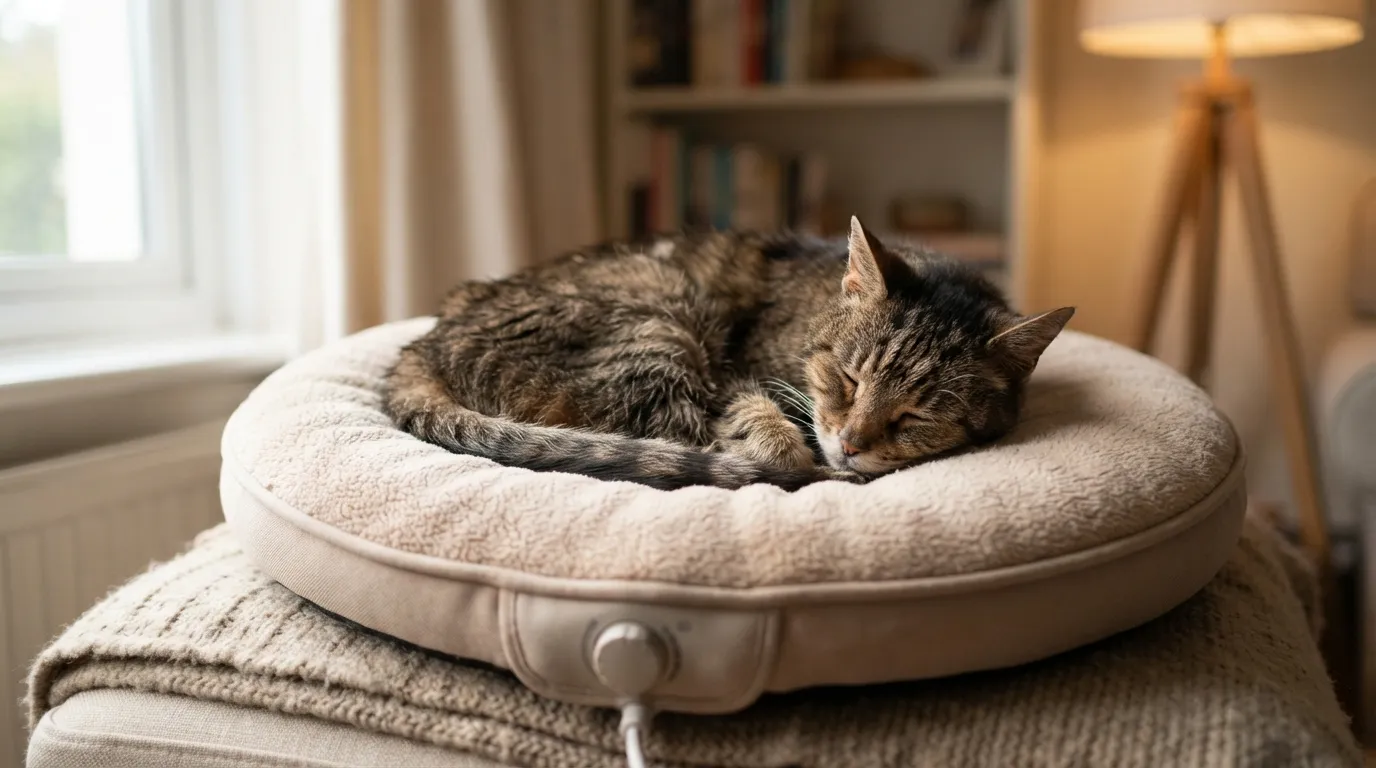
Senior cats lose muscle mass that once helped regulate body heat, making small temperature shifts feel bigger. A house that feels comfortable to you may be genuinely cold to a cat who can barely move from their bed.
Heated cat beds reduce joint pain and help cats sleep more comfortably, but skip human heating pads, which aren't necessarily safe for animals. Choose a pet-safe, temperature-controlled bed that's easy for the cat to leave.
Cats with poor mobility or reduced sensation need closer supervision, because they may not move away when overheated.
A dedicated, thermostatically controlled pet heating pad is one of the single most-recommended items in feline hospice care. It's unglamorous, but it works.
Think warmth is the biggest physical fix? Wait until you see what #14 says about the litter box.
#14 - The Low-Sided Litter Box Is Non-Negotiable
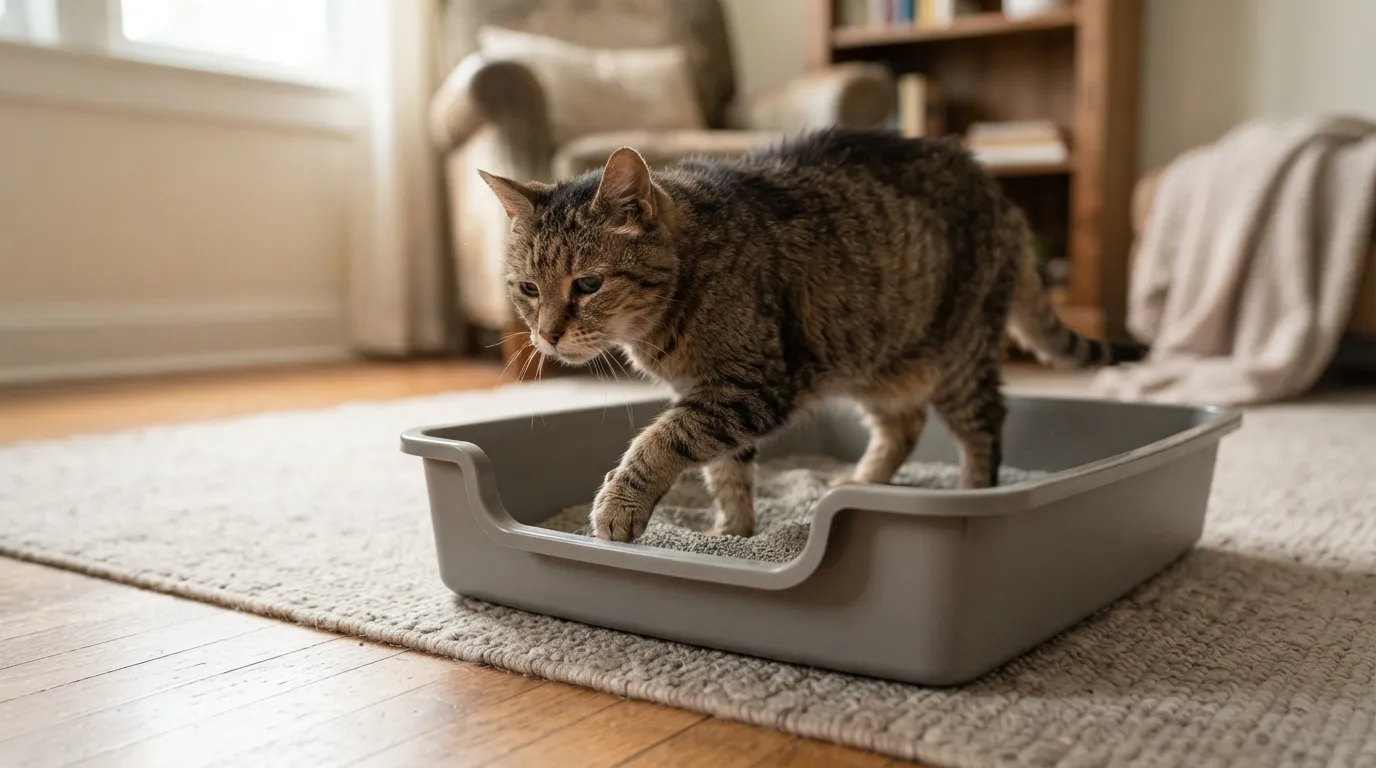
Many senior cats suffer from arthritis or joint stiffness, making high-sided boxes difficult to enter. A low-entry box lets them get in and out without straining their joints.
Senior cats may lose bladder tone as they age, making it hard to "hold it" until they've reached their box. When the box is even slightly too high or too far away, accidents follow.
Owners often misread those accidents as behavioral problems rather than pain signals.
Fast Facts
- This condition is very common in older cats, affecting an estimated 70% to 90% of cats over 12 years of age.
- 90% of cats older than 12 years of age had radiographic evidence of osteoarthritis, even though only 4% of these had any mention of arthritis by either owner or veterinarian.
- A low-entry box removes one of the most painful daily obstacles a stiff-jointed cat faces.
Place a litter box with low sides on every level of your home so your cat doesn't have to navigate stairs. The single most effective hygiene intervention a vet can recommend for a senior cat costs under $20 and fits in a corner. Most owners wait too long to make this swap.
That physical ease matters enormously - but #13 reveals why what the litter box is filled with matters just as much.
#13 - Unscented, Soft-Textured Litter Only
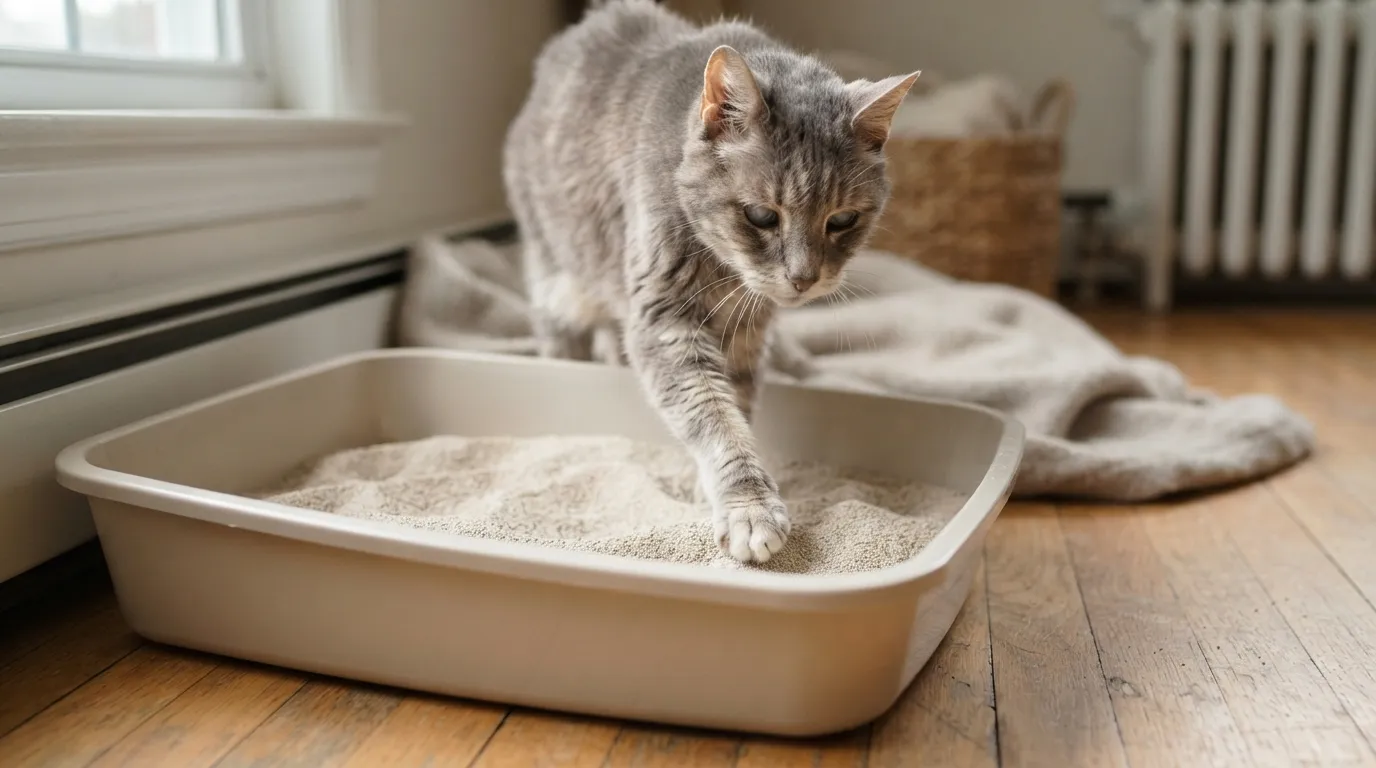
Older cats may develop sensitivities to textures and scents. Rough litter or strong fragrances can be uncomfortable, so a soft, unscented litter creates a more inviting environment.
Older cats often have sensitive paws, so a soft, fine-grained litter is worth prioritizing. Heavily perfumed "odor control" litters are especially problematic.
The scent that covers smells for humans can actively repel a cat whose sense of smell is still sharp even as their body fails.
Switching from scented to unscented litter alone has been enough to resolve litter box avoidance in some senior cats, according to veterinary behaviorists. It's a two-dollar fix hiding inside an expensive problem. Keep the box clean daily with a mild, unscented cleaner too.
Now that you've covered the basics, #12 gets into something few owners ever think about - and it has nothing to do with equipment.
#12 - Keeping the Routine Locked In
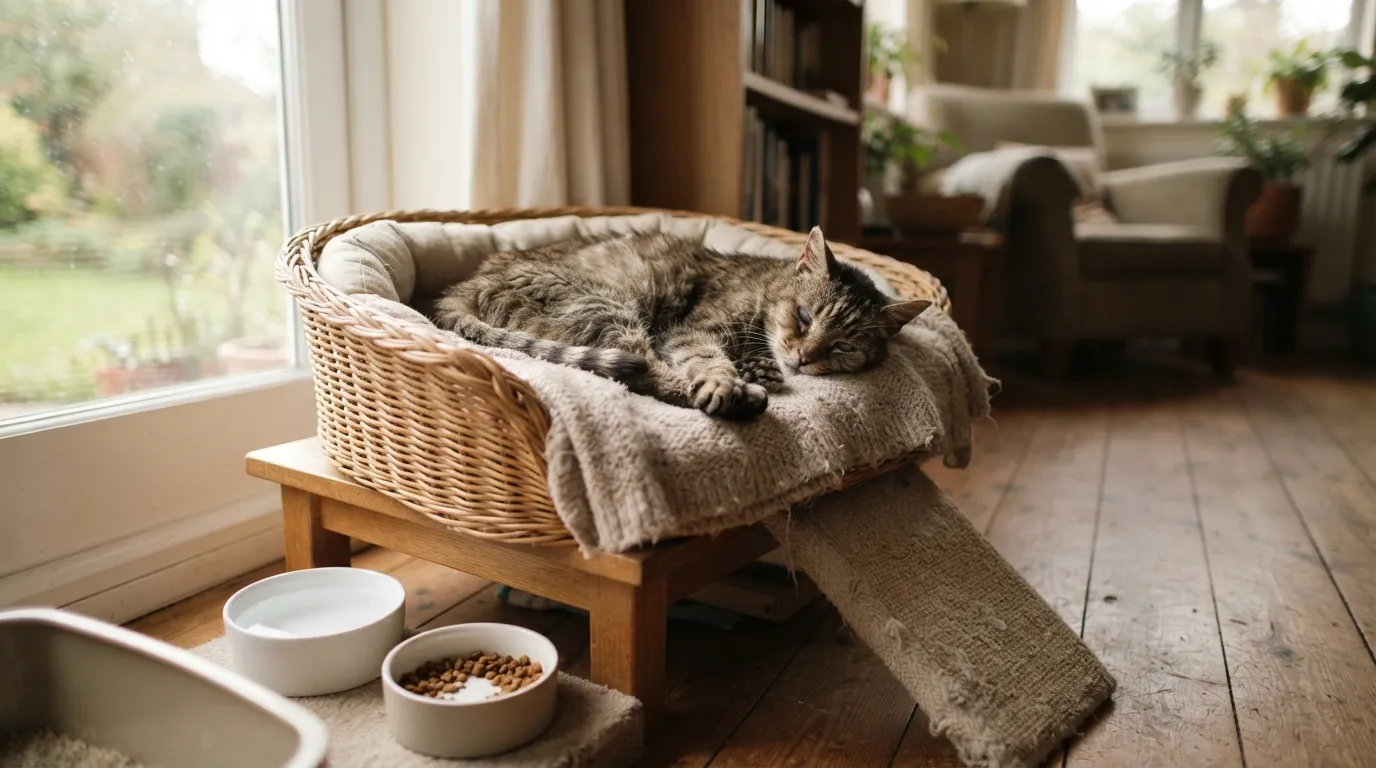
A senior cat is more likely to be stressed by any change in routine or environment. Feeding at the same times, cleaning the box at the same hour, and resting in the same spots isn't boring - it's a form of medicine.
Low-sided boxes on every level, multiple water and feeding stations, ramps to favorite spots, warm resting areas, and a predictable routine all support a geriatric cat. The most comforting thing for a cat whose world is shrinking is proof that the world still makes sense.
Predictability reduces cortisol, and lower stress directly reduces the perception of pain in cats - that's established in feline veterinary literature, not anecdotal. Disrupt a dying cat's routine and you've introduced a stressor their body can no longer absorb.
And if you think routine is powerful, #11 adds a layer to it that most owners overlook entirely.
#11 - Familiar Scent Over Fresh Bedding
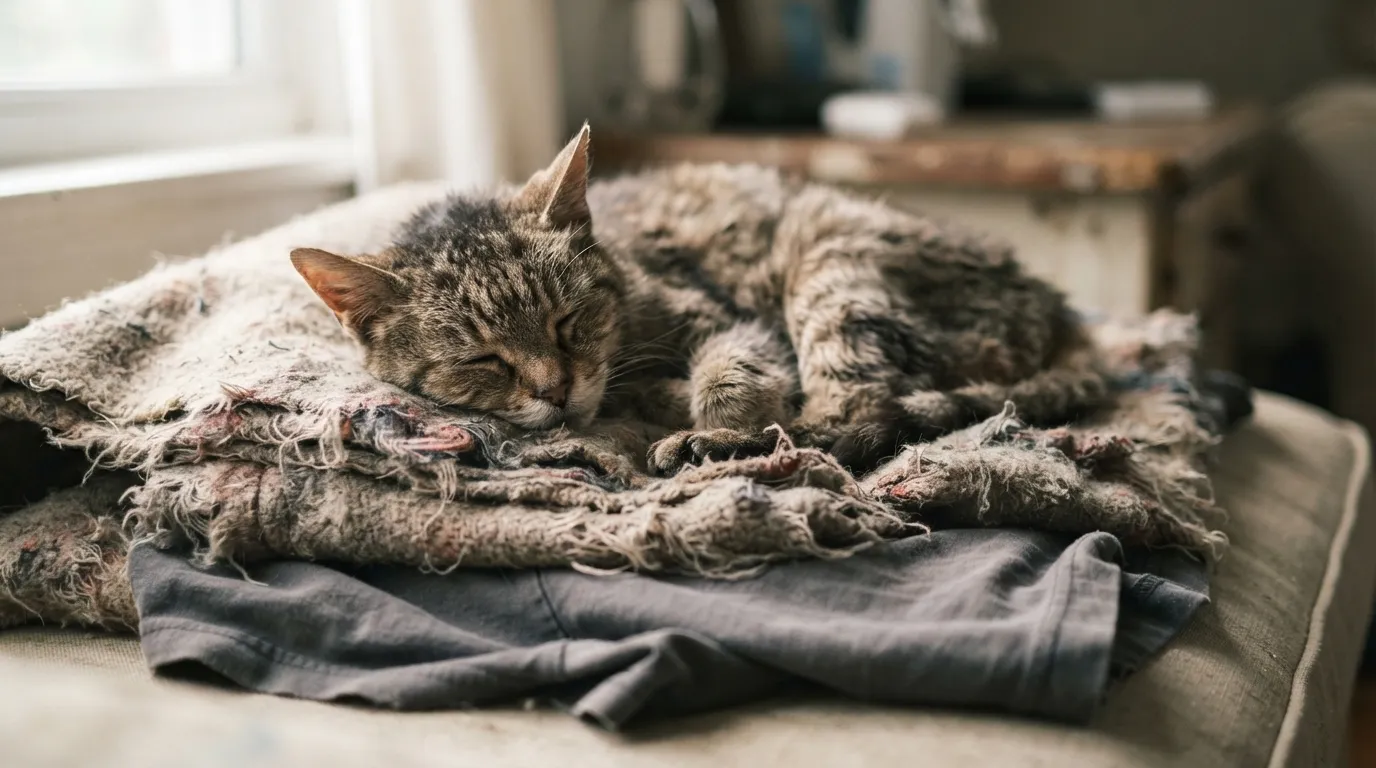
Vets often see cats settle more deeply into an old, worn item than a plush new one bought in a panic. Skip the last-minute haul of gear - keep the ratty blanket they've kneaded for years.
It tells their nervous system, "I know this, I'm safe." Better yet, layer in one of your worn T-shirts so your scent stays close even when you're not in the room.
Cats live and die by scent, and in the final stretch, unfamiliar smells can actually spike anxiety instead of soothing it. Trading that lived-in comfort for something "cuter" is, quietly, one of the mistakes vets say they wish more owners avoided.
The instinct to upgrade everything when a cat is sick is human. The cat, however, disagrees with that instinct completely.
Now here's where things get surprising - #10 is about something almost no one adjusts, and it directly affects how much a cat eats.
#10 - Raised Food and Water Bowls
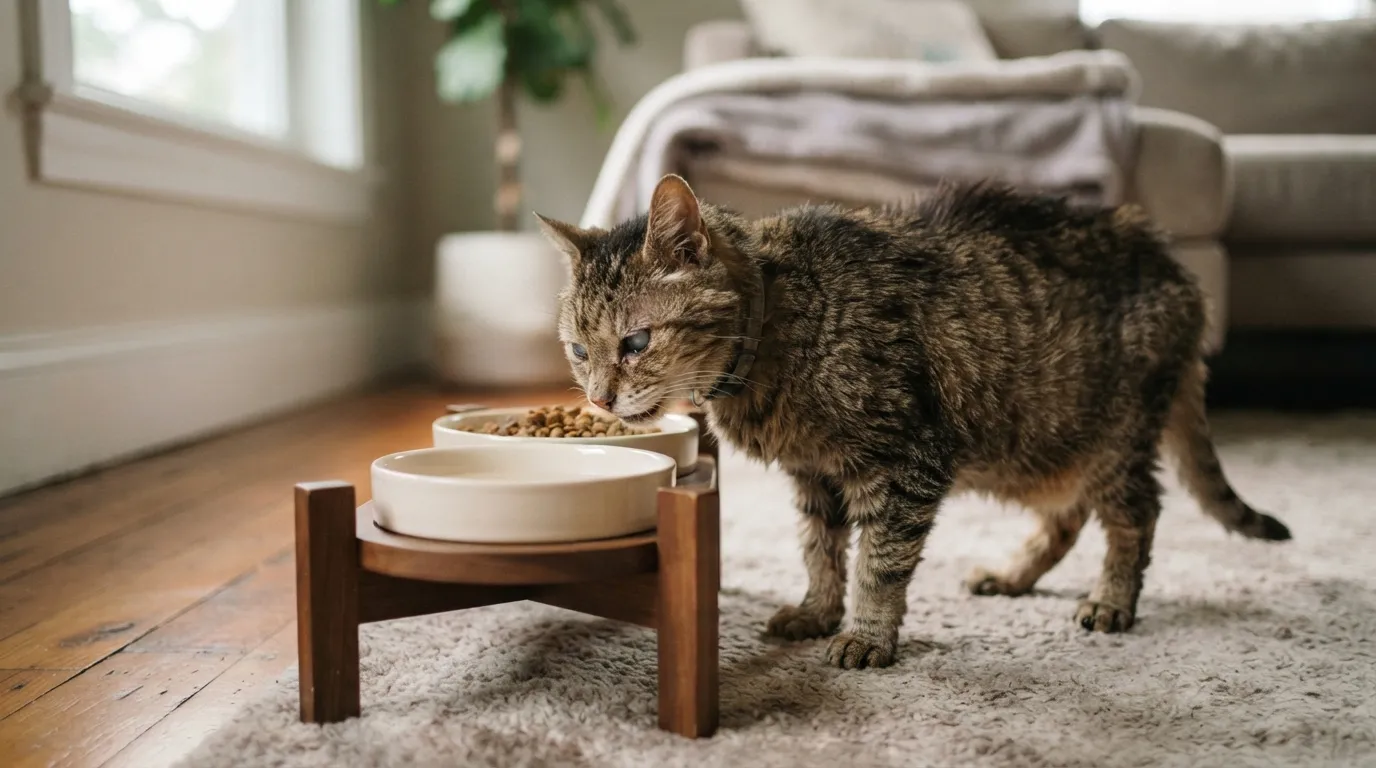
Most owners put food bowls flat on the floor their entire cat's life without a second thought. But for a senior cat with arthritis in the neck or spine, bending down to eat can be genuinely painful.
Pain at mealtime means the cat eats less, loses weight faster, and declines more quickly. Raising the bowl just two to three inches off the floor can meaningfully improve meal intake.
This is a consistent recommendation across veterinary physiotherapy - simple, cheap, and almost universally ignored until someone points it out. Place several feeding stations around the home, and keep bowls away from litter boxes.
The goal is to remove every friction point between a weakening cat and the things it needs most.
Speaking of eating, #9 reveals exactly what vets say about the food itself - and one popular choice turns out to be the wrong one.
#9 - Wet Food as the Primary Diet
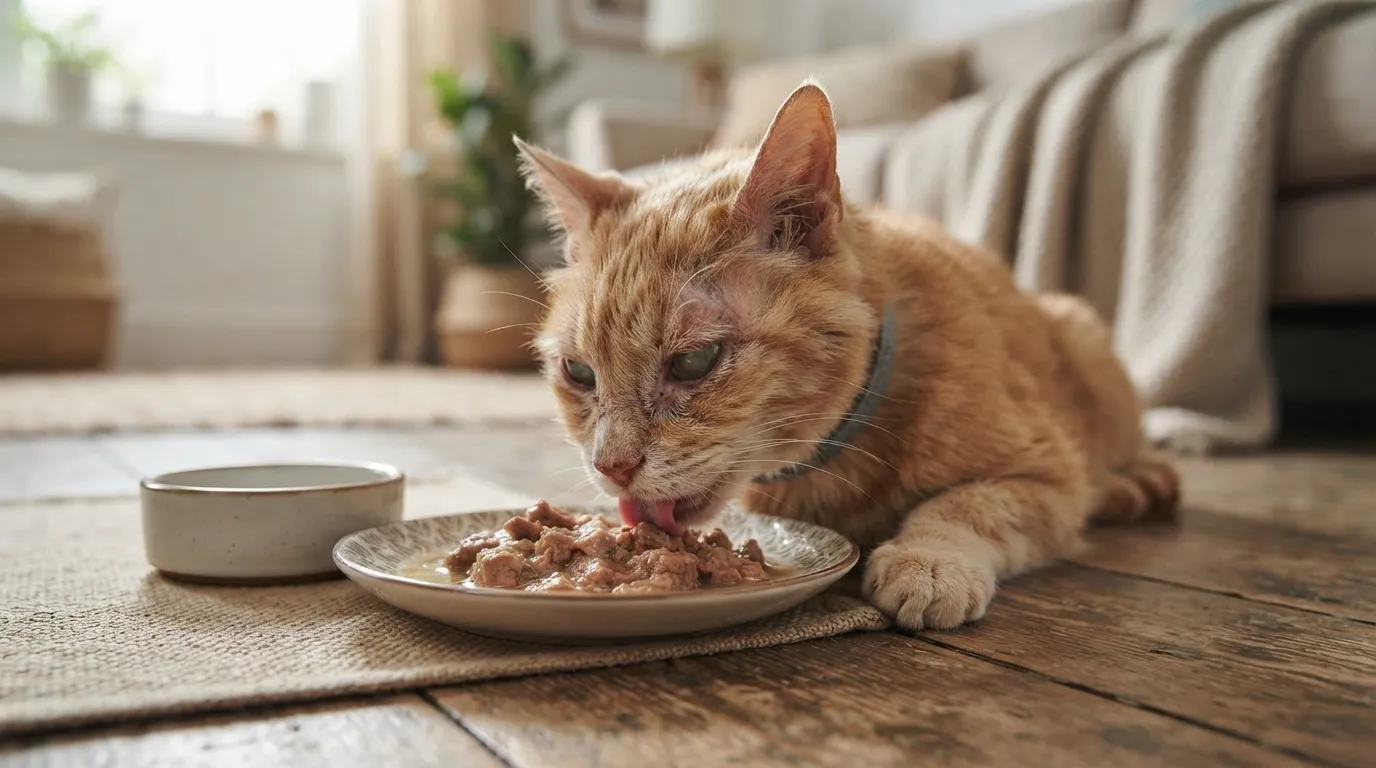
Senior cats often need dietary adjustments as they age. They benefit from diets lower in calories but rich in easily digestible proteins that support muscle mass.
Wet food has an edge over dry food because hydration is critical for aging cats. Cats are notoriously poor drinkers, and dehydration accelerates kidney decline - the most common condition in senior cats.
Quick Compare
- Wet food: about 75-78% moisture, while dry food has only 10-12% moisture, making it far more hydrating.
- Kidney disease risk climbs with age: affecting 30% to 40% of cats over 10 years of age and 81% of cats over 15 years.
- More moisture at every meal means less strain on kidneys already working overtime.
A healthy senior cat shouldn't automatically be switched to a low-protein or restricted diet. Kidney disease, diabetes, obesity, dental disease, and low body weight can all call for very different feeding plans, so don't self-prescribe without your vet's input.
Wet food as a base is almost universally appropriate, though. Appetite in the final months is fragile - protect it.
But there's something even more powerful than the food itself - and #8 will surprise you.
#8 - Multiple Water Stations Around the Home
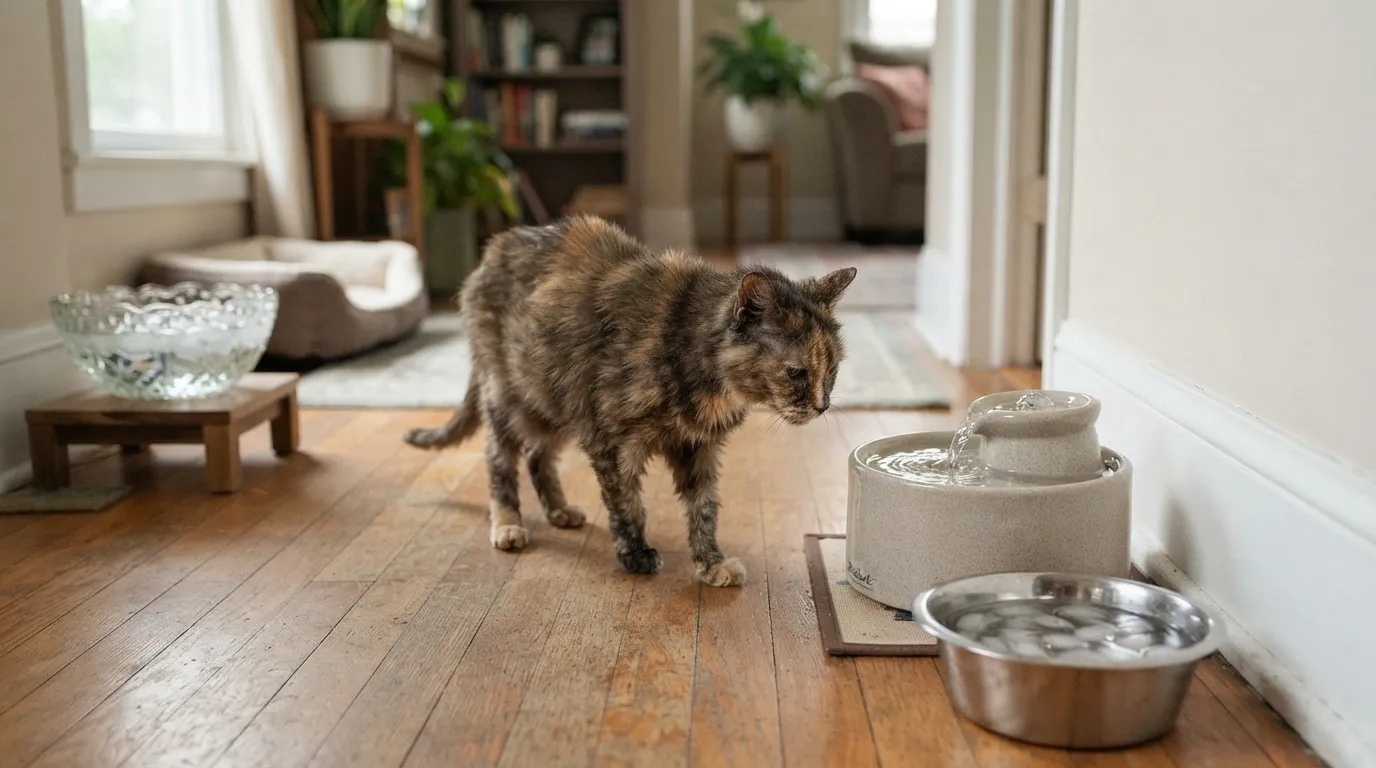
Have several watering stations with a variety of bowls, glasses, and fountains to encourage drinking. Some cats prefer colder water, so offer ice water at one station.
Automated water fountains encourage hydration because moving water appeals to a cat's instincts. Many senior cats who ignore a stagnant bowl will drink reliably from a fountain.
Chronic dehydration in cats with kidney disease is one of the most correctable contributors to faster decline - and it's correctable at home, not just in a clinic. The rule of thumb from hospice teams: more stations, less effort for the cat.
Once you've handled hydration, #7 gets into something emotional - and it's the one comfort owners get wrong most often out of love.
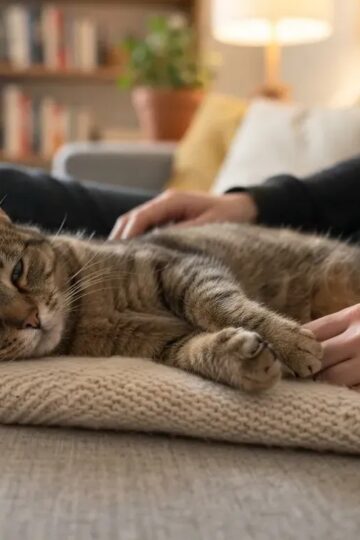
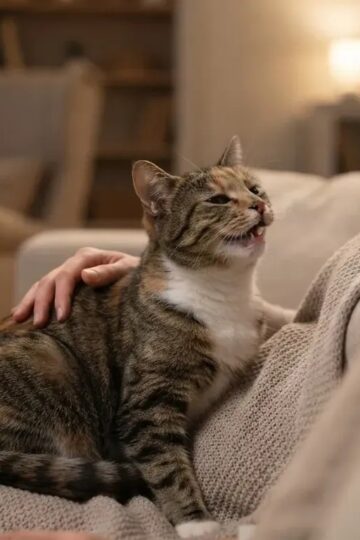
#7 - Gentle Touch on the Cat's Terms
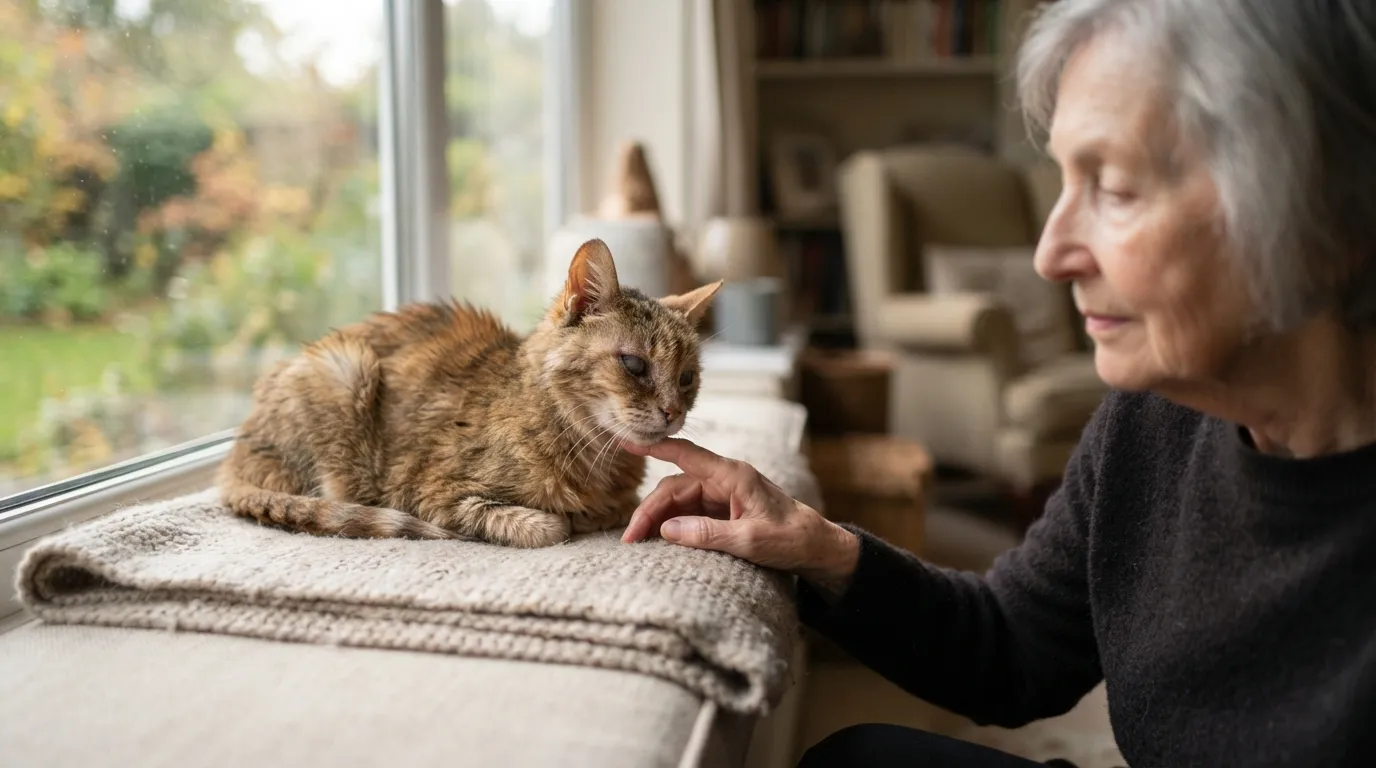
Some cats want to be near you constantly at the end. Others quietly withdraw, and both are normal.
If your cat retreats, let them choose, and simply be nearby. The mistake most loving owners make is pursuing contact when the cat pulls away.
Picking up a cat in pain - however well-intentioned - can create fear around human contact at exactly the moment when connection matters most. Follow the cat's cues, not your own need to help.
Sitting on the floor at their level, avoiding direct eye contact, and letting them come to you signals safety far more powerfully than a forced cuddle. Being present without demanding anything in return is the advanced skill of senior cat care.
And yet, touch only works if something else is already in place. #6 deals with that foundation.
#6 - Pain Management, Properly Guided
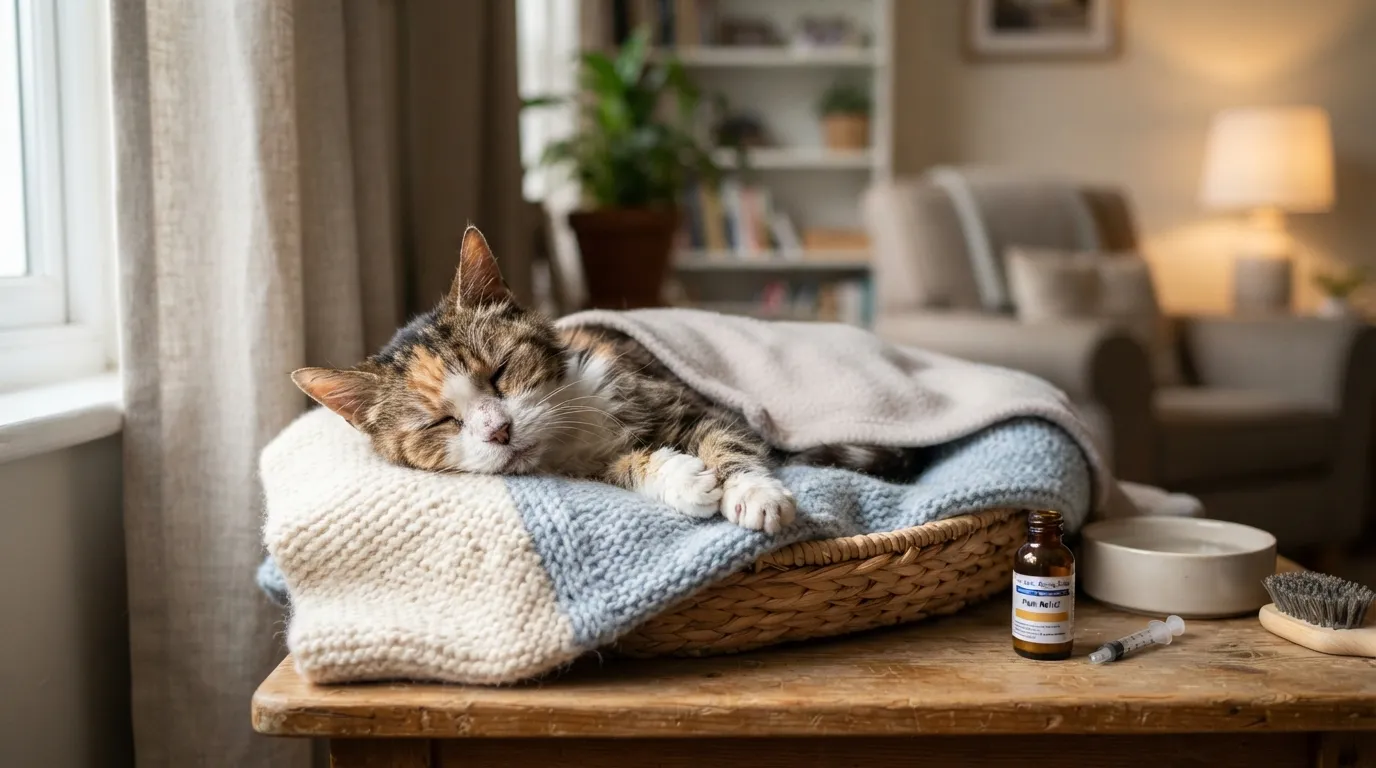
You manage a dying cat's pain by working closely with your veterinarian, who can prescribe safe, effective medications. Warmth and a soft, quiet resting place matter, but pain management is the single most important part of end-of-life comfort.
Cats hide pain very well, and the signs can be subtle. Behavior changes, lack of grooming, litter box avoidance, or hiding are all red flags.
Worth Knowing
- Reduced grooming, especially around the hindquarters, often points to joint pain rather than laziness.
- Hiding more than usual can signal discomfort, not just normal aging.
- A cat that stops jumping onto once-favorite surfaces may be protecting a painful joint.
- Quiet isn't calm - it's often a cat's way of coping with pain alone.
A cat that seems "quiet" may in fact be in significant pain, and owners frequently mistake silence for acceptance. Palliative care includes pain control, anxiety control, and nutritional support working together.
Never adjust or discontinue a cat's pain medication without speaking to your vet first - even natural remedies require veterinary clearance in a compromised animal. Get the pain right, and everything else on this list becomes more effective.
Which brings us to #5 - the comfort that costs literally nothing.
#5 - A Calm, Steady Voice
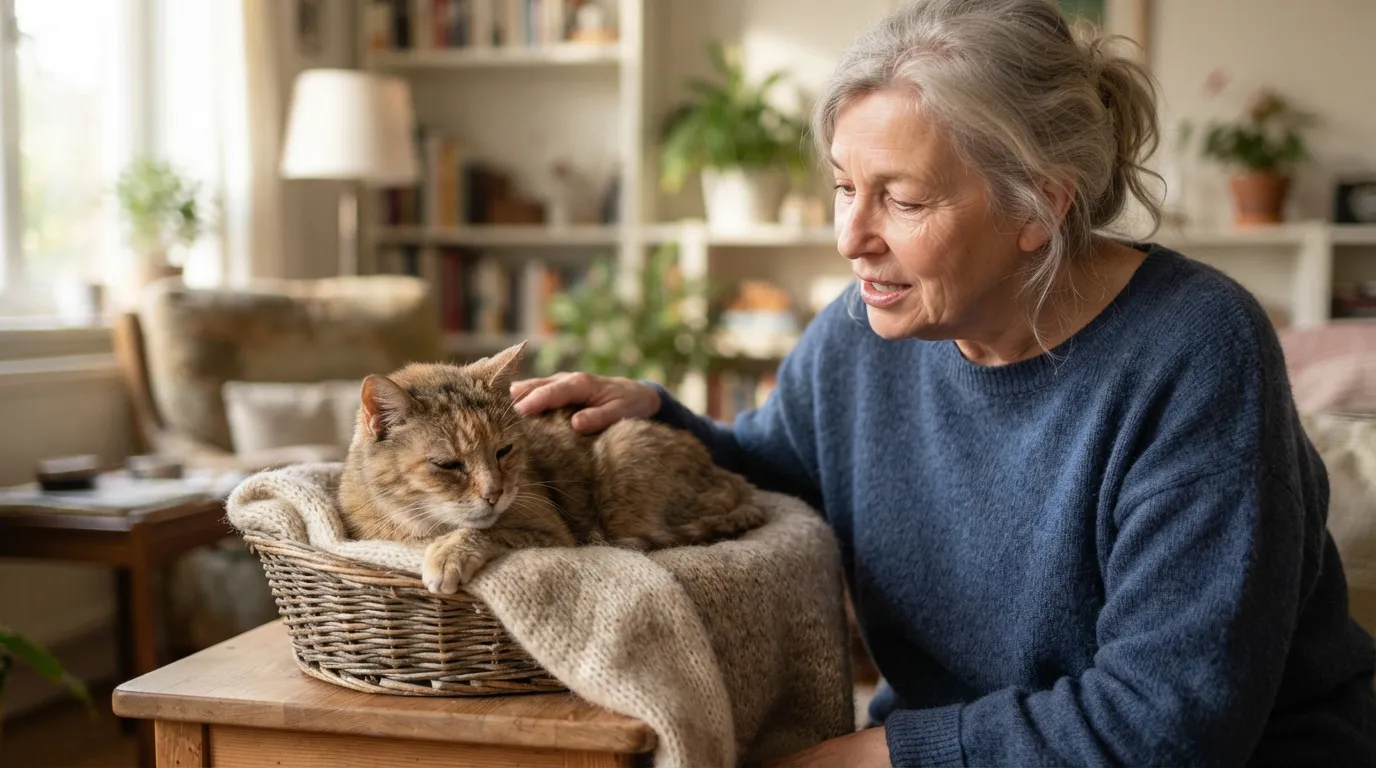
The tone you use around a sick cat matters more than most people realize. Cats read human emotional state through voice pitch, pace, and volume.
A voice that shifts into anxious "sick talk" can communicate distress directly to an animal already under physical strain. That includes sudden shifts in your own emotional register, not just outside noise.
Speak in your normal, everyday voice. Don't whisper dramatically or coo excessively - both signal to the cat that something is wrong.
The vets who spend the most time with dying animals say this quietly and consistently: the cat is reading you. Your nervous system and theirs are still in conversation.
#4 gets into the home environment itself - and one specific modification most owners never think of.
#4 - Night Lights Along Walking Routes
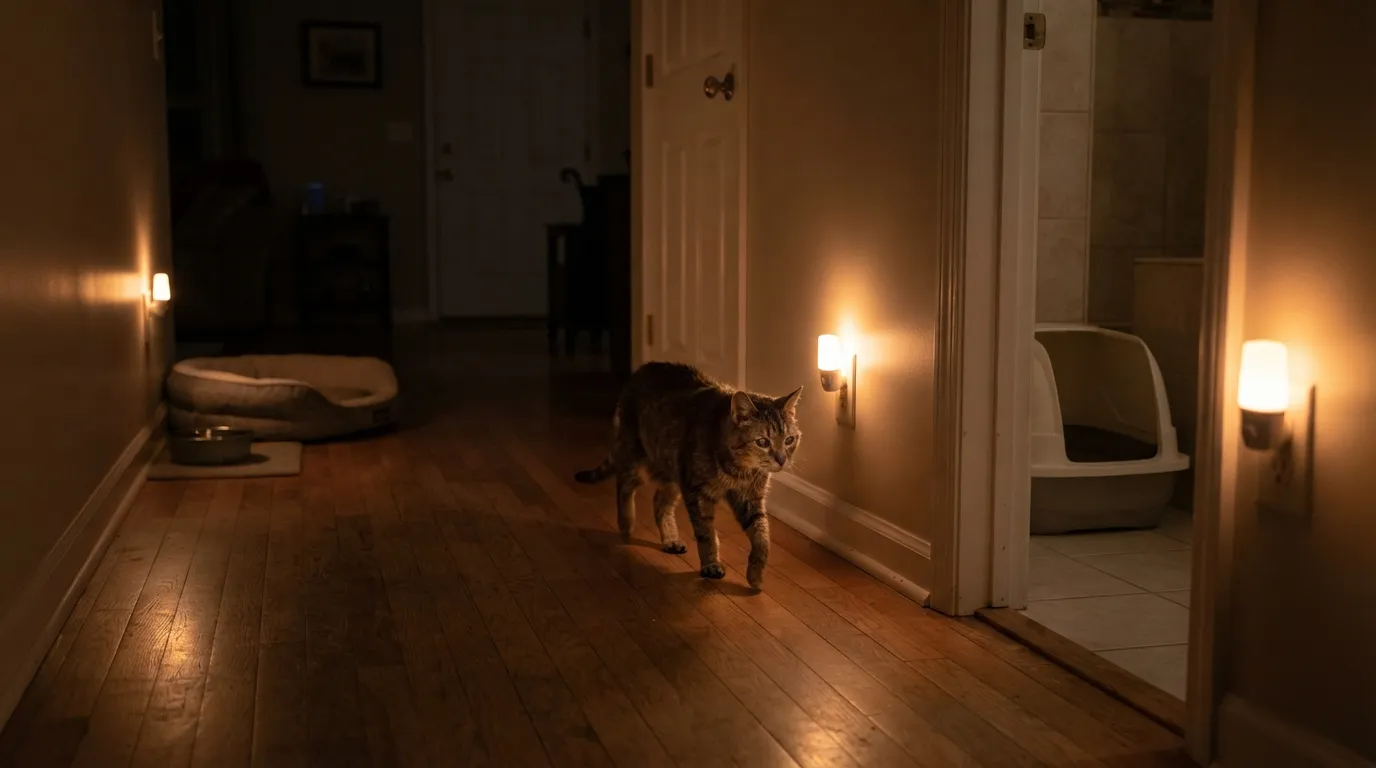
Night lights guide cats to their essentials in the dark, adding both comfort and safety. Senior cats - especially those with early cognitive decline or vision changes - can become disoriented after dark.
A cat that can't find its litter box at 2 a.m. is a cat that has an accident, gets stressed, and sleeps worse. This is the kind of detail hospice vets mention almost as an aside, and owners remember it as a revelation.
It takes five minutes and three plug-in night lights. Disorientation at night is one of the more distressing experiences for a senior cat, and one of the most preventable.
#3 is the one comfort that ties everything else together - and it's about what you do when you're not in the room.
#3 - Ramps and Steps to Favorite Spots
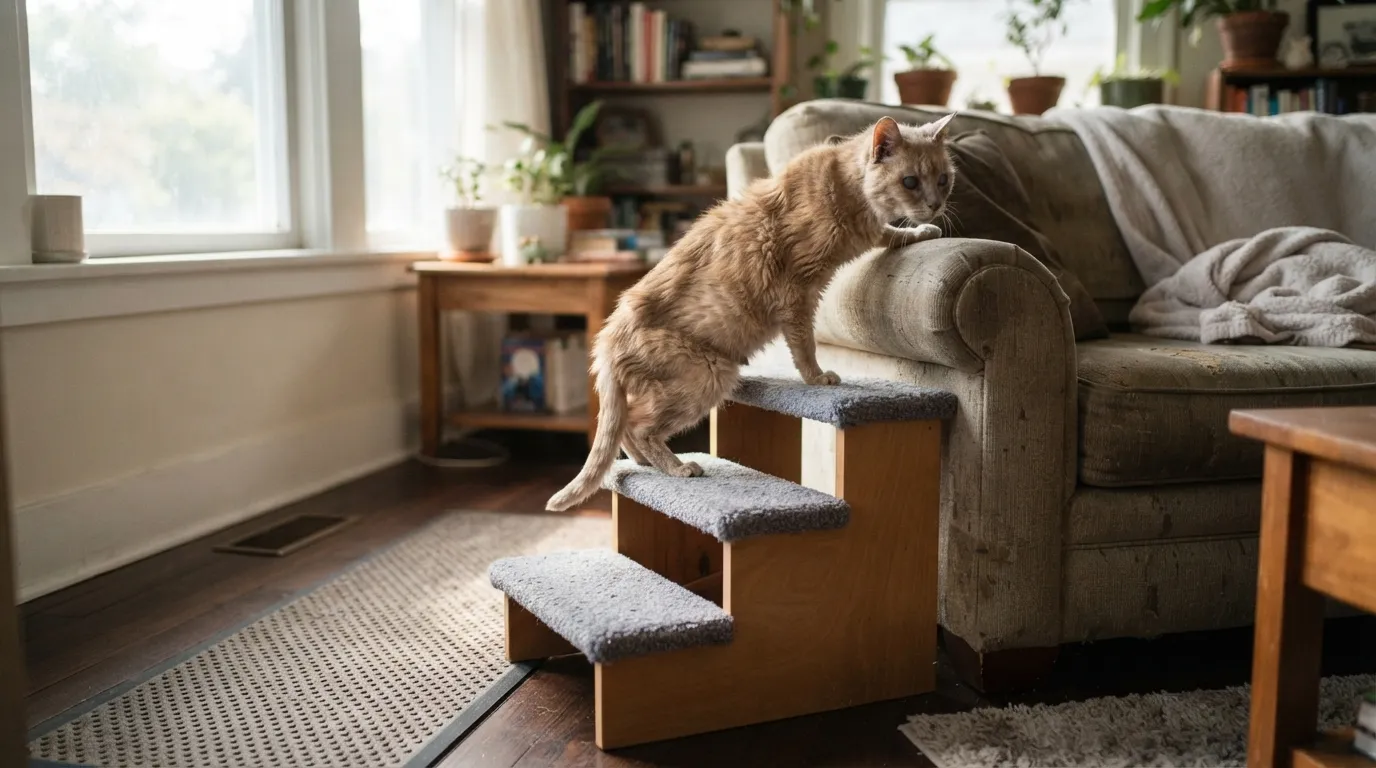
Place carpeted steps or ramps near your cat's favorite elevated spots so they can reach them more easily. A senior cat that can no longer jump to the windowsill it's used for twelve years has lost a source of joy, stimulation, and safety, all at once.
Non-slip rugs on hardwood floors matter enormously too. A cat with weakened muscles on a slippery floor stops moving, and a cat that stops moving declines faster.
Maintaining access to even one beloved spot - the couch arm, the sunny corner, the window perch - is an act of dignity that hospice vets explicitly prioritize. It tells the cat: you still belong here.
#2 is something nearly every vet will bring up, and it tends to be the most underused resource available.
#2 - Consistent Veterinary Check-Ins at Home
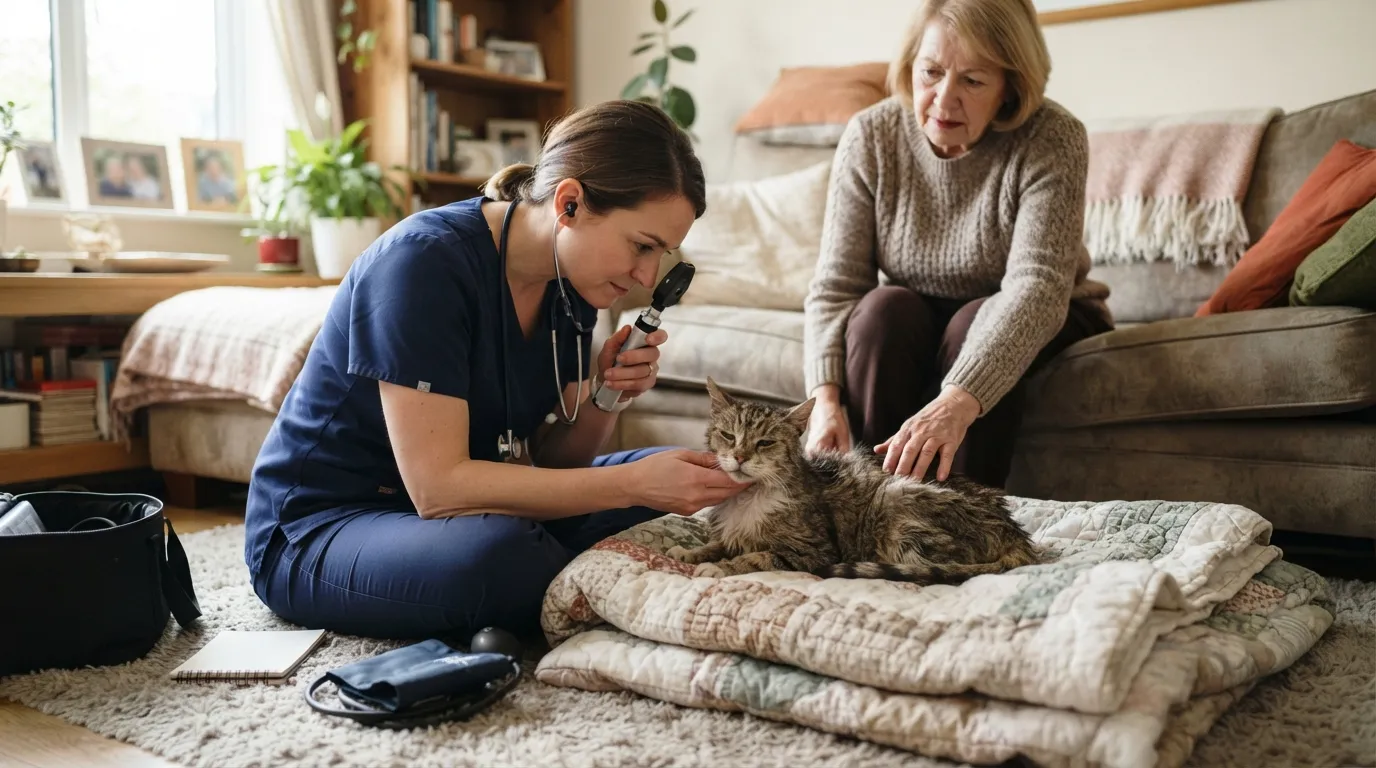
If your geriatric pet has mobility issues, consider an in-home vet who specializes in older pets and offers hospice or palliative care. Clinic visits are stressful for healthy cats; for a dying one, the carrier, the car ride, and the exam room can be genuinely traumatic.
At a Glance
- The global hospice/palliative care pet end-of-life services market size was valued at US$ 704.6 million in 2025 and is estimated to grow at a compound annual growth rate (CAGR) of 10.3% from 2025 to 2033.
- In-home hospice care has emerged as the fastest-growing and most preferred option, accounting for approximately 35% of total market revenue in 2024.
- More practices now offer tele-triage and home-based pain management as standard, not extras.
Veterinarians tailor hospice care to help owners manage comfort and the challenges of caregiving. Cats who receive hospice care may live their fullest life possible and reach a peaceful goodbye.
Hospice and palliative care isn't just for "the final days" - it's specialized medical care for senior pets or pets living with serious illness. Waiting until the very end to involve a palliative specialist means missing weeks of improved quality of life that were available the whole time.
In-home veterinary hospice is one of the fastest-growing areas in veterinary medicine - and most cat owners don't know it exists until they need it.
Which brings us to the #1 comfort - the one hospice vets say matters most of all, and the one no piece of equipment can replace.
#1 - Your Informed, Present Calm
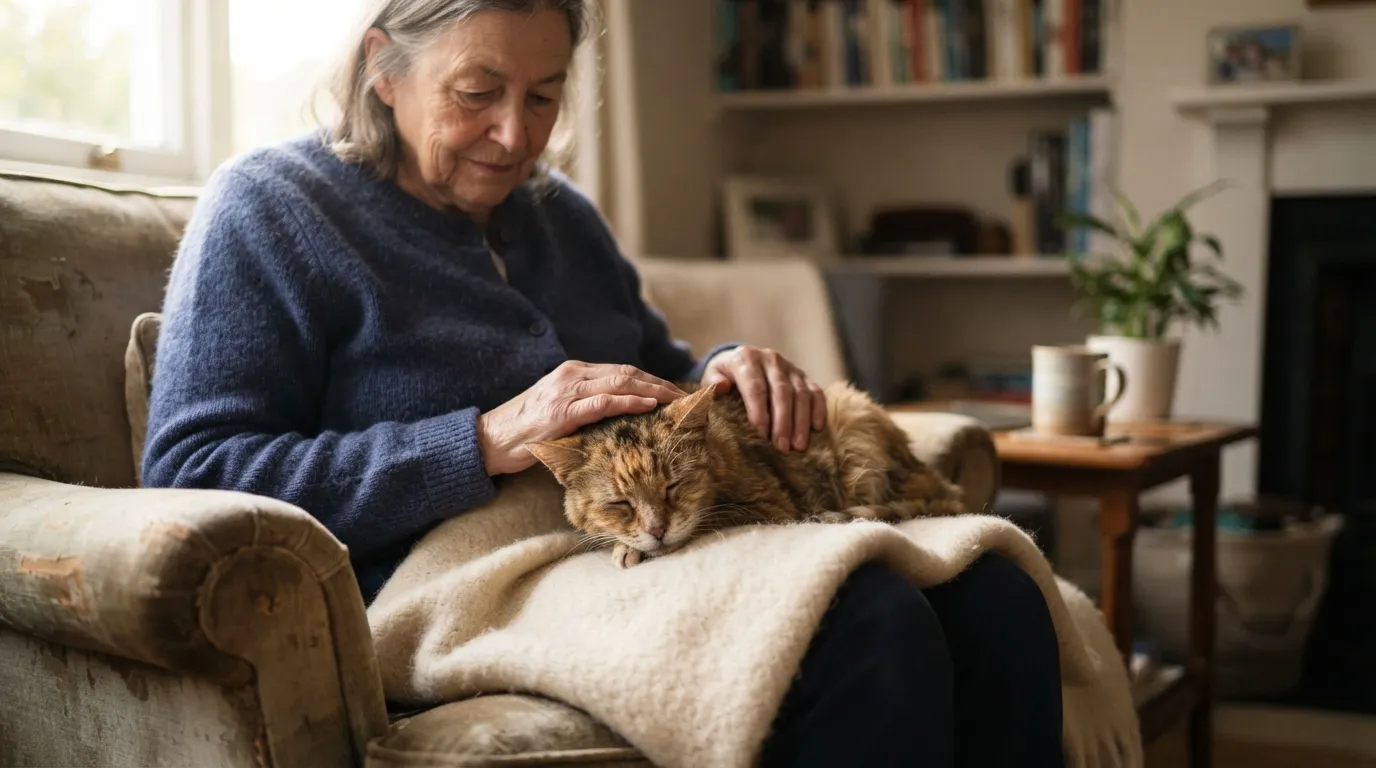
Minding your senior cat's health, nutrition, and comfort - and giving them lots of love - goes a long way toward making their final months rewarding for you both. Regularly watch for good appetite, pain-free movement, and regular interaction with you and others.
Overall, your cat should have "more good days than bad." That benchmark is the clearest, most honest quality-of-life measure in veterinary palliative care, and it belongs in every owner's head.
An honest talk with your vet about hospice and euthanasia is an act of love, not failure.
Common guidance from veterinary hospice care teams
The most profound comfort a senior cat receives in its final months is an owner who is educated, calm, and paying close attention. Everything else on this list works better when that foundation is solid.
Be the person your cat has always known - just more deliberate, more present, and more informed than ever before.
The Bottom Line
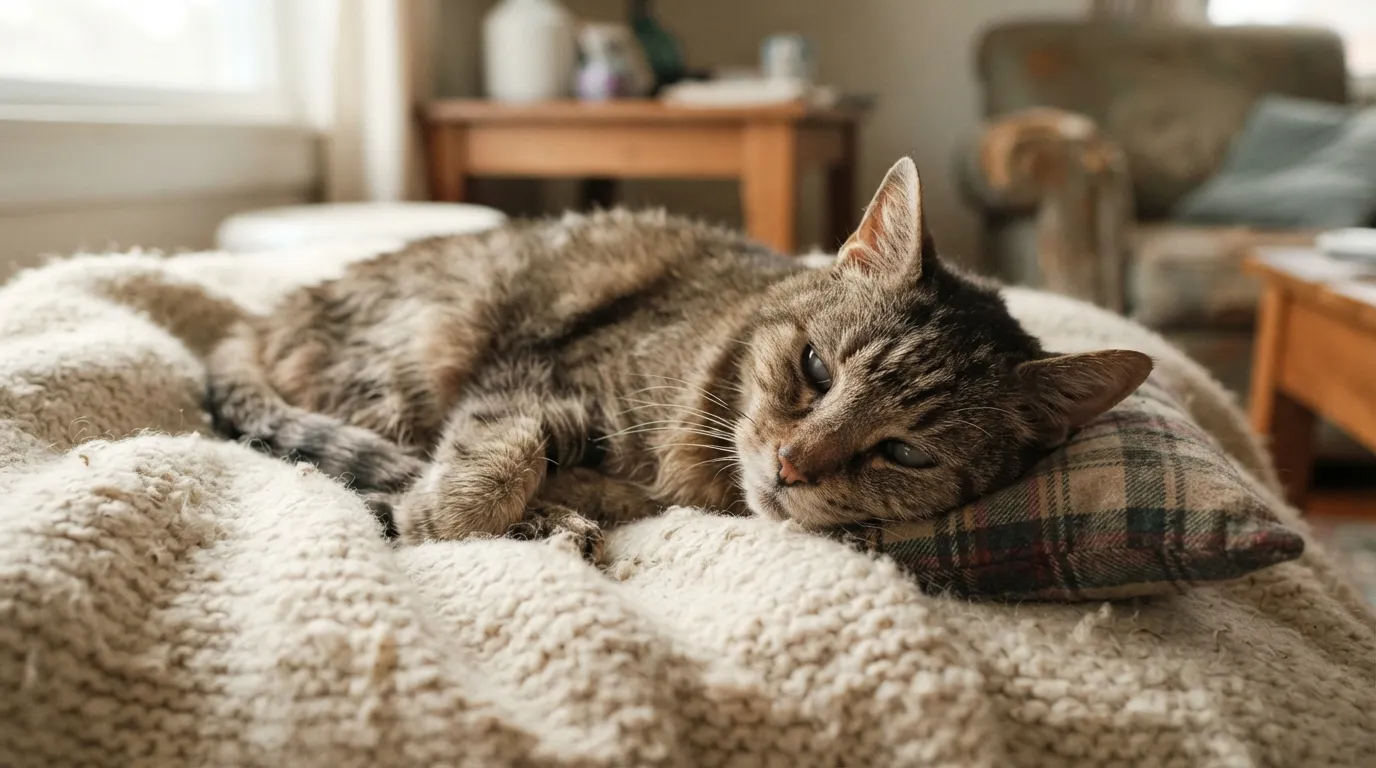
None of this is dramatic, and that's exactly why nobody talks about it. Vets say these quiet, almost invisible choices often decide whether a cat's ending feels peaceful or panicked.
The comforts that matter most - a familiar blanket, a low-sided litter box, unscented litter, a calm voice, warm bedding, steady routine - are almost embarrassingly simple. But simple isn't the same as easy, and it isn't the same as unimportant.
Senior cats often ask for our care in very quiet ways. A little more support, easier access to essentials, a warmer resting place, and a predictable routine can make a meaningful difference.
Which of these did you already have in place - and which one caught you off guard? Drop it in the comments.