14 Habits Veteran Cat Owners Quietly Wish Every First-Time Owner Knew
Most people treat cat ownership like the easy pet choice - low effort, low mess, low commitment. That assumption is quietly behind a shocking number of surrenders, emergency vet visits, and burnt-out owners who never saw it coming.
Cats look independent. They are not simple. Veteran owners learn the real rules through trial, error, and a few heartbreaking mistakes - and they rarely say any of it out loud until you ask. Here's what they'd tell you if they were being honest.
#14 - The "Cats Are Independent" Myth Is Costing You the Relationship
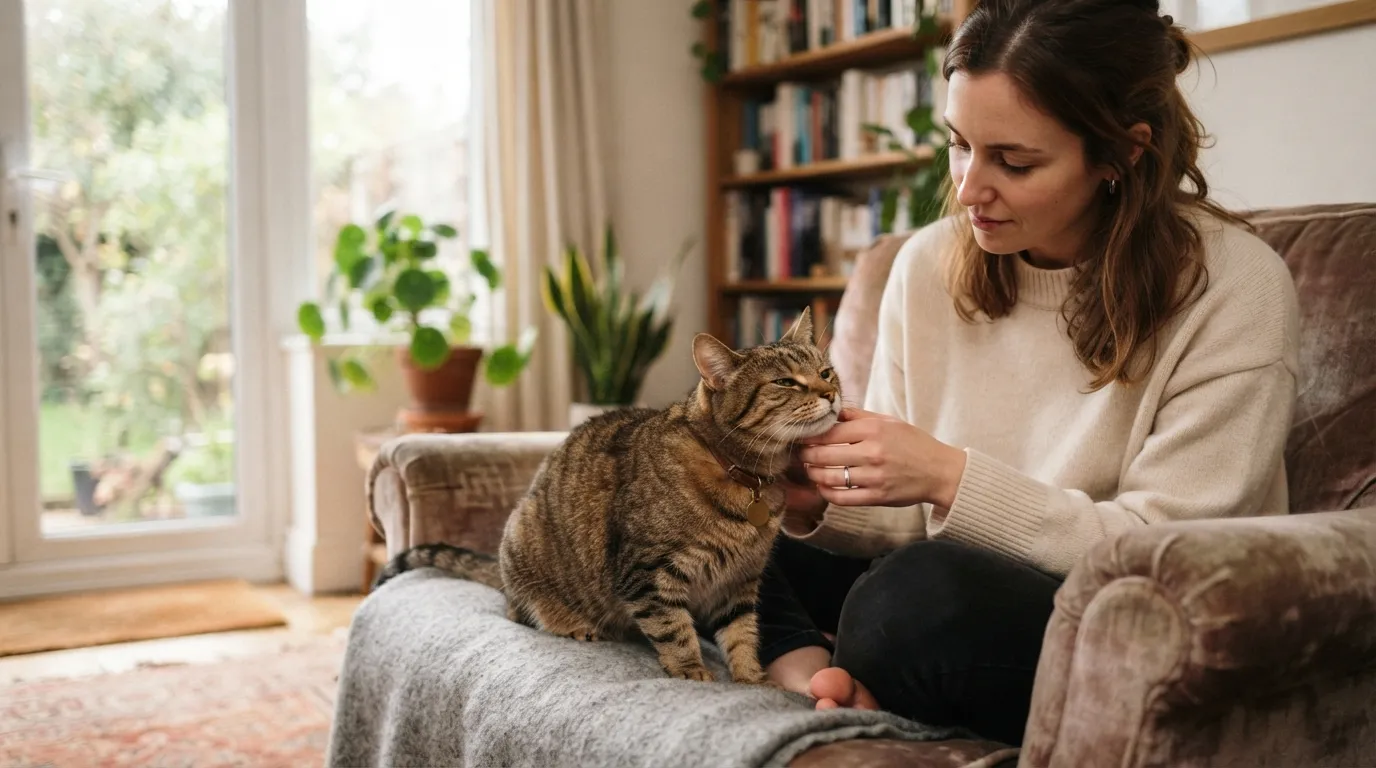
Most new owners treat a cat's independence as permission to be hands-off. That's the first mistake, and it's the one that quietly damages everything else.
Owners who understand cat behavior and build a real bond with their cats report far fewer behavioral problems. Your cat isn't aloof - it's reading you constantly.
Calmer, more predictable owners tend to raise calmer cats. Erratic or overly intense owners often end up with anxious ones who hide or act out.
Your energy is your cat's environment. That's not a metaphor - it's documented behavior.
Give your cat attention on its terms, not yours. Learn to invite connection instead of forcing it.
But that's nothing compared to the litter box blunder almost every first-timer makes next...
#13 - You Need More Litter Boxes Than You Think
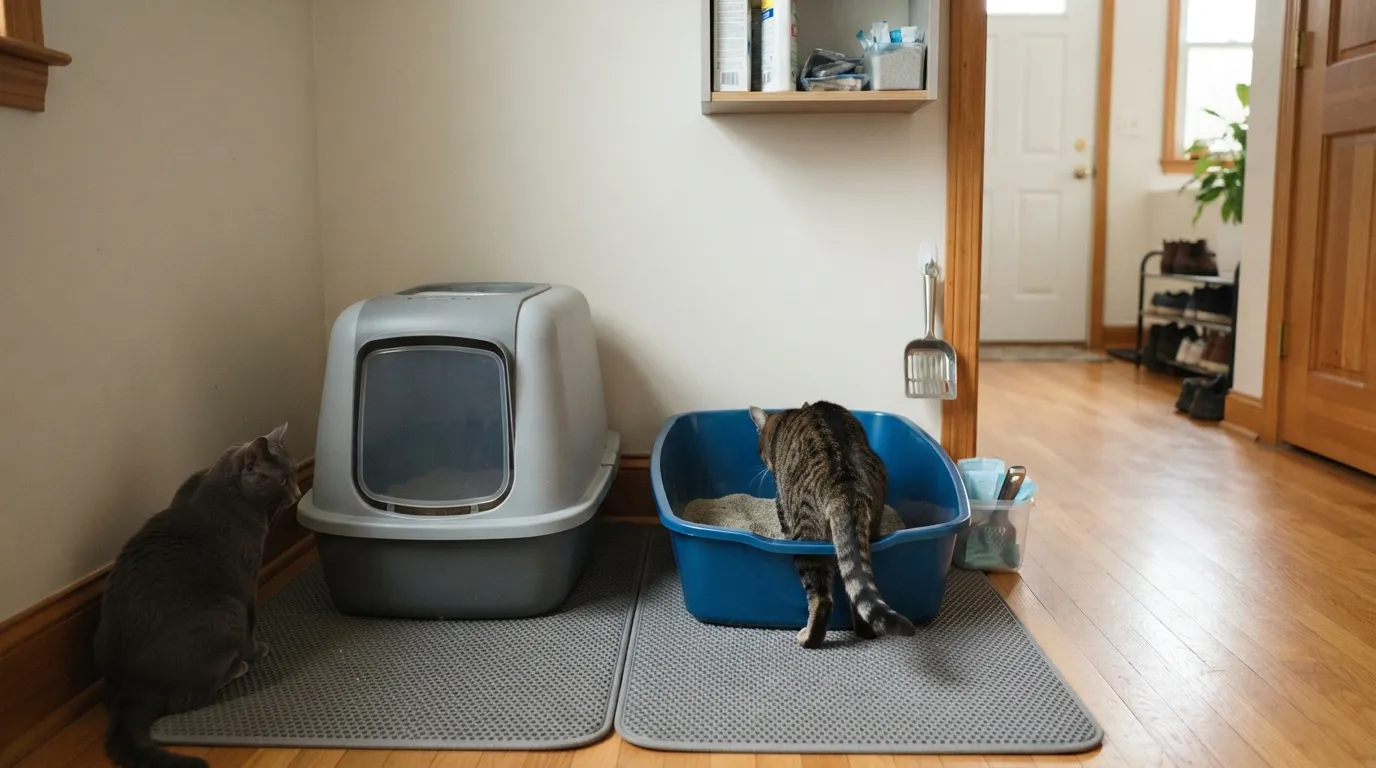
New owners almost always buy one litter box for one cat. That's half of what most vets actually recommend.
The house should have one box for each cat plus one extra - so two for one cat, three for two cats, and so on.
Dr. Audrey Cook, Texas A&M School of Veterinary Medicine
This isn't a suggestion. It's a near-universal standard across veterinary medicine.
Inappropriate elimination - a cat refusing the box and going elsewhere - is the leading behavioral reason cats end up in shelters. One poorly managed litter box situation can end a cat's home life.
A sudden change in bathroom habits is never "just behavior" until a vet rules out a medical cause. When in doubt, call the vet, not a cleaning service.
But the number of boxes means nothing if you put them in the wrong place - which is exactly what trips up owners next...
#12 - Where You Put the Litter Box Changes Everything
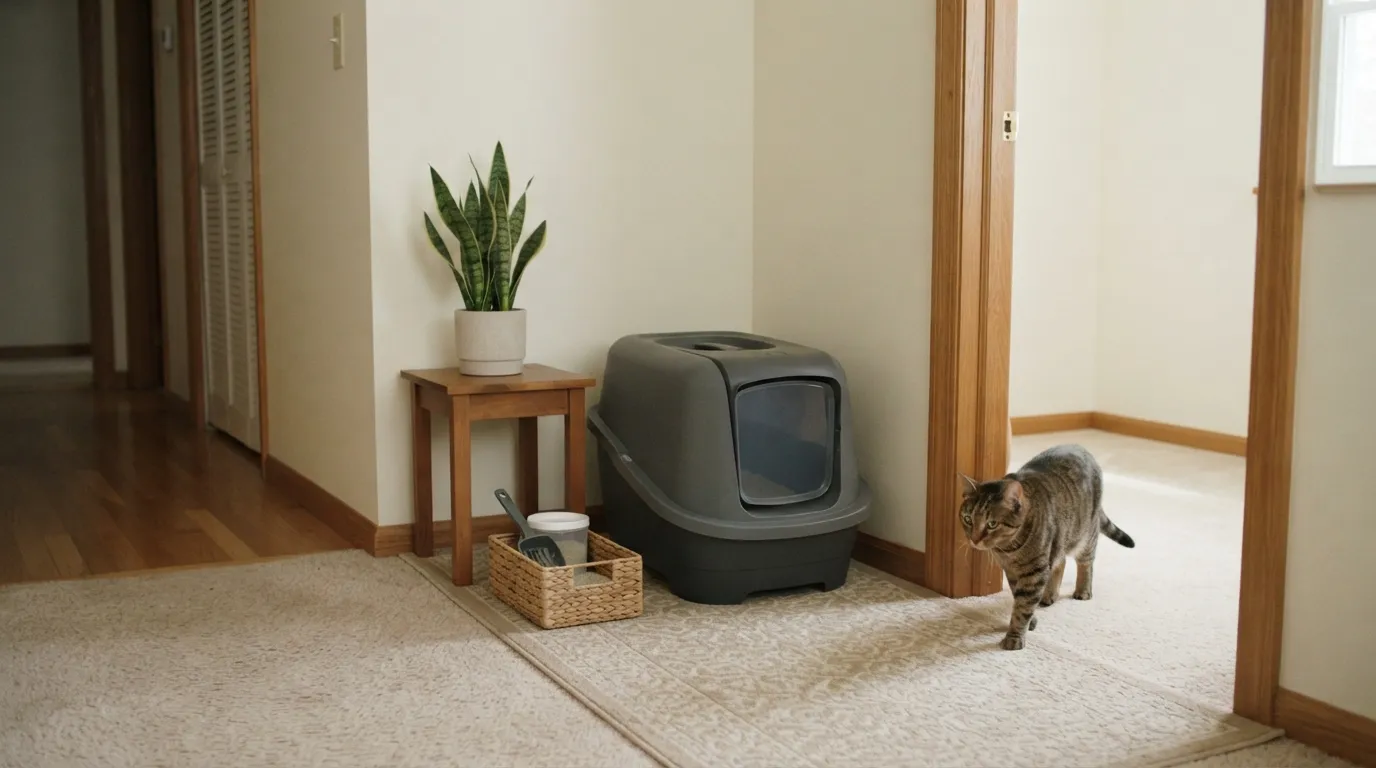
You can have the right number of boxes and still have a cat that refuses all of them. Location is the variable most new owners never think about.
Cats instinctively avoid eliminating near where they eat. Stacking food bowls and litter boxes in the same laundry room is a classic first-timer error.
Boxes need to sit somewhere quiet, private, and easy to reach. If a dog or toddler can interrupt mid-use, that box stops counting as safe in your cat's mind.
Worth Knowing
- Boxes should sit in quiet, easily accessible spots - never crammed next to loud appliances
- Keep litter boxes away from food and water bowls entirely
- Each box should have a clear escape route so your cat never feels trapped
- Multi-level homes need at least one box per floor
A box your cat won't use is no box at all.
Spread boxes across multiple floors if you have them. Quiet corners beat convenient spots every time.
And once placement is right, there's a daily habit most owners skip entirely...
#11 - Skipping Daily Scooping Is a Health Hazard, Not Just a Smell Problem
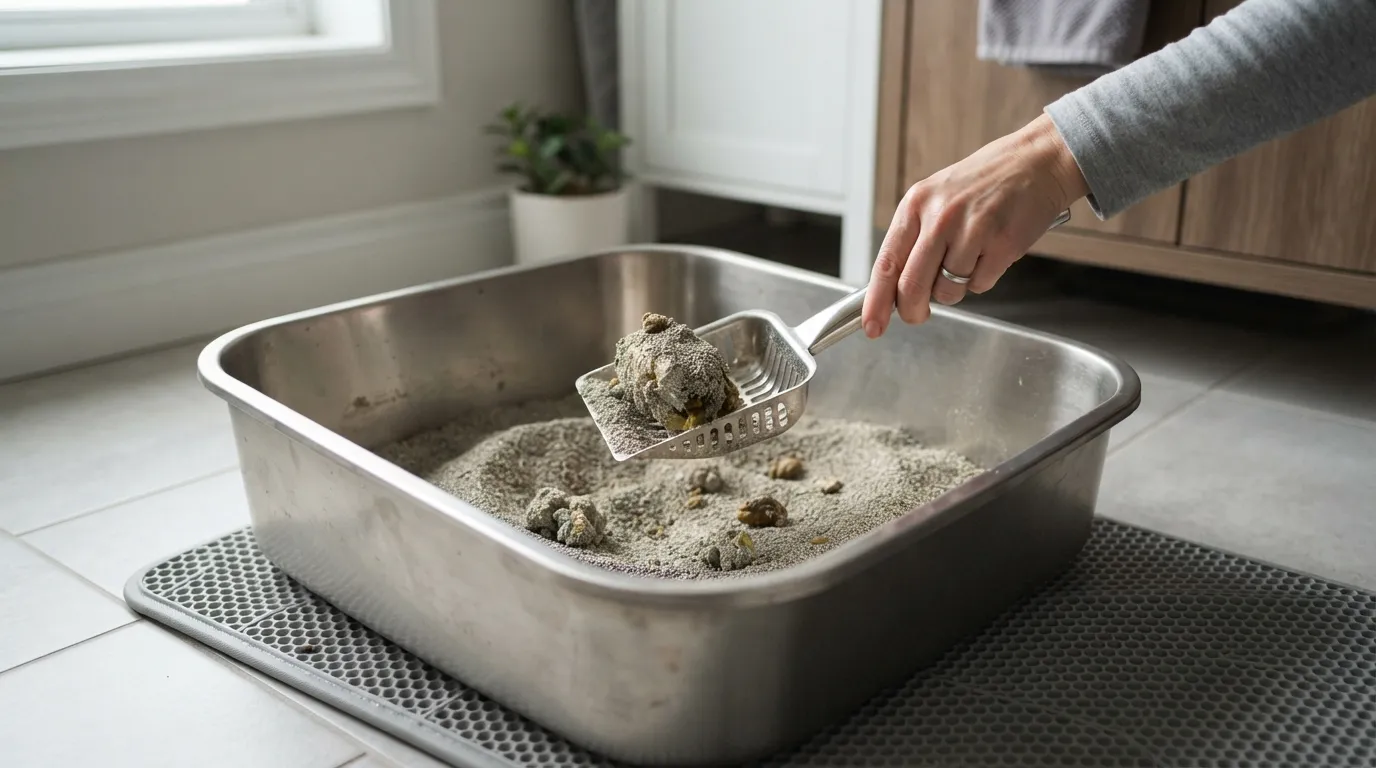
First-timers often scoop once or twice a week. Veteran owners scoop every single day - and the reason goes beyond odor.
Cats are far less likely to use a box that already holds waste. Daily scooping is what actually keeps a box "available" in your cat's mind.
A dirty box can push a cat to hold urine longer than is healthy, raising the risk of urinary problems - especially in male cats, where a blockage can turn life-threatening within hours.
Think of scooping as preventive medicine, not chores. Ninety seconds a day can save you a vet bill of hundreds.
Speaking of health - #10 reveals something most new owners get dangerously wrong about how cats drink...
#10 - Your Cat Is Probably Chronically Dehydrated and You Don't Know It
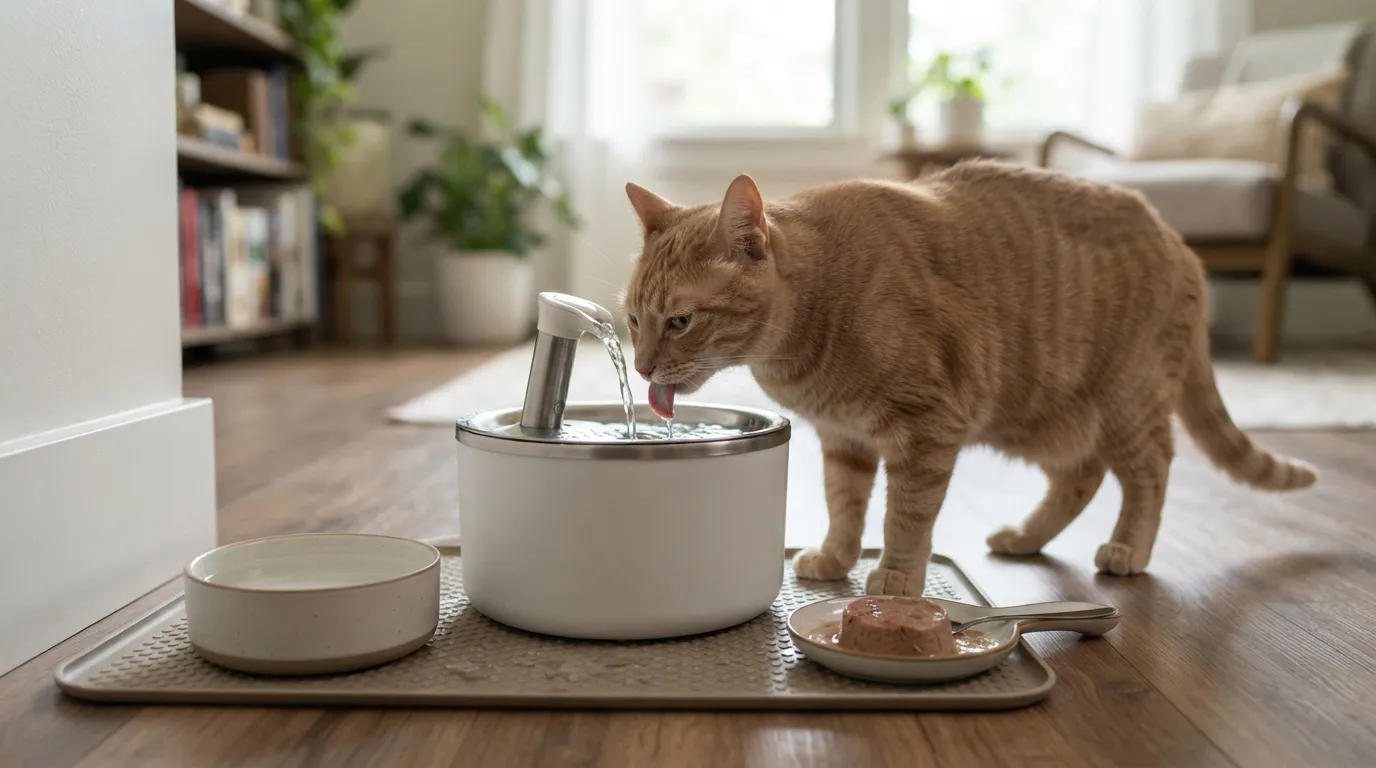
Cats evolved as desert animals with a weak natural thirst drive. In the wild, most of their moisture came from prey, not a bowl.
In your home, a single still bowl of water usually isn't cutting it. Multiple bowls and a running-water fountain make a real difference, since cats are drawn to moving water.
Quality wet food helps too - your cat eats its water along with its meal.
Chronic mild dehydration is a major contributor to kidney disease, the leading cause of death in older cats. Getting this right early is one of the highest-leverage things you can do for your cat's lifespan.
A cat ignoring its bowl isn't picky. It's telling you the setup is wrong.
But there's another daily habit veteran owners swear by that almost no first-timer even considers...
#9 - Interactive Play Isn't Optional. It's Medical.
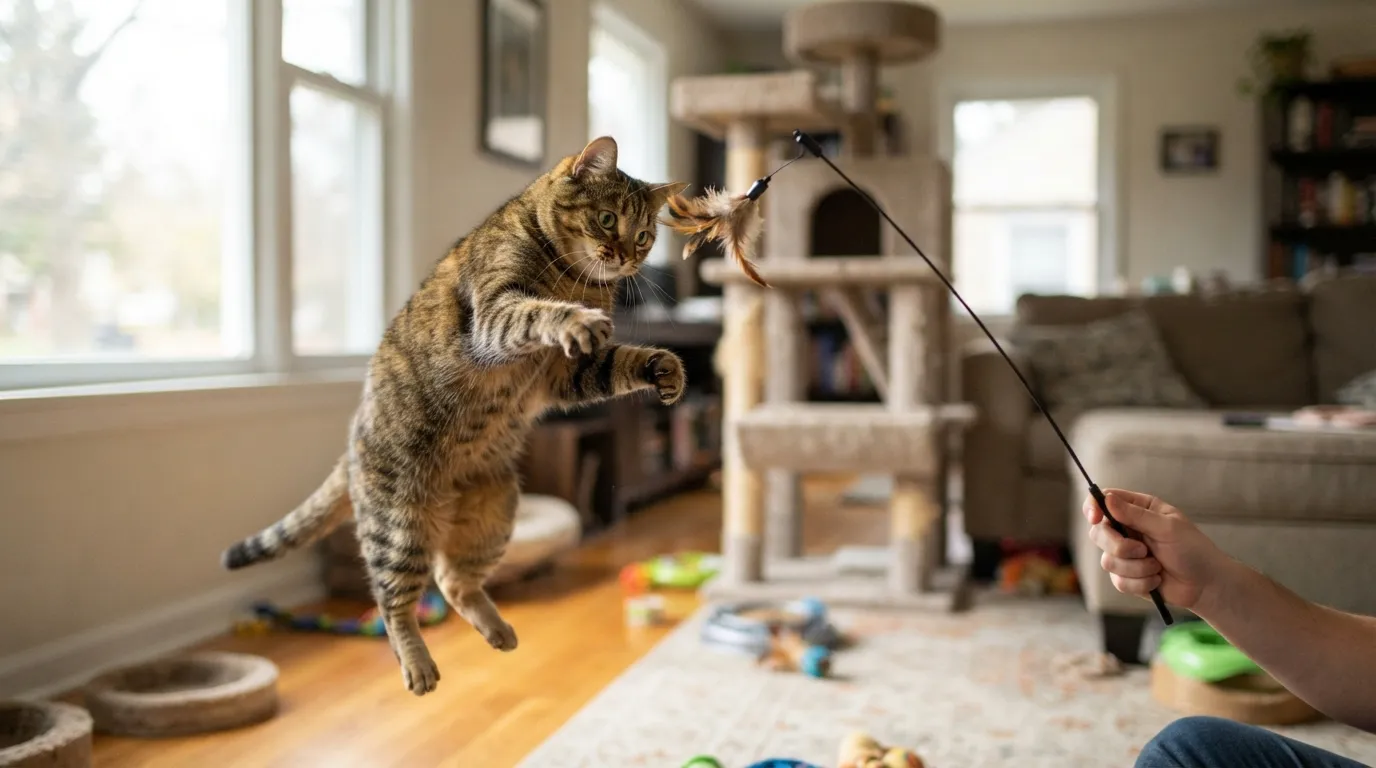
Most new owners toss a toy on the floor and call it enrichment. That's not play - that's furniture.
Real play is scheduled and interactive, and skipping it has real consequences. Vets recommend at least two 10-minute sessions a day.
That's 20 minutes standing between you and a bored, destructive, anxious cat. Left alone all day with nothing to do, indoor cats need puzzles, cat trees, and toys that actually move.
Boredom is one of the most underdiagnosed causes of behavior problems in indoor cats.
A wand toy that mimics prey beats ten catnip mice. Be the hunt - your cat's mental health depends on it, even if the prey isn't real.
What comes next surprises almost every new owner who hears it...
#8 - Cats Don't Misbehave Out of Spite. Ever.
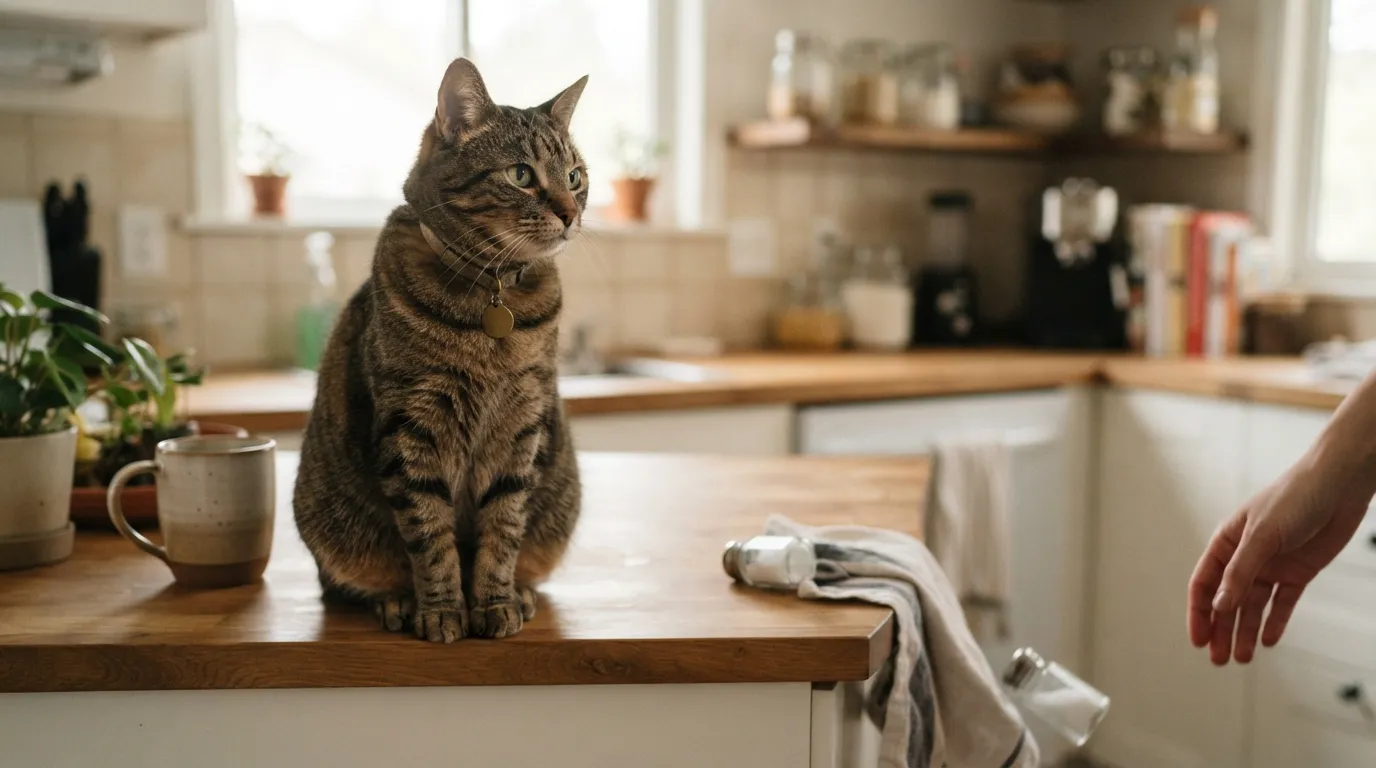
This might be the single biggest mindset shift a new owner can make. When your cat knocks something off the counter or misses the box, it is never revenge.
Every behavior has a cause - stress, boredom, pain, territorial anxiety, or an unmet need. Punishing a symptom without finding the cause doesn't fix anything; it just erodes trust.
Owners who understand cat behavior use far less punishment and show more patience with problem behaviors. Punishment makes cats more anxious and less bonded to you - the opposite of what anyone wants.
Ask "why" before you ask "how do I stop this." The first answer usually solves the second.
And the real reason cats scratch your furniture is something most owners completely misunderstand...
#7 - Scratching Is Non-Negotiable. Redirect It or Lose the Couch.
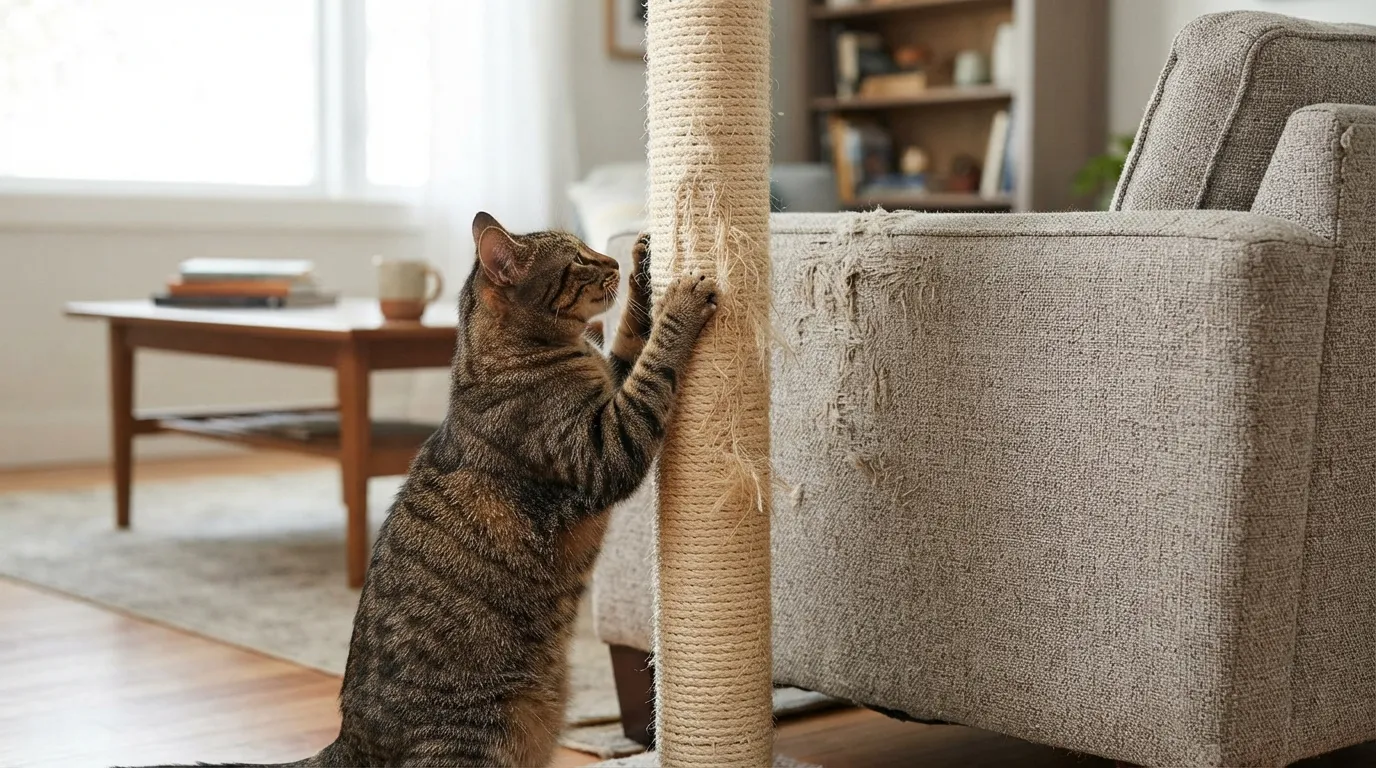
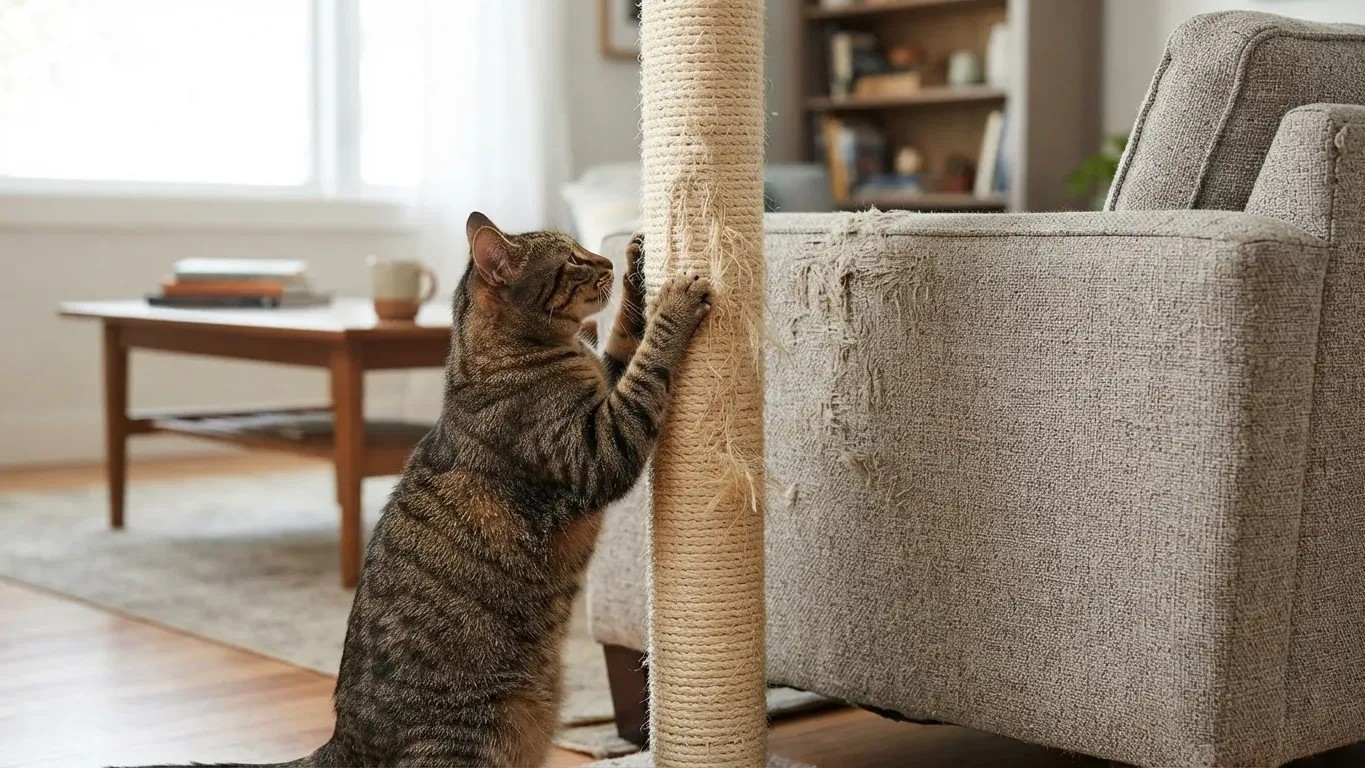
New owners think scratching is a bad habit they can train away. Veteran owners know better - it's biological, and no amount of discipline erases it.
The goal was never to stop scratching. It's to control where it happens.
Get both vertical and horizontal posts, and put them exactly where your cat already spends time. A scratching post hidden in a back room is useless - cats scratch in prominent spots because it's a marking behavior.
Place a post right next to the furniture your cat already targets. That's not rewarding bad behavior; that's speaking your cat's language.
The next habit is something vet professionals say most owners are dangerously late on...
#6 - Indoor Cats Need Vet Visits Too. Every Single Year.
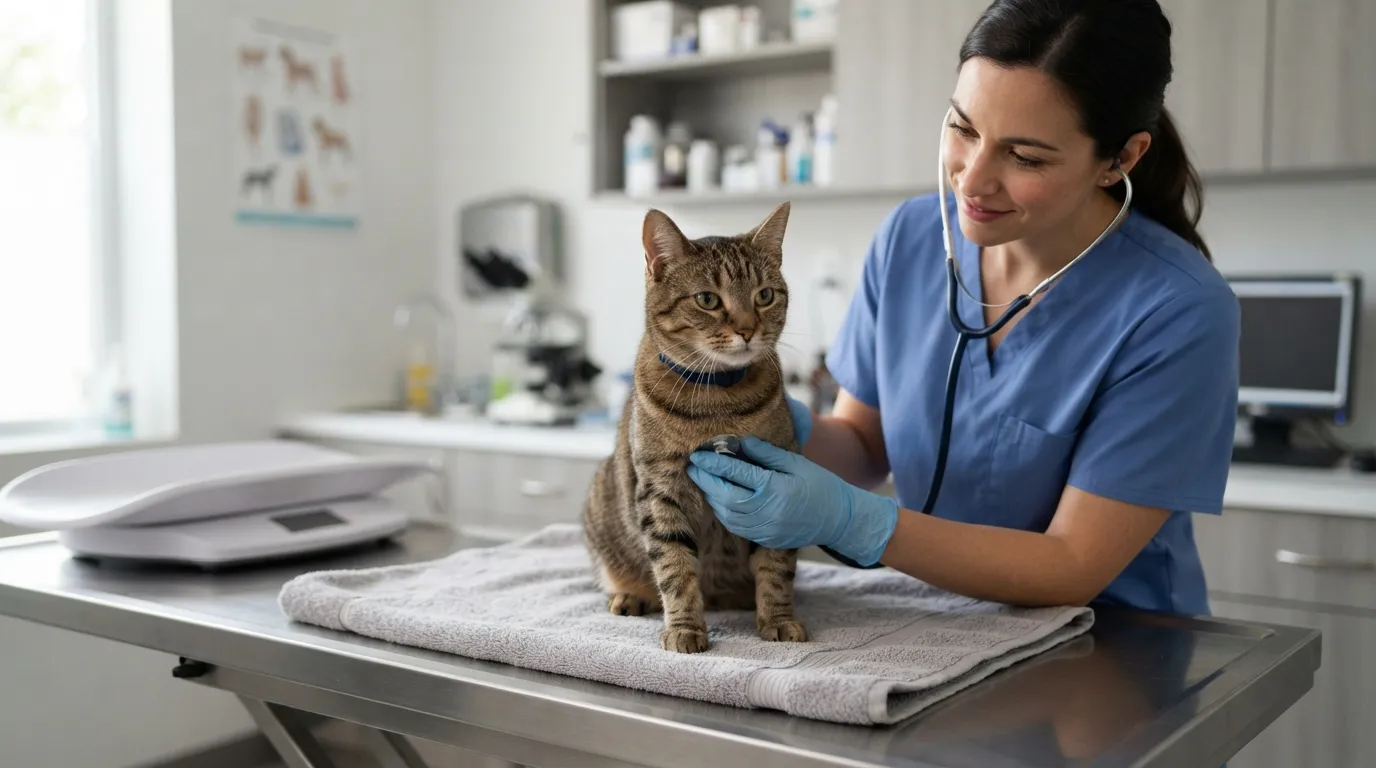
Ask most new owners when they last took their indoor cat to the vet. The answer is usually "when we got them" - or "when something went wrong."
Cats are the most popular pet in America, yet dogs get taken to the vet far more often. Indoor cats are quietly falling through the cracks.
At a Glance
- Only about 47% of cats visit a vet annually for routine care, versus nearly 79% of dogs
- Cats average roughly 0.7 vet visits a year, compared to 1.5+ for dogs
- 63% of cats in cat-only households live strictly indoors, yet still develop diabetes, heart disease, and thyroid problems
- Most veterinarians say every cat needs at least one annual checkup, no exceptions
Being indoors doesn't erase the need for yearly exams or age-appropriate vaccines. Cats are experts at hiding illness - by the time symptoms show, a problem has often been building for months.
Annual exams catch kidney disease, dental disease, thyroid issues, and weight problems while they're still treatable. Your cat's silence is not a clean bill of health.
What comes next is one of the most commonly ignored, highest-impact decisions a new owner makes in week one...
#5 - The Food You Choose in Week One Sets a Precedent That's Hard to Break

Most new owners grab whatever looks appealing on the shelf. Veteran owners know early food choices shape lifelong preferences - and that cheap dry-food-only diets quietly cause long-term problems.
Quality wet food matters, especially given how poorly cats hydrate themselves from a bowl. It keeps their coat healthier and their litter box less offensive too.
A cat raised exclusively on low-quality dry kibble is statistically more prone to urinary and kidney issues later in life. Savings on cheap food now rarely offset the vet bills later.
Ask your vet for a food recommendation at the very first visit. Don't guess on this one.
The next habit reveals one household danger almost every new owner completely overlooks...
#4 - Your Home Is Full of Things That Can Kill Your Cat
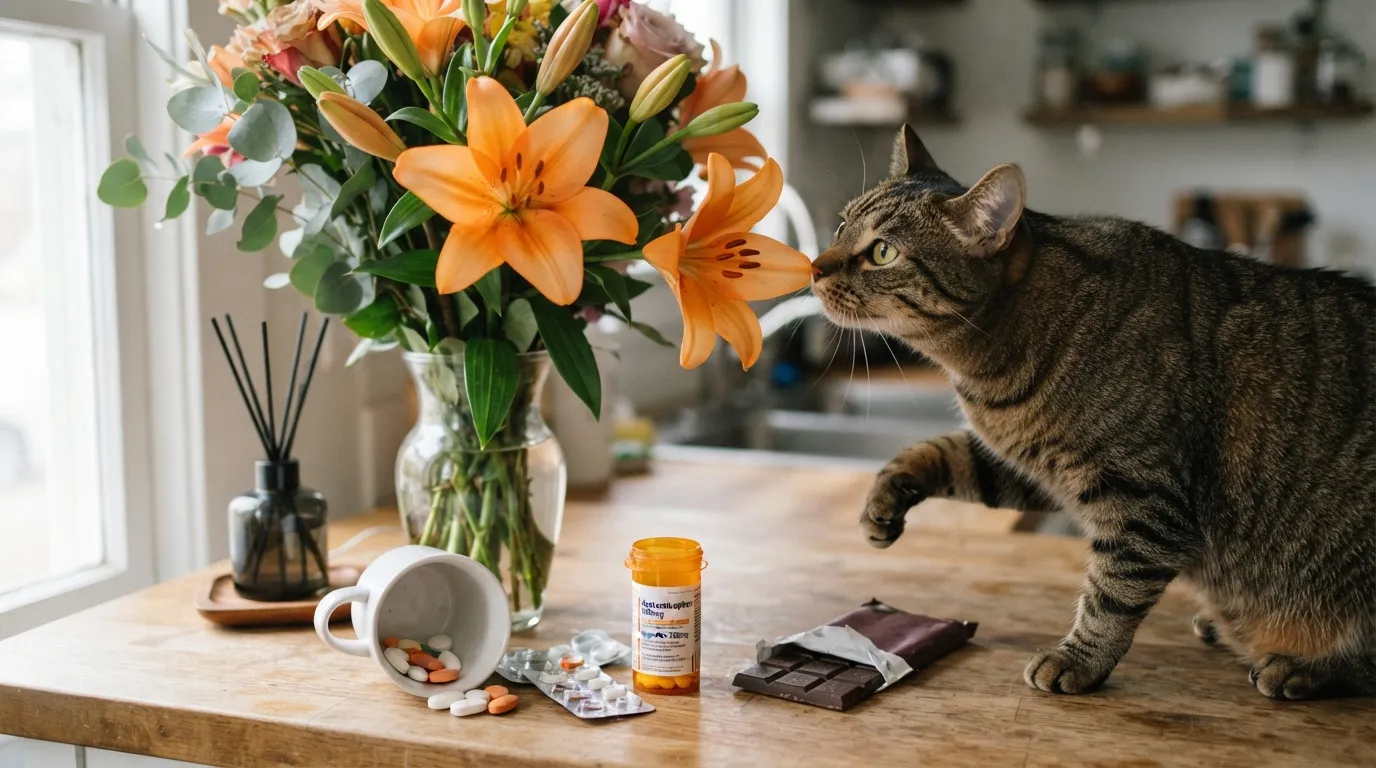
New owners spend money on toys and beds, and zero time checking for toxins. That's backwards.
Everyone knows about antifreeze. Fewer people know that acetaminophen, ibuprofen, naproxen, and aspirin are just as dangerous - and far easier to find lying around.
Fast Facts
- Common pain relievers like acetaminophen and ibuprofen can be lethal to cats in tiny amounts
- Lilies are among the most dangerous houseplants for cats - a single leaf can trigger kidney failure
- Onions, garlic, and chocolate are also on the danger list
- Even unlit essential oil diffusers can cause respiratory distress in cats
Certain houseplants are fatally toxic too, including lilies, which show up in almost every florist bouquet. A single lily leaf can cause acute kidney failure.
This isn't a fringe risk - it's one of the most common cat poisoning emergencies vets see. Cats can squeeze into impossibly tight spaces and turn almost anything into a toy.
Before your cat comes home, walk every room at floor level. You'll be surprised what you find down there.
But the single behavioral mistake next is the one veteran owners wish someone had warned them about first...
#3 - How You Greet a New Cat in the First 72 Hours Sets the Tone for Months
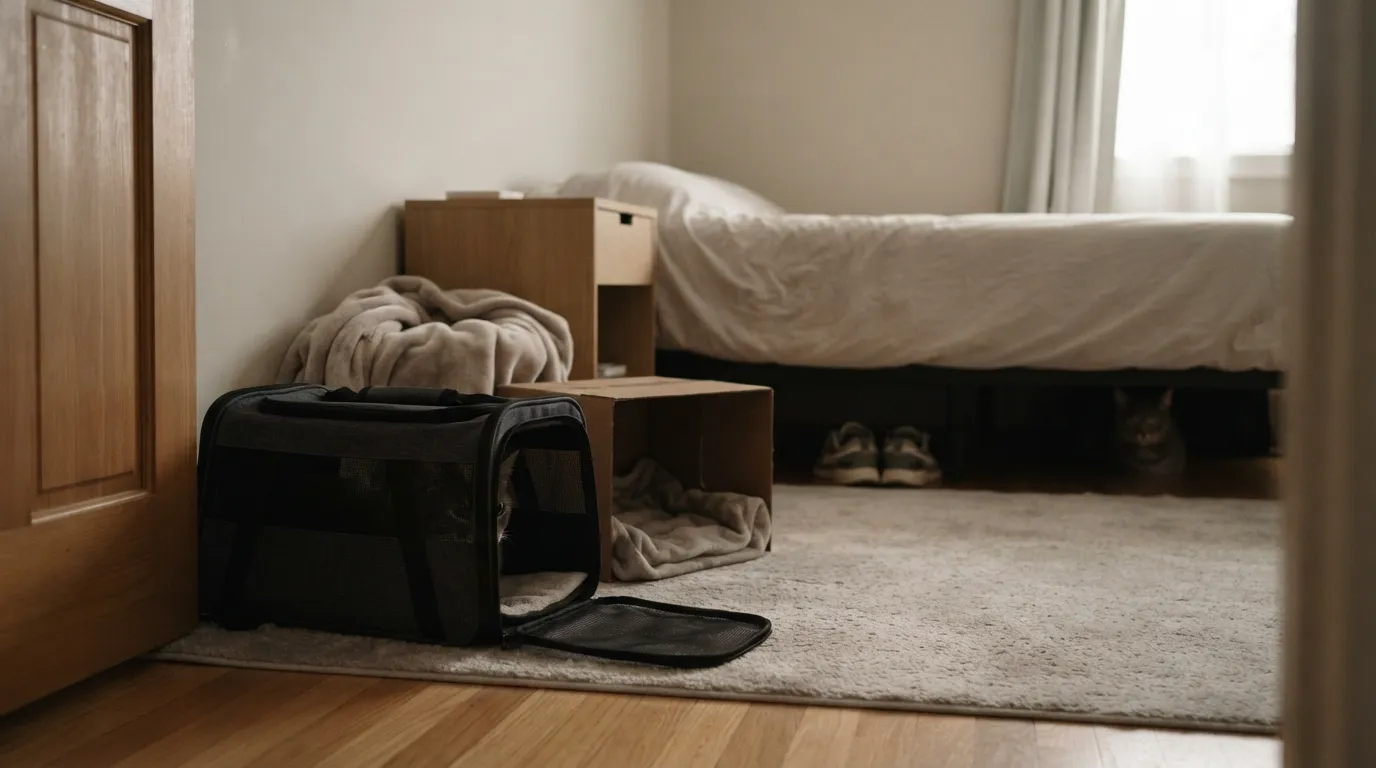
Most first-timers bring a cat home and immediately want to hold it, tour every room, and show it off to family. That eagerness is exactly what creates a skittish, avoidant cat.
Every cat adjusts at a different speed. Some settle in hours; others take weeks.
The instinct to smother a new cat with love is the fastest way to make it hide under the bed for a week. Veteran owners set up one quiet room, open the carrier, and walk away.
The cat comes out when it's ready, not when you are. Patience in week one pays off for the entire relationship - the cats that bond deepest are the ones given space first.
The habit at #2 is one almost nobody talks about, but every veteran owner does it without even thinking...
#2 - You Need to Learn Your Cat's Baseline Before Something Goes Wrong

Veteran owners notice the moment something feels slightly off. New owners don't even know what "normal" looks like yet - and that gap is where emergencies hide.
Your cat's baseline includes how much it eats and drinks, how often it uses the litter box, how vocal it usually is, and how its coat and eyes normally look. None of that is obvious unless you've paid attention from day one.
A cat that suddenly eats less, drinks more, or goes quiet is showing a clinical warning sign - not a personality quirk. Knowing the baseline is what lets you catch that shift in week one instead of month three.
Keep a simple mental note, or even a written one. It sounds excessive until the day it saves your cat's life.
The #1 habit veteran owners quietly wish every new owner had from day one? It's not what you'd expect...
#1 - The Real Secret Is Learning to Read What Your Cat Is Actually Saying
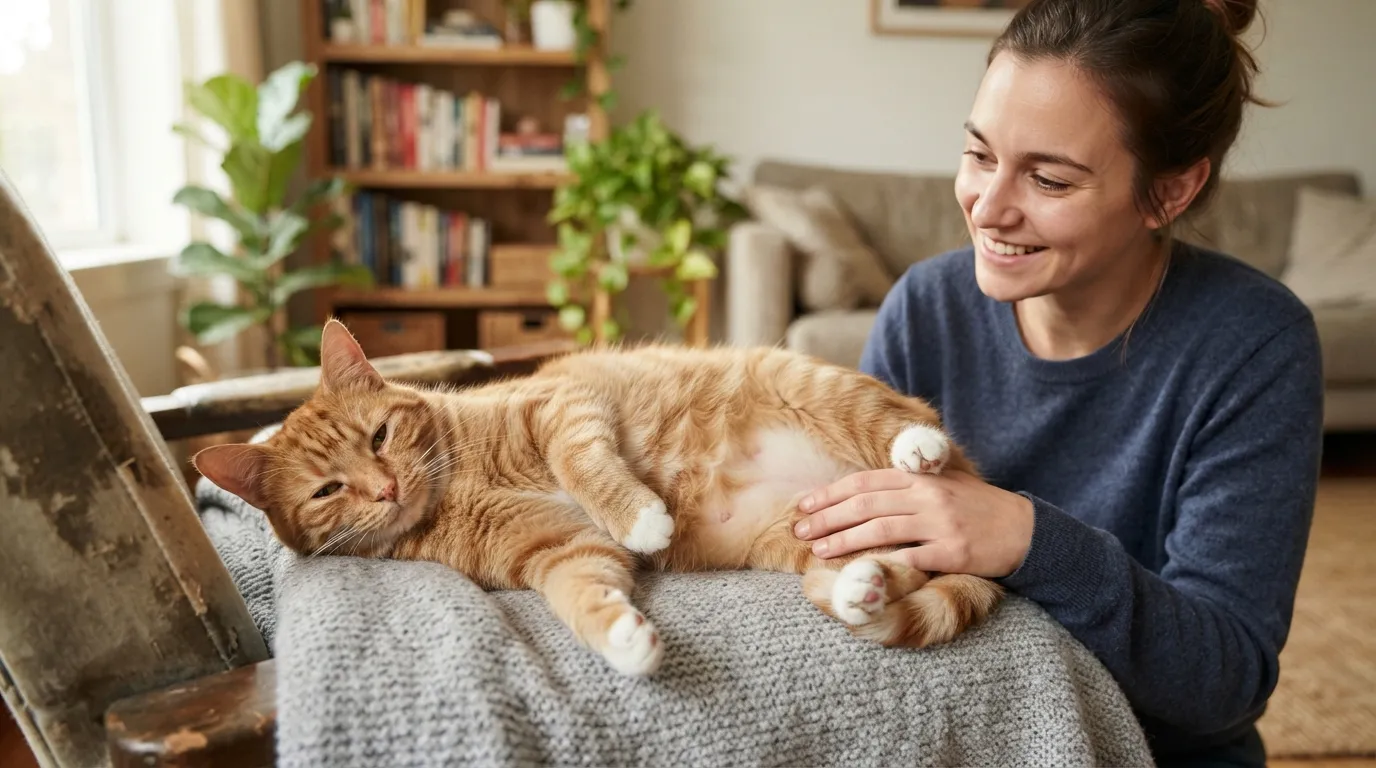
Every habit on this list gets easier the moment you learn feline body language. Almost no new owner studies it - they assume cats communicate randomly. They don't.
Quick Compare
- Slow blink = trust and calm, not sleepiness
- Twitching tail base = irritation building, back off
- Exposed belly = comfort, not an invitation to touch
- Ears flattened sideways = stop the interaction right now
Most cat bites and scratches are responses to signals the owner missed two minutes earlier.
Multi-cat households raise the stakes - tension builds fast when food bowls, litter boxes, and resting spots aren't plentiful enough to go around. Stress is almost always written in body language long before it becomes a behavior problem.
Owners who understand this language use less punishment and show far more patience. Learn it, and you don't just avoid problems - you build the kind of relationship most people never get to have with their cat.
The Bottom Line
Veteran cat owners aren't smarter. They've just already made the mistakes you haven't made yet.
The litter box math, the food quality, the daily play, the toxin audit, the quiet first week - none of it is complicated, but all of it is consequential.
The cats that thrive long-term belong to owners who treated "low maintenance" as a myth from day one. Understanding your cat's behavior, baseline, and body language isn't just enrichment - it's the closest thing to preventive medicine you can practice at home.