How Your Cat Decides Which Chair in the House Is Yours
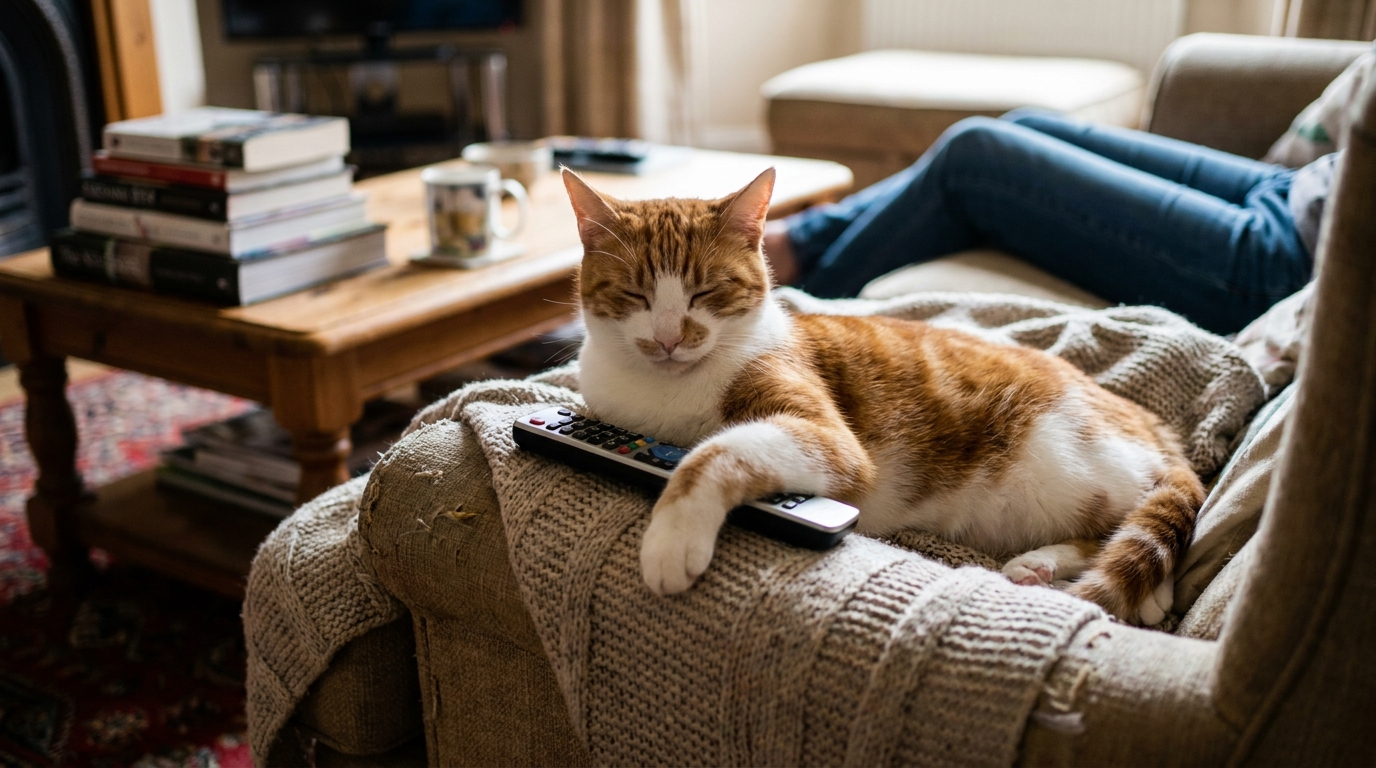
If you've ever wondered why your cat gravitates toward certain furniture while avoiding others, you're not alone. Cats use a complex mix of scent mapping, territorial logic, and behavioral observation to assign ownership of every surface in your home—and your favorite chair is no exception.
The truth is, your cat doesn't just tolerate your seating choices. They actively study them, then decide whether that spot belongs to you, to them, or exists in a contested gray zone that explains why you keep finding fur on the armrest.
Here's what the data actually says.
#12 — They Track How Often You Sit There
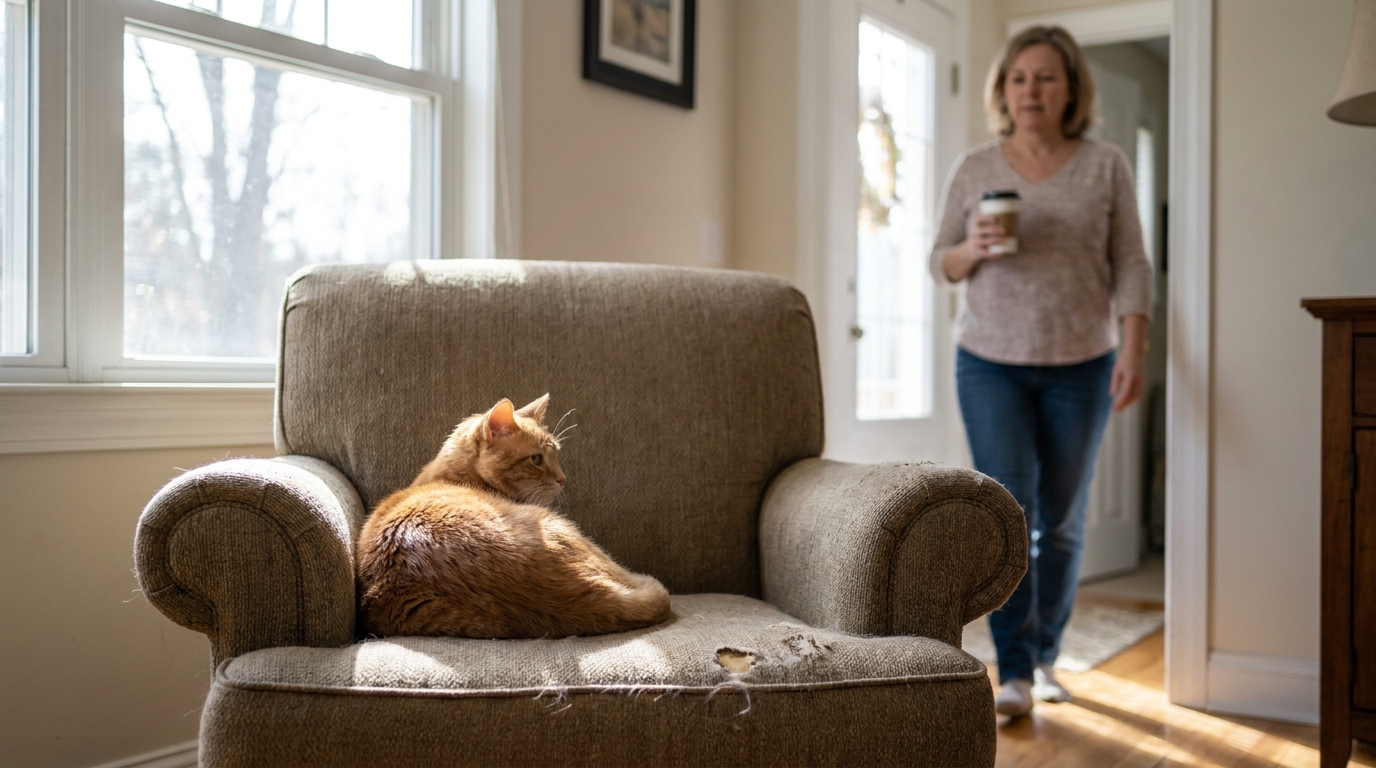
Cats are meticulous observers of routine, and they mentally log which furniture you use most frequently.
A 2019 study published in Animal Cognition found that domestic cats form spatial maps of their owners' daily patterns within the first two weeks of observation. They note not just where you sit, but how long you stay and what time of day you're most likely to occupy that spot.
Your cat watches you more than you think. They're not staring blankly—they're collecting data.
If you consistently sit in the same armchair every evening after dinner, your cat registers that pattern. They begin to associate that chair with your presence, your scent, and your predictable behavior.
This is why cats often avoid sitting in "your" chair when you're home but claim it immediately after you leave. They respect the occupied territory but see no reason to waste a warm spot once you've vacated it.
But frequency isn't the only factor they consider...
#11 — Scent Markers Tell Them Everything
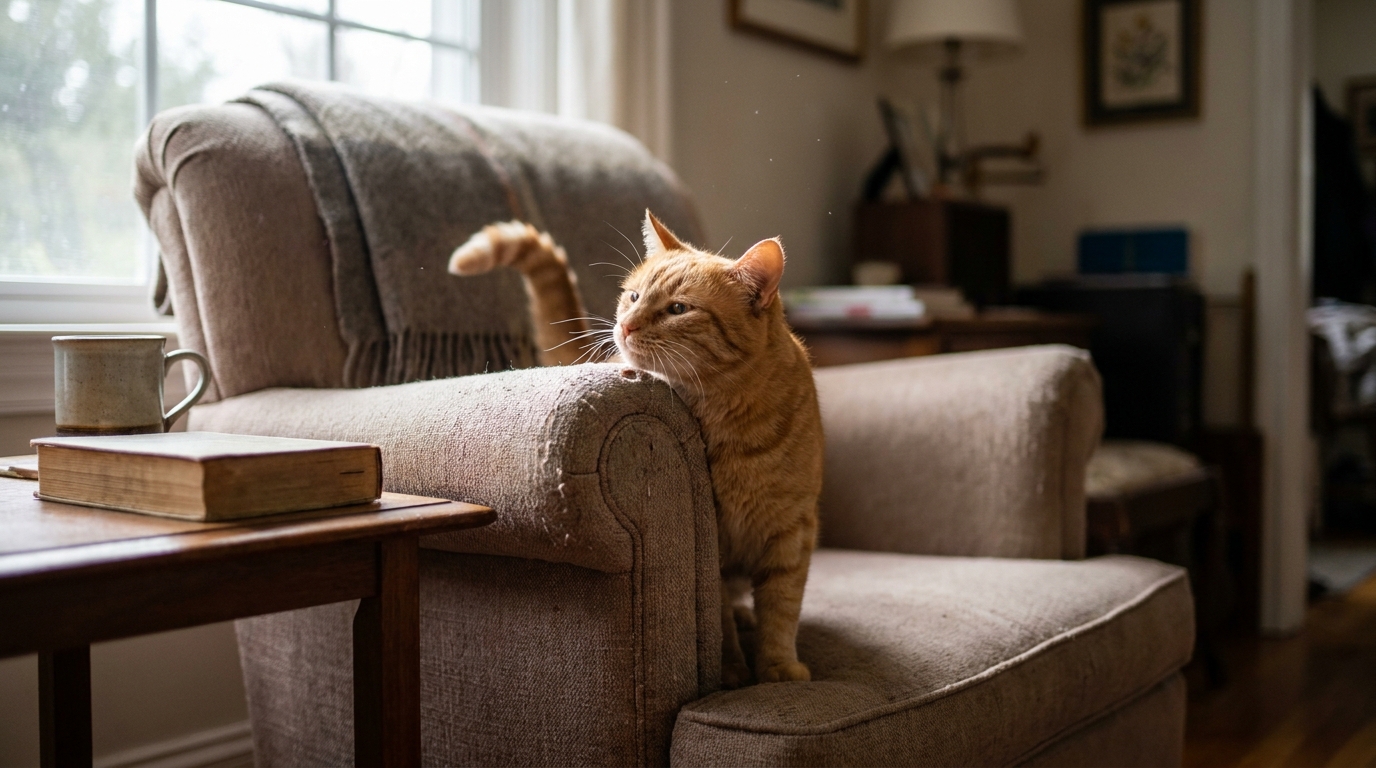
Cats experience the world primarily through scent, and every piece of furniture in your home carries an olfactory signature.
When you sit in a chair for extended periods, you deposit skin cells, oils, and sweat—imperceptible to you, but a detailed chemical profile to a cat. Feline olfactory receptors are roughly 14 times more sensitive than human ones, according to veterinary research from Cornell University.
Your cat can detect not just that you've been sitting somewhere, but your stress level, what you ate, and whether you've recently touched other animals. That's an astonishing amount of information from a single sniff.
When a cat rubs their face against furniture, they're depositing pheromones from scent glands located around their cheeks and chin. They're adding their signature to yours, creating a blended "colony scent" that marks the space as shared territory.
If a chair smells strongly of you with no feline overlay, your cat reads it as your exclusive zone.
But scent alone doesn't determine ownership...
#10 — Temperature Patterns Matter More Than You'd Expect
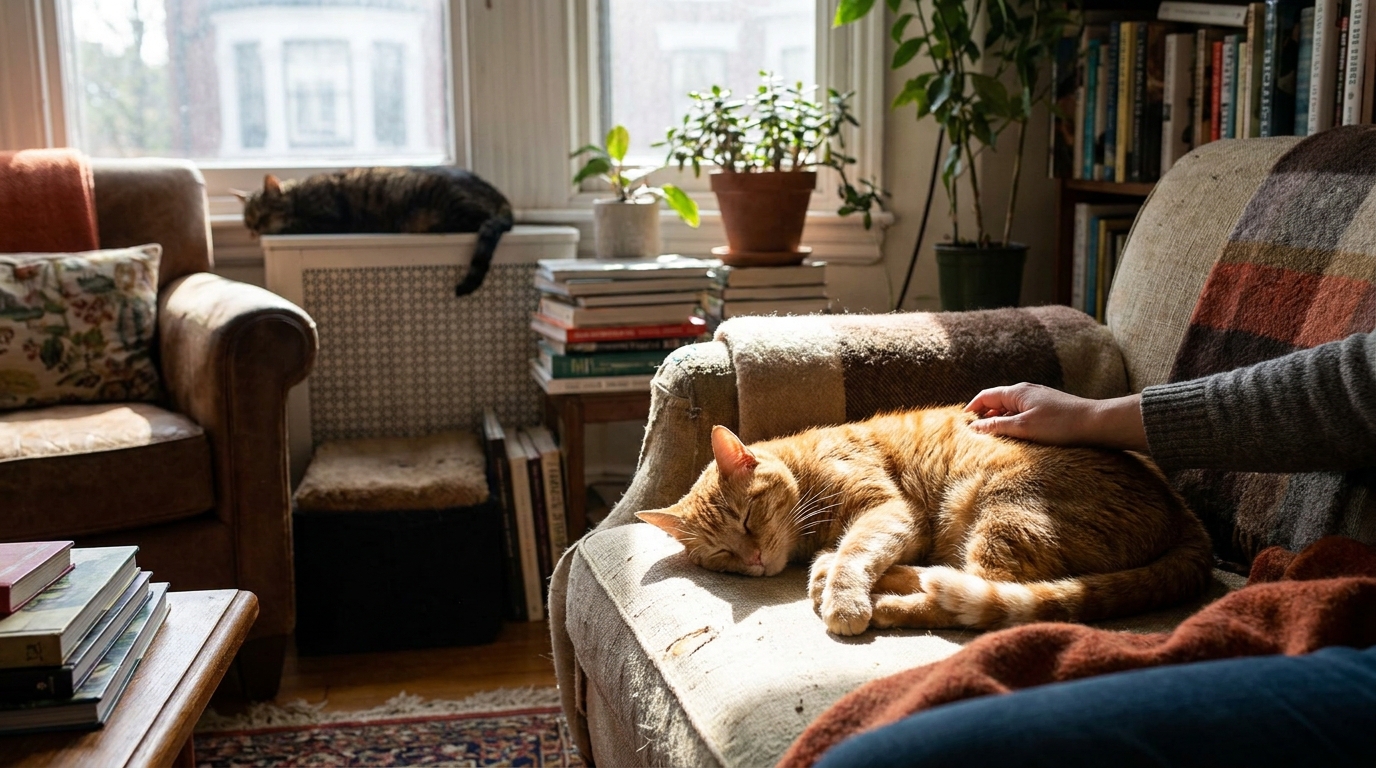
Cats are heat-seeking creatures with body temperatures that run about 102°F, and they prioritize warmth when choosing resting spots.
A chair you've just vacated holds residual body heat for 15 to 20 minutes, making it prime real estate in feline terms. This is why your cat often jumps into your seat the moment you stand up—they're not being spiteful, they're being thermally opportunistic.
Cats lose heat more rapidly than humans because of their smaller body mass. They need to conserve energy, and a pre-warmed surface requires less metabolic effort to maintain comfort.
Research from the Waltham Centre for Pet Nutrition found that cats actively seek out surfaces between 86°F and 100°F when given a choice. Your body-warmed chair falls perfectly within that range.
If a particular chair sits in a sunbeam during morning hours, your cat will factor that into their territorial calculus. They may decide that chair belongs to them during sun hours and to you during evening hours.
Thermal mapping is a surprisingly sophisticated process...
#9 — Elevation Changes Everything
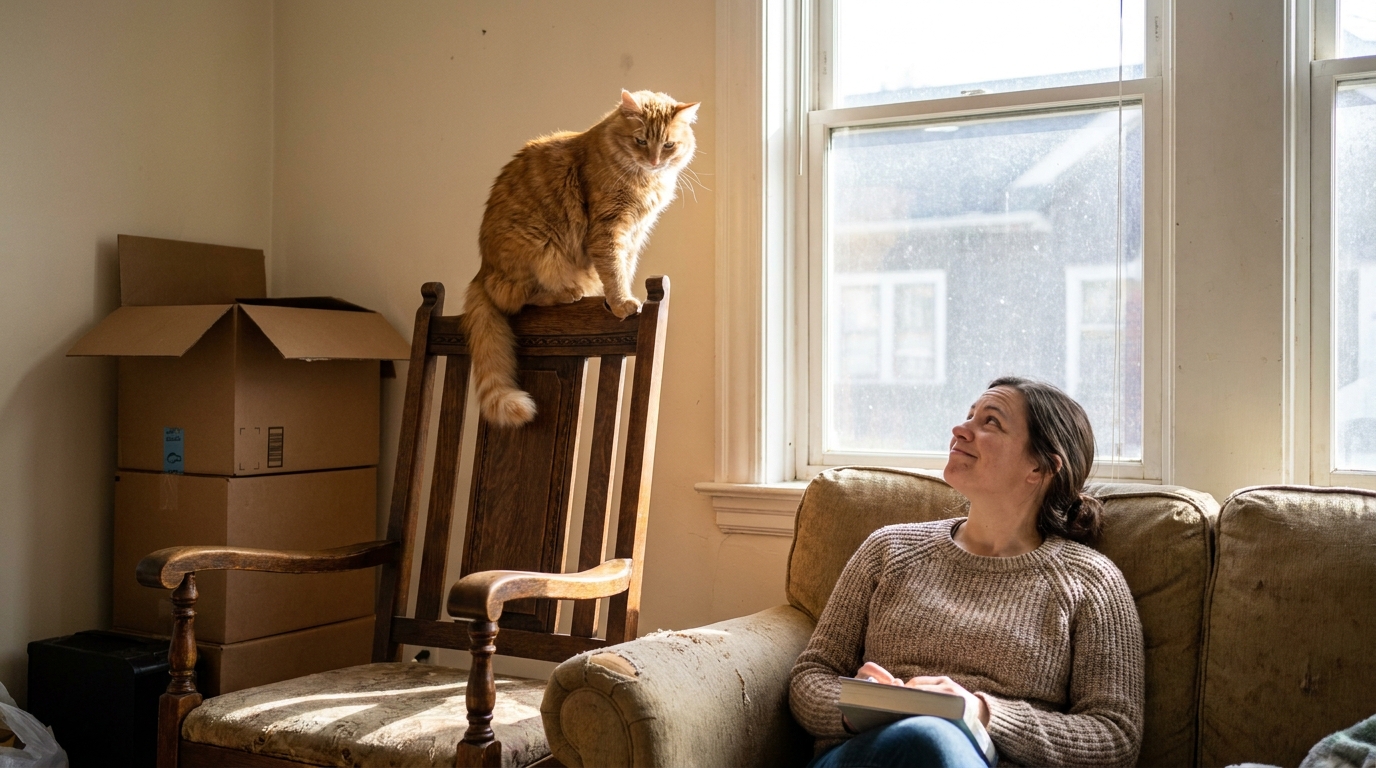
Cats are ambush predators by evolution, and they instinctively value elevated positions that offer visibility and tactical advantage.
A chair with a high back or one positioned on a raised platform (like a desk chair or barstool) automatically ranks higher in feline real estate hierarchy. Your cat assesses not just comfort, but strategic value.
From an elevated seat, a cat can monitor doorways, windows, and the movements of household members. This isn't paranoia—it's hardwired survival instinct, even in domestic cats who've never faced a genuine threat.
Feline behaviorist Jackson Galaxy notes that "vertical territory" matters as much as square footage to cats. A house with ample floor space but no high perches feels smaller to a cat than a compact apartment with multiple elevated options.
If you consistently choose a chair that offers the best sightlines in a room, your cat notices. They may cede that spot to you because they recognize you value the vantage point, or they may challenge you for it if they deem the strategic position more valuable than the relationship cost.
Territorial negotiation in multi-cat or cat-human households is constantly evolving...
#8 — They Monitor Who Else Uses That Chair
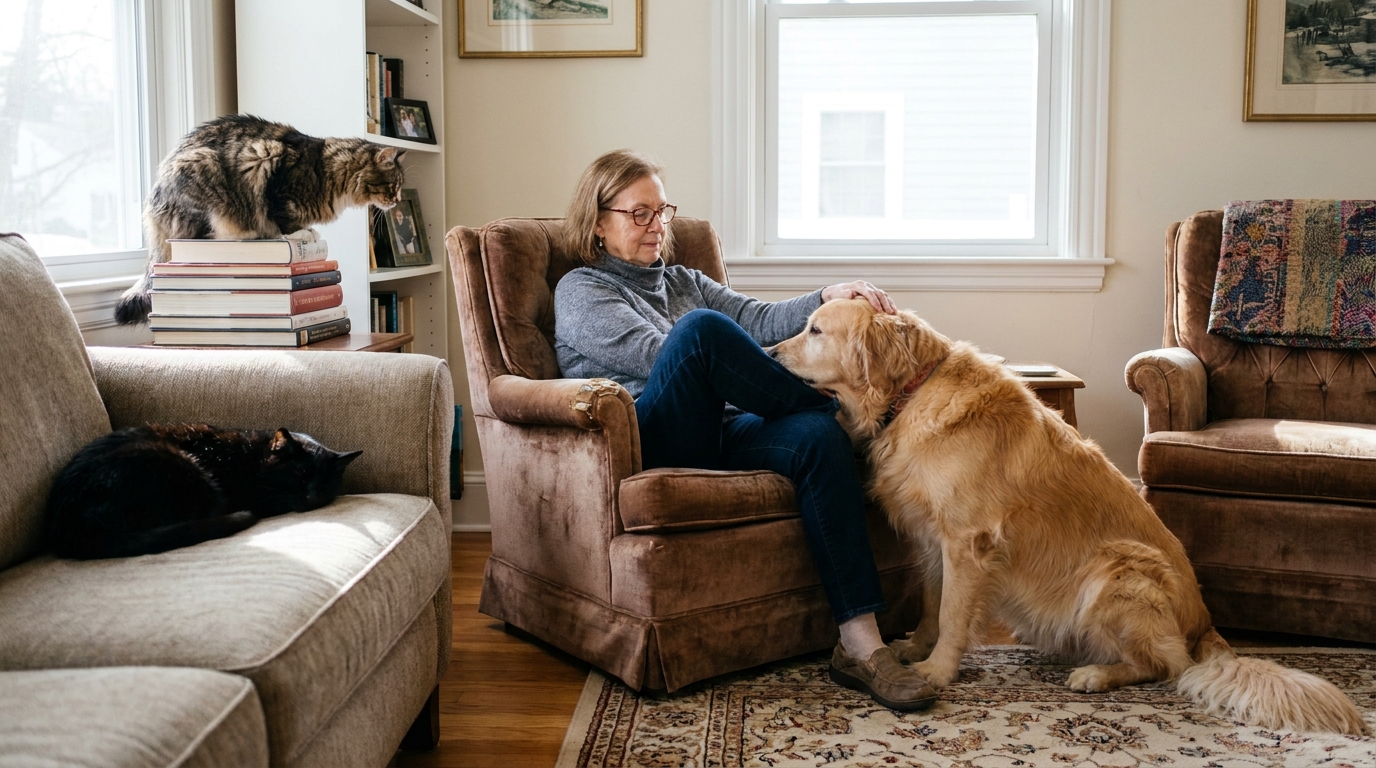
Cats are social mappers who track the movements and preferences of every household member, human and animal alike.
If multiple people sit in the same chair at different times, your cat notes the pattern and adjusts their territorial claims accordingly. Shared-use furniture typically gets classified as "neutral zone" rather than belonging to any individual.
A 2021 study in Applied Animal Behaviour Science found that cats in multi-person households develop distinct behavioral responses to each family member. They don't treat humans as interchangeable—they recognize individuals and adjust their space-sharing accordingly.
If one person always sits in a particular recliner and no one else ever does, the cat assigns ownership clearly. But if that same recliner gets used by different people throughout the day, the cat treats it as communal property.
This is why your cat may sit on "your" chair when guests visit—they're reclaiming temporarily ambiguous territory. The presence of an unfamiliar person disrupts the usual territorial map.
Cats also notice if you defend a chair from other family members. If you consistently tell others "that's my seat," your cat registers the verbal and behavioral claim.
But there's more going on than simple observation...
#7 — Material and Texture Influence Their Assessment
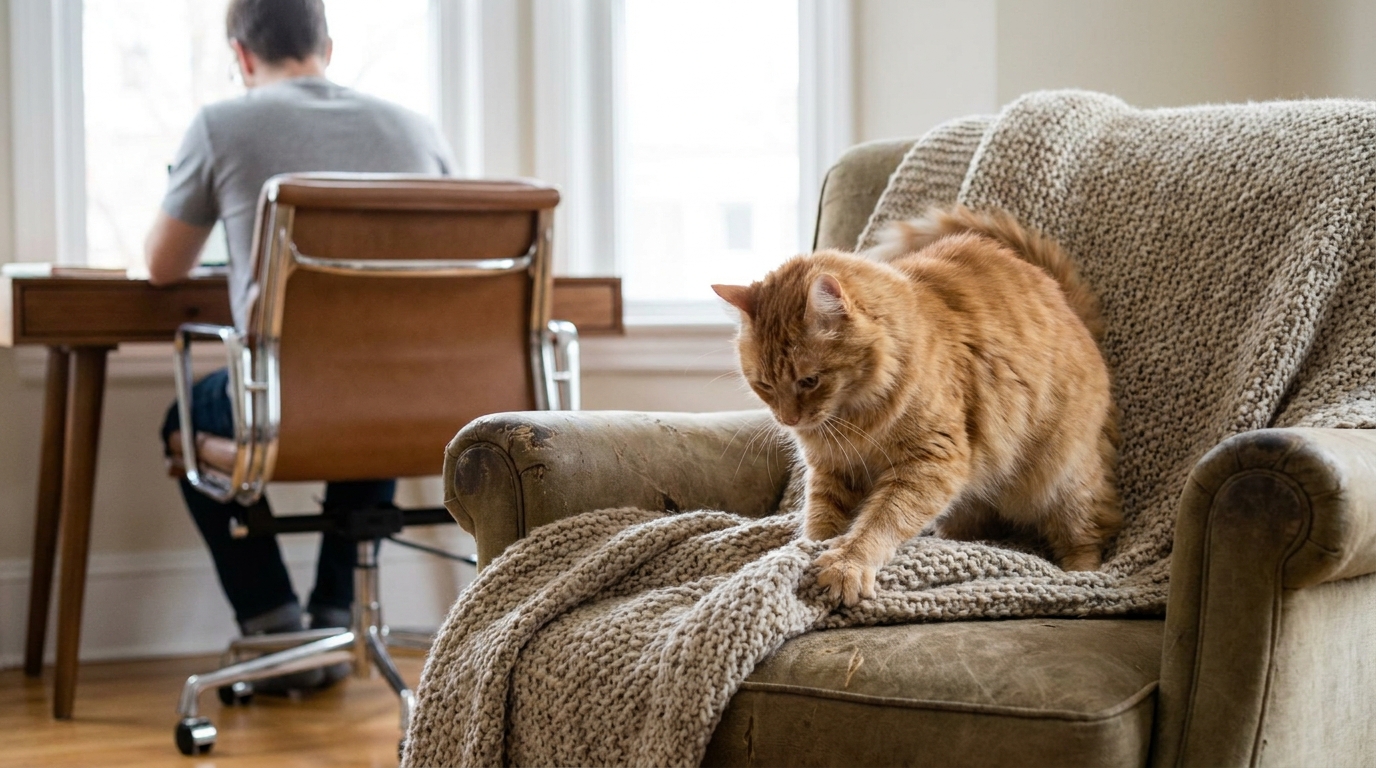
The physical characteristics of a chair factor heavily into whether a cat considers it suitable territory for themselves or prefers to cede it to you.
Cats have strong texture preferences, and these vary by individual. Some cats adore leather because it retains heat and offers a smooth, cool surface. Others prefer fabric that allows for kneading and claw engagement.
If your favorite chair is upholstered in a material your cat finds uncomfortable or uninteresting, they're more likely to classify it as "yours" by default. Conversely, if it's covered in their preferred texture, you're in a constant negotiation.
Cats have scent glands in their paw pads, and scratching serves dual purposes—claw maintenance and territorial marking. A chair that can't be scratched effectively is less valuable in feline terms.
Veterinary behaviorist Dr. Mikel Delgado explains that cats prefer fabrics they can "grip" with their claws, which is why tightly woven microfiber or slick leather may be less appealing than nubby upholstery.
If you've chosen furniture specifically because it resists cat damage, you've inadvertently made it less territorially interesting to your cat. They may decide it's your domain simply because it doesn't meet their physical needs.
Material matters more than most people realize...
#6 — The Cushion Depth and Shape Play a Role
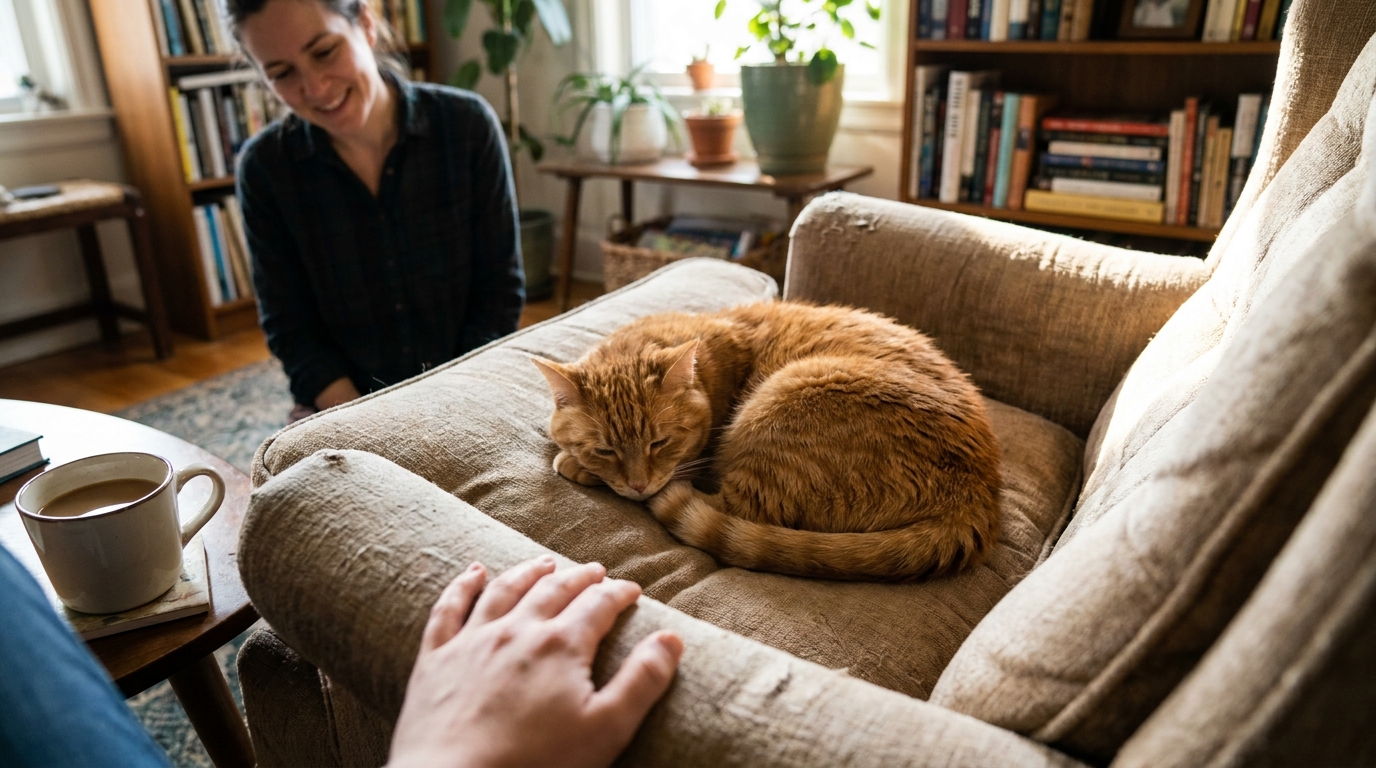
Cats are particular about sleeping surfaces, and the physical dimensions of a chair determine whether they find it suitable.
A deep, soft cushion that allows a human to sink in may be too unstable for a cat's preference. Cats typically favor surfaces with some resistance—firm enough to support their weight without excessive give.
Research from the University of Lincoln found that cats prefer resting surfaces that allow them to maintain their "loaf" position or curl into a compact ball. Chairs with contoured seats or armrests at specific heights facilitate these postures better than others.
If your favorite chair is designed for human lumbar support and ergonomic positioning, it may be geometrically wrong for feline comfort. Your cat notices this incompatibility and is more willing to recognize the chair as exclusively yours.
The armrests matter too. Cats often use armrests as chin rests or elevated observation posts. Wide, flat armrests increase a chair's appeal to cats, while narrow or angled ones decrease it.
If you sit in a dining chair with no arms or cushioning, your cat likely has no interest in claiming it. But if you favor a plush recliner with broad armrests, you're in direct competition for prime territory.
The physical design of furniture shapes territorial boundaries more than most owners realize...
#5 — They Notice Your Emotional State in Different Chairs
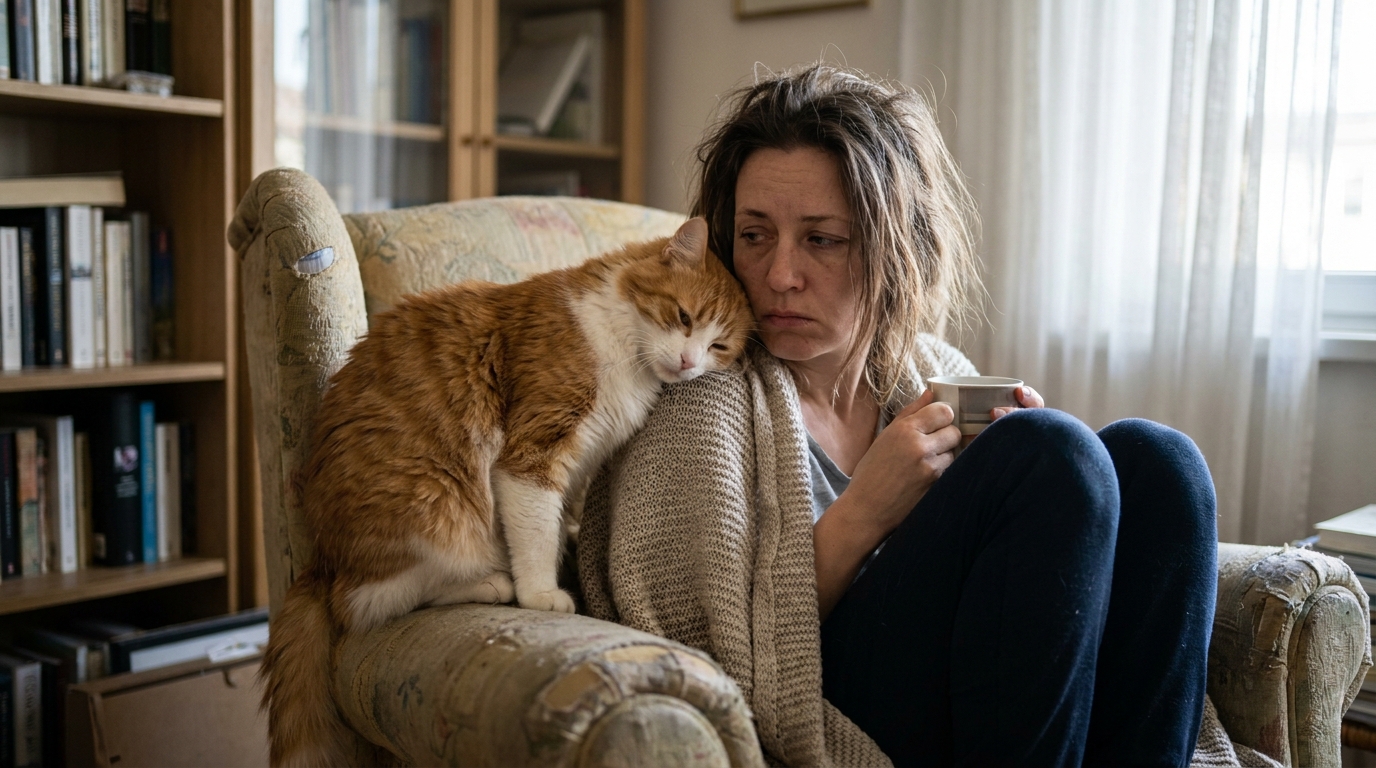
Cats are surprisingly attuned to human emotional states, and they associate specific furniture with your mood patterns.
If you always sit in a particular chair when you're relaxed—reading, watching TV, or napping—your cat registers the positive emotional signature. They're more likely to approach that chair and consider it "safe" territory.
Conversely, if you typically sit in a specific spot when you're stressed or busy (like a desk chair during work hours), your cat may avoid it. They can detect cortisol levels through scent and body language, and they learn which locations correlate with unapproachable moods.
**A 2020 study in PLOS ONE found that cats modify their behavior based on human emotional expressions.** They're not indifferent observers—they're responsive social partners who adjust their spatial decisions based on your affective state.
If your home-office chair is associated with tension, deadline stress, and minimal interaction, your cat will classify it differently than your weekend reading chair. The same human sitting in two different spots creates two different territorial classifications.
This is why some cats always join you in specific chairs but never in others. They're seeking out the "relaxed you" locations and avoiding the "stressed you" zones.
Emotional geography matters in feline territorial assessment...
#4 — The Chair's Location Relative to Resources
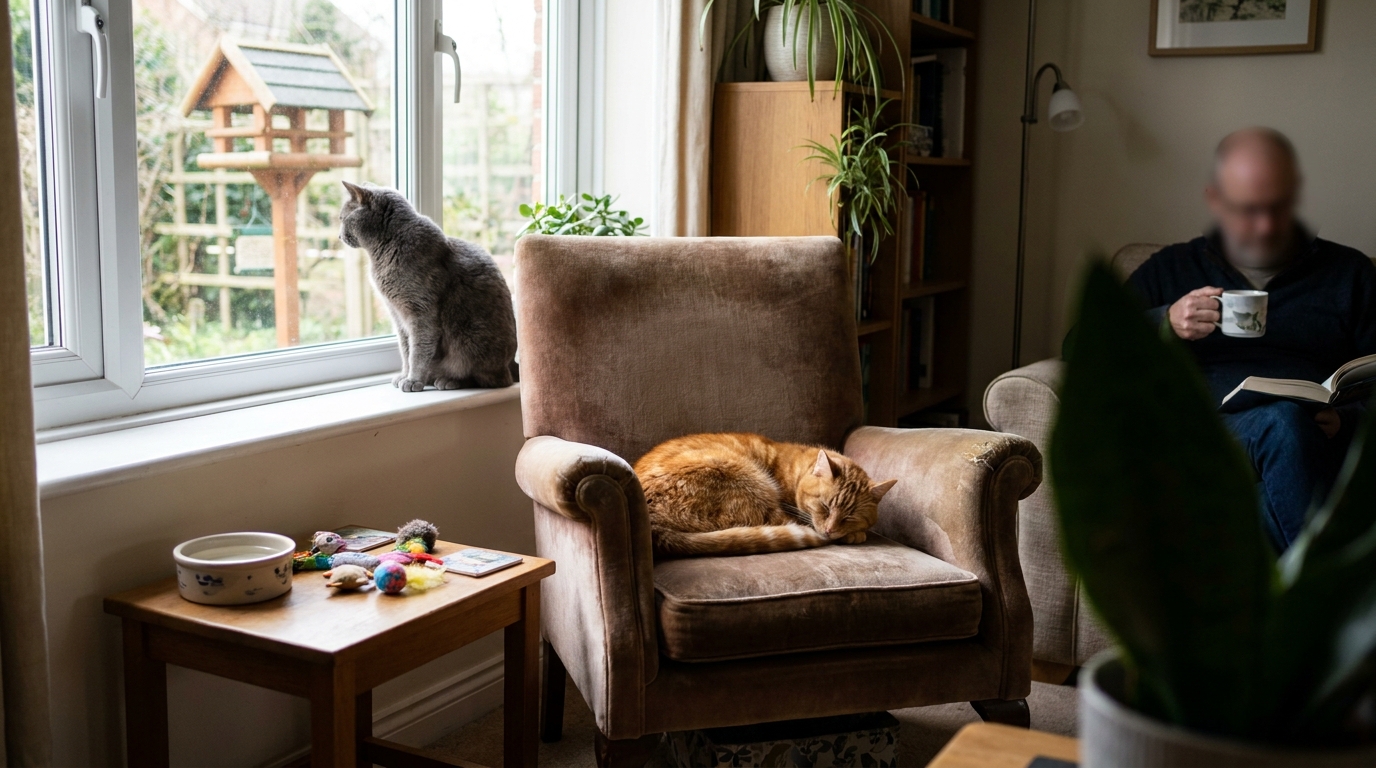
Cats mentally map their environment around key resources—food, water, litter boxes, windows, and sleeping areas.
A chair positioned near a window offers visual enrichment and stimulation. Cats value window access highly, and they're less likely to permanently cede a chair that offers prime bird-watching real estate.
Dr. John Bradshaw, author of Cat Sense, notes that domestic cats maintain a mental map of resource locations and travel routes between them. Furniture placement within this cognitive map affects its perceived value.
If your favorite chair sits directly in a high-traffic pathway between important resources, your cat may avoid it simply because it disrupts their movement patterns. They prefer not to establish territory in zones that require constant displacement.
Chairs positioned near heat sources—radiators, fireplaces, heating vents—automatically gain feline value. A chair that's thermally unremarkable in summer may become contested territory in winter.
Similarly, furniture located far from food stations or litter boxes may be considered low-priority territory. Cats are efficiency-minded and prefer resting spots within reasonable distance of essential resources.
The spatial relationship between a chair and the broader home environment shapes whether your cat considers it worth claiming.
But there's a social dimension that trumps physical factors...
#3 — How You React When They Sit in "Your" Chair
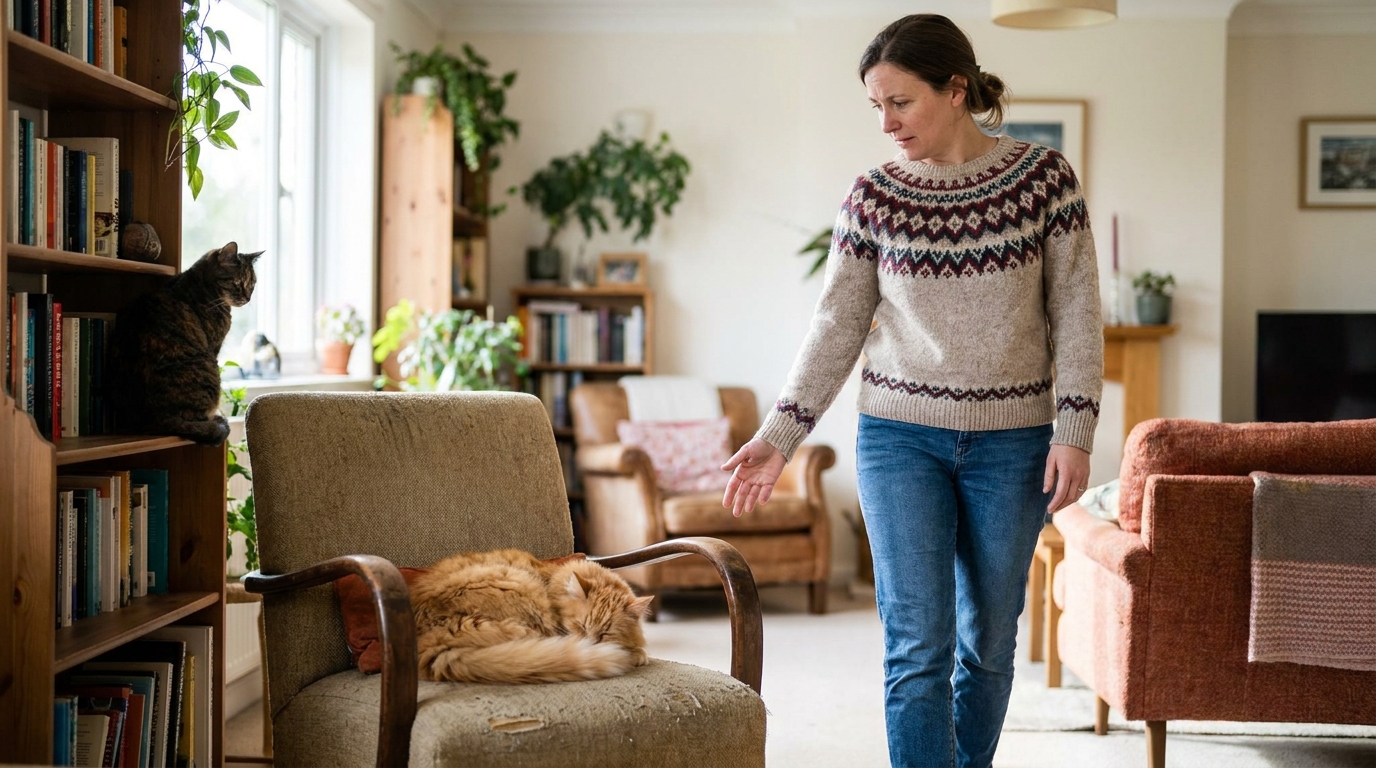
Your behavioral response to finding your cat in your chair teaches them whether the territory is truly yours or negotiable.
If you consistently displace your cat—picking them up and moving them—they learn that the chair is your exclusive domain. Cats are quick learners when it comes to social boundaries, and consistent enforcement creates clear territorial rules.
But if you frequently choose a different chair rather than disturb your cat, you're teaching them the opposite lesson. You've signaled that their comfort takes precedence, and the "ownership" of that chair shifts accordingly.
Cats read hesitation as permission. If you pause, sigh, or show any reluctance before moving them, they register that hesitation as a weakening of your territorial claim.
Feline behaviorists note that cats constantly test boundaries through incremental encroachment. They'll start by sitting on the armrest, then progress to half the seat, then the entire chair if you don't enforce limits.
This isn't dominance behavior in the way people often assume—it's simply pragmatic resource assessment. Cats are asking "is this really yours, or can we share?" and your answer shapes future interactions.
Consistency matters far more than any single interaction...
#2 — Whether You've Assigned Them Alternative Territory
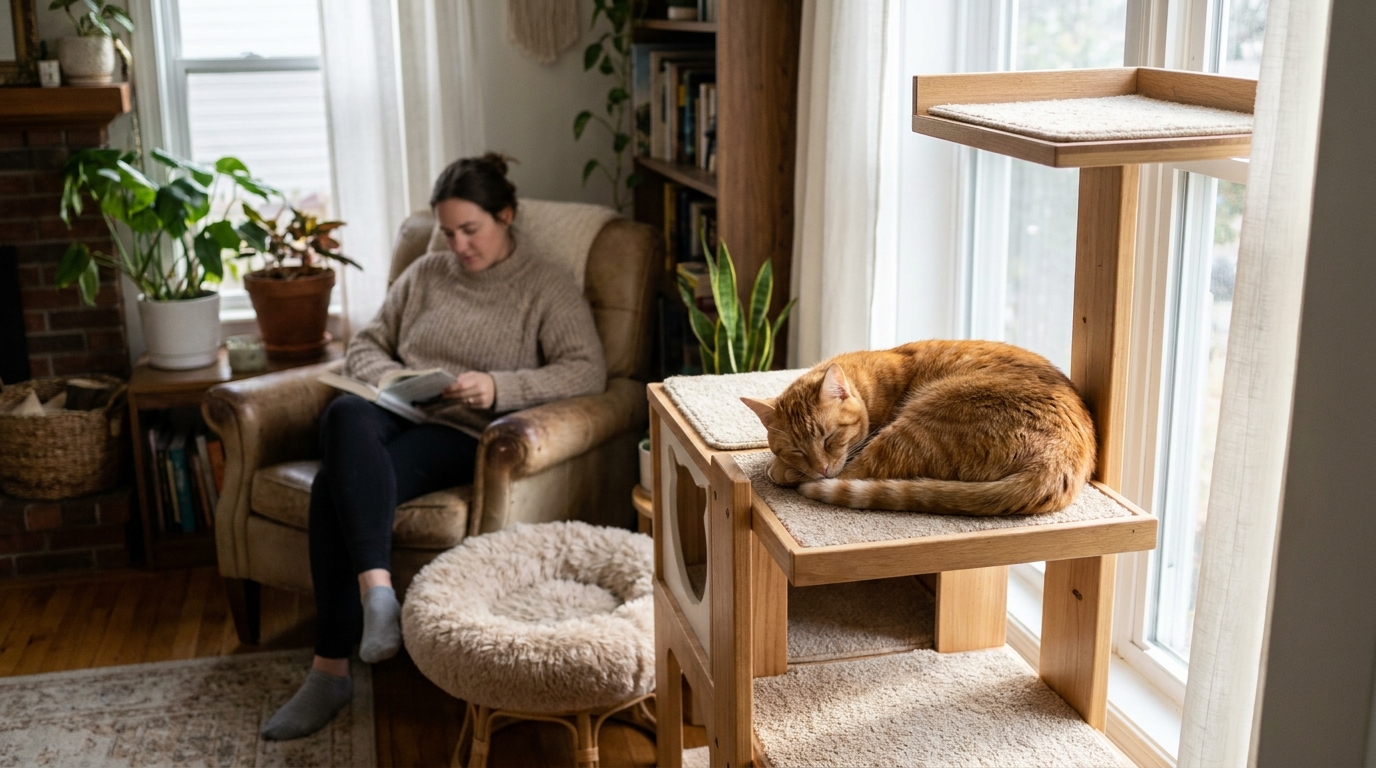
Cats are less likely to contest your furniture if they have clearly designated spaces of their own that meet similar needs.
If you've provided a cat tree near your favorite chair, positioned at comparable height with similar sightlines, your cat may accept that as their spot while recognizing the chair as yours. Territorial disputes decrease when both parties have suitable options.
The key word is "suitable." A cat bed tucked in a corner far from household activity doesn't compete with a prime living room chair. Cats want proximity to family members, visual access, and thermal comfort—if their designated spot lacks these qualities, they'll continue pursuing yours.
Jackson Galaxy's "catification" concept emphasizes creating vertical territory and designated perches throughout a home. When cats have multiple elevated, comfortable options, competition for specific furniture decreases.
Research shows that enriched environments with ample resting options reduce stress-related behaviors in domestic cats. A house with strategic cat furniture placement experiences fewer territorial conflicts.
If your cat constantly claims your chair, the solution isn't necessarily enforcement—it's often providing an equally appealing alternative. A heated cat bed positioned next to your chair may resolve the dispute entirely.
Territorial generosity works better than territorial exclusion in most cat-human relationships...
#1 — They Know You'll Come Back—And That Makes It Valuable
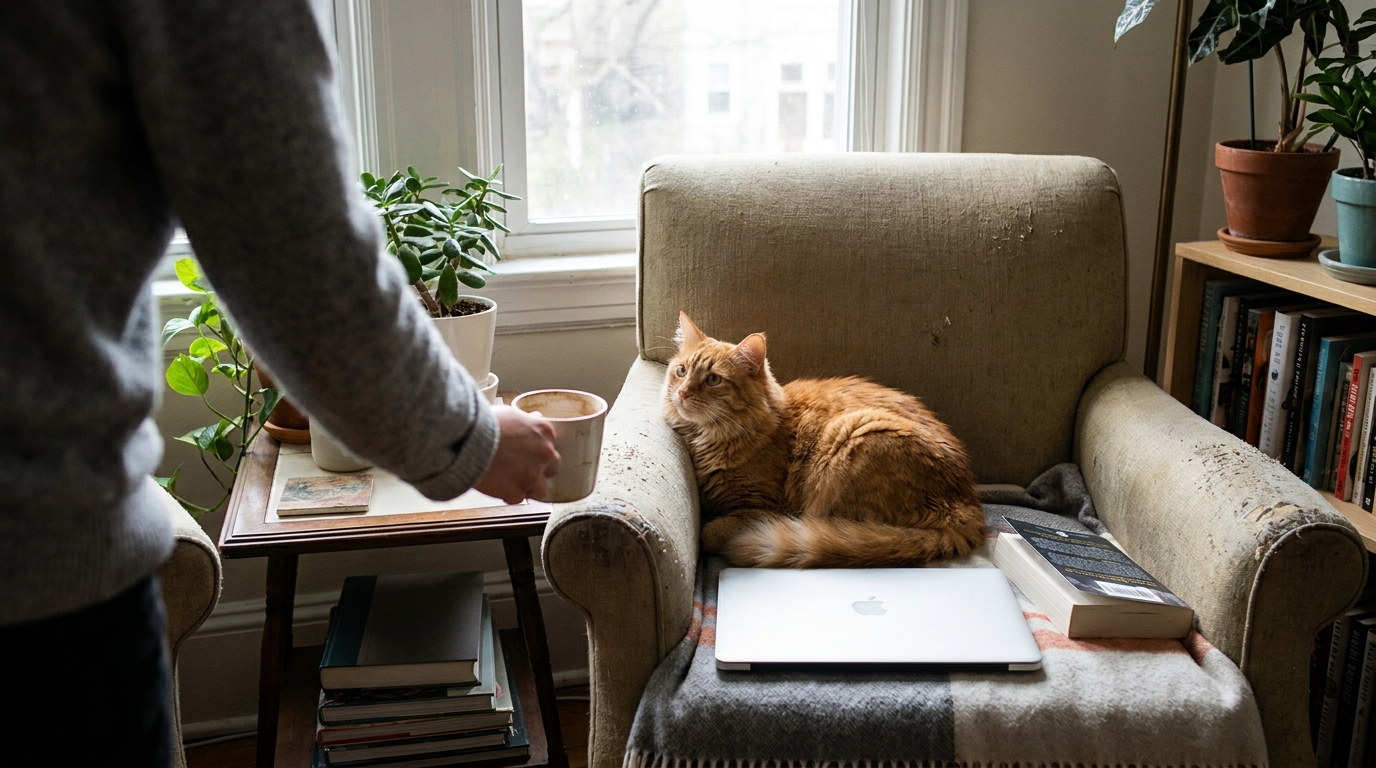
The number one factor in how cats decide which chair is yours is simpler and more social than most people realize: they know you return to it.
Cats bond with their humans, and one way they express that attachment is by maintaining proximity to objects and spaces strongly associated with you. Your scent-saturated chair isn't just furniture—it's a connection point to you when you're absent.
This explains the common behavior of cats sleeping in "your" spot while you're away, then moving when you return. They're not being deliberately obstructive—they're seeking proximity to your scent signature because it provides comfort and security.
A 2019 Oregon State University study found that cats form secure attachments to their owners at rates comparable to dogs. The majority of cats tested showed clear preference for their owner's presence over novel stimuli.
Your chair represents you when you're not available. It smells like you, it's warmed by you, and it's predictably associated with your return. For an attached cat, that makes it valuable territory worth monitoring.
When your cat sits in your chair and watches the door, they're not claiming dominance. They're waiting for you, surrounded by your scent, in the spot most strongly associated with your presence.
This is why cats often make direct eye contact when you find them in your seat—they're acknowledging the shared value of that space and their temporary stewardship of it. They know it's yours, and that's exactly why they're there.
The Bottom Line
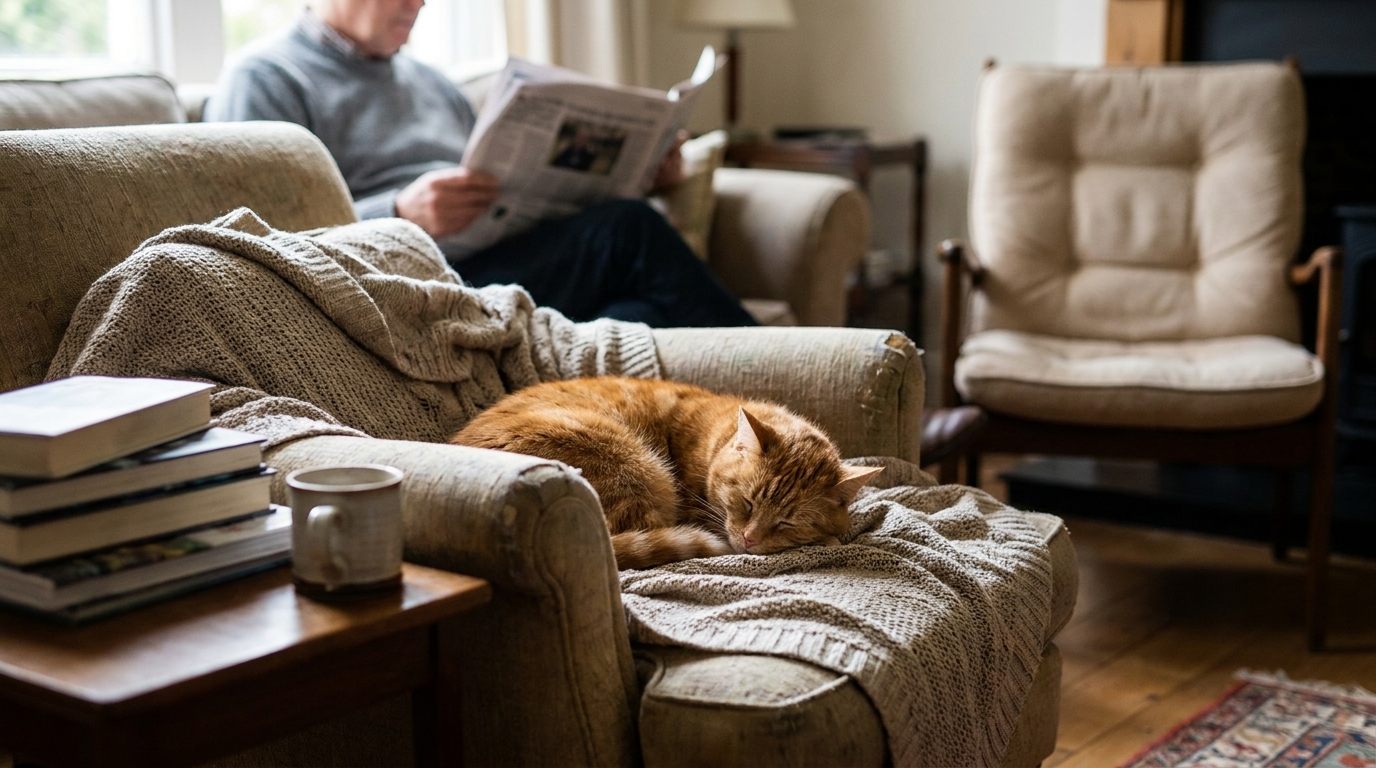
Your cat's decision about which chair belongs to you is based on a complex calculation involving scent, routine, temperature, elevation, and emotional associations. They're not randomly choosing where to sit—they're responding to dozens of environmental and social cues you've provided.
The strongest indicator remains consistency. The furniture you use most often, defend most clearly, and emotionally invest in becomes "yours" in your cat's mental territory map.
But remember that cats also view your favorite chair as a connection to you. When they claim it in your absence, it's often a form of proximity-seeking rather than territorial challenge.
Which chair in your house has your cat permanently claimed as their own, despite your best efforts? Drop it in the comments.
- That Empty Stare? Your Cat's Not Bored, They're Guarding Your Home From the Unseen
- 12 Cat Breeds With Personalities Bigger Than Their Size
- Animal Behavior Says Cats Who Regularly Meet You at the Door May Be Responding to More Than the Sound of You Arriving
- Why Your Cat Wakes You at the Same Time Every Morning