You walk into the living room at midnight for a glass of water, and your cat is already there. Completely still. Eyes locked onto a corner of the wall where, as far as you can tell, absolutely nothing is happening. It’s one of those quietly unsettling moments that every cat owner has experienced at least once.
The easy explanation is that your cat is just being weird. The more honest answer is far more interesting. Your cat is operating on an ancient sensory and behavioral system that has barely changed since its wildcat ancestors roamed open grasslands, and what looks like eccentric behavior is often something much more purposeful.
The Ancient Instinct That Never Left
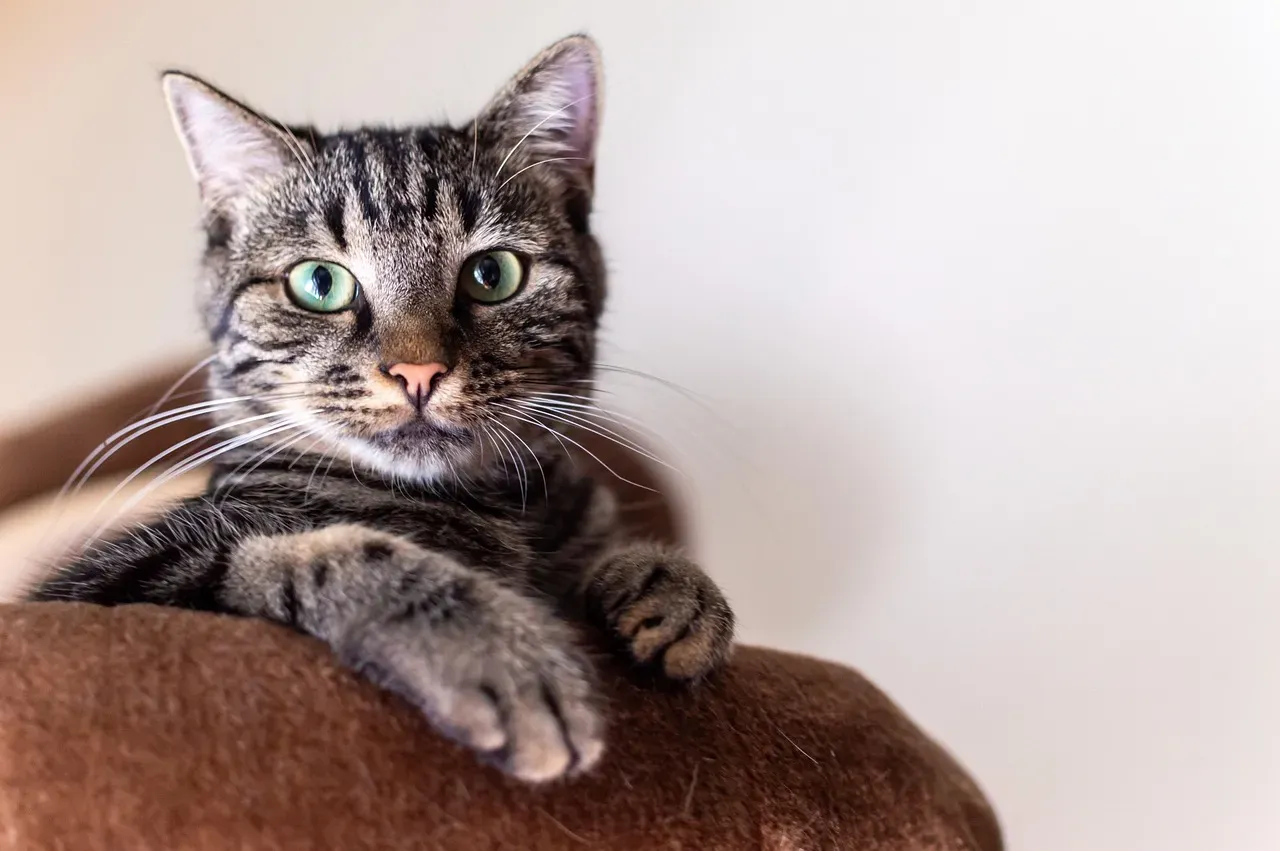
Your cat was never fully domesticated in the same way dogs were. Feline protection stems from both evolutionary and emotional roots. In the wild, cats are territorial animals that rely on vigilance to survive. When domesticated, this instinct doesn’t disappear – it simply redirects toward their human family.
Your home becomes their territory, and you become part of their social group. Protecting you, therefore, is an extension of protecting their domain. This is why a cat that seems indifferent to your existence during the day can shift into something resembling a tiny, fur-covered sentinel by night. The drive to monitor and defend is simply too deeply wired to switch off.
Territorial Mapping: Your Home Is Their Kingdom
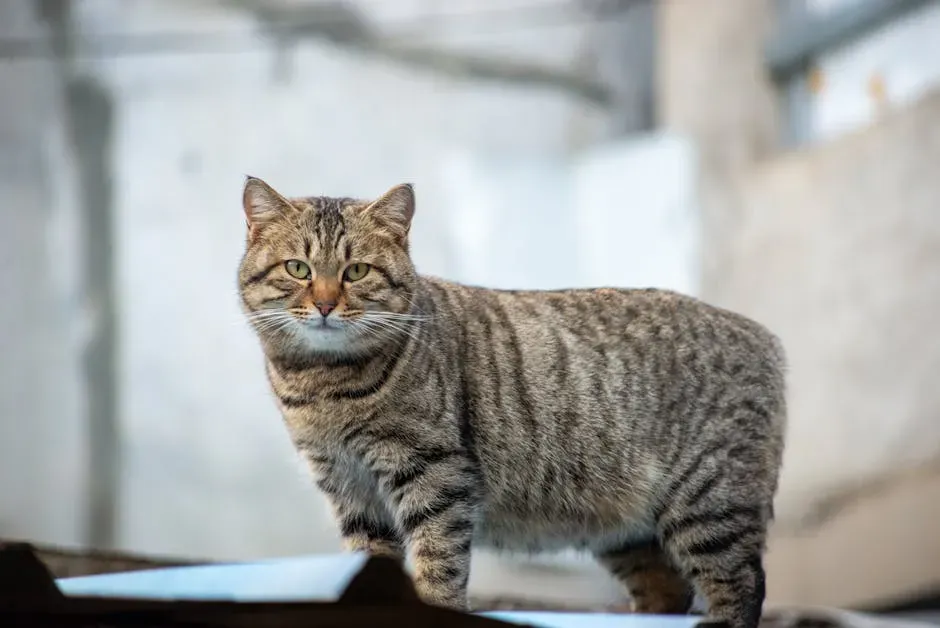
Cats establish mental maps of their territory, and any movement within that space can trigger their instinct to observe and assess the situation. By watching you, the cat is evaluating whether your actions pose a risk to their established boundaries or resources, such as food, water, or resting spots. Monitoring is a key aspect of a cat’s territorial behavior, as it allows them to maintain control over their environment.
Cats are territorial creatures by nature, and guarding behavior may stem from their innate desire to defend their territory and assert their dominance. By positioning themselves near a door, cats may be signaling to other animals, both inside and outside the home, that this area belongs to them and should be approached with caution. When your cat parks itself in a doorway or hallway, it often isn’t coincidental. It’s strategic.
The Hearing That Turns Silence Into a Crime Scene
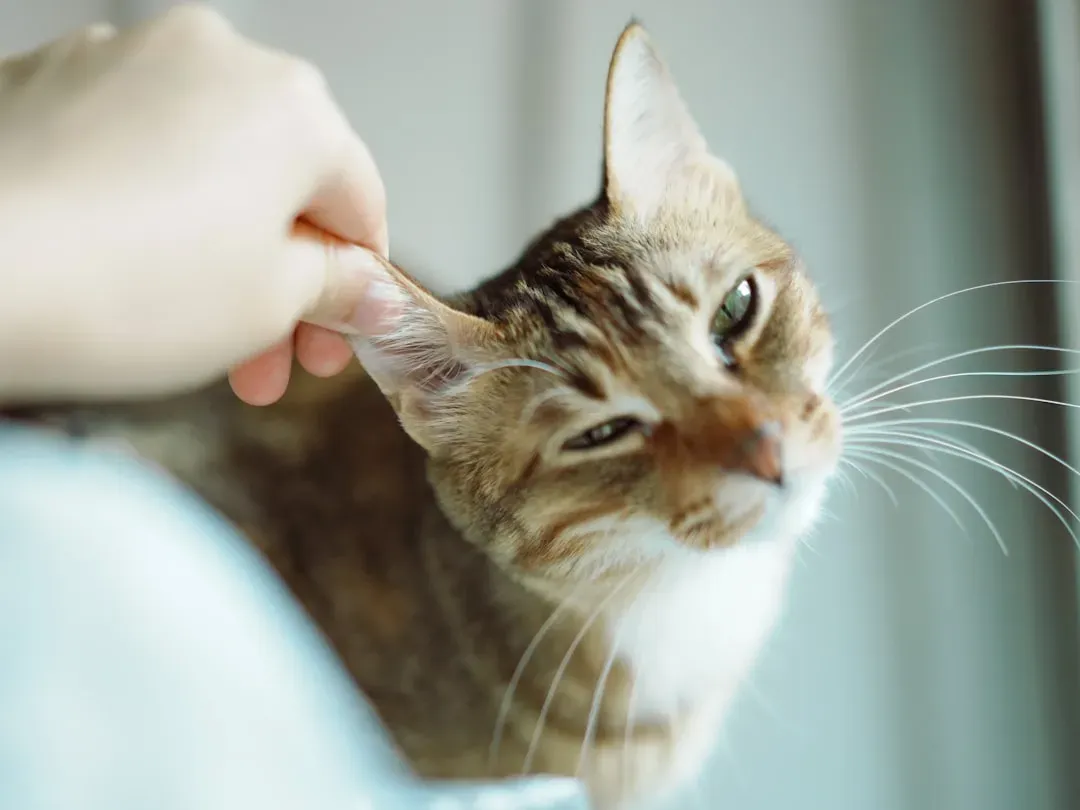
Humans and cats have a similar range of hearing on the low end of the scale, but cats can hear much higher-pitched sounds, up to 64 kHz, which is 1.6 octaves above the range of a human, and 1 octave above the range of a dog. That gap in perception is enormous. What registers as complete silence to you is a fairly noisy environment to your cat.
Cats can detect high-frequency sounds well beyond the human range. Pipes expanding inside walls, rodents behind baseboards, and HVAC systems all produce sounds your cat hears clearly. When your cat stares at a wall, what holds their attention is often what they hear. So the next time your cat fixates on a blank stretch of drywall, there’s a solid chance something is actually going on in there.
What Your Cat Sees That You Simply Can’t
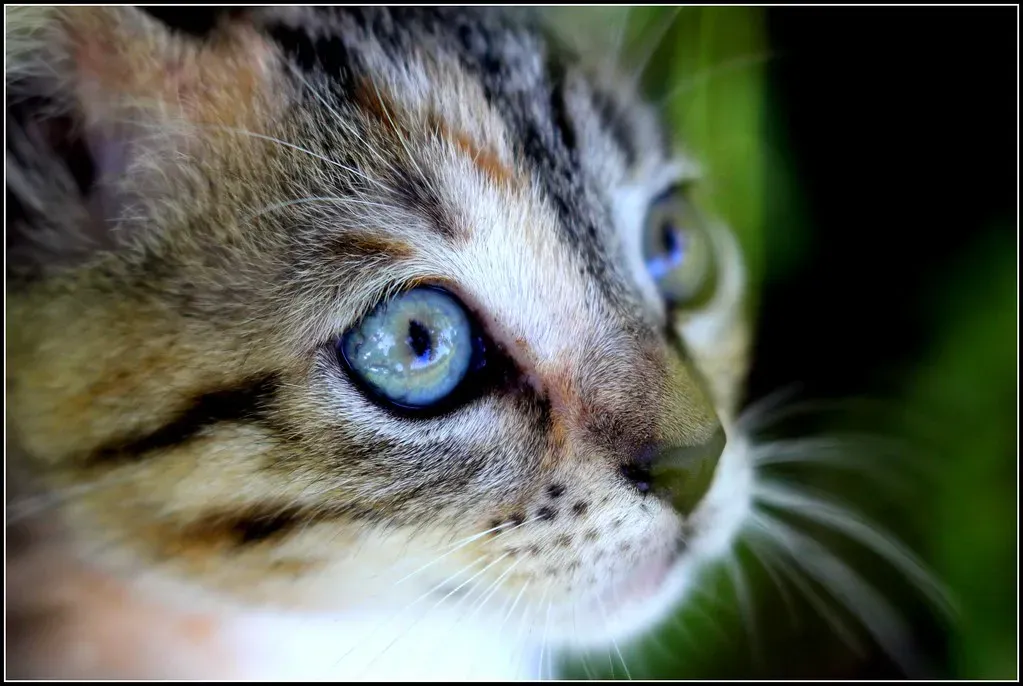
Cats have a tapetum lucidum, which is a reflective layer behind the retina that sends light that passes through the retina back into the eye. They also have a high number of rods in their retina that are sensitive to dim light. While these improve the ability to see in darkness and enable cats to see using roughly one-sixth the amount of light that humans need, they appear to reduce net visual acuity when light is abundant.
Cats can see in light levels six times lower than humans. When your cat stares at a wall, they may be tracking tiny movements, like shadows, dust particles, or reflections, that are invisible to you. When listening for something, a cat’s ears will swivel in that direction; a cat’s ear flaps can independently point backwards as well as forwards and sideways to pinpoint the source of the sound. Combined with exceptional night vision, this makes your cat a genuinely formidable early-warning system.
Guarding the Doors: More Than Just Waiting for You
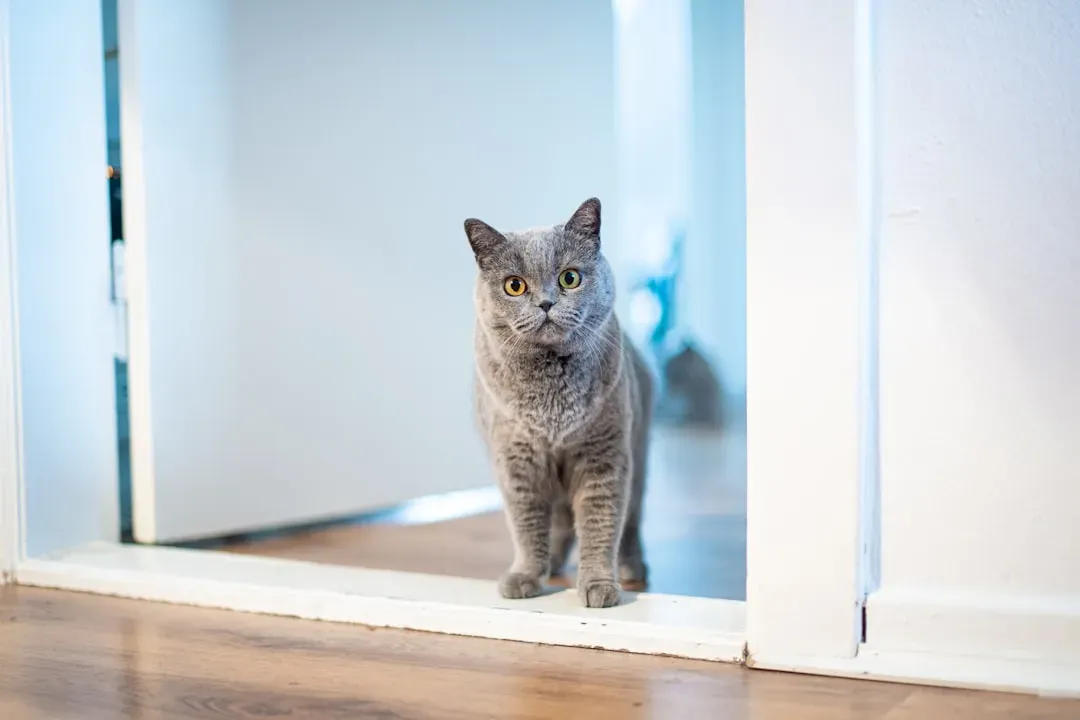
One puzzling behavior exhibited by many feline companions is their tendency to guard doors. Whether it’s the front door, a bedroom entrance, or even the bathroom, cats seem to take their role as gatekeepers quite seriously. This behavior isn’t random restlessness. It reflects a deliberate awareness of entry points that anything, or anyone, could use to enter their space.
Have you ever seen your cat flop over on their side in the middle of a hallway? What about near stairs or by a doorway? While they could be resting, they may also be guarding whatever’s on the other side. This may be especially true if an important resource like the litter boxes are all in one location. It’s a deceptively relaxed posture for what is, in feline terms, a fairly serious occupation.
The Nighttime Watch: Your Cat While You Sleep
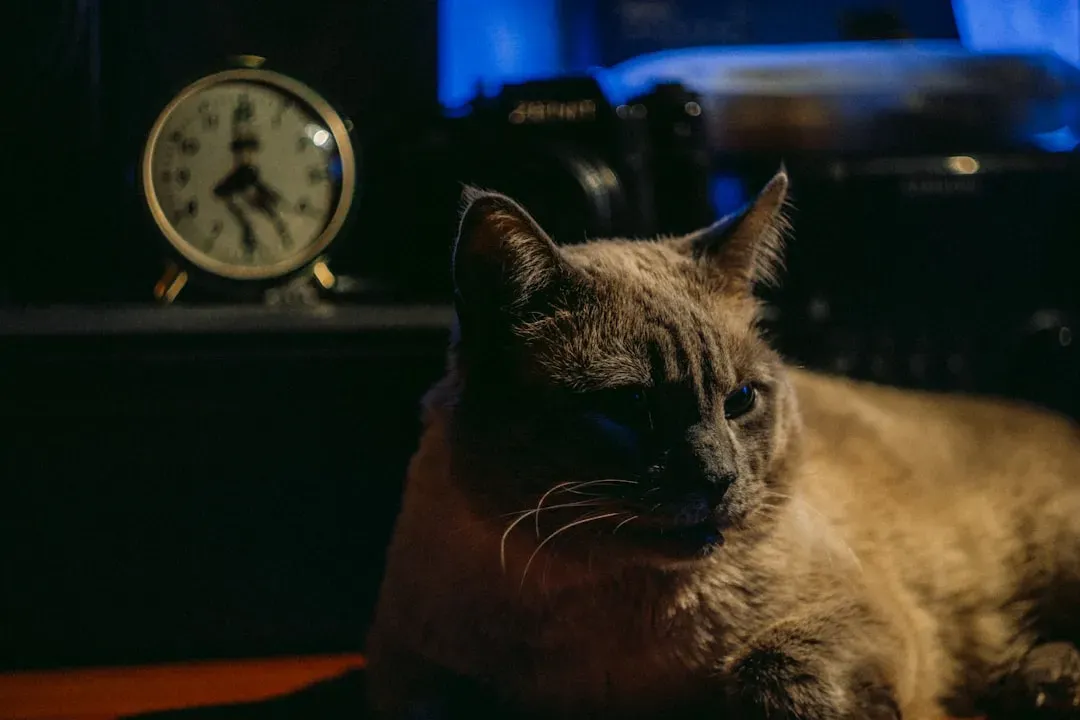
Many cats choose sleeping positions that allow them to monitor their surroundings while staying close to their owners. Their superior night vision and acute hearing enable them to detect disturbances long before humans notice them. This behavior can be traced back to their wild ancestors, who monitored their group during rest periods to alert them of danger. Cats’ protective instincts extend into daily routines, and sleep is a vulnerable time when they naturally feel the need to watch over their companions.
One clear sign of guarding behavior is positioning. Cats that are guarding tend to face the door or the most open part of the room, ready to confront any potential threats. Their ears might twitch at the slightest noise, and their body remains tense, ready to spring into action. It’s a posture built for readiness, not for relaxation, even if it looks suspiciously like a comfortable nap.
The Scent Patrol: Invisible Boundaries You Can’t Smell
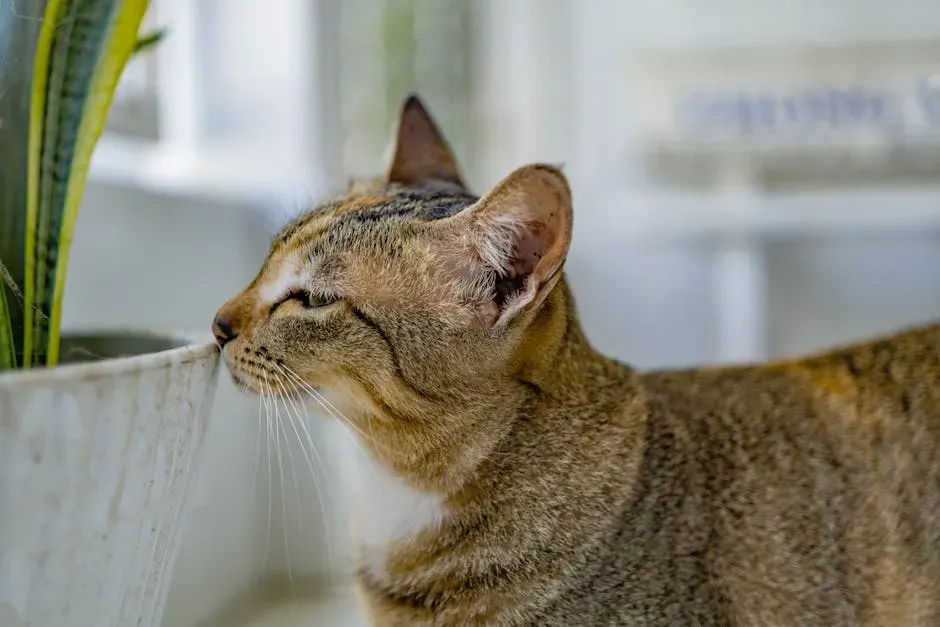
Smell is a cat’s strongest sense, with approximately 200 million odor-sensitive cells. Cats also possess a vomeronasal organ on the roof of their mouth that allows them to detect pheromones. They use this powerful sense for everything from hunting to marking territory. While you go about your day completely unaware of the invisible chemical landscape around you, your cat is reading it like a constantly updated news feed.
Cats demonstrate several territorial behaviors, primarily through marking. You’ve seen it when your cat rubs their cheeks and body against items in your home, including you and your family. They can also mark by scratching. A wall near a doorway might carry residual pheromones from your cat, another pet, or wildlife outside. Staring is often part of processing these invisible scent messages. Your cat sniffing a door frame with intensity isn’t curiosity. It’s reconnaissance.
When Protection Meets Emotional Bonding
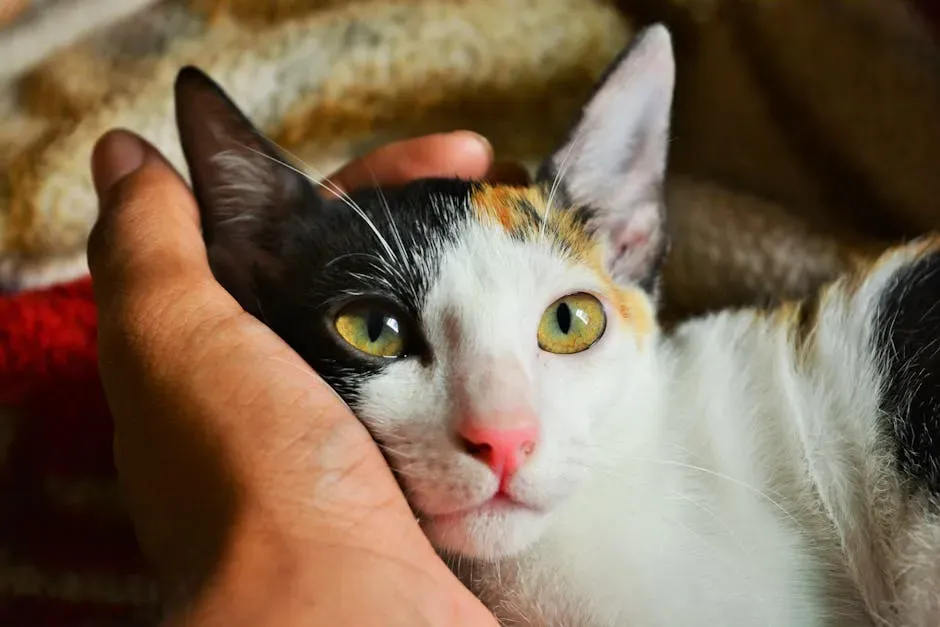
Emotional bonding also plays a major role. Cats that feel secure and loved often reciprocate by watching over their owners. They may sense subtle changes in your mood or health and respond accordingly. For instance, some cats become more attentive when their owners are sick or stressed, offering companionship and quiet support.
Guarding is a normal protective behavior that is often a display of affection, accompanied by purring, kneading, head butting, and licking. Unlike dogs, cats rarely display loud, overt protection. Their guarding is often subtle: sitting in a doorway, following you closely, observing strangers, or showing displeasure when an unfamiliar animal approaches. This quiet, watchful presence is a form of protection that aligns with a cat’s personality: cautious, intelligent, and vigilant.
When to Take the Behavior Seriously
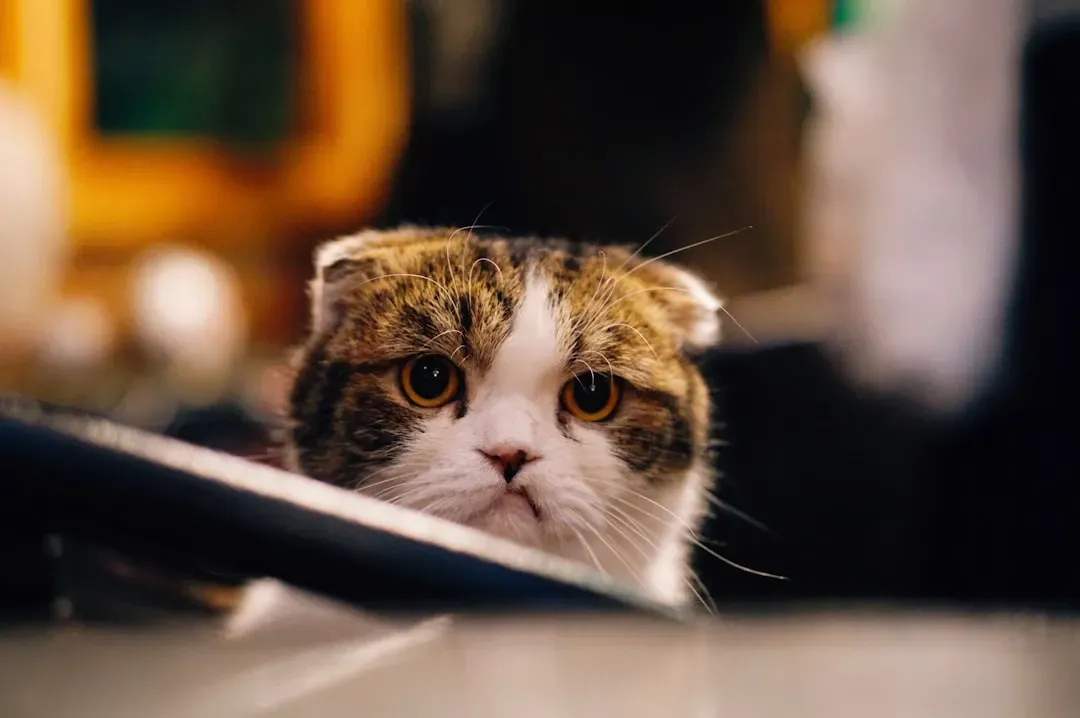
Guarding behavior can sometimes be the sign of separation anxiety or overprotectiveness. If your cat’s guarding behavior has progressed to unhealthy levels, it’s worth scheduling a visit with your veterinarian. Most of the time this behavior is completely harmless, but there’s a useful line between natural vigilance and chronic stress that’s worth knowing about.
Some medical reasons for staring at walls include feline cognitive dysfunction syndrome, also known as dementia, and seizures. Cats that also press their heads against walls need urgent veterinary attention, as this is a sign of several very serious medical conditions. Plain staring is very different from head pressing, so it’s a distinction worth keeping in mind if your older cat suddenly develops a new fixation with a particular corner.
Conclusion
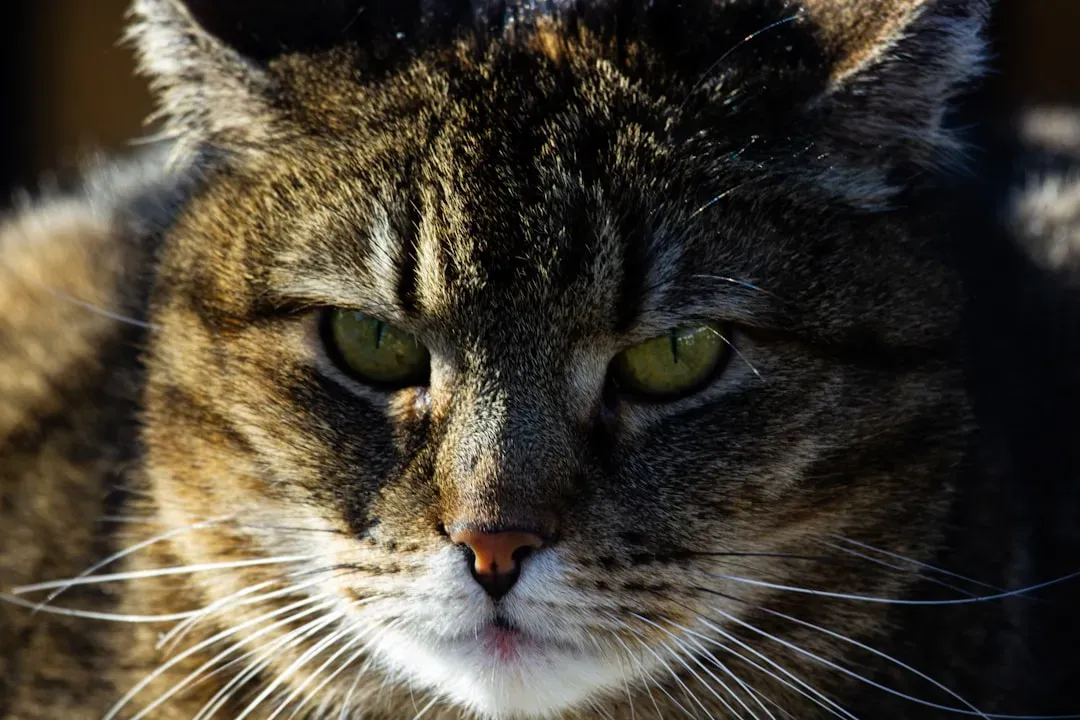
Your cat’s habit of staring at nothing, guarding doorways, or shadowing your every move around the house is not a sign of feline eccentricity. It’s the expression of a deeply preserved sensory and behavioral toolkit, one refined over thousands of years for exactly this kind of vigilance. In reality, cats have sensory abilities far beyond human perception, and what looks like “nothing” to us is often a real stimulus to them. Cats are not spacing out when they stare at a blank wall.
There’s something quietly reassuring about that. The small creature curled at the foot of your bed or stationed at your bedroom door isn’t guarding against purely imaginary threats. It’s doing exactly what its biology prepared it to do: keeping watch over its territory, which happens to include you. You’re not just a provider of food and warm laps. In your cat’s internal worldview, you’re worth protecting.
Kristina is a young writer from India. An arts graduate and an avid content creator, Kristina is passionate about animals and wildlife. She enjoys exploring topics related to pet care, animal behavior, conservation, and nature, combining thorough research with engaging storytelling.