
Everyone tells you the same thing about cats: they’re cold, they’re selfish, they only show up when the food bowl is empty. Ask any owner who’s been slow-blinked at 2 a.m. and they’ll tell you that’s a myth.
Scientists using the same attachment framework built for studying human infants have found something owners suspected all along – cats form real, lasting bonds with one specific person. The signs have been hiding in plain sight, and once you know what to look for, you’ll never see your cat’s “weird” habits the same way again.
#14 – They Follow You From Room to Room
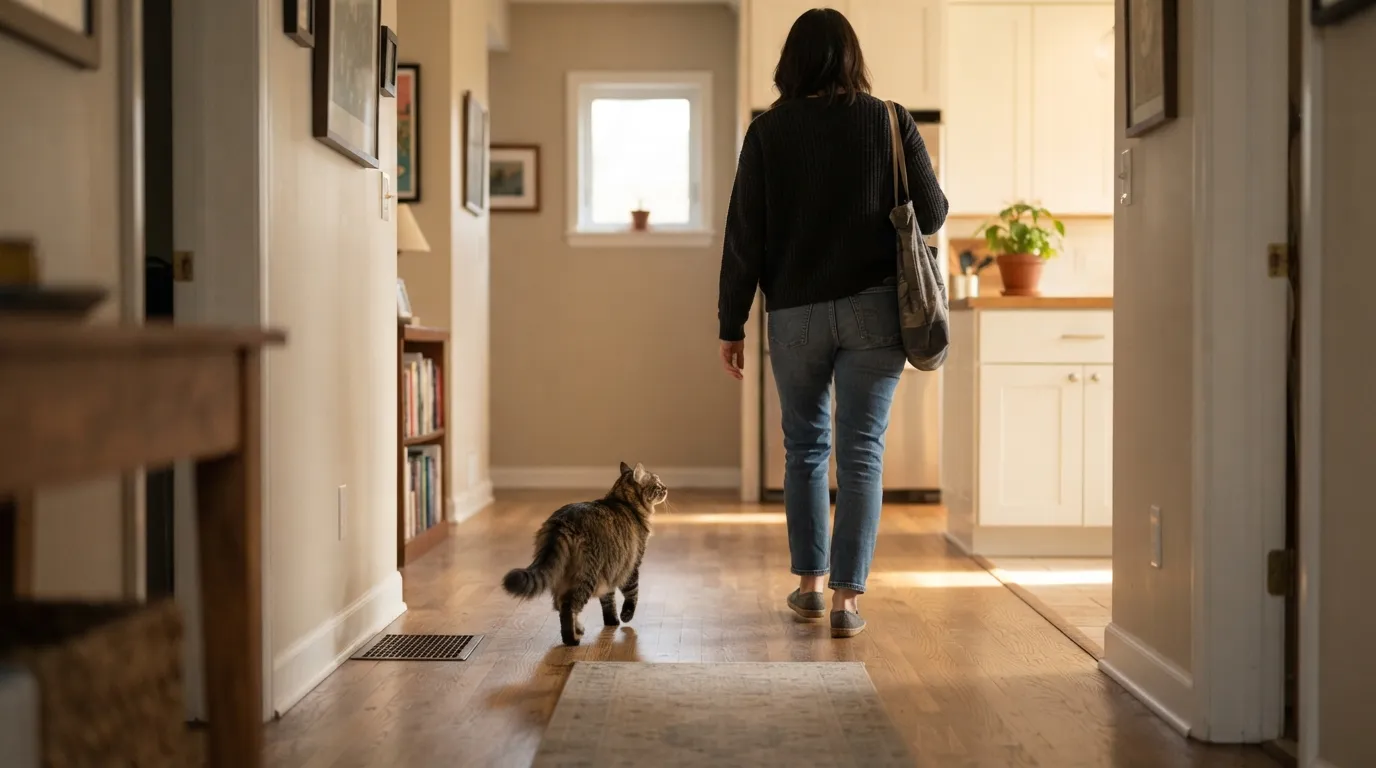
Most owners write this off as nosiness. It’s not even close.
A cat that shadows you through the house is showing real social attachment, not neediness. In feline colonies, staying physically close to another cat signals membership in the same protective group.
Your cat isn’t trailing you out of boredom. It’s standing guard – and what’s coming in #13 is even more personal.
#13 – They Head-Butt You (and It Means More Than You Think)
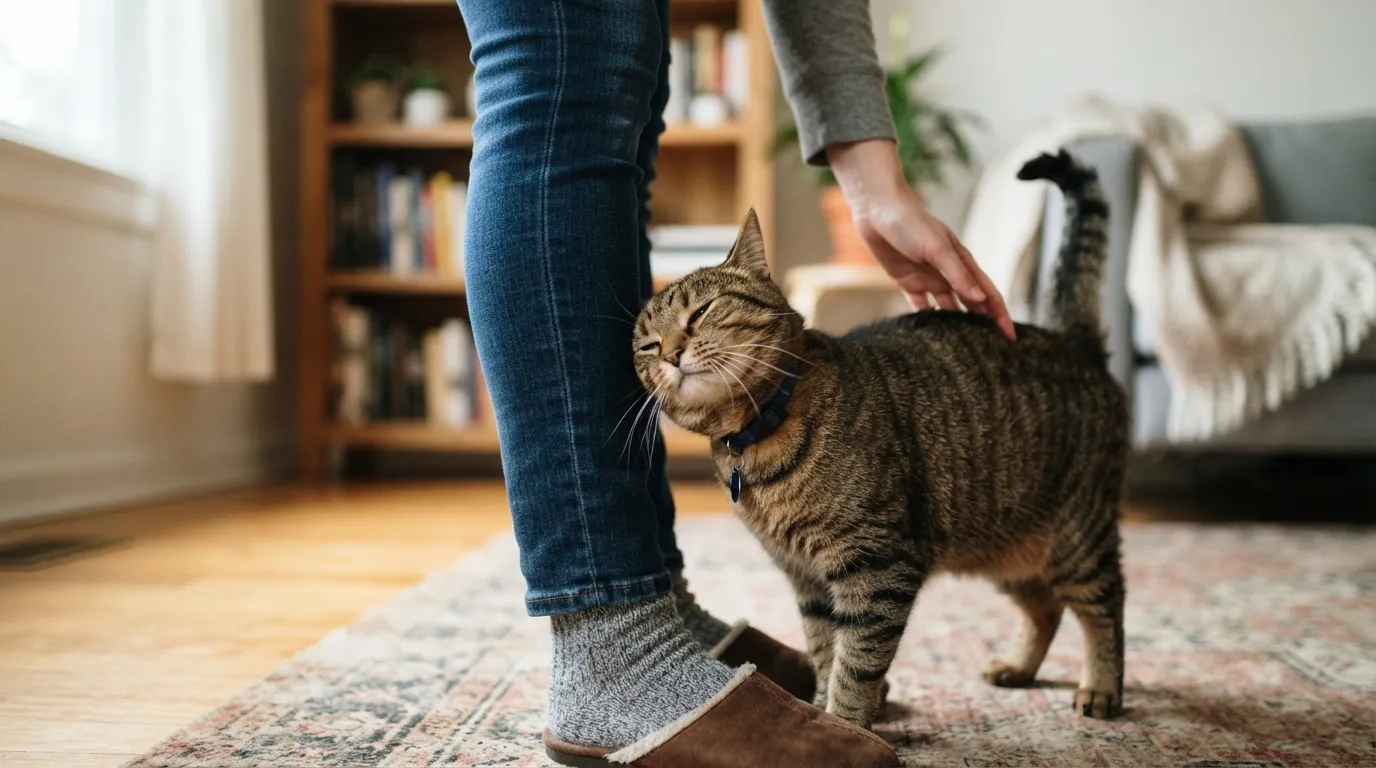
That gentle thud against your shin isn’t random affection. It’s a deliberate, chemical signature.
Cats have scent glands in their cheeks and chin, and a head-butt deposits their scent directly onto you, marking you as theirs. It’s their way of saying you belong to their inner circle.
No cat head-butts a stranger. That gesture is reserved for family only – and #12 takes it a step further.
#12 – They Knead You Like Dough
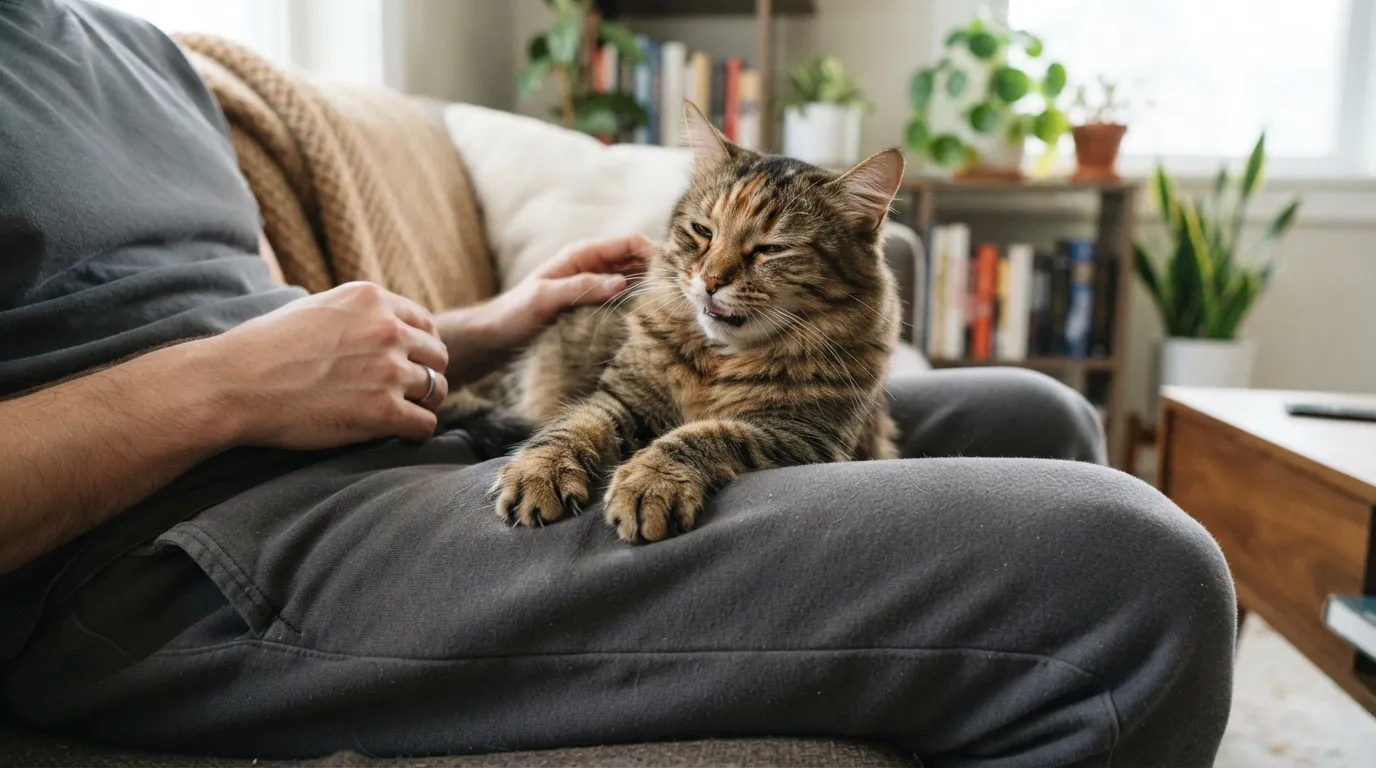
It looks silly, and it might even sting a little. But “making biscuits” on your lap is one of the highest compliments a cat can pay.
Kittens knead their mother’s belly to bring on milk, and many cats carry that comforting habit into adulthood. When a grown cat kneads you while purring, they’re reliving that exact feeling of safety.
You’re not just their owner – you’re their safe place. Wait until you see what their eyes tell you in #11.
#11 – They Slow-Blink Directly at You
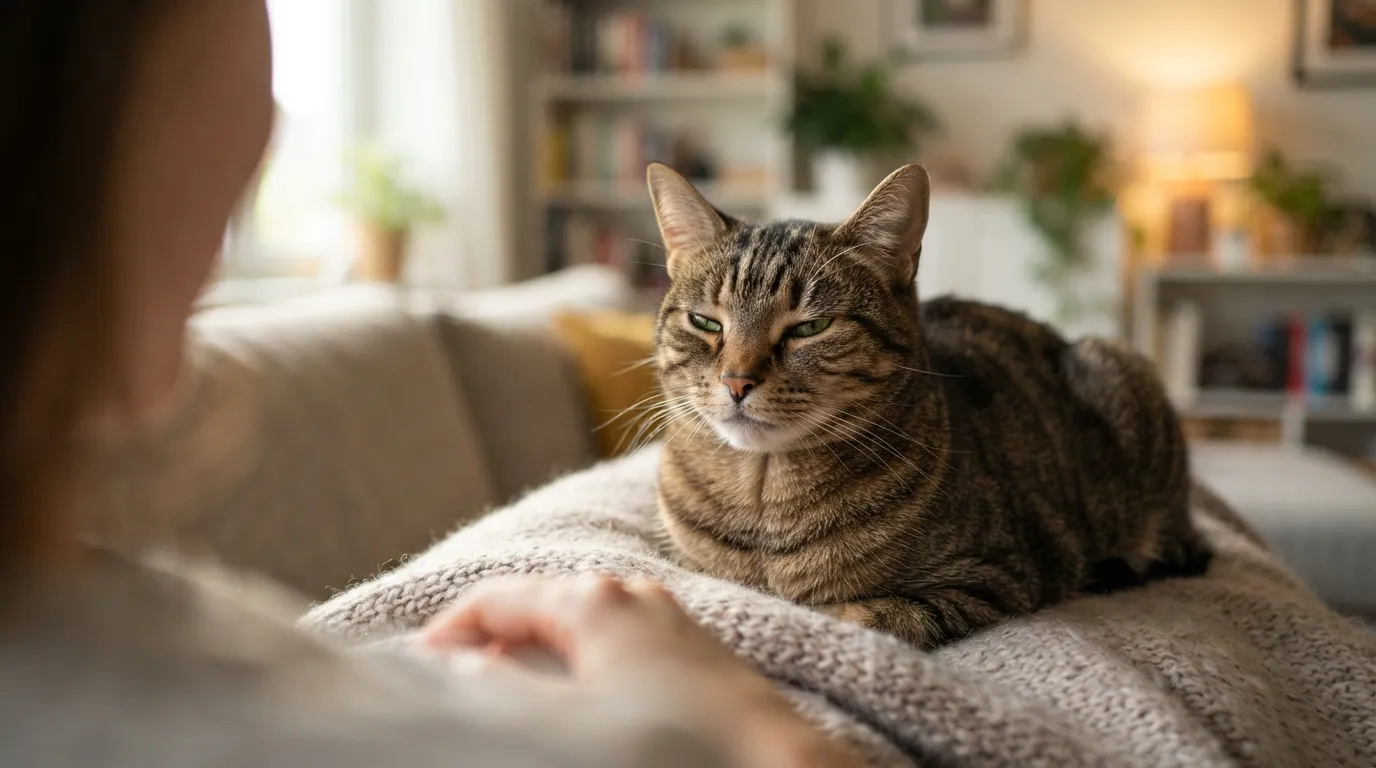
Most people think their cat is just zoning out. That lazy, half-closed stare is actually one of the most intimate signals in the feline world.
Closing their eyes near you means they trust you enough to lower their guard completely. A prey animal choosing to go half-blind around you is a full declaration of confidence.
Fast Facts
- University of Sussex researchers found cats slow-blink back significantly more after a human blinks at them first
- In a second test, unfamiliar cats were more willing to approach a total stranger who had slow-blinked at them
- The effect worked with both owners and researchers the cats had never met before
Try slow-blinking back. The response is often immediate – and it only gets more affectionate from here.
#10 – They Trill When They See You
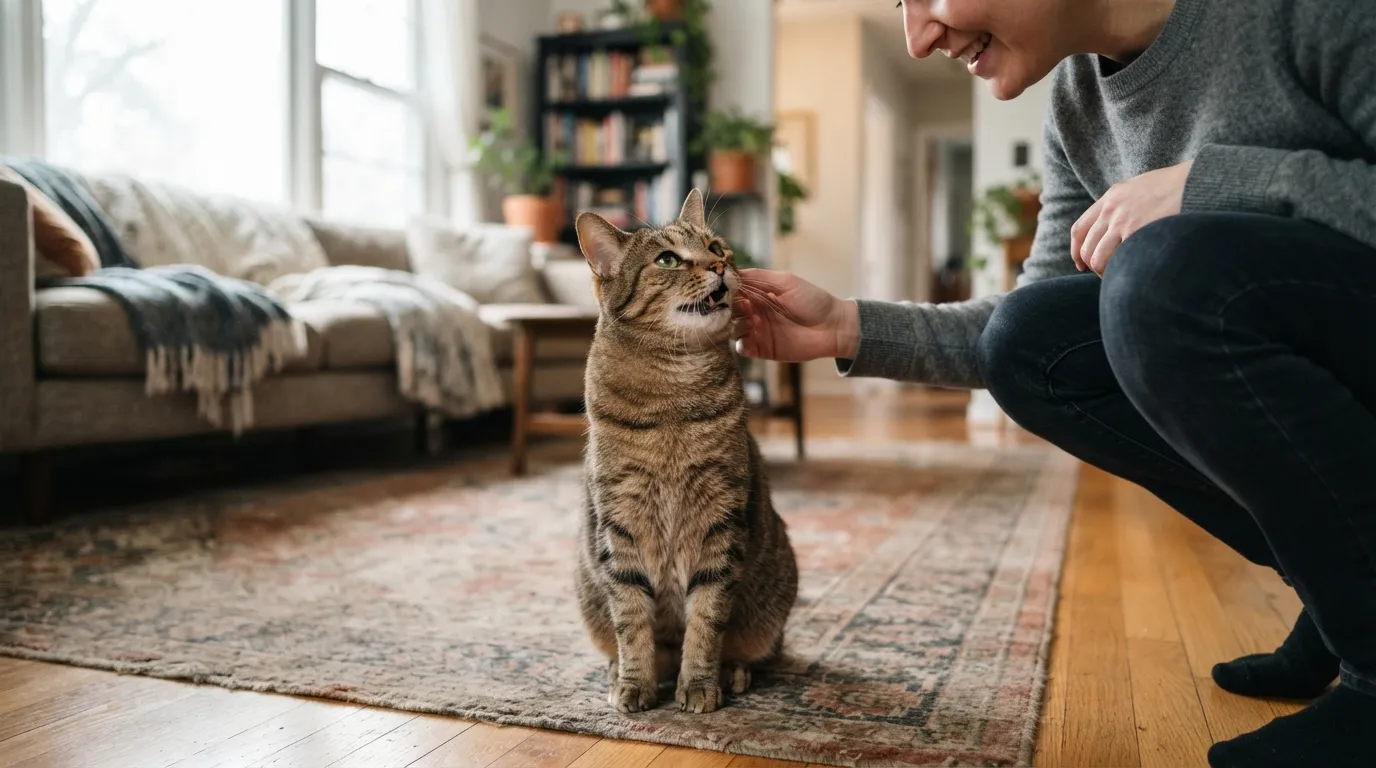
Cats have a whole vocabulary most owners never learn. The trill is the part everyone misses, and it’s the warmest sound they make.
This melodic, purr-adjacent chirp is almost always saved for a cat’s favorite person, usually as a greeting or a thank-you. Mother cats use the same sound to call their kittens to follow them.
If your cat trills at you, you’ve been adopted into the family unit. It’s not small talk, and #9 proves just how far that trust really goes.
#9 – They Show You Their Belly (Without Expecting a Rub)
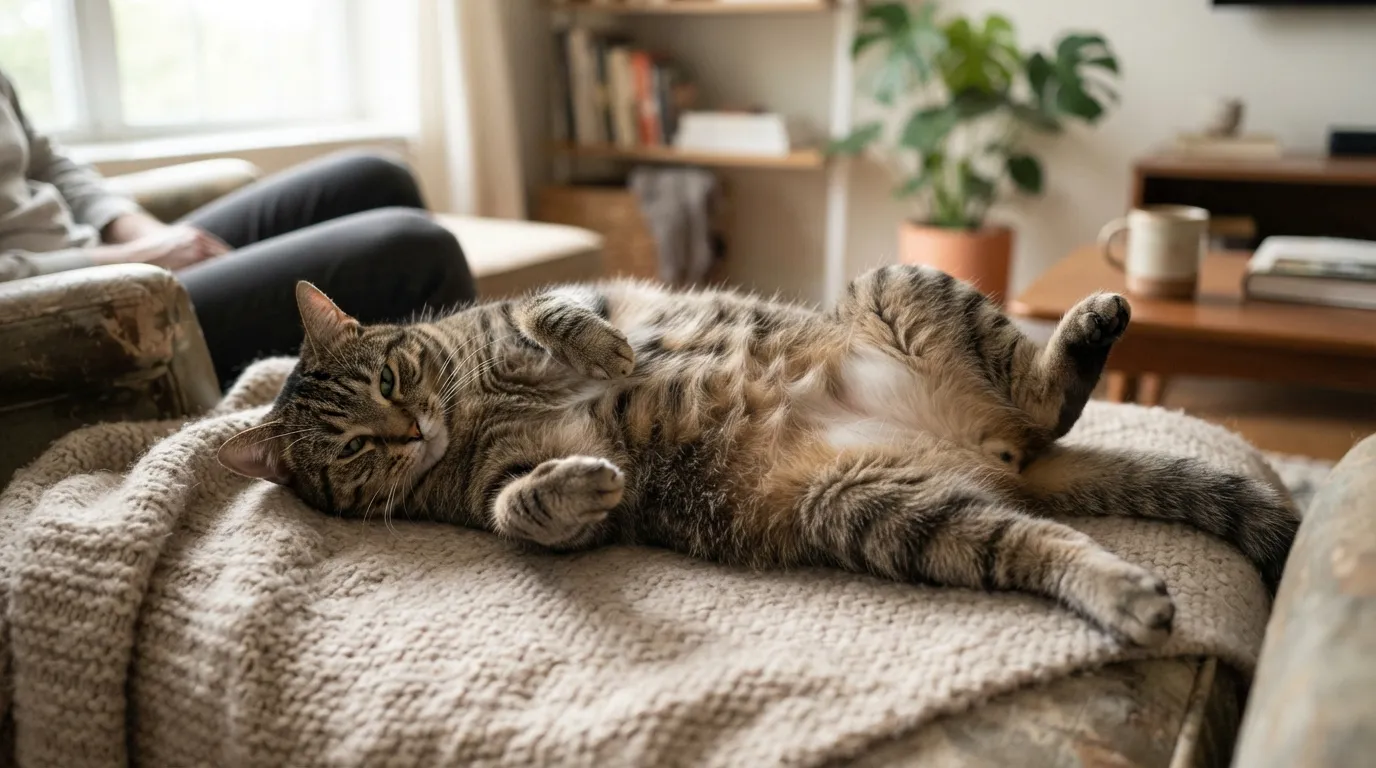
This one gets misread constantly. Owners reach in for a rub and get scratched, because they’re reading the signal wrong.
A cat’s belly is its most vulnerable spot, so exposing it is one of the biggest trust signals a cat can give. Most cats still don’t want it touched – the display itself is the gift.
It’s not an invitation. It’s a declaration. And #8 shows that trust turning into something even more physical.
#8 – They Groom You
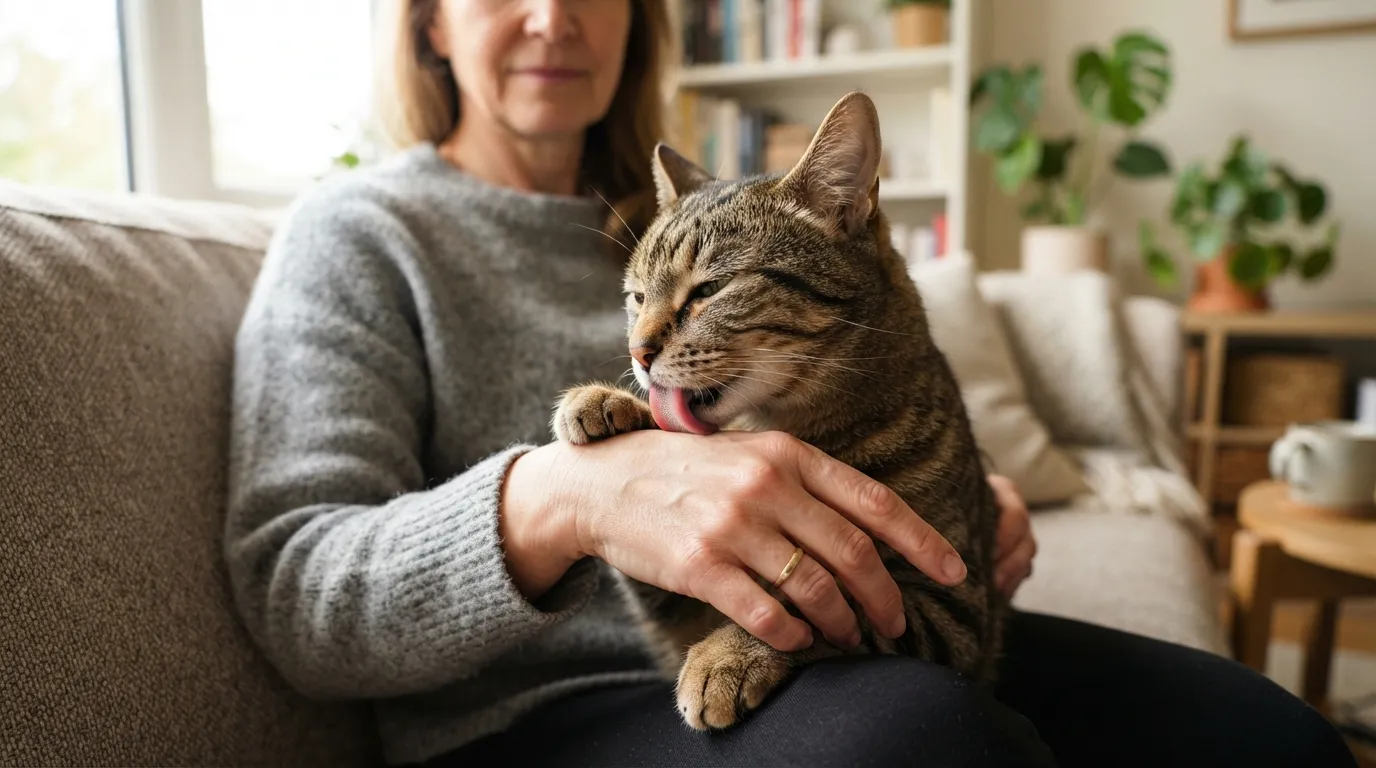
A lick on your hand or hair feels like a quirky habit. It’s actually a profound social act.
Mutual grooming, called allogrooming, is something cats reserve strictly for their trusted social group. By grooming you, they’re literally blending their scent with yours.
They’re making you part of the family on a chemical level. #7 goes even deeper into vulnerability.
#7 – They Sleep on You or Pressed Against You
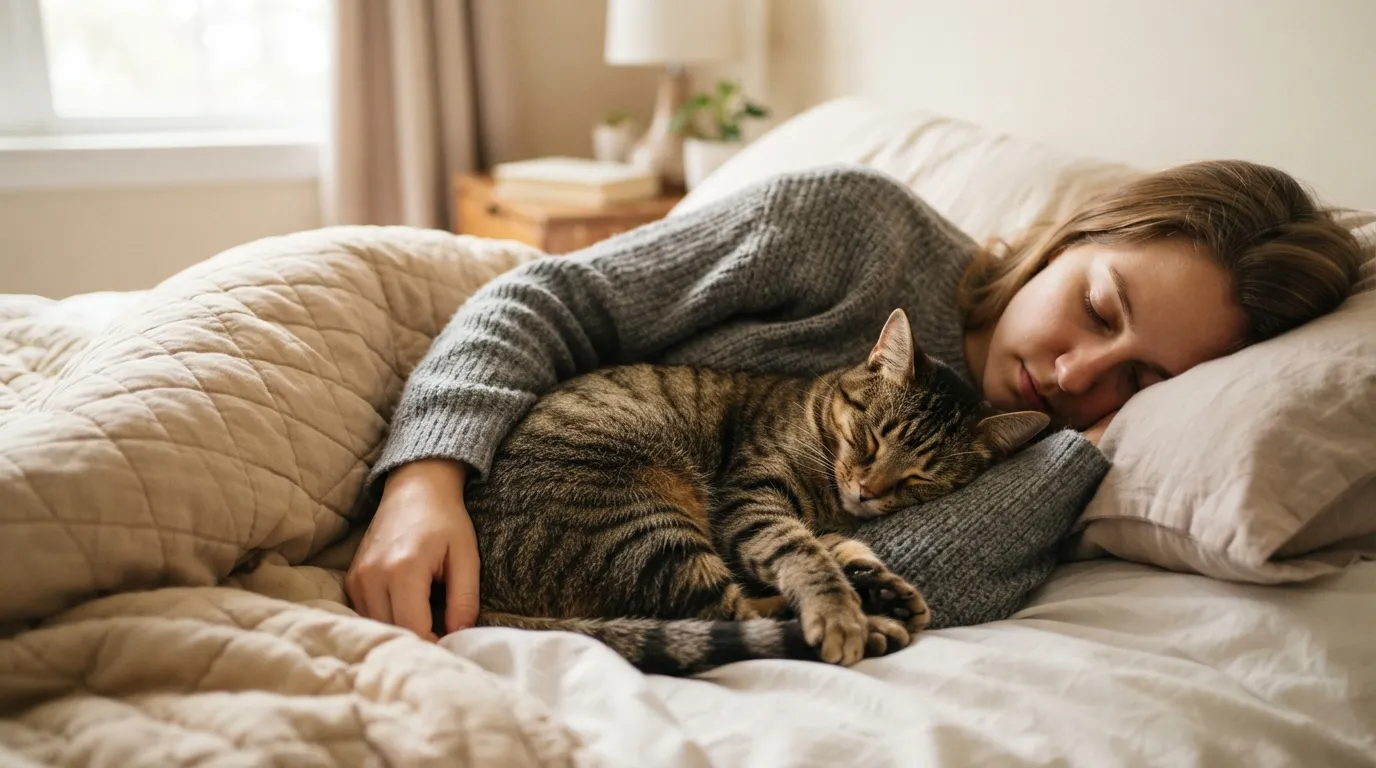
Plenty of cats nap somewhere nearby. The ones who sleep directly on you, or pressed against your body, are operating on a different level of trust entirely.
Sleep is maximum vulnerability for a predator species. A cat who sleeps touching you has decided you’re safe enough to fully let go.
The harder they press against you, the deeper the bond. It’s not about warmth – it’s about who they trust with their life.
At a Glance: Trust Signals So Far
- Following you room to room – they see you as protection
- Head-butting – scent-marking you as family
- Kneading – reliving kitten-level safety
- Slow blinking – deliberately lowering their guard
- Sleeping pressed against you – total trust while vulnerable
#6 gets a little stranger, and a lot more meaningful.
#6 – They Bring You “Gifts”
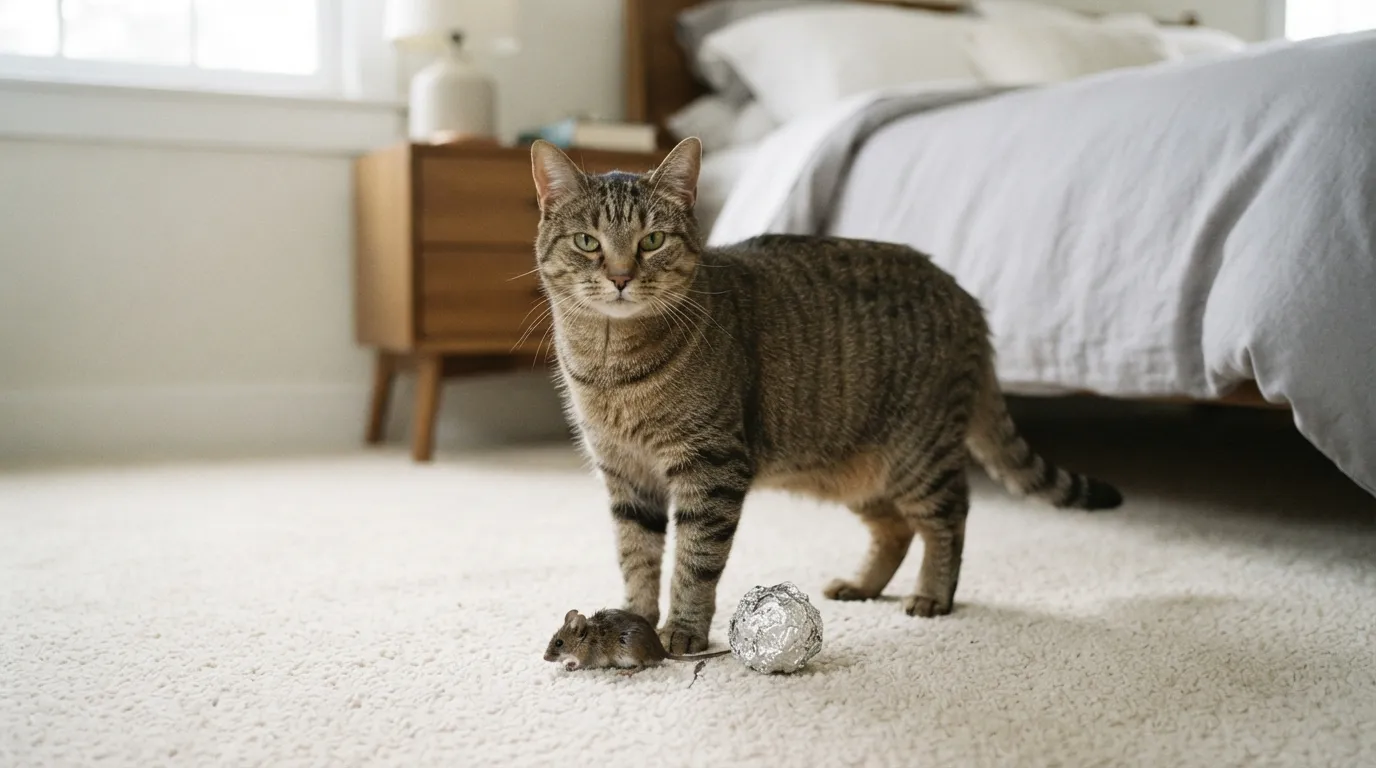
Yes, it’s gross. A dead bird, a half-eaten mouse, a crumpled ball of foil – it all means something.
Cats bring offerings to members of their colony, the ones they consider family. Where they leave the gift matters too – bedrooms are the most intimate space of all.
If your cat drops a “gift” in your bedroom, you’re at the very top of their hierarchy. That’s devotion, cat-style. #5 reveals a sound they save only for you.
#5 – They Meow Specifically at You
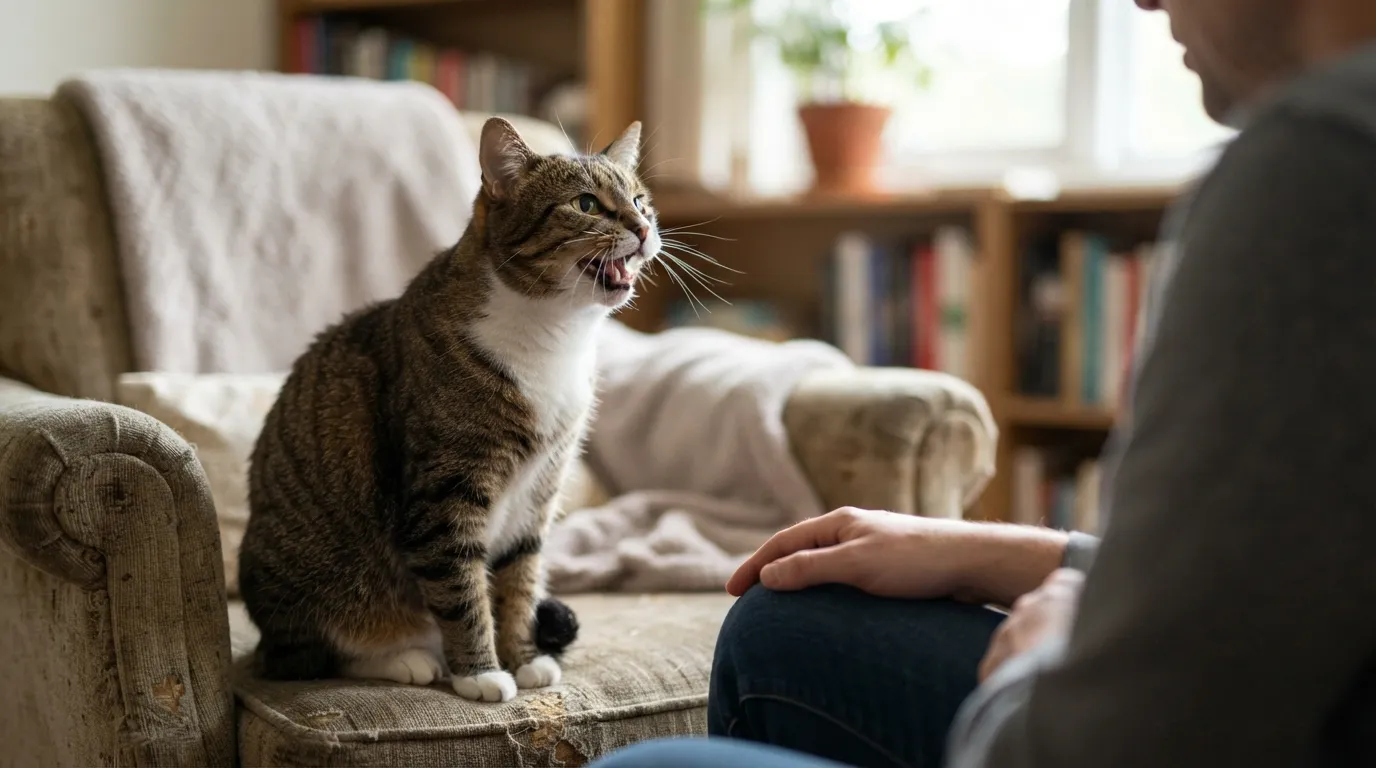
Here’s something most owners don’t know: adult cats rarely meow at other cats. They developed the sound almost entirely to talk to humans.
A cat that’s unsure of you tends to hide, not vocalize, so a meow aimed at you is a deliberate bid for attention. Studies show cats can tell their owner’s voice apart from a stranger’s and remember familiar people for years.
That chatty cat isn’t just noisy – you’re their chosen conversation partner. #4 shows just how closely they’re watching your life.
#4 – They Know Your Schedule Better Than You Do
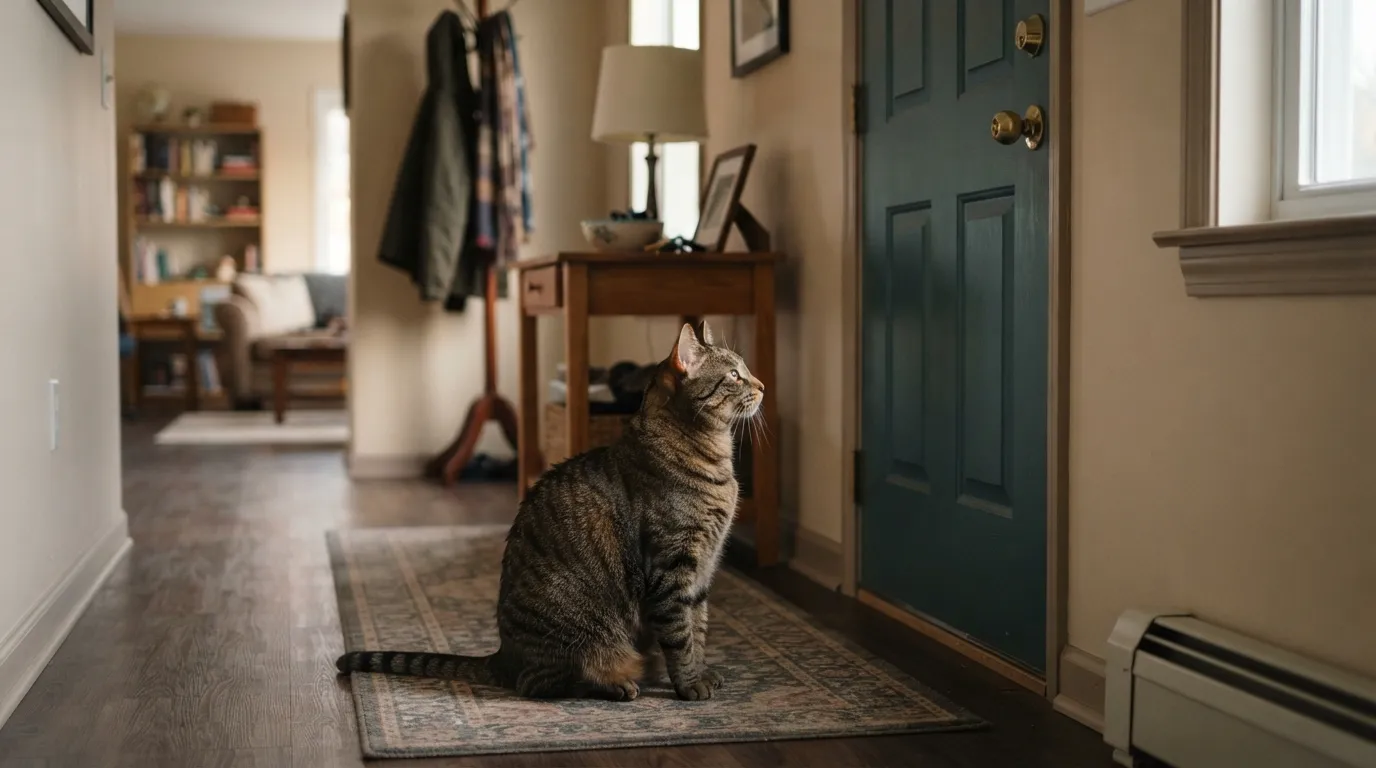
This one surprises almost everyone. Your cat isn’t waiting by the door when you get home – it started waiting before you even left work.
Cats can anticipate regular events within roughly 15-minute windows and adjust their sleep and activity around your routine. They build predictive habits around your meals, your bedtime, even your play sessions.
A bonded cat rebuilds its internal clock around one person. That kind of attention isn’t accidental – and #3 shows it isn’t only physical, either.
#3 – They Comfort You When You’re Upset

Cats get accused of not caring about human emotions all the time. It’s one of the most persistent myths about them, and one of the most wrong.
During stress, bonded cats increase their closeness to their chosen person, offering comfort just by staying near. If your cat has ever appeared out of nowhere to press against you while you cried, that wasn’t a coincidence.
A cat who seeks you out during hard moments has made an emotional investment in you. That’s not independence – that’s loyalty. And #2 is backed by the hardest science on this entire list.
#2 – They Use You as Their “Secure Base”
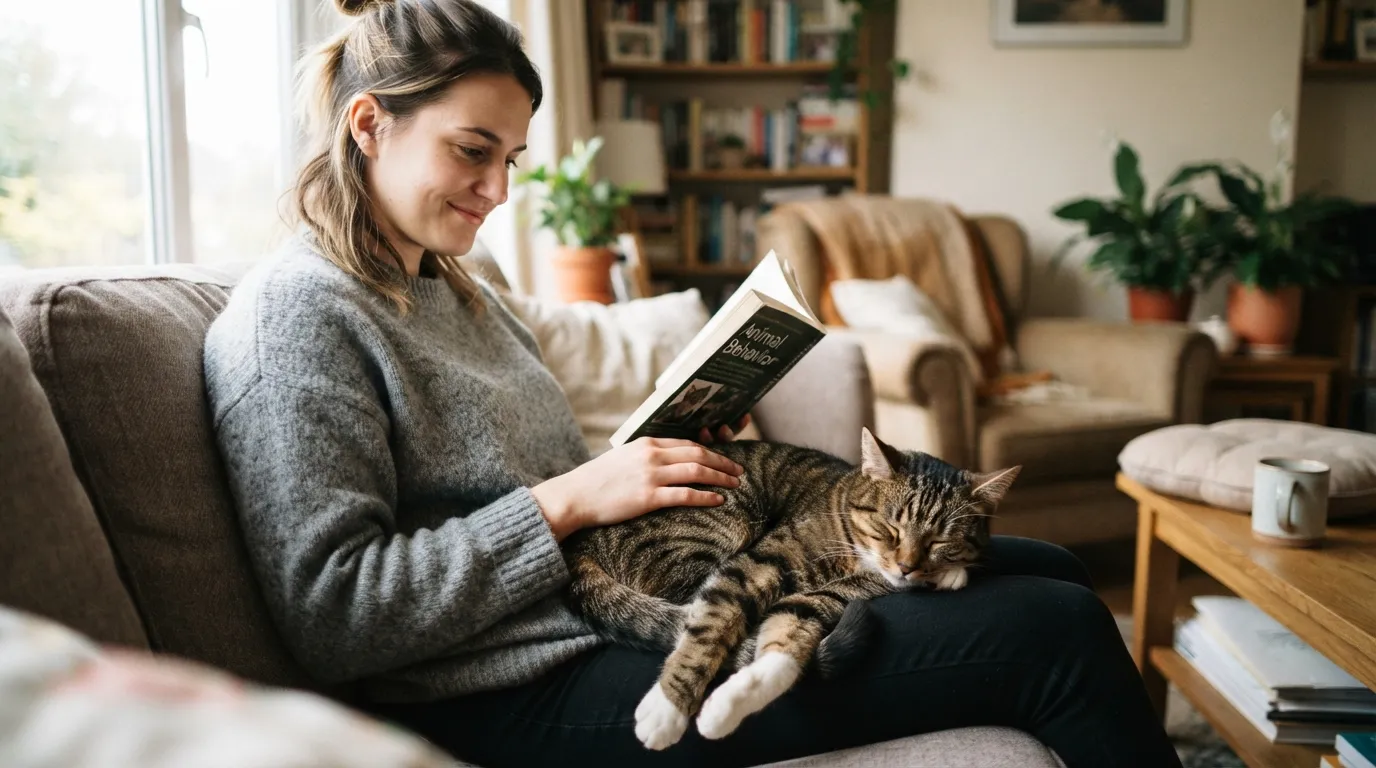
This is the one most owners have never heard of, and it’s the one with real data behind it.
When cats live in a state of dependency with a human, that attachment behavior is flexible and the majority of cats use humans as a source of comfort.
Oregon State University research team
In that same research, roughly 65 percent of cats studied showed secure attachment to their person – staying calm when their human left and returned, balancing exploration with staying close. That’s a higher rate of secure attachment than the 58 percent reported in a comparable study of dogs.
Quick Compare: Secure Attachment Rates
- Human infants: about 65% securely attached
- Adult cats: about 65.8% securely attached
- Kittens: about 64.3% securely attached
- Companion dogs: roughly 58-61% securely attached, depending on the study
Still think cats don’t bond? Wait until you see what #1 means for everything on this list.
#1 – They Chose You. Deliberately. And That Changes Everything.
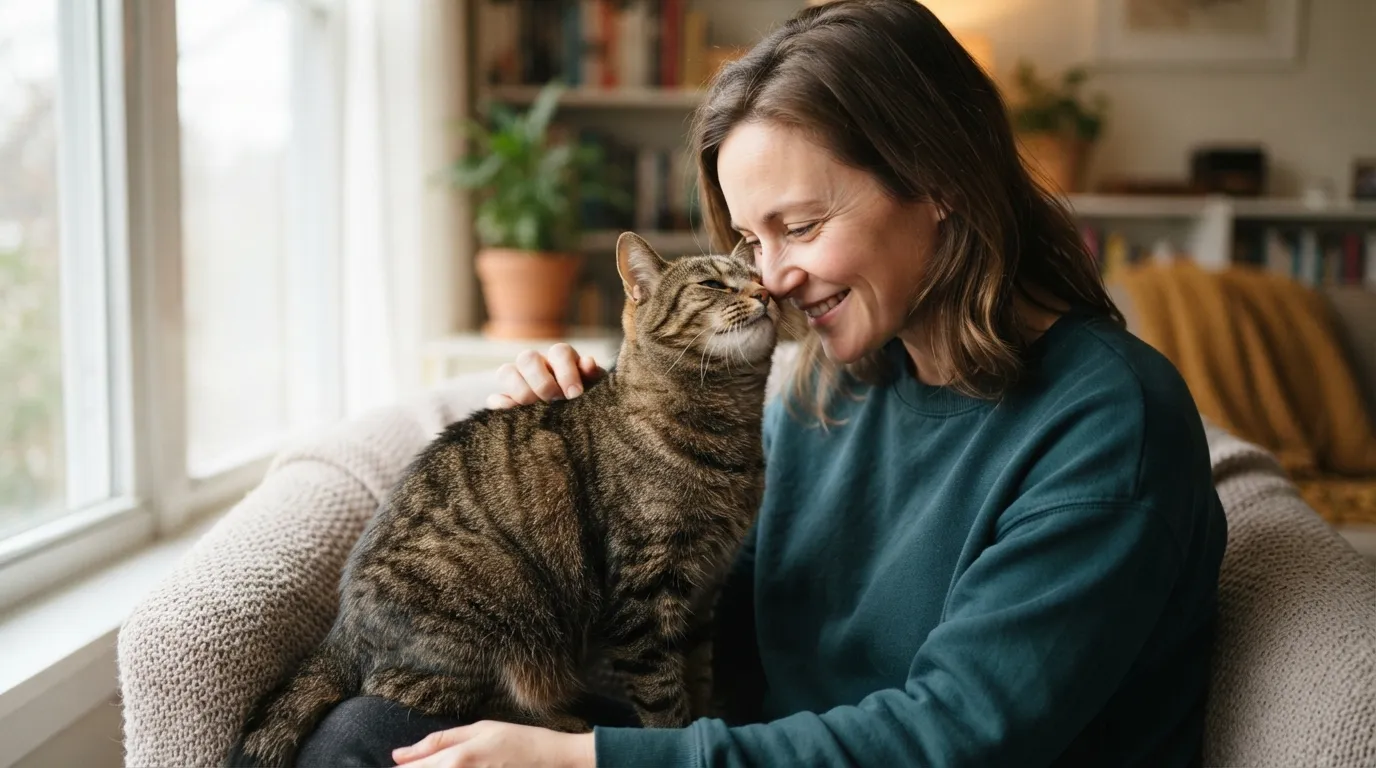
Every sign on this list comes down to one truth science now backs up.
Cats don’t love like dogs, handing out affection to anyone who walks in the door. Cat love is selective, earned, and expressed in subtle signals most owners miss entirely – until now.
Research using the same attachment theory built for studying human infants confirms cats form real, secure bonds with their caregivers. They show separation anxiety when their person leaves, and a clear preference for that person over strangers.
Your cat doesn’t love you because it has to. It loves you because it chose to. Every head-butt, every slow blink, every 3 a.m. purr is that choice being renewed all over again.
The Bottom Line
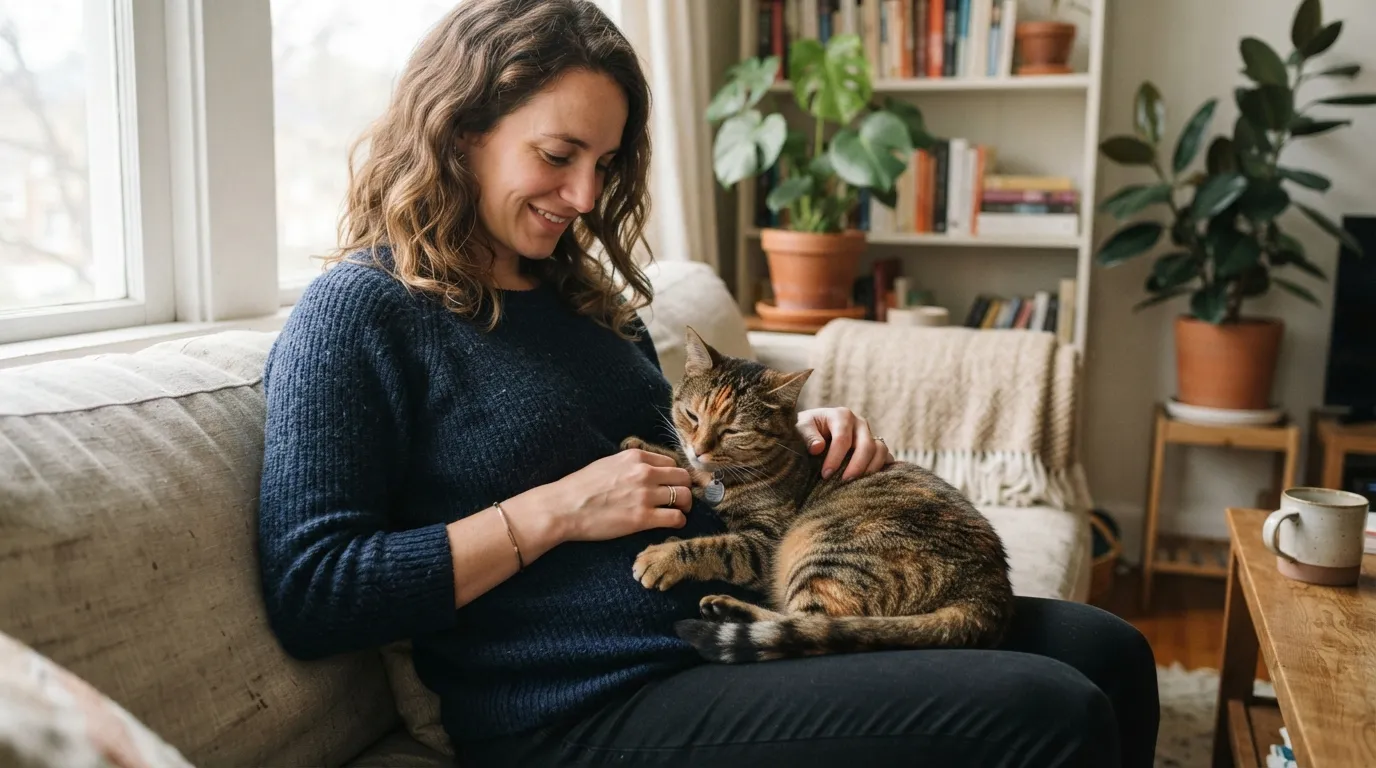
Most people live for years with a deeply bonded cat and never realize what they’re witnessing. The shadowing, the trilling, the kneading, the gifts – none of it is random.
Science backs this up directly: the majority of cats are securely attached to their owner and use them as a source of security in unfamiliar environments. Your indoor cat isn’t just sharing your space – it has staked a permanent claim on you.
Now that you know the signs, which one surprised you most? Tell us in the comments, especially if your cat does something that didn’t make this list.
Growing up traveling and experiencing new cultures and wonders, I have had a passion for nature, adventuring, photography, and videography. I am currently working towards a BSc in Biodiversity and Ecology at Stellenbosch University, and I hope to specialise in Marine Sciences one day.
Please send any feedback to Feedback@animalsaroundtheglobe.com