
Most people believe cats tolerate their owners at best, like roommates who occasionally allow a head scratch. Real behavioral science says something completely different: cats form deep, specific attachments to exactly one person in the house.
But it’s not affection in general – it’s a fifteen-item catalog of behaviors so precise that researchers can actually measure them. Here’s what your cat has been quietly telling you all along.
#15 – The Tail-Up Greeting
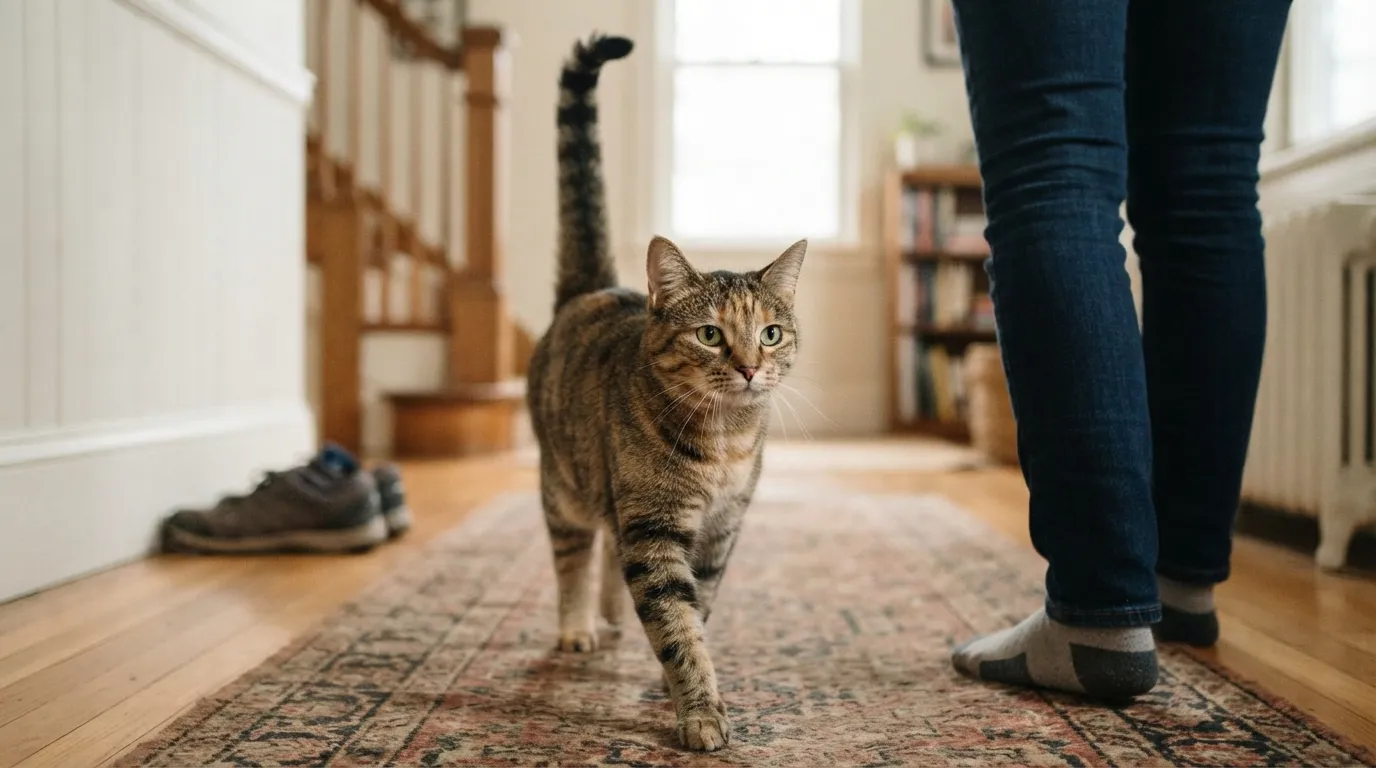
A straight-up tail walking toward you isn’t a random posture. Across the research literature, it’s the single most consistent signal of trust and friendly intent a cat can send.
Wild and feral cats rarely use this greeting on humans at all. That means your cat may have essentially invented this gesture just for you.
A tall, upright tail signals contentment – and if it quivers at the tip, that’s the feline equivalent of a standing ovation.
Fast Facts
- Tail-up posture is considered the clearest sign of feline social confidence.
- Unfamiliar and feral cats almost never use it on people.
- A quivering tip usually means extra excitement or affection.
- The gesture is largely reserved for trusted, familiar relationships.
But that’s nothing compared to what we found about #14…
#14 – The Slow Blink
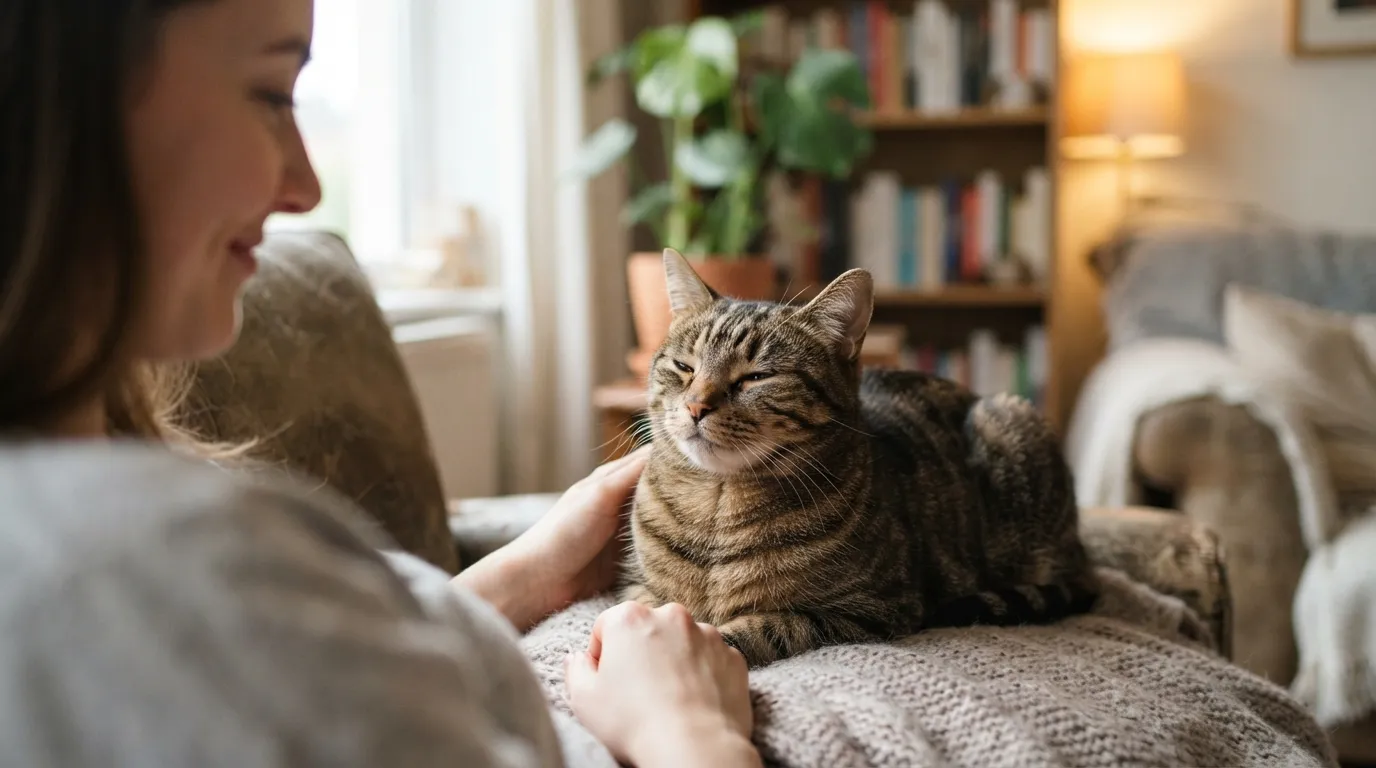
Your cat isn’t drowsy when it half-closes its eyes at you. That slow, deliberate blink is often called a “cat smile” – a feline signal of pure trust.
In the predatory world of felines, direct eye contact usually reads as a challenge. Choosing to soften their gaze instead is a deliberate, high-trust move.
A 2020 study in Scientific Reports found cats respond positively when humans slow-blink back at them. Try it yourself – most cats will return the gesture almost immediately.
But that’s nothing compared to what we found about #13…
#13 – Head Bunting (The Scent Stamp)
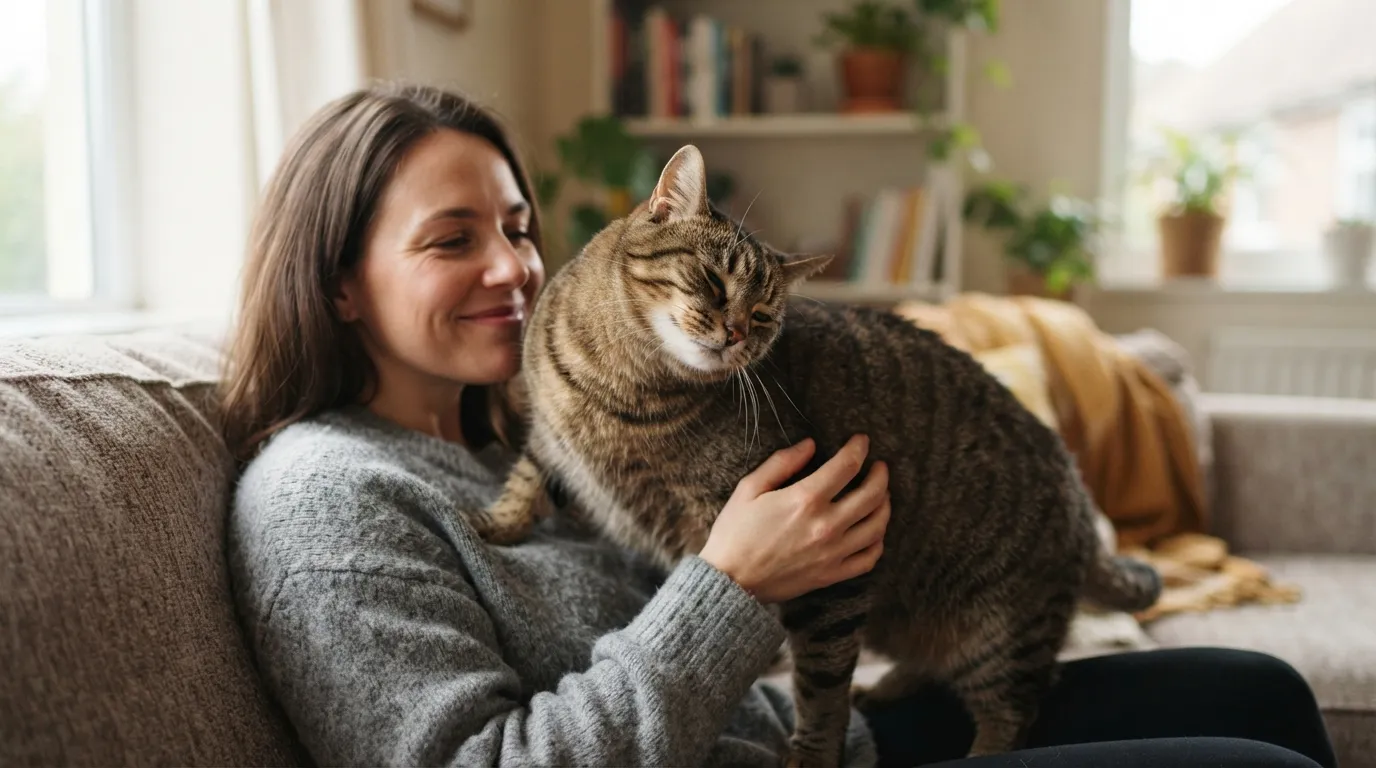
When your cat presses its forehead or cheeks against you, it’s doing far more than being cute. It’s marking you with pheromones from special scent glands, essentially stamping you as safe family.
Those glands sit on the cheeks, forehead, and chin. Bunting releases chemical signals of ownership and familiarity reserved for the closest companions.
Cats typically save head bumps for their closest feline friends and most trusted humans. If yours does it regularly, you’re in the inner circle.
But that’s nothing compared to what we found about #12…
#12 – Kneading (“Making Biscuits”)
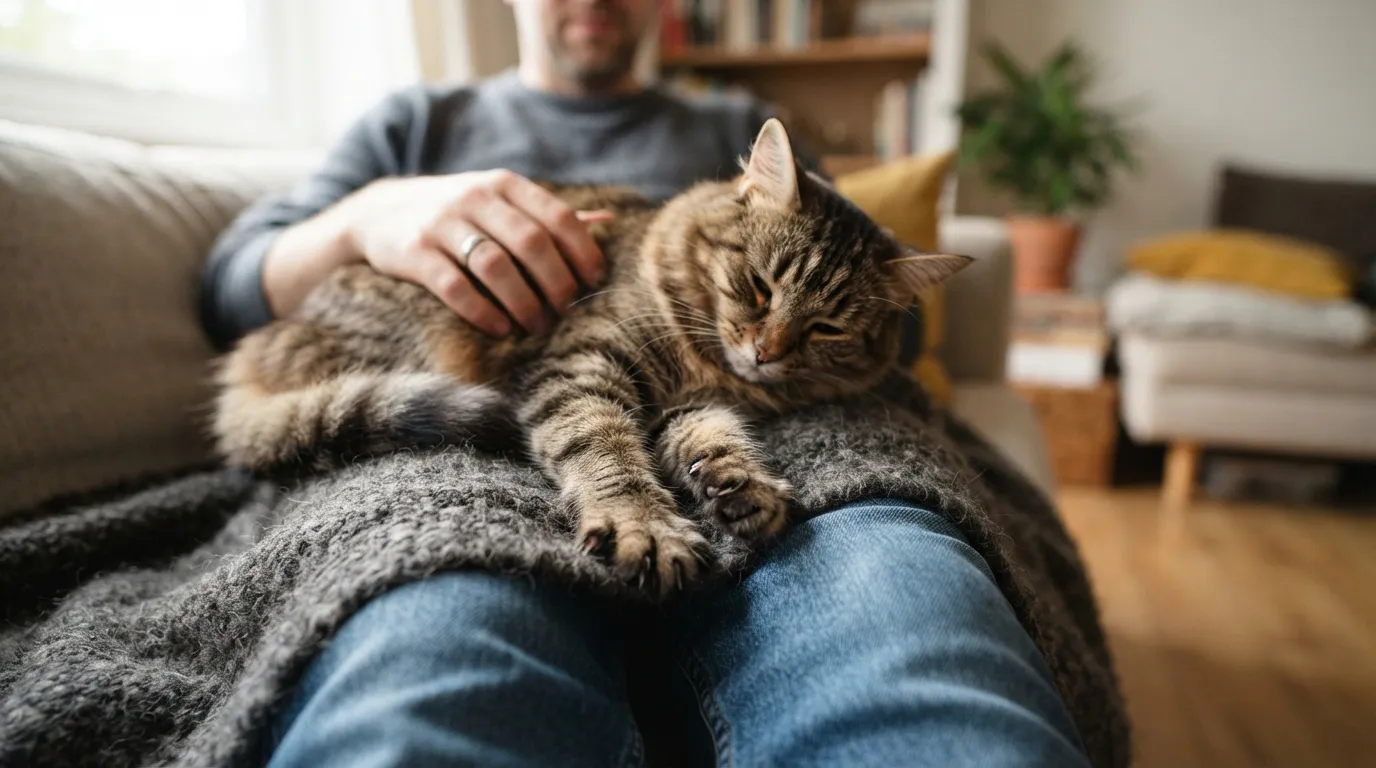
That rhythmic paw-pushing on your lap – “making biscuits” – traces back to kittenhood, when kneading a mother’s belly triggered milk flow. Doing it to you as an adult means your cat feels every bit as safe.
It usually shows up right before your cat settles down, fully relaxed and content. That word – content – is doing a lot of heavy lifting.
Behaviorists agree kneading is trust made visible. Those little paws are saying something real.
But that’s nothing compared to what we found about #11…
#11 – Sleeping On or Beside You
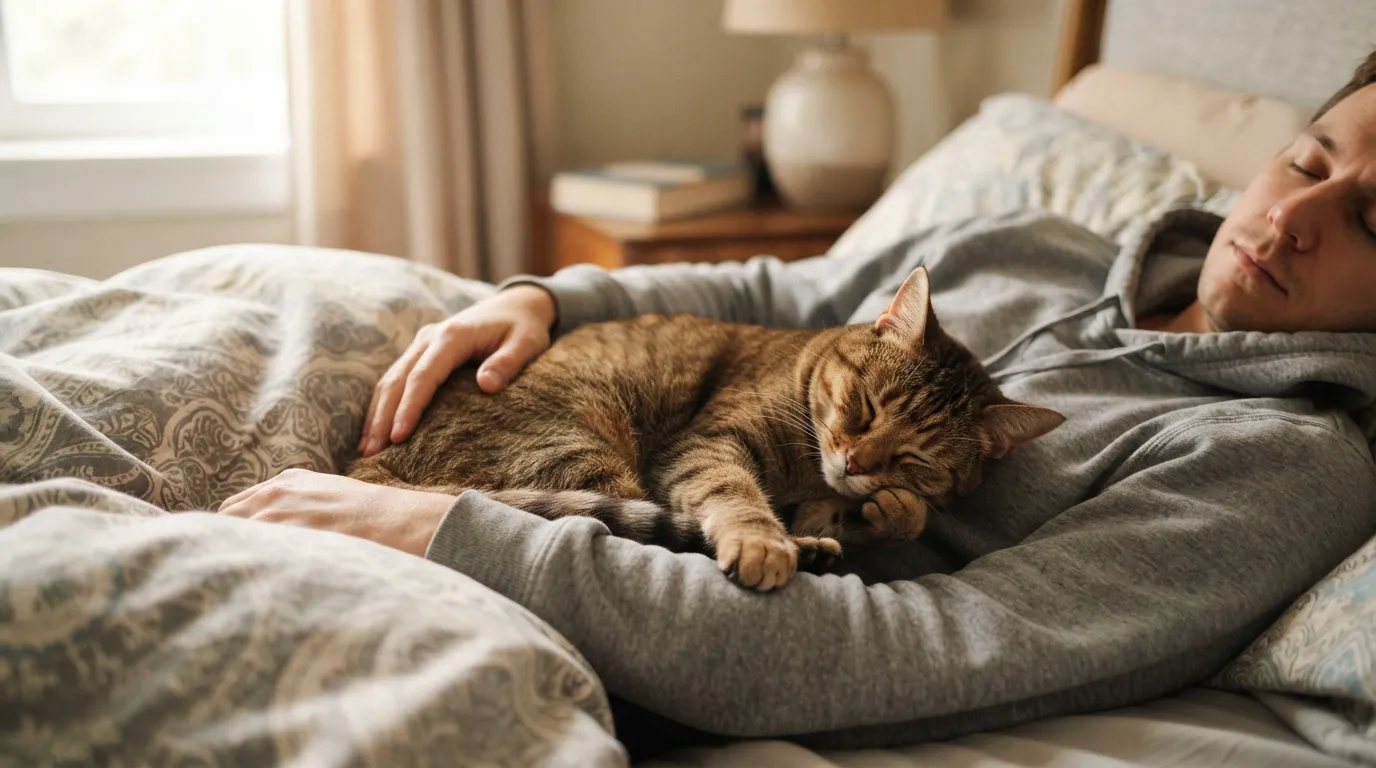
Sleep is the most vulnerable state a predator can enter. Every instinct tells a cat to hide somewhere protected – so choosing your body as that spot is a major statement.
It doesn’t matter where your cat naps during the day. If they choose to sleep near or on you specifically, that’s a direct, unmistakable vote of trust.
Most cats only fully relax beside humans they’re genuinely bonded to. A cat snoozing with its back against you isn’t lazy – it’s one of the highest compliments in the feline world.
But that’s nothing compared to what we found about #10…
#10 – Grooming You (Allogrooming)
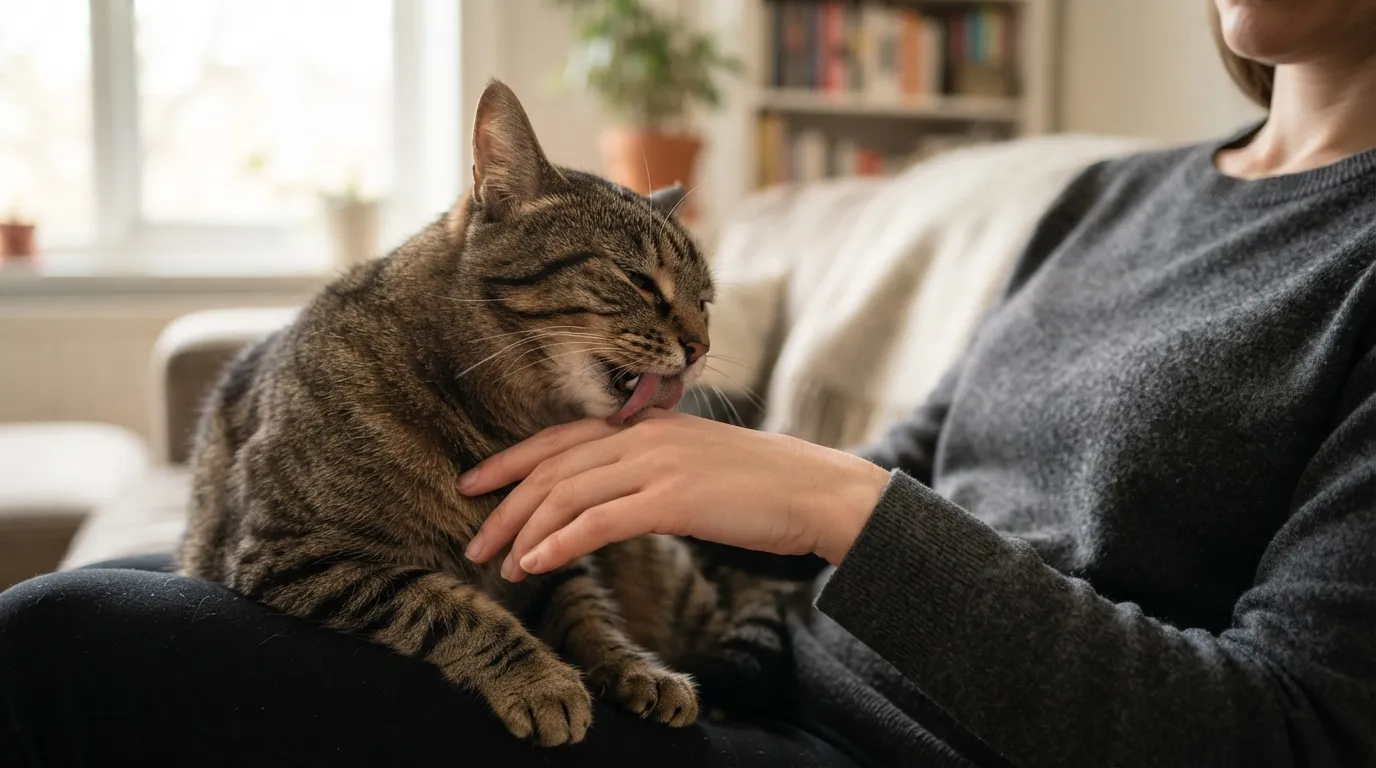
If your cat licks your hand or hair, most people assume it’s just the salt on your skin. It’s actually something far more intimate – allogrooming, the same behavior cats use to bond with each other.
Licking or nibbling you is a scent exchange that folds you into their social group. You become, quite literally, family.
This isn’t something cats hand out to strangers. It’s reserved for whoever they’ve genuinely accepted.
But that’s nothing compared to what we found about #9…
#9 – Bringing You “Gifts”
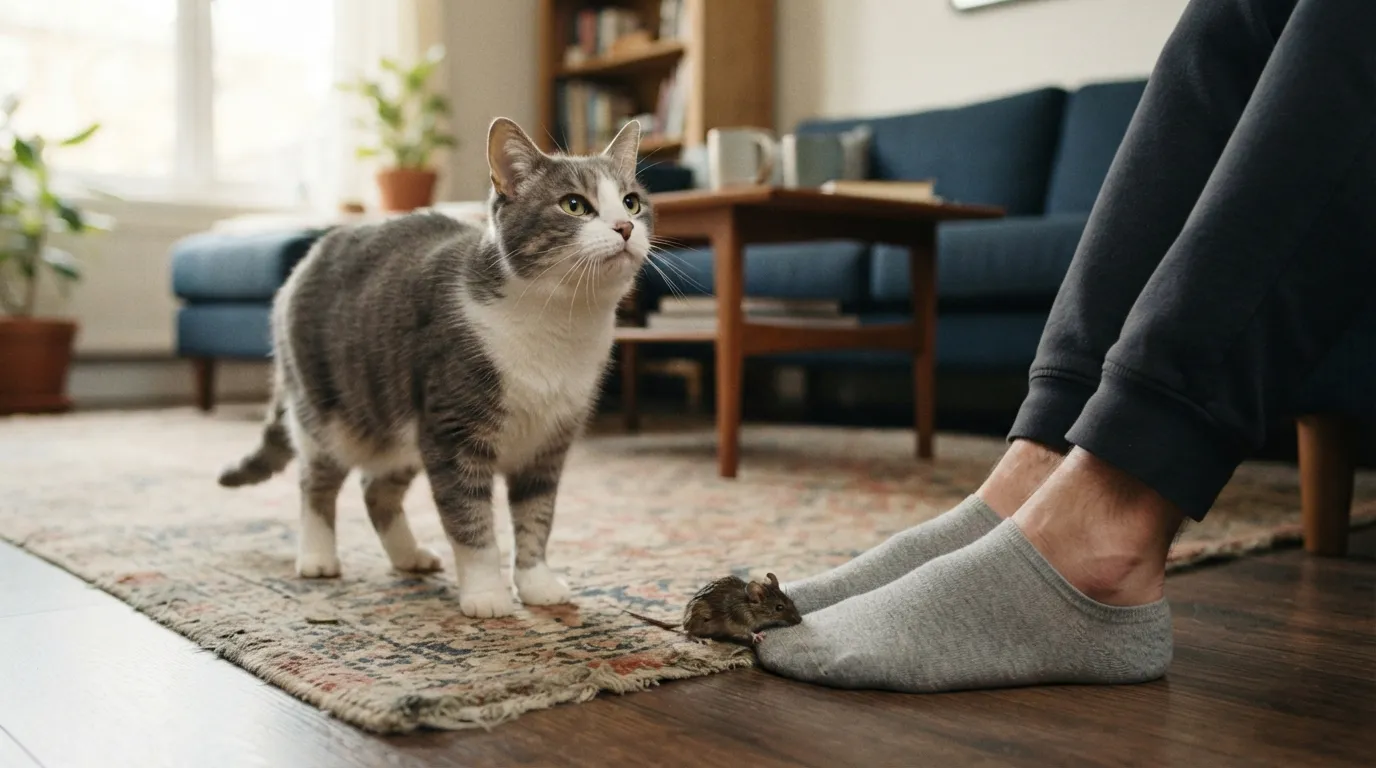
Finding a toy mouse – or worse, actual prey – at your feet isn’t weird. It’s generous.
In the wild, cats bring prey home to share with family. By dropping a gift at your feet, your cat is including you in the hunt.
The more revolting the gift, the greater the love, at least by feline logic. Cats simply don’t bother doing this for people they merely tolerate.
But that’s nothing compared to what we found about #8…
#8 – Following You From Room to Room
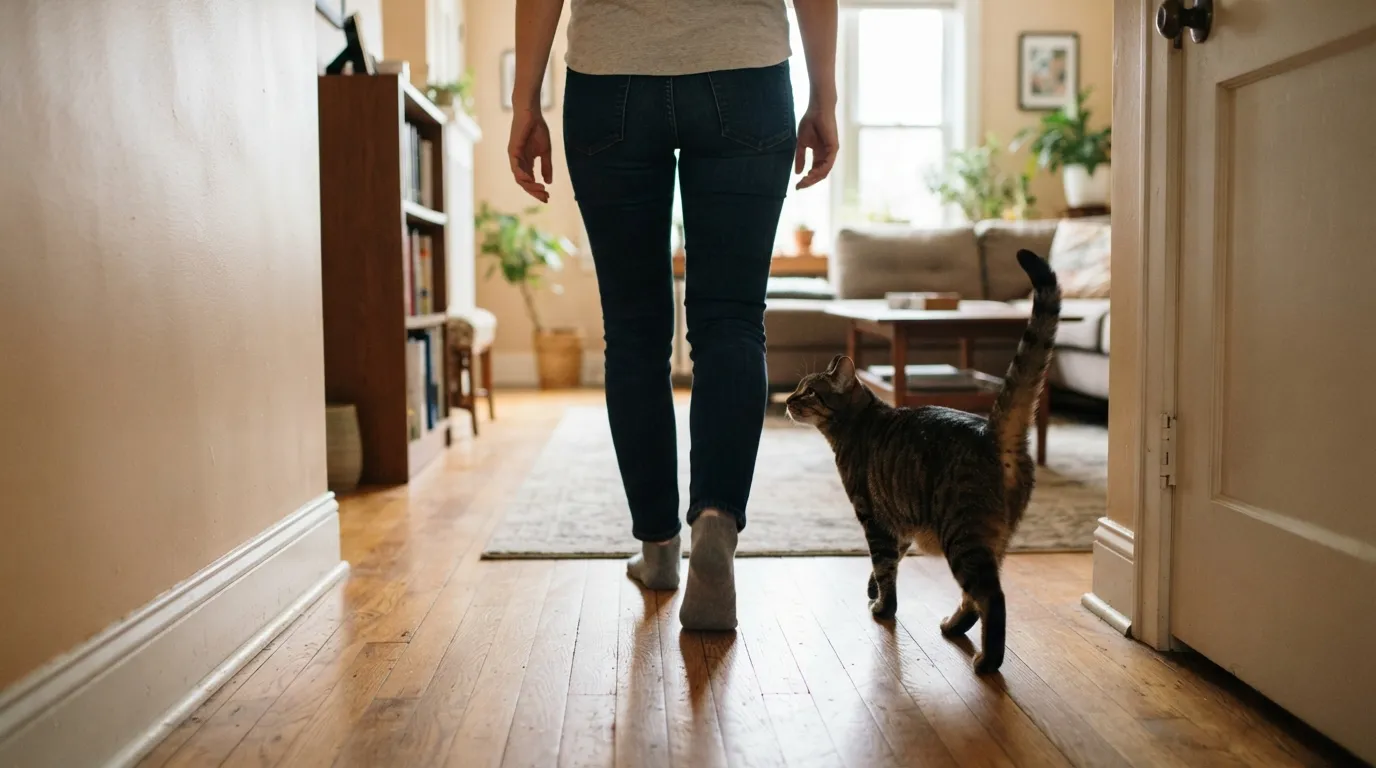
Your cat isn’t stalking you – it just doesn’t want to be without you. Following you room to room is a classic sign that you’re the one it wants to be around.
Kneading your lap, purring against your chest, trailing you through the house – these are all active choices. Your cat is choosing your company over solitude, every single time.
It could stay anywhere in the house. It picks wherever you are – that’s not coincidence, that’s devotion.
But that’s nothing compared to what we found about #7…
#7 – The Personalized Meow Vocabulary
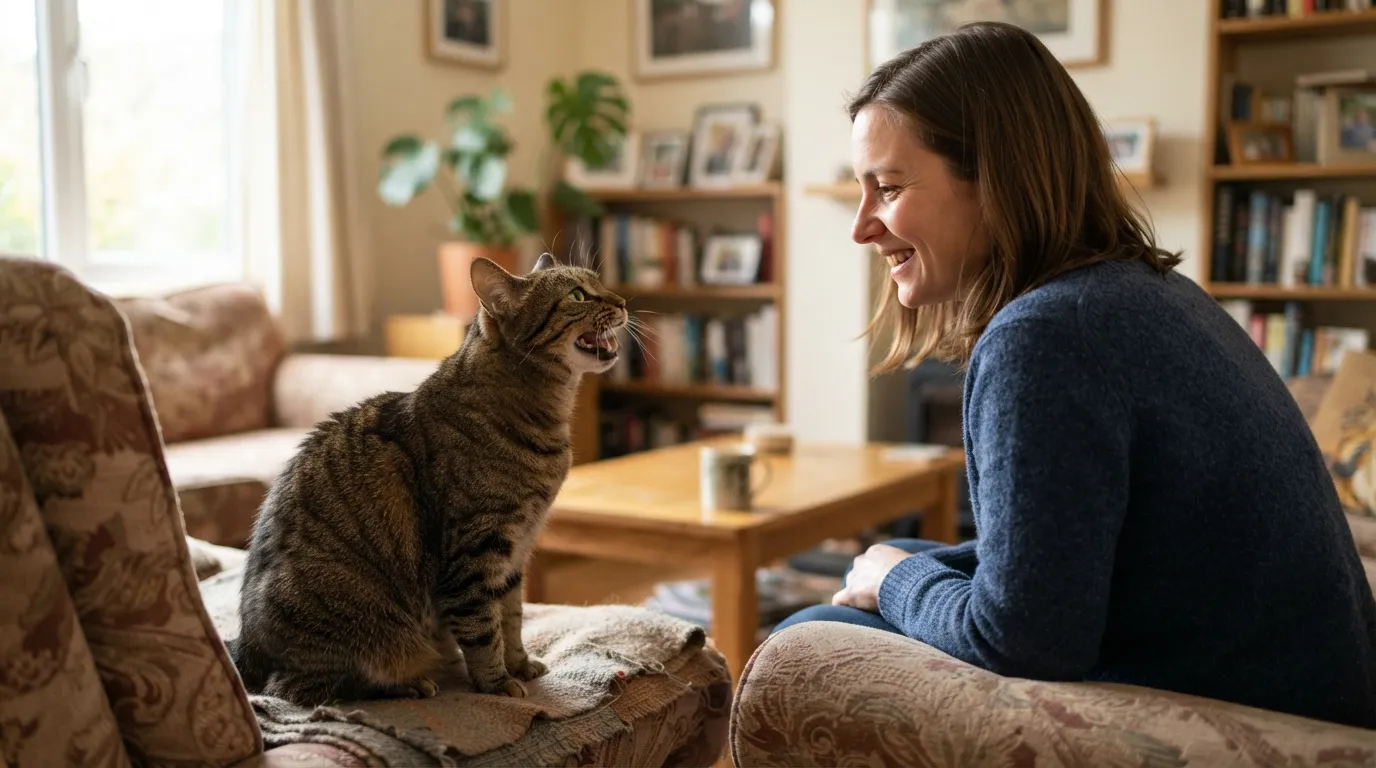
Here’s a fact that surprises most owners: cats barely meow at each other at all. That sound is reserved almost entirely for communicating with humans.
Researchers Nicholas Nicastro and Michael Owren found that people were better at understanding meows from their own cat than from unfamiliar cats. That suggests each cat develops its own private vocabulary, tuned specifically to the human it lives with.
Worth Knowing
- Adult cats rarely meow at other cats – the sound is mostly aimed at people.
- Owners are consistently better at reading their own cat’s meows than a stranger’s.
- Pitch, length, and urgency shift depending on what the cat wants.
- Kittens meow at their mothers, but most drop the habit with other cats by adulthood.
Your cat has essentially built a language just for you. No other human on Earth shares that exact dialect.
But that’s nothing compared to what we found about #6…
#6 – The Trill or Chirp Greeting
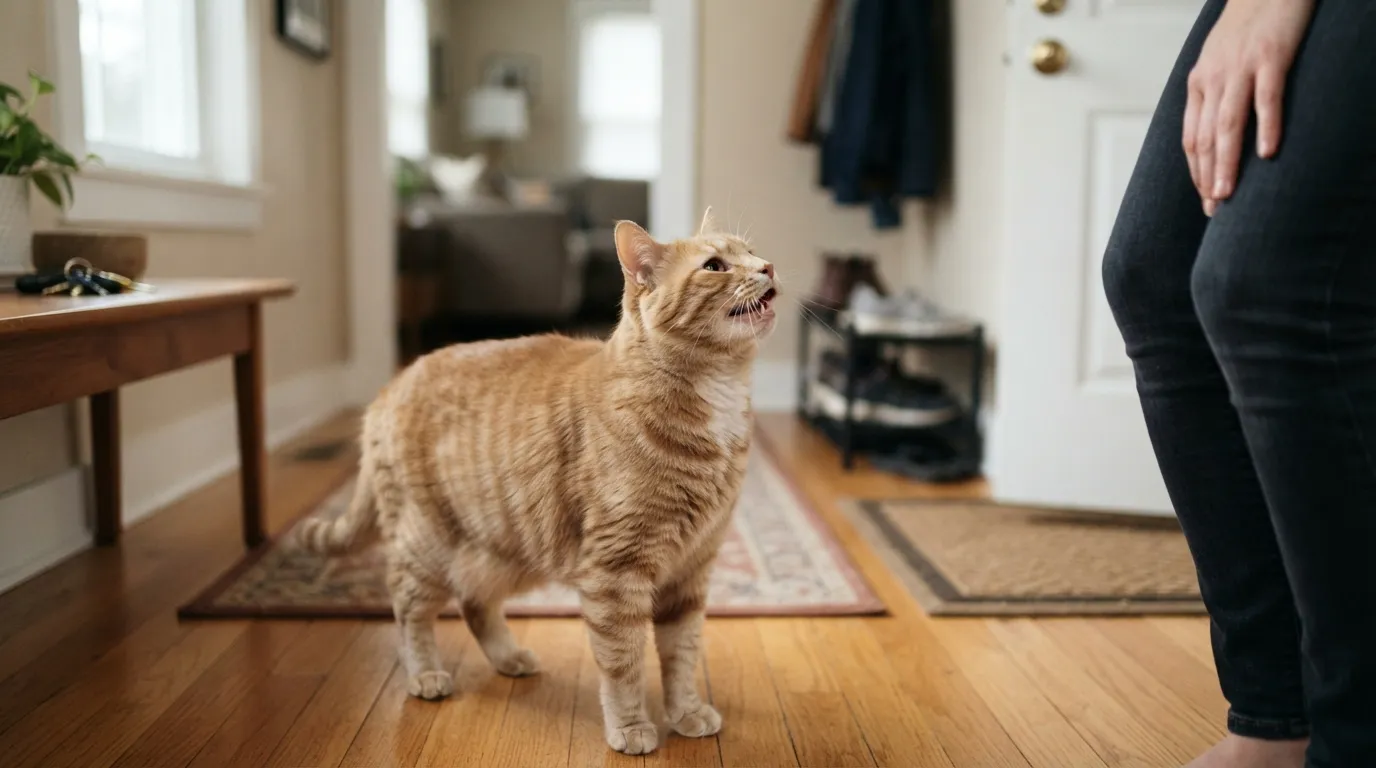
Most people know the meow. Far fewer recognize the trill – and that might be the more meaningful sound.
That short, melodic chirp is classified as an affiliative vocalization, one cats use to signal friendly greeting. When your cat trills specifically at you, it’s repurposing a cat-to-cat greeting just for you.
Cats trill at humans they genuinely like. If yours does it when you walk in, you’ve earned something real.
But that’s nothing compared to what we found about #5…
#5 – Exposing Their Belly
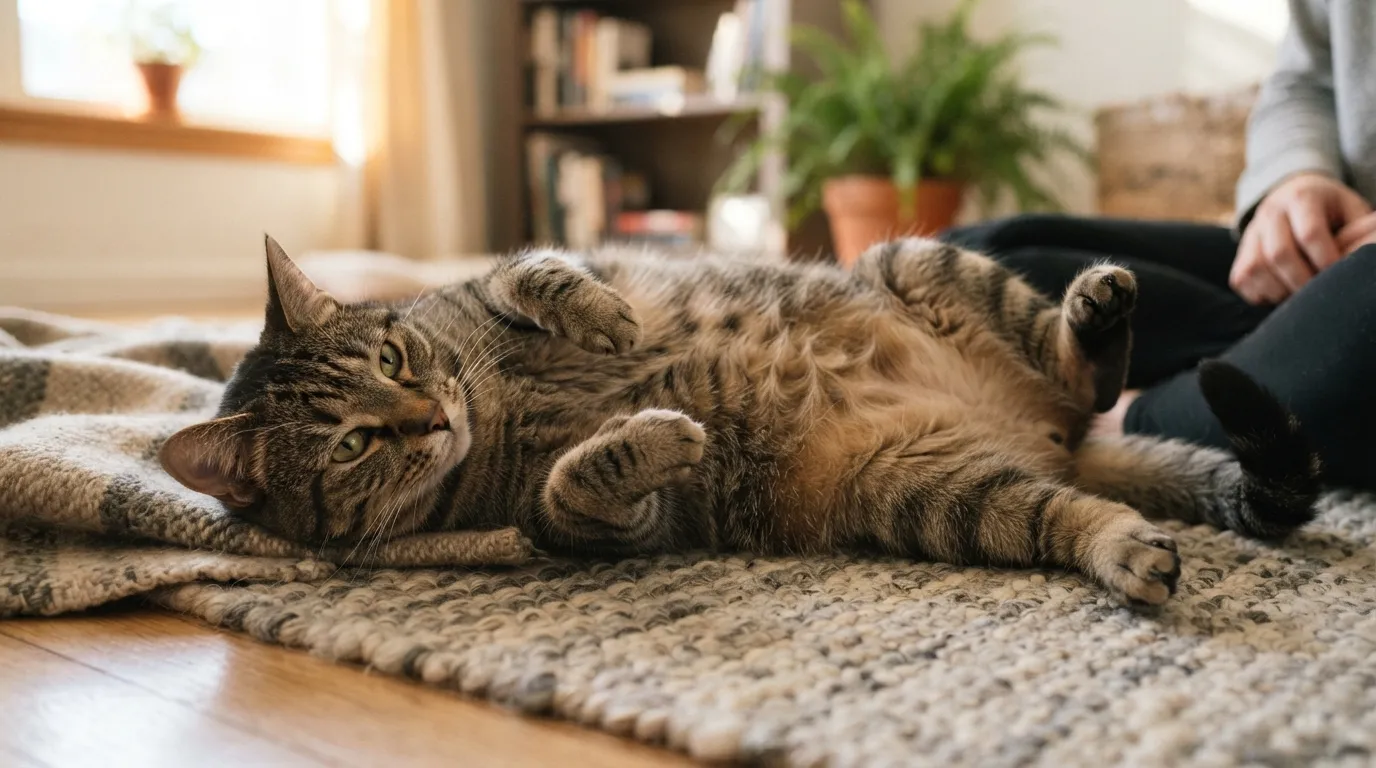
Few feline signals get misread as badly as this one. A cat rolling onto its back to expose its belly is performing one of the clearest trust behaviors in its entire repertoire.
The abdomen holds every vital organ and is the least protected part of a cat’s body. Showing it to you is a deliberate act of vulnerability.
She’s probably not asking for a belly rub, though – she’s just showing you her love. Most people reach for the belly anyway and ruin the moment entirely.
But that’s nothing compared to what we found about #4…
#4 – Greeting You at the Door
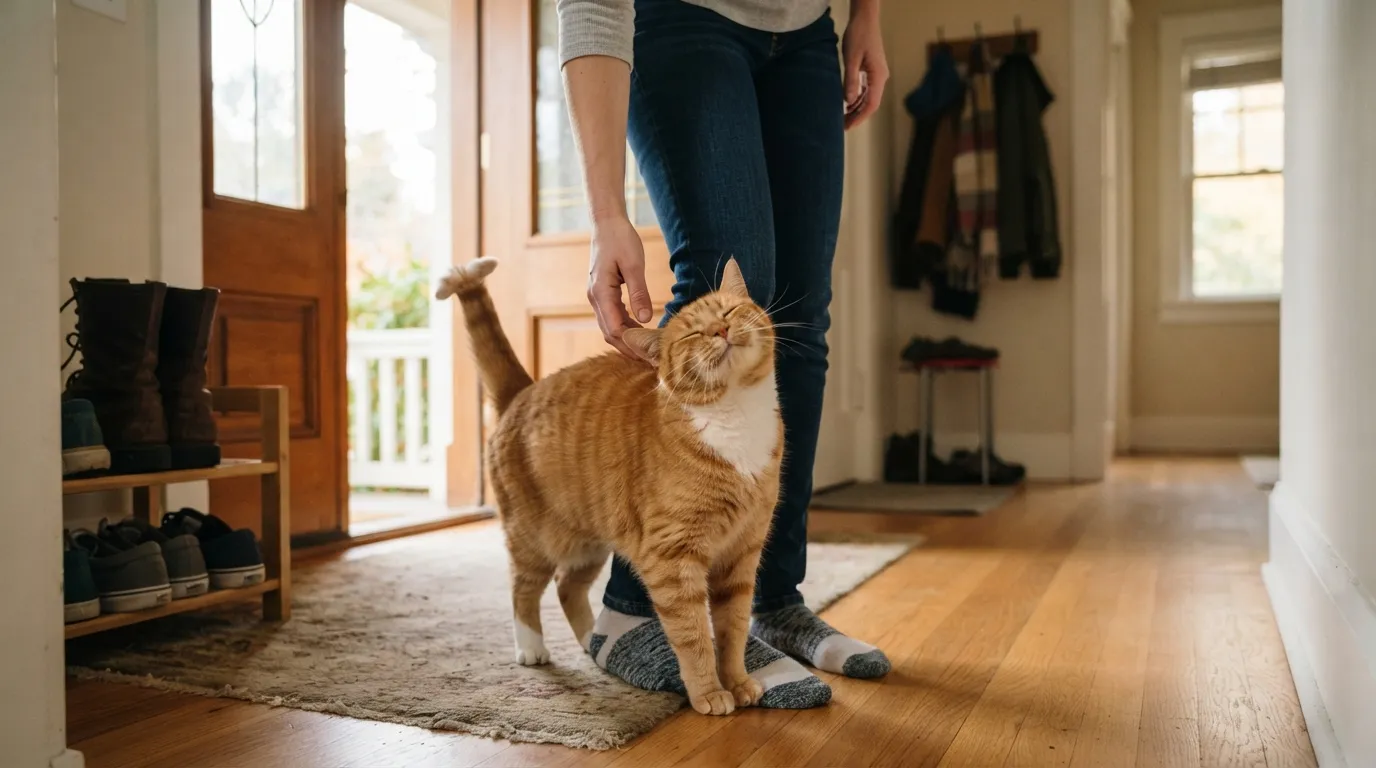
Dogs get all the credit for this one. Cats do it too – but only for people they’ve truly chosen.
A nervous or indifferent cat will watch from a distance. One that comes running the second you walk in the door is telling you something specific.
This isn’t habit or a feeding schedule talking. Cats greet the humans they actually want to see – and if it happens every single day, that bond is real.
But that’s nothing compared to what we found about #3…
#3 – Choosing You Over Food
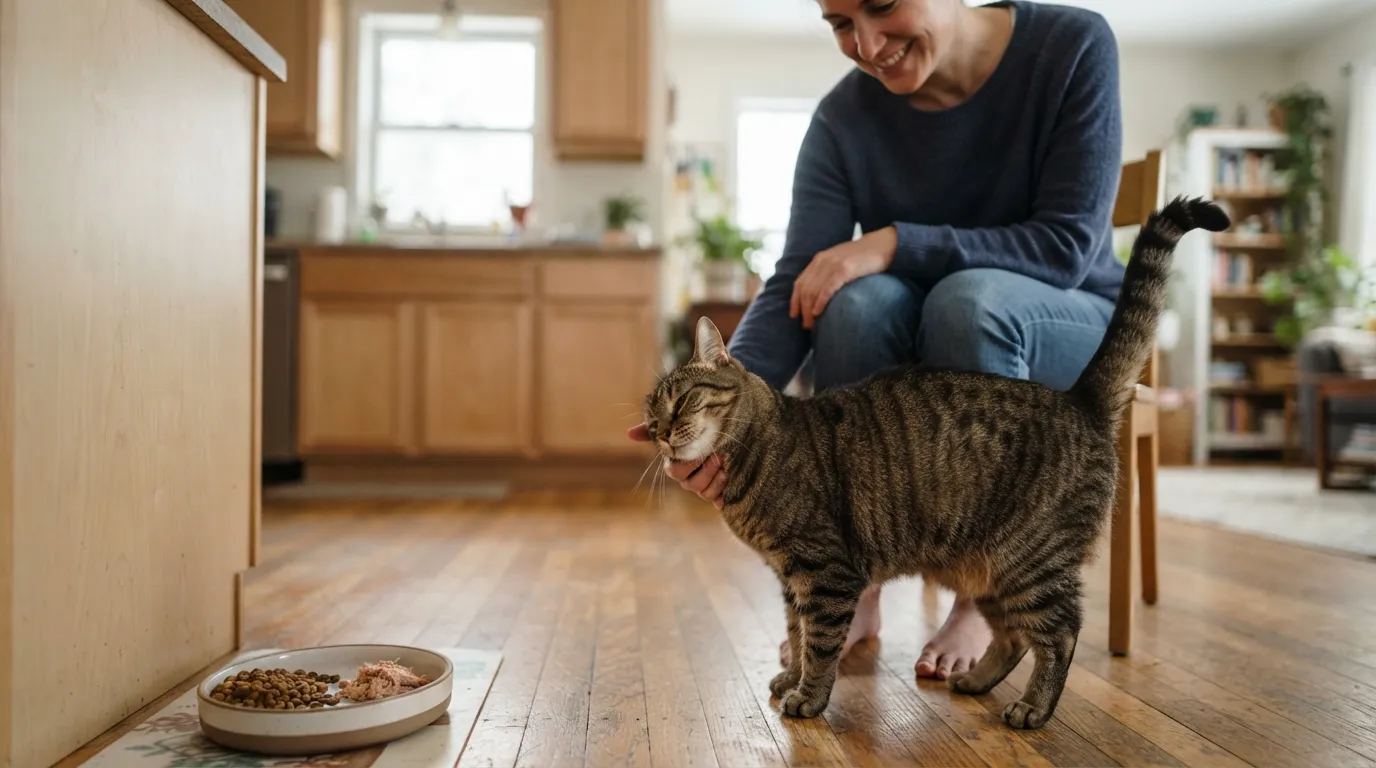
This one genuinely shocks people, given how self-interested cats are supposed to be. The science says otherwise.
Research by Kristyn Vitale found that roughly half of cats, given the choice, preferred human interaction over their favorite food, scent items, or toys. Studies out of Oregon State University back this up.
Quick Compare
- Social interaction beat food, toys, and scent as the top pick overall.
- Cats that chose people spent an average of 65% of their time interacting with a human.
- Food came in a close second place – tuna almost won.
- Toys and scent items trailed well behind both.
Half of cats will skip a meal just to spend time with you. That single fact dismantles the entire “cats only want food” argument.
But that’s nothing compared to what we found about #2…
#2 – Using You as a Secure Base
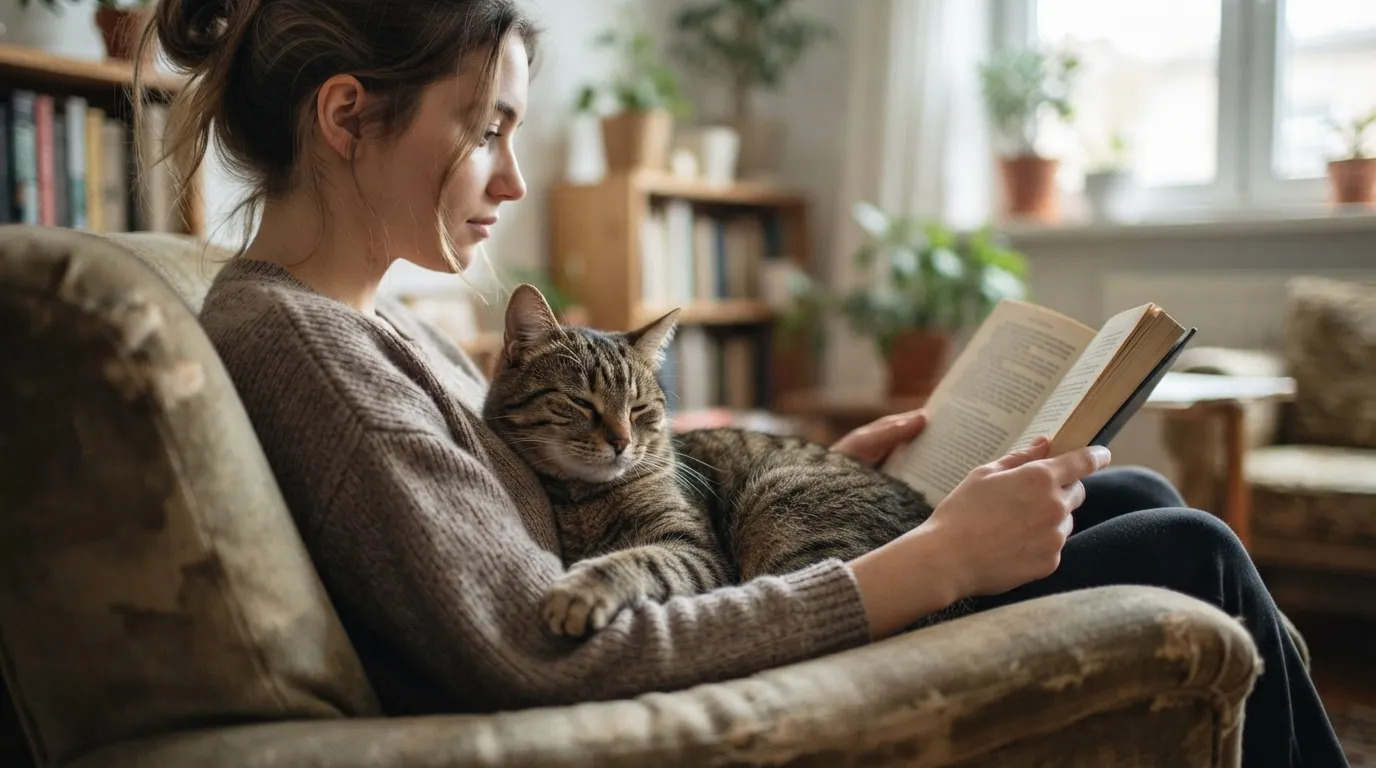
Scientists borrowed a test built to study attachment between human infants and their caregivers – and ran it on cats. The results were startling.
In a 2019 Oregon State experiment, cats spent time in a new environment with their owner, then alone, then reunited. When their person came back, 65% of cats calmed down and confidently kept exploring, the same pattern seen in securely attached human children.
That’s a rate comparable to human infants. That’s not a pet tolerating you – that’s a bond.
But that’s nothing compared to what we found at #1…
#1 – Purring Specifically for You
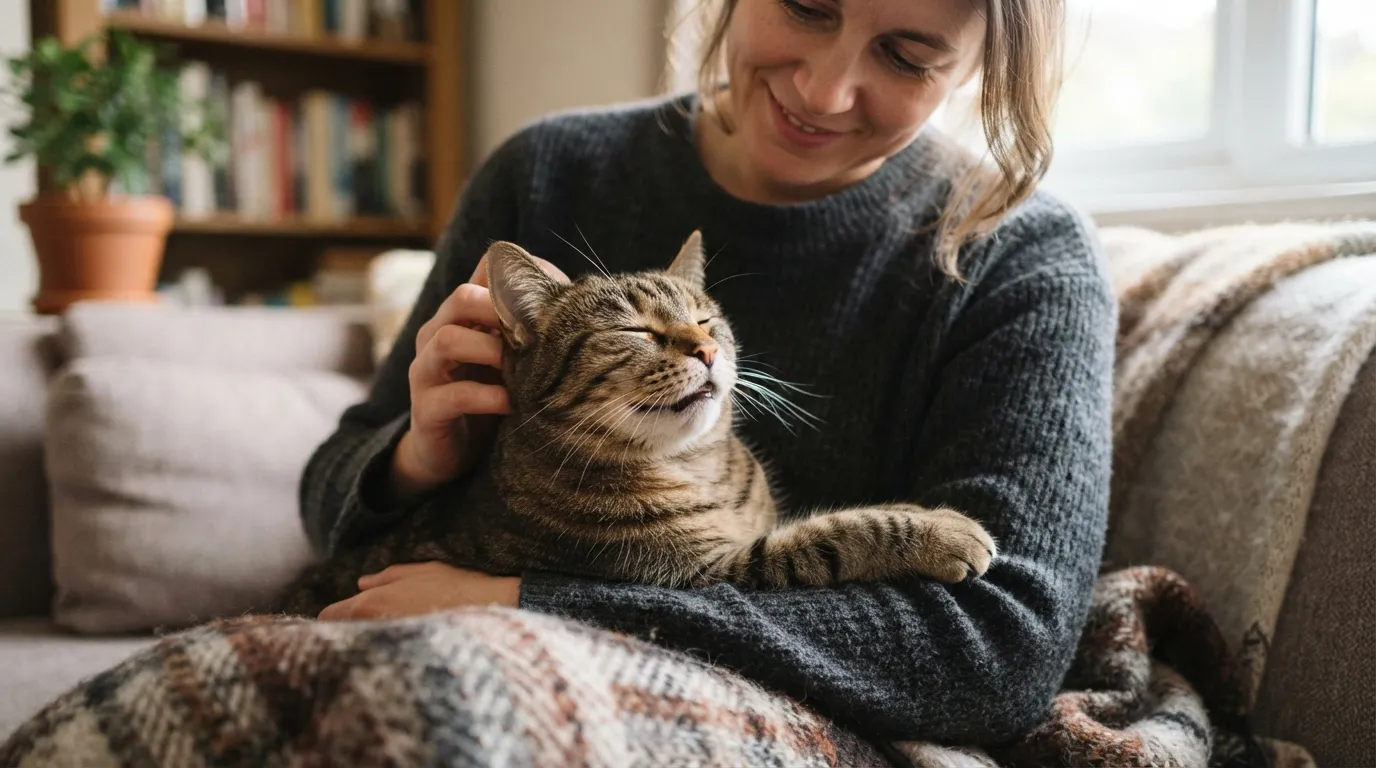
You’ve heard your cat purr plenty of times. But here’s what most owners never stop to consider: your cat doesn’t purr in an empty room.
When a cat purrs specifically around you, it’s usually a direct expression of comfort and gratitude. The most remarkable part happens neurologically.
Oxytocin – the same “bonding hormone” released between mothers and infants – surges when a cat engages in close contact with someone it trusts. That’s not just biology, that’s love, chemically confirmed.
The Bottom Line
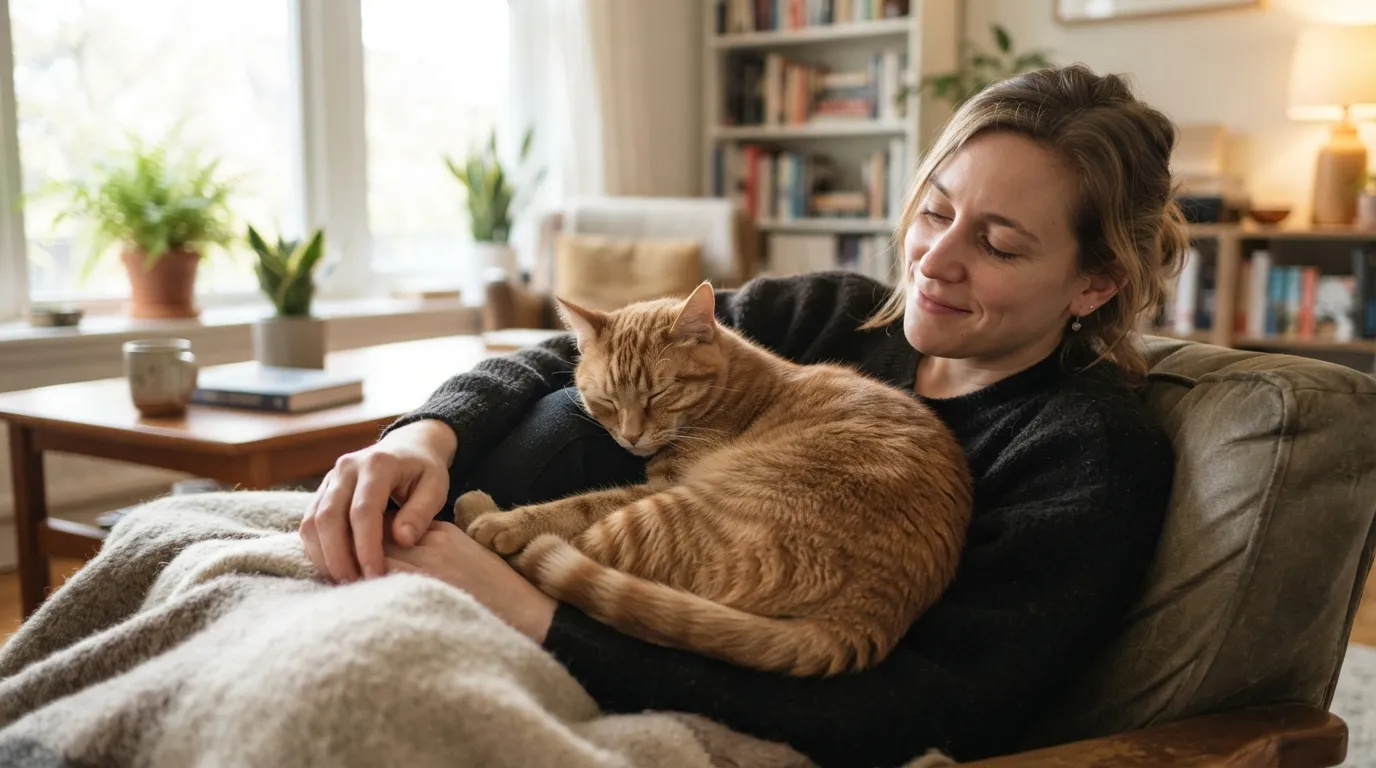
Cats have been misread for centuries. The cold, indifferent-feline stereotype collapses completely once you look at the actual science.
From a private meow vocabulary built just for you, to an oxytocin surge when they curl up close, your cat’s affection is deliberate and deeply selective.
I love cats because I enjoy my home; and little by little, they become its visible soul.
Jean Cocteau
They don’t perform these fifteen behaviors for everyone. They perform them for you.
Which of these does your cat do? Drop it in the comments – we’d love to know which one surprised you most.
Growing up traveling and experiencing new cultures and wonders, I have had a passion for nature, adventuring, photography, and videography. I am currently working towards a BSc in Biodiversity and Ecology at Stellenbosch University, and I hope to specialise in Marine Sciences one day.
Please send any feedback to Feedback@animalsaroundtheglobe.com