You lean in, wrap your arms around your cat, and begin showering them with affection. They sit still. They tolerate it. But are they secretly plotting their escape, or are they genuinely soaking in every second of it? Honestly, this is one of the most delightfully maddening mysteries of being a cat owner.
Cats are famously subtle creatures. Unlike dogs, who practically do a full-body dance of joy when you pay attention to them, cats operate on a far more nuanced frequency. Reading your cat’s true feelings during a cuddle session takes some practice, a little patience, and a whole lot of attention to detail. Let’s dive in.
The Purr: Your Cat’s Internal Happiness Meter
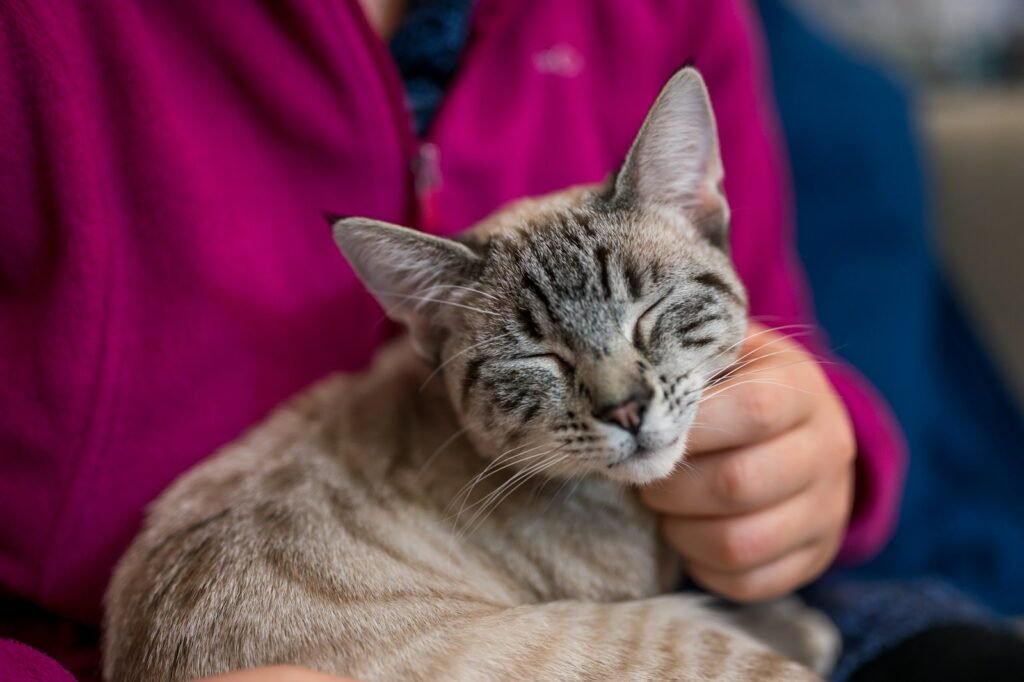
There is probably no sound more reassuring to a cat owner than that warm, rumbling purr. The rhythmic purring of a cat is a quintessential sign of affection, and it tends to occur when a cat feels safe and relaxed, often while being petted or enjoying your close presence. It feels like your cat’s way of saying, “Yes, keep going, this is perfect.”
Here’s the thing though – purring is not always a pure signal of bliss. Cats may also purr when they are nervous, and this is often paired with different body language such as holding their ears back, putting their head down, or fast tail-swishing. So the purr alone is not the whole story. You need to look at the whole picture, not just tune into the sound and assume all is well.
The Slow Blink: A Love Letter Written With Eyelids
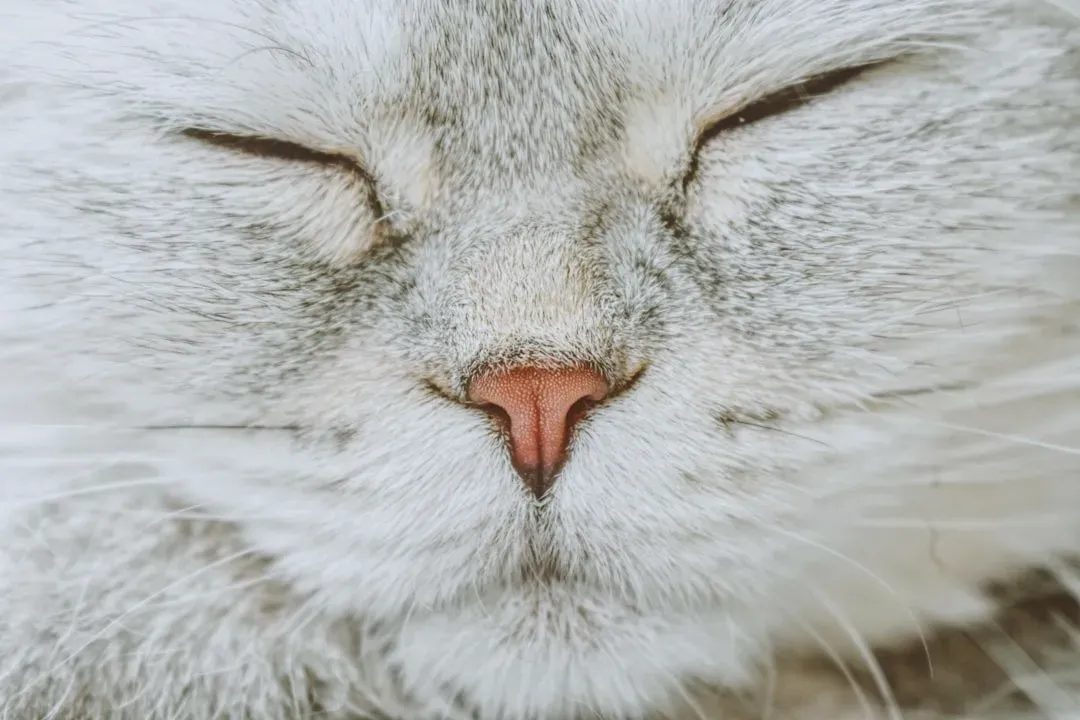
If your cat gazes at you during a cuddle session and then slowly, deliberately closes and opens their eyes, you have just received one of the most heartfelt gestures in the feline world. Cats use the slow blink as a form of communication, primarily to signal trust, affection, and a sense of safety. It is their way of saying, “I’m comfortable around you.” Think of it as a non-verbal “I love you” – no words required.
Although the slow blink phenomenon has been recognized in cats for a long time, research suggests that cats do indeed respond to slow blink movements from humans by exhibiting slow blink movements themselves. Cats also appear more likely to approach a person who slow blinks at them, suggesting this is genuinely perceived in a positive way. So next time your cat blinks slowly at you, blink back. It works both ways.
Kneading: When Your Lap Becomes a Bread Factory
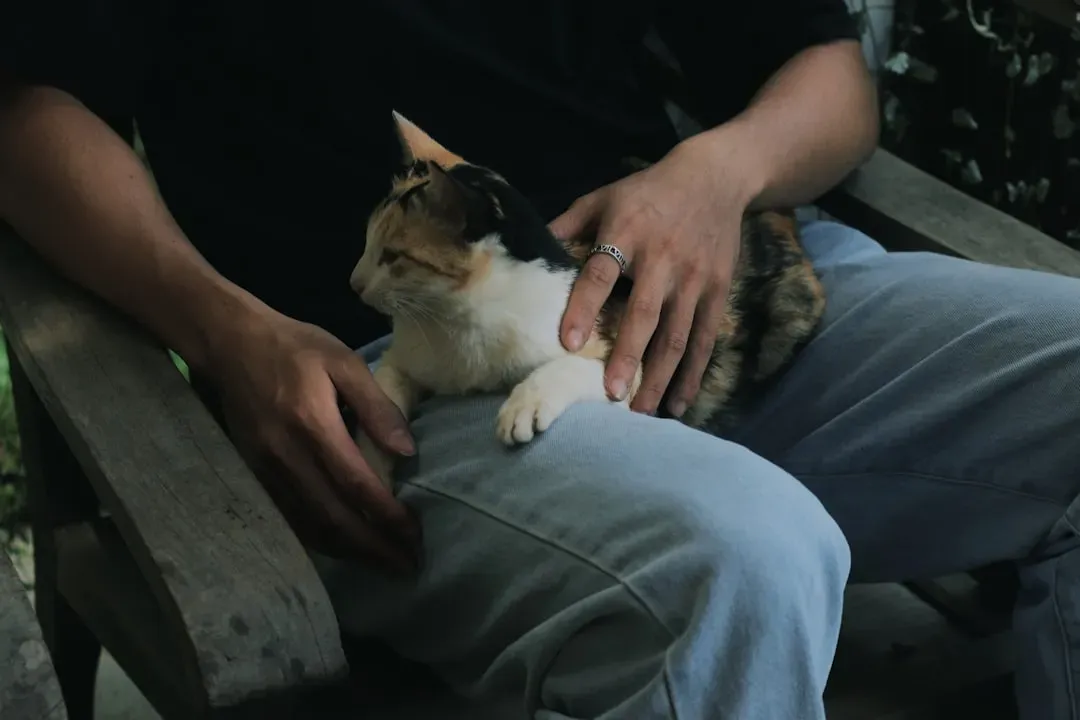
If your cat starts rhythmically pressing their paws into your lap or your stomach during a cuddle session, congratulations. Kneading is often a display of love. If your cat climbs onto your lap and starts making biscuits while purring, they are showing that they feel completely relaxed and happy in your presence. It is one of the clearest, most instinctive signs that your cat is not merely tolerating you.
Kittens knead their mother’s mammary glands to stimulate the milk flow, and they may grow to associate kneading with the deep comfort of nursing. The action of kneading provides adult cats with the same feeling of contentment. Grown cats tend to knead when they are around a special person that makes them feel safe and loved. Yes, when your cat kneads you, they are essentially treating you like their mother. High praise, even if it comes with the occasional scratch.
The Headbutt: You’ve Been Officially Claimed
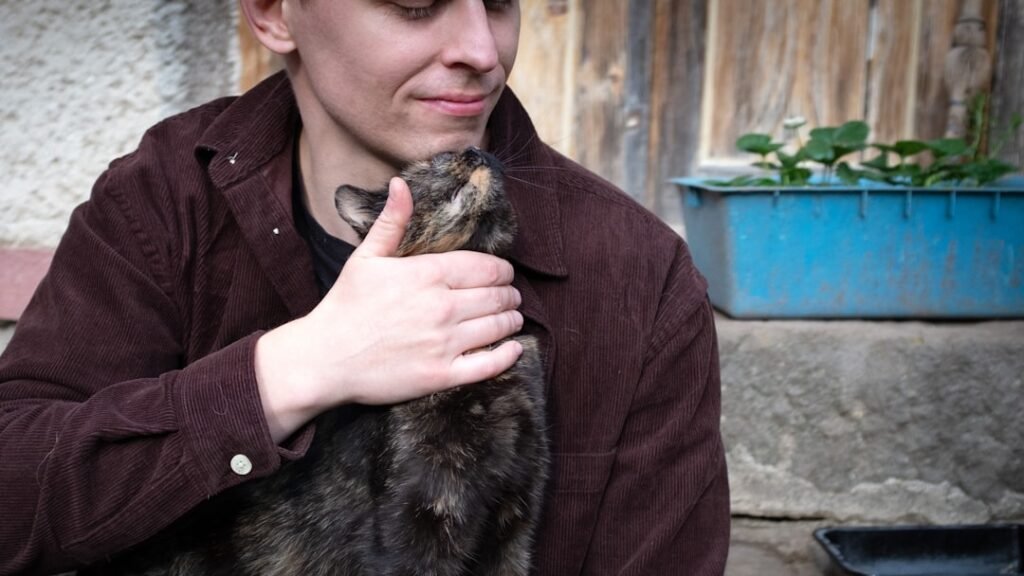
Cats mark familiar people just like they mark things around the house. When a cat headbutts and marks you, it means you have been accepted into a very special club: a cat’s inner circle. By marking you, a cat is connecting to you through scent and bonding with you. In simple terms, getting headbutted by your cat during or after a cuddle is the feline equivalent of being handed a VIP pass.
In cat-speak, this move is called “head bunting,” and it is a sign your furry friend feels secure, social, and affectionate around you. Confident cats tend to headbutt more frequently and with more force than shy cats. So if your bold, bossy cat rams their forehead into yours mid-cuddle, take it as the ultimate compliment.
Tail Talk: What That Tail Is Whispering to You
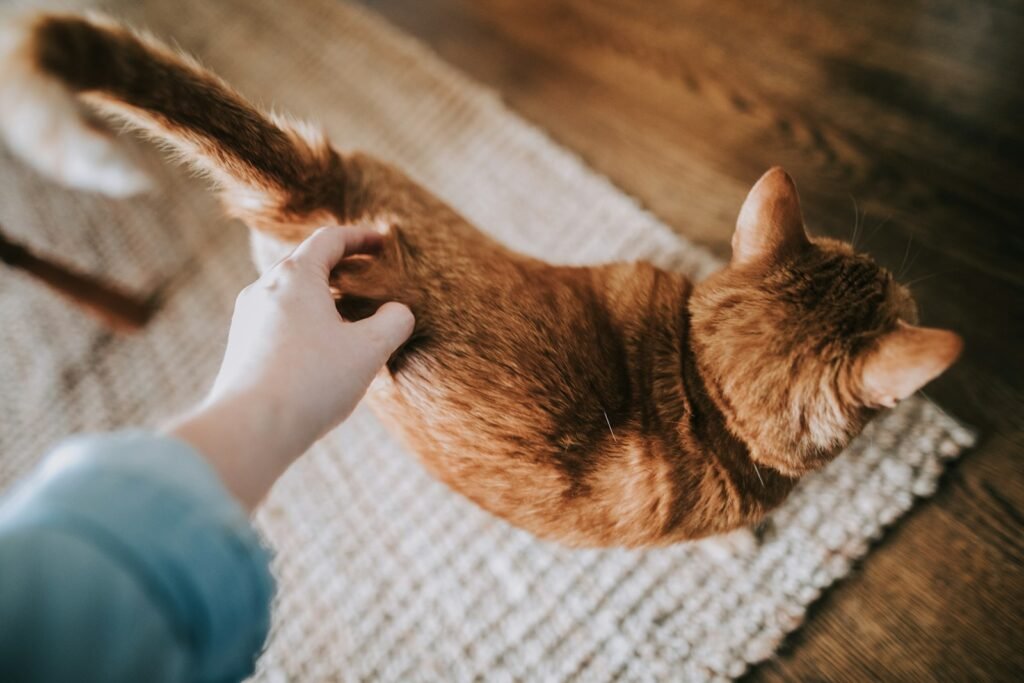
The tail is basically your cat’s emotional ticker tape during a cuddle. If your cat snuggles up next to you with their tail curled around you, it means you are part of their in-crowd – they like you a lot. If a cat wraps their tail around another cat or a person, it is a definite sign of affection. These are the tail signals you want to see while you are cuddling.
On the flip side, watch out for sharp, rapid movements. Thrashing or whipping tail motions indicate irritation. When lying down, a thrashing tail is usually accompanied by a thumping sound as the cat’s tail hits the floor, warning you that your current petting session is getting a little out of hand. Consider it a polite “please stop” before the claws come out.
Ear Position: The Tiny Antennas of Emotion
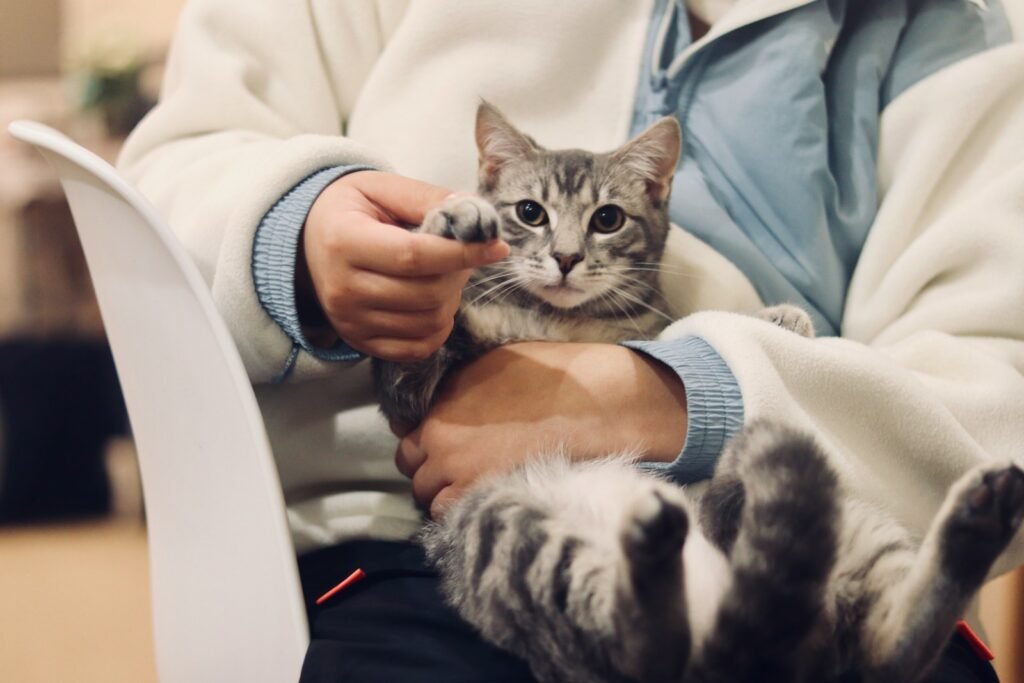
You might not think to check your cat’s ears during a cuddle, but they are actually broadcasting a very clear signal. Ears held upright and slightly forward signal a happy and attentive cat. Ears that are relaxed and slightly tilted to the side indicate a calm and content state. Both of those scenarios are green lights during your snuggle session.
When a cat’s ears flatten, they are afraid of something in the immediate vicinity. It is best to stay vigilant and give cats their space if you see this. I think of flat ears as nature’s little “do not disturb” sign. If you see them mid-cuddle, gently set your cat down and give them space. No hard feelings – cats just need their moments.
Body Posture: Loose and Relaxed vs. Stiff and Ready to Bolt
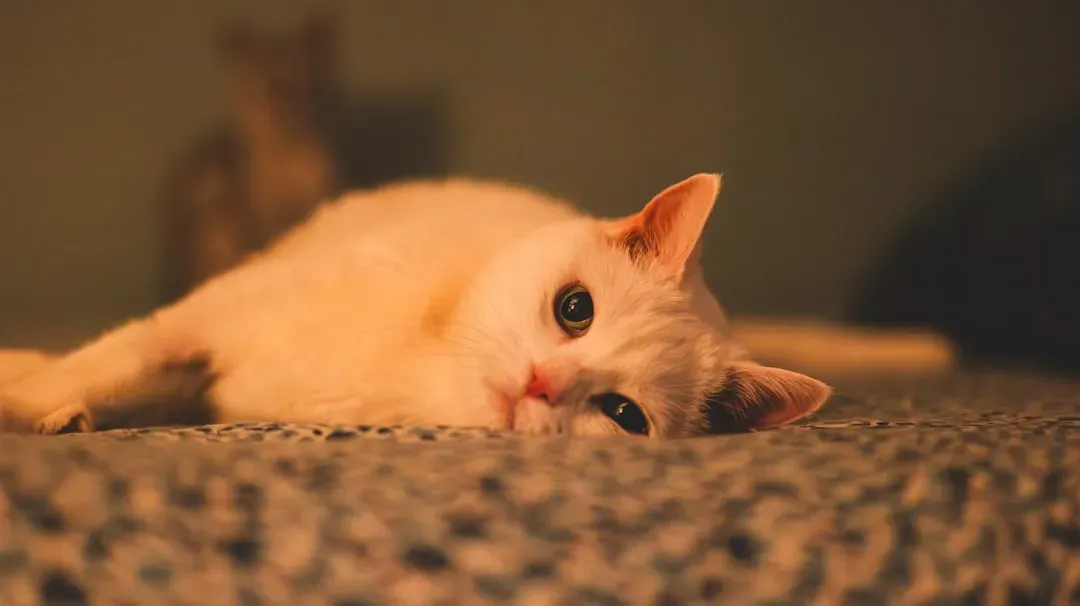
Cats who are relaxed will have loose, fluid body movements, and their breathing will be slow and steady. They might fold their feet in front of themselves, stretch their feet way out in front, or slouch over the side of a perch. Relaxed cats’ ears and whiskers will be at their neutral positions or maybe slightly forward. If your cat is draped across you like a warm, furry blanket, that is pretty much the gold standard of cuddle success.
Generally speaking, happy and relaxed felines have body language that is loose and gently curved. If you were to pick them up or pet them, they would feel soft, heavy, and relaxed rather than rigid or tense. A stiff, tense body is a red flag. Think of it this way: a cat that is enjoying themselves melts into you. A cat that is not stays wound up like a coiled spring.
Choosing to Stay: The Most Honest Signal of All
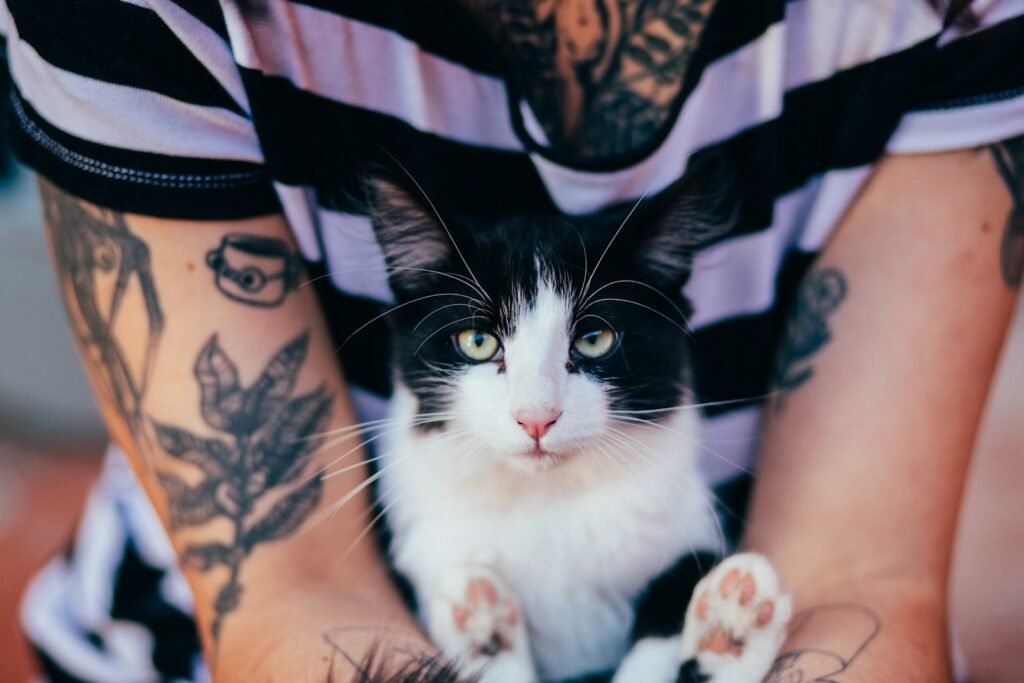
Here is one of the most telling signs that your cat is genuinely enjoying your company – they choose it. Your cat is placing trust in you when jumping into your lap or arms. A cat who chooses to sleep on or close to you is showing their love and trust in you. When a cat actively seeks your lap out of all the comfortable spots in the house, they are making a deliberate choice. That matters enormously.
Cats like to be in control and decide when and where they interact with others. Instead of scooping them up and restraining them, letting them approach on their own terms for a stroke or chin rub is far more effective. It is hard to say for sure, but I genuinely believe one self-chosen lap session outweighs a dozen forced cuddles. Respect the choice, and you will get more of them.
The Warning Signs: When Your Cat Is Just Tolerating You
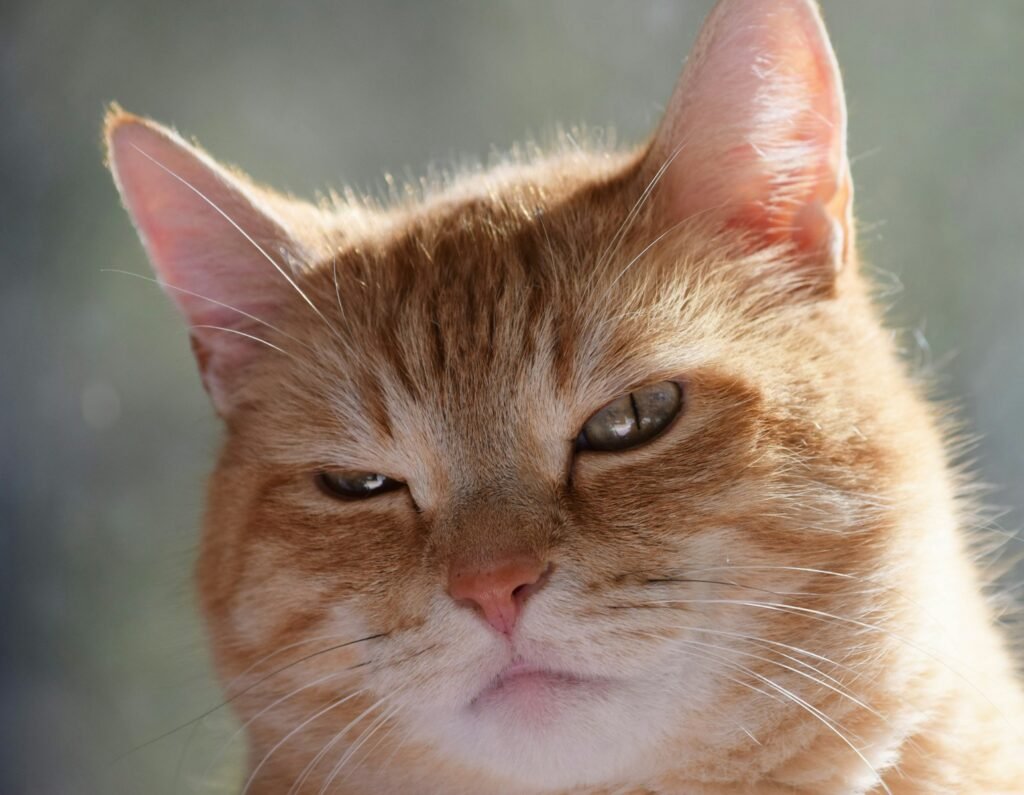
You should allow your cat to be the guide for how much physical affection and social interaction they want from you. Many cats will tolerate cuddling with their humans, but that does not mean they necessarily enjoy it. There is a real difference between a cat that is sitting with you and a cat that is sitting still waiting for the whole thing to end.
One of the most subtle behaviors cats use to show they are not comfortable is suddenly or excessively grooming their fur. If your cat quickly starts cleaning themselves as you approach them, that is a signal to turn around and leave them in peace. Other clear signs include flattened ears, a rapidly flicking tail, dilated pupils, and a body angled away from you. If you approach your cat and they shrink away from you, moving into a crouched position, that is a strong indicator that they want their own space. If they try to run or jump away, you can be pretty confident they do not want physical contact.
Every Cat Has a Unique Cuddle Language
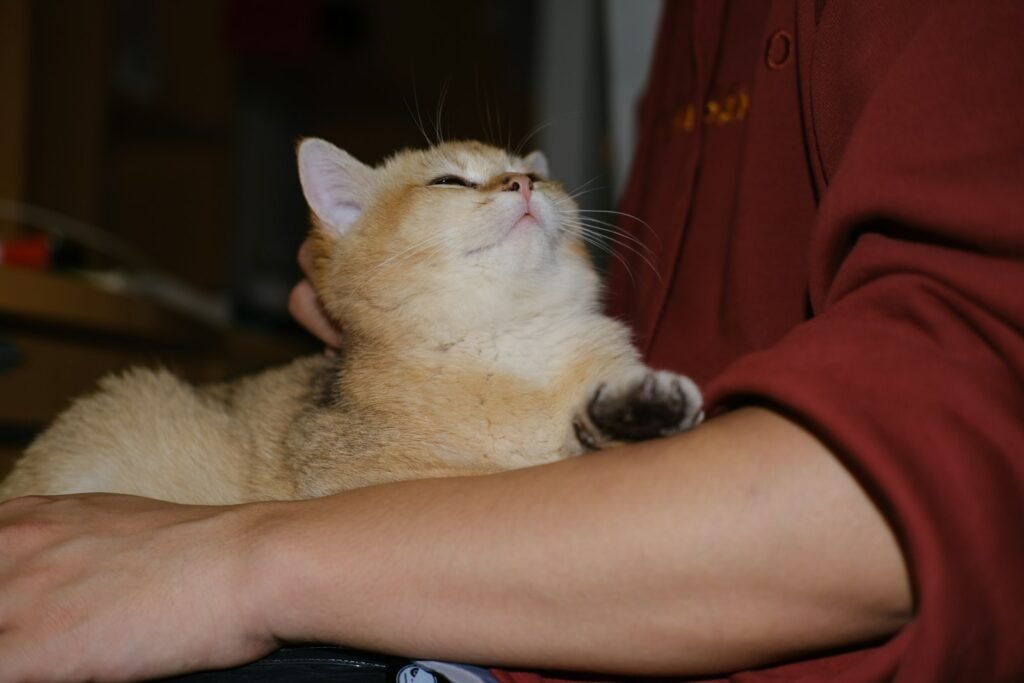
Let’s be real: not all cats are the same, and not all cats are natural lap cats. Some cats like to cuddle, some cats do not, and many change their minds throughout the day. Every cat has its own unique way of expressing affection. Some cats are cuddly lap cats, while others may show their love through playful interactions or gentle headbutts. It is important to learn your cat’s individual love language and appreciate their unique ways of showing affection.
A study published in Current Biology found that cats form attachment bonds to their human caretakers in very much the same way that dogs and human children do. After observing key secure attachment behaviors in over roughly two thirds of cats and kittens involved in the study, researchers from Oregon State University concluded that we may be underestimating cats’ socio-cognitive abilities. So even if your cat is not a snuggler in the traditional sense, the bond is very much real. It just speaks a different dialect.
Conclusion: Learning to Listen to the Language of Fur
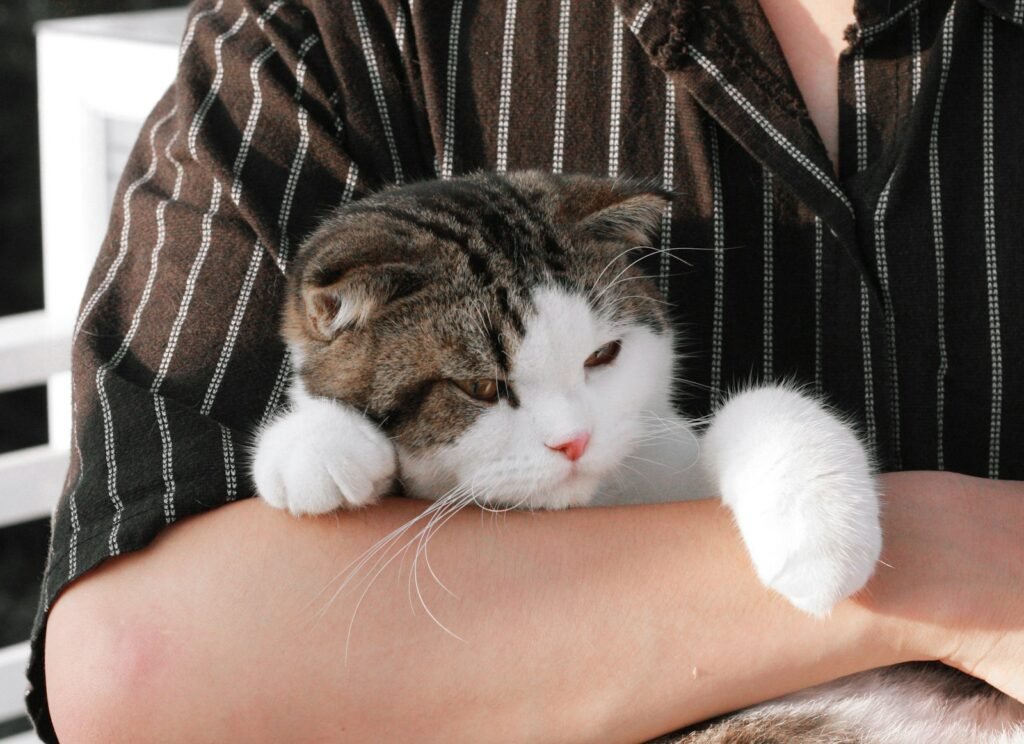
Figuring out whether your cat genuinely loves your cuddles or is simply enduring them is one of the more rewarding puzzles of pet ownership. The signs are all there. You just have to know where to look. From the rumble of a contented purr to the delicate drama of a slow blink, your cat is constantly communicating with you in a language that goes far beyond words.
The key takeaway is simple: watch the whole cat, not just one signal. A relaxed body, soft ears, a gently curled tail, a little bit of kneading, and the choice to stay in your lap are all pieces of the same beautiful puzzle. Respect their boundaries, let them come to you, and those genuine cuddle moments will multiply over time.
After all, a cat that chooses you is worth a thousand cats that are just stuck in the room with you. Does your cat have a cuddle signal you’ve noticed that surprised you? Drop it in the comments – cat lovers everywhere would love to know.
Kristina is a young writer from India. An arts graduate and an avid content creator, Kristina is passionate about animals and wildlife. She enjoys exploring topics related to pet care, animal behavior, conservation, and nature, combining thorough research with engaging storytelling.