You’ve probably noticed it more than once. Your cat skips the perfectly comfortable bed you bought and ends up folded into a laundry basket or pressed flat on top of the refrigerator. It seems random, maybe even a little theatrical. The truth is, it’s neither.
Felines are able to sleep nearly everywhere and in any position, yet how and where they snooze isn’t as random as it may seem. A cat’s sleeping posture, pattern, and location can reveal a great deal about their temperament, health, and how they’re feeling. Once you start reading those signals, your cat’s napping habits become surprisingly informative, sometimes even more telling than you’d expect.
The Curled-Up Ball: Your Cat Is Playing It Safe

When your cat tucks themselves into a tight crescent, nose nearly touching tail, they’re doing something entirely practical. This is the most common cat sleeping position, also known as the crescent. The reason most cats tend to sleep curled up is to protect themselves while maximizing body warmth.
This common crescent shape isn’t just cute – it’s practical. Your cat is protecting their vital organs while conserving body heat, a position that reflects either comfort and instinct or a desire to feel more secure in their space. Senior cats or anxious felines often prefer this position, so if your older cat has settled into this habit, it’s not something to worry about. It’s simply their way of making themselves feel snug and shielded.
The Belly-Up Position: A Rare Compliment From Your Cat
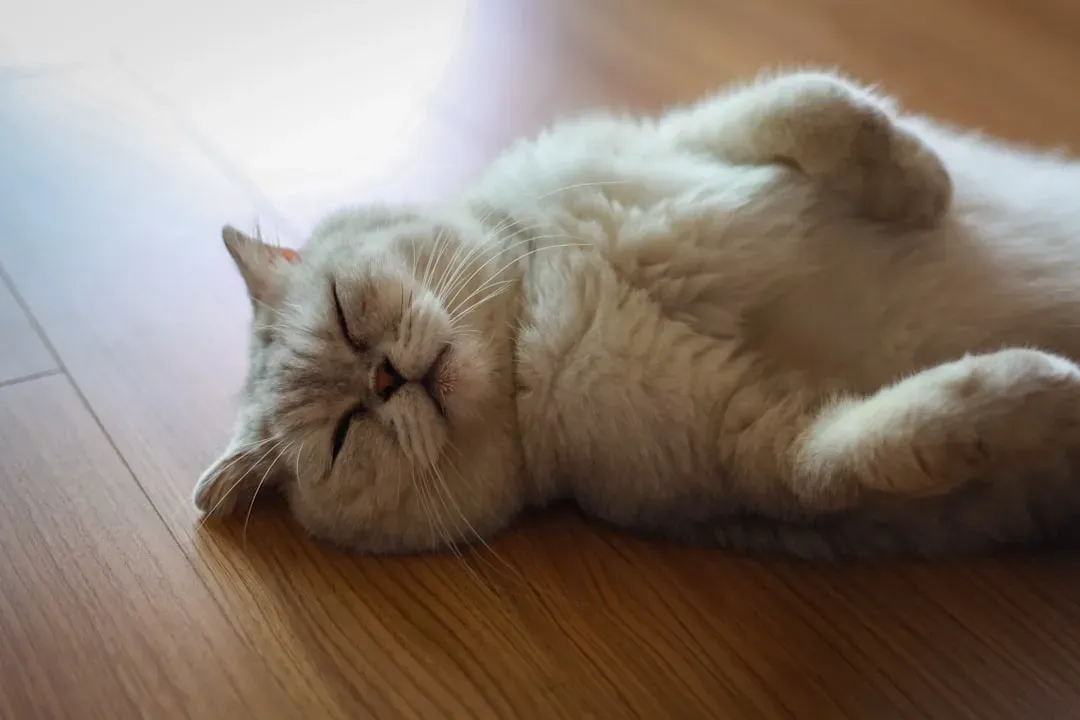
If your cat tends to choose to sleep with their belly exposed, sprawled out on their back, this means they feel incredibly comfortable and safe around you. This position would leave them extremely vulnerable in the wild. Seeing it in your home is genuinely meaningful.
When your cat exposes their belly while sleeping, it’s a strong sign of trust. This is their most vulnerable position, so they only do this in spaces where they feel completely safe. It can also mean your cat is trying to cool down or simply enjoys the freedom of a good stretch. Either way, consider yourself trusted. Don’t ruin the moment with an unsolicited belly rub – most cats prefer you admire that display from a respectful distance.
The Bread Loaf: Content But Still Keeping Watch
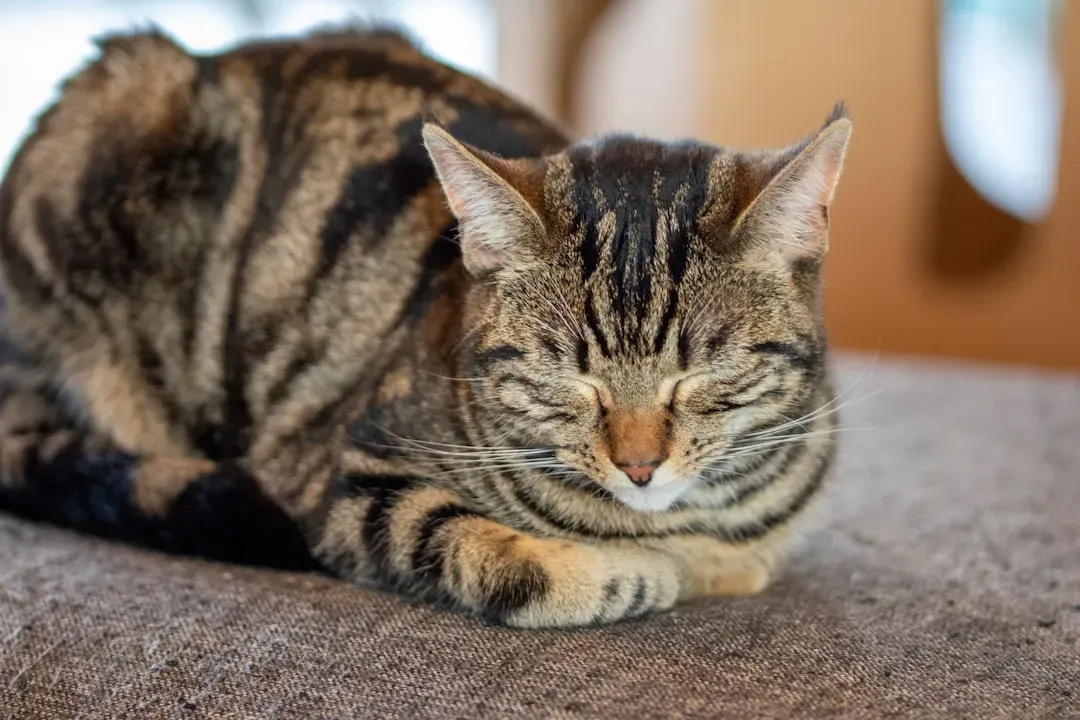
The “cat loaf” is a common and adorable posture where cats tuck their front paws under their bodies and often keep their heads up. This compact stance helps cats conserve body heat and shields their vital organs. When you see your cat in the loaf position, it usually means they are comfortable and at ease, yet they remain alert and ready to move quickly if necessary.
The meaning of the bread loaf position is that your cat is trying to get some shut-eye while still being aware of their surroundings. By sitting upright they are ready to spring into action at any moment but are mostly comfortable with their surroundings. Cats who sleep in a bread loaf are caring, but cautious – comfortable around their owner but prepared to spring into action if needed. Think of it as their version of resting with one eye open.
Side Sleeping: Deep Trust Written in Body Language
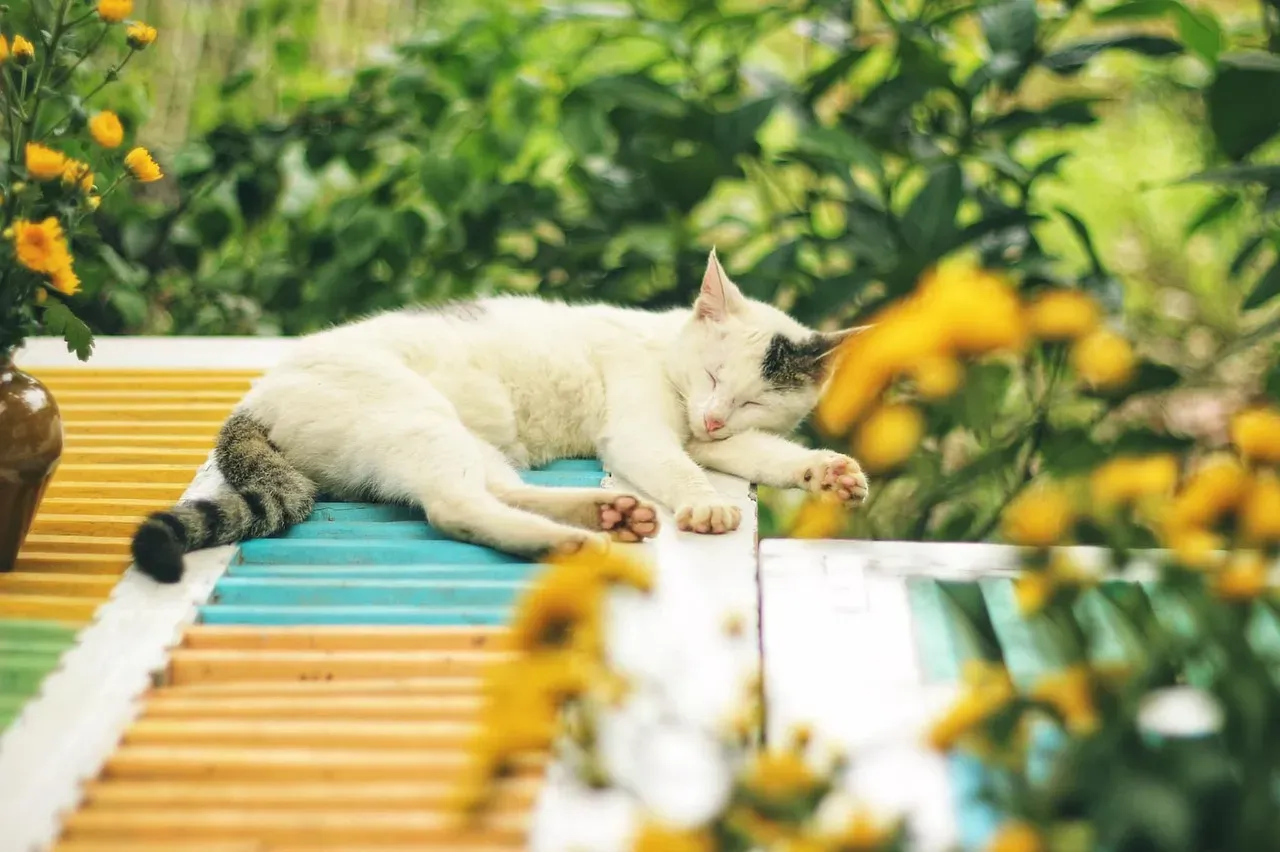
A cat lying on its side with limbs outstretched is in a deep, restful sleep. It means they’re feeling safe, stress-free, and completely at ease in their environment. This position is usually seen in well-adjusted, confident cats.
Side sleeping is one of the most comfortable positions for cats. When your cat is spread out on their side, they are often in a deep sleep. If your cat is an avid side sleeper, this means they really do trust and feel comfortable around you, as it is one of the sleeping positions that leaves them most vulnerable. However, sleeping on their side makes it easier for your cat to jump up or run if needed. As prey animals, having this escape option acts as a bit of insurance, helping your cat get a restful sleep.
Sleeping by Your Head: The Ultimate Feline Vote of Confidence
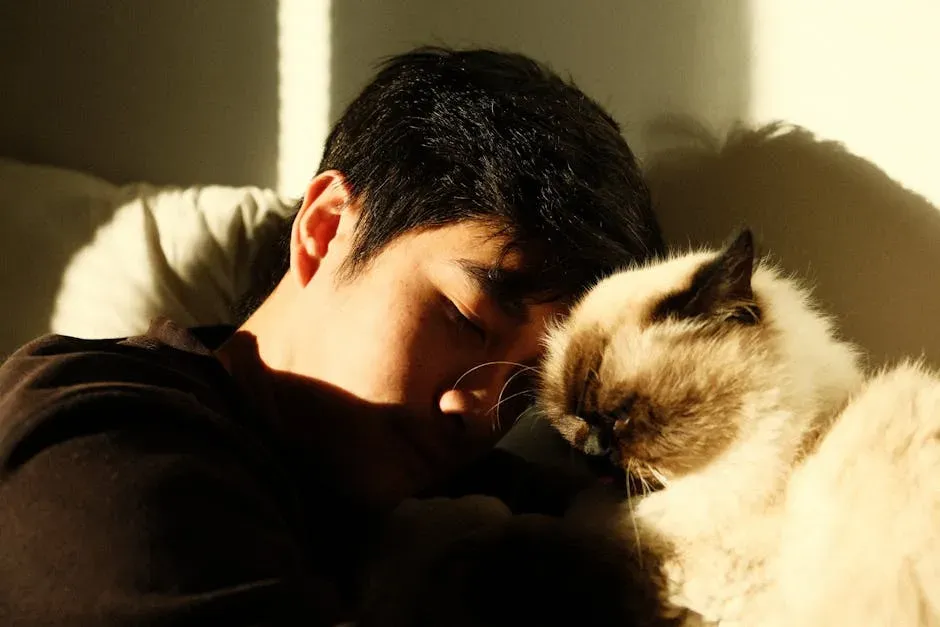
Sleeping by your head or on your pillow means your cat is seeking your scent at its strongest concentration. Your face and scalp release natural oils that your cat associates with comfort and familiarity. It might occasionally wake you up at 4 a.m., but the motivation behind it is as affectionate as feline behavior gets.
Sleeping is the most vulnerable state for a cat. By placing their most vital organs next to yours, they are signaling a level of trust equivalent to that between a kitten and its mother. It is the ultimate feline compliment. In a bedroom, the headboard is often the highest and most “fortified” part of the bed. By sleeping here, the cat has a clear view of the room’s entrance while having their back protected by the wall – the feline version of a high-ground watchtower.
Elevated Spots: Your Cat Is Claiming the High Ground
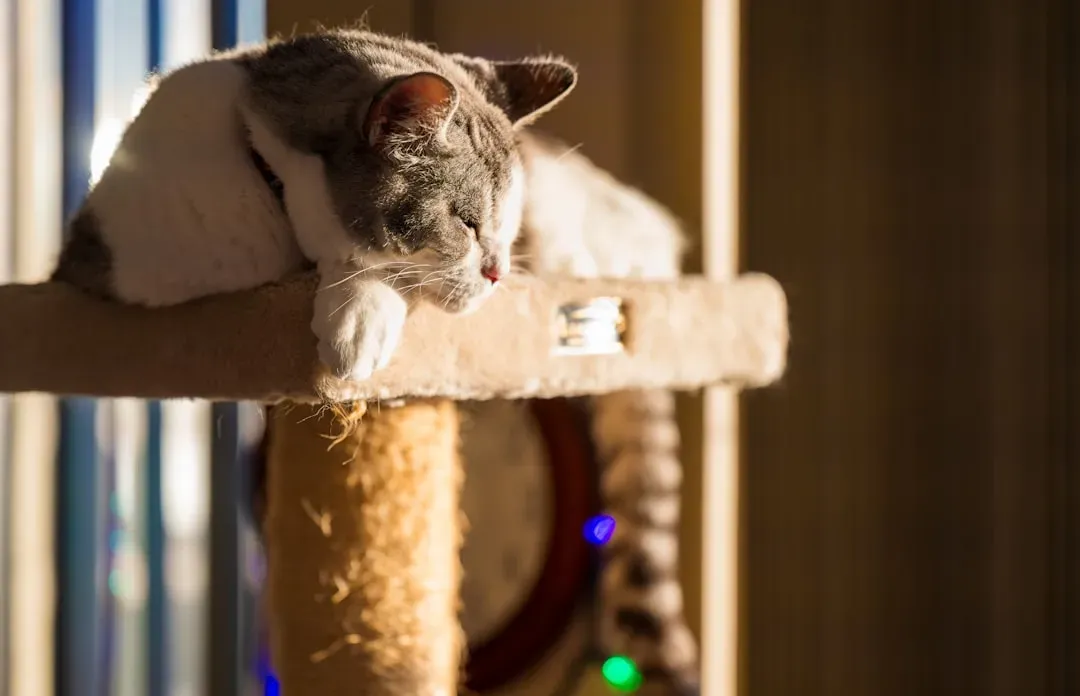
According to animal behavior experts, most cats prefer to sleep and hang out in places with good vantage points. It comes from their instinct to protect themselves, and a high position for sleeping or resting gives them an aerial advantage for spotting any potential dangers around them.
Another basic function of high places, especially in climate-controlled homes, is to provide a warm location for cats to rest. Because warmer air rises, cats might prefer the tops of appliances, cat trees, and bookshelves over cold floors. This can be especially true during the winter. Cats prefer elevated sleeping spots because they feel secure, can avoid being startled, and can easily monitor their environment. In multi-cat homes, higher spots may even become part of subtle social hierarchies, with more confident cats claiming the top positions.
Enclosed and Hidden Spots: Security Over Sociability
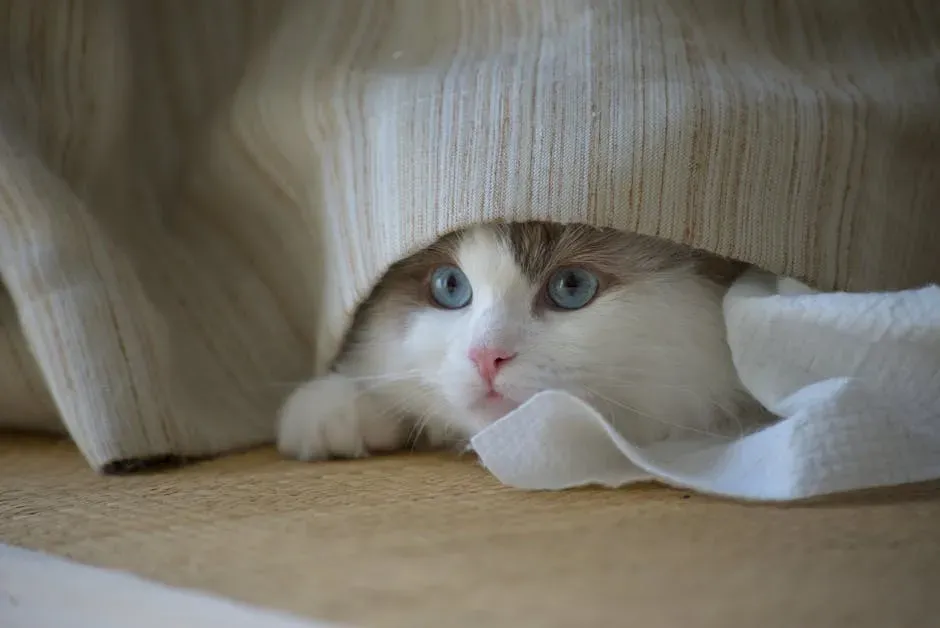
Small, enclosed spaces provide cats with a sense of security and protection, mimicking the den-like environments their wild ancestors sought for safety during rest periods. Cats get comfort and security from enclosed spaces as well as tactile stimulation, which is why they love cuddling up inside of boxes, sinks, and tight spaces. This behavior can be traced back to their wildcat ancestors who would sleep safely hidden away to help avoid predators. The perceived safety that comes from nesting or “denning” can significantly reduce stress.
Many cats choose closets, boxes, or even behind the couch cushions because these areas feel safe. Enclosed spaces offer protection from perceived dangers or disruptions like loud children, dogs, or guests. If your cat is overwhelmed by activity in the home, it may seek out low-traffic areas. A high shelf or behind the curtains offers solitude and a break from overstimulation. So if your cat disappears into the wardrobe, don’t take it personally. They’re just recharging.
Sleeping on You: Your Cat Has Decided You’re Family
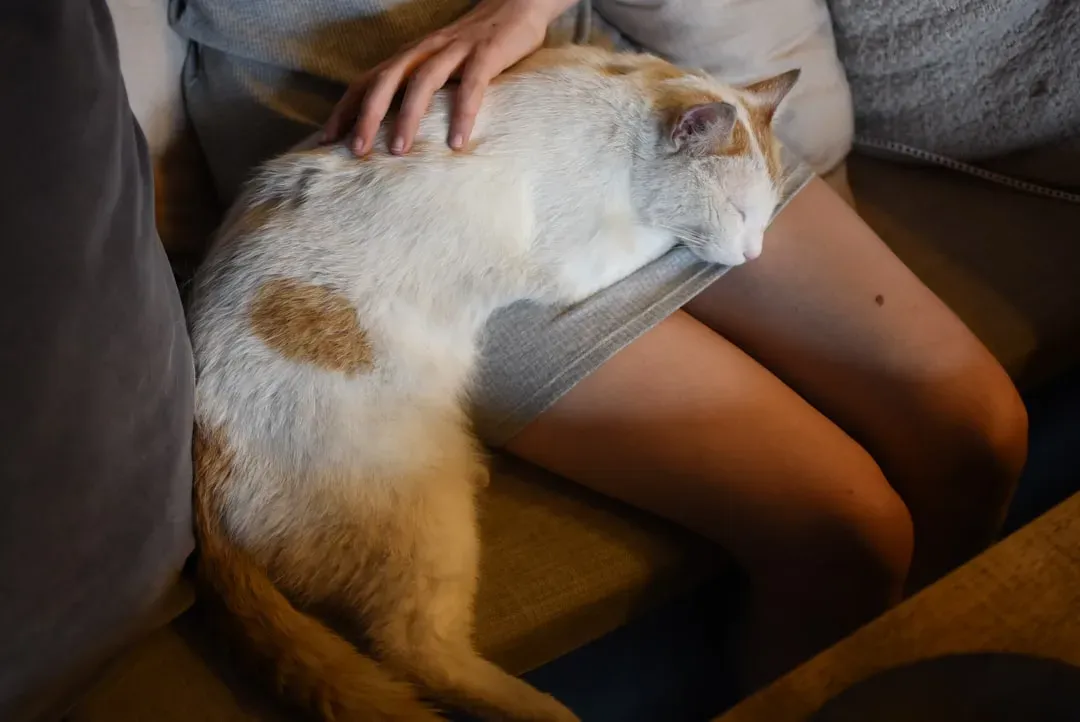
When a cat decides your lap is the perfect place to sleep, they mean it. Human laps provide warm, slightly cushioned surfaces that help a cat stay toasty without spending extra energy. Your lap also raises your cat a little off the ground, giving them a better view and a stronger sense of safety than they get from an exposed spot on the floor.
Most importantly, resting on your body shows deep trust. Cats feel most vulnerable while asleep, so when they drift off on top of you, they show that they expect you to protect them and that your presence helps them unwind. Sleeping on your lap shows your cat feels a strong bond with you. In nature, kittens often sleep in a pile and share warmth. When your adult cat uses you the same way, they are treating you like family and strengthening your social bond.
Sudden Changes in Sleeping Spot: A Signal Worth Taking Seriously
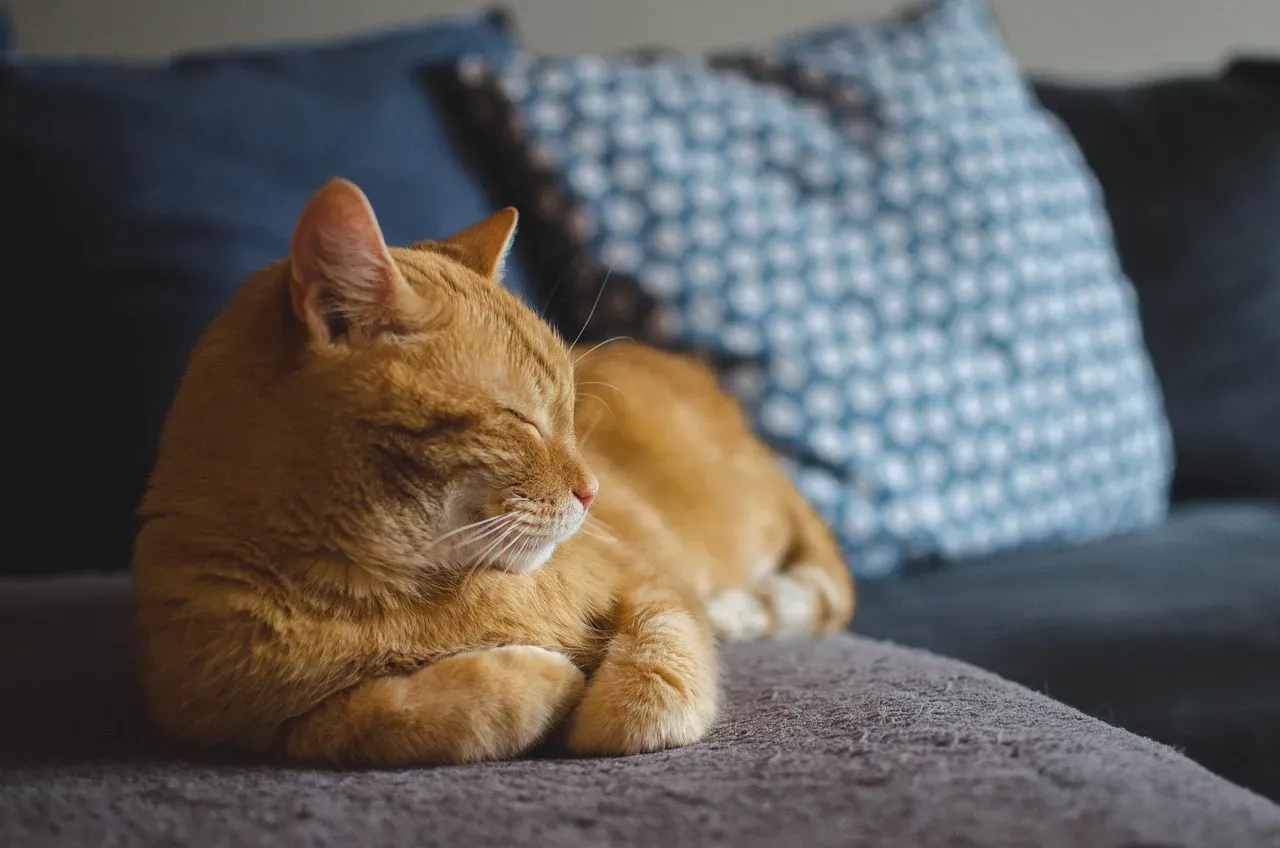
Just like humans, cats can experience stress or anxiety, which can lead to changes in their behavior, including where they sleep. Cats are sensitive to changes in their environment, such as moving to a new home, changes in routine, or the presence of new pets or people. Stress can cause a cat to seek out new, more secure locations to sleep.
If your cat begins to sleep in increasingly hidden or hard-to-reach places, and shows other signs like reduced appetite, lethargy, or avoidance, it may signal illness or discomfort. Cats instinctively hide weakness, so unusual sleeping patterns may be an early sign something is wrong. Certain sleep patterns can indicate health issues. A cat that suddenly starts sleeping in a hunched, tense position, hides in dark or enclosed spaces more than usual, or stops stretching out entirely may be in pain. Combined with changes in appetite, grooming, or litter box habits, altered sleeping behavior is a good reason to schedule a vet visit.
Conclusion
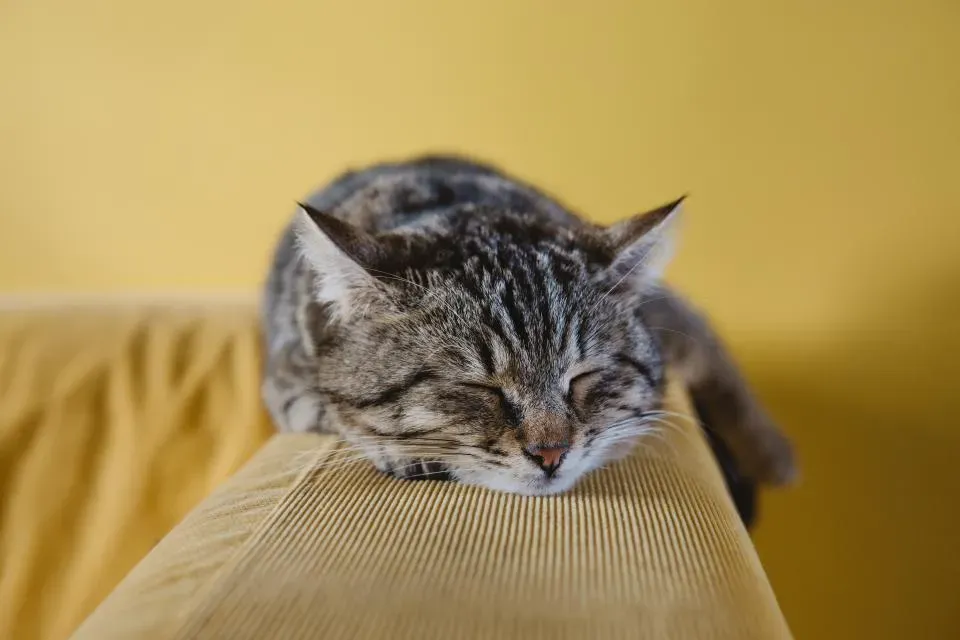
Your cat’s napping habits are genuinely communicative, even when your cat seems to be doing absolutely nothing. Cat sleeping positions are more than random habits. Every posture reflects a mix of instinct, comfort, temperature regulation, and emotional state. A cat’s wild ancestors had to protect vulnerable organs and stay ready to react to threats even while resting, and those instincts still shape how domestic cats sleep today. Paying attention to your cat’s preferred positions can give you real insight into their mood, health, and how secure they feel in your home.
The quiet language of where your cat chooses to rest, and how, is one of the more honest conversations you’ll have with them. You just have to know how to listen.
Kristina is a young writer from India. An arts graduate and an avid content creator, Kristina is passionate about animals and wildlife. She enjoys exploring topics related to pet care, animal behavior, conservation, and nature, combining thorough research with engaging storytelling.