You’re sitting quietly on your couch when you notice your cat locked in an unblinking stare at the corner of the room. Nothing’s there. Or at least, nothing you can see. It’s one of those small, slightly unsettling moments that cat owners encounter regularly, usually followed by the quiet suspicion that their pet knows something they don’t.
The truth is, your cat probably does. The explanation isn’t paranormal or mysterious in some theatrical sense. It’s rooted in biology, evolution, and a sensory toolkit so finely tuned that it makes your own perception of the world look fairly limited by comparison.
Your Cat’s Eyes Are Built for a Different World
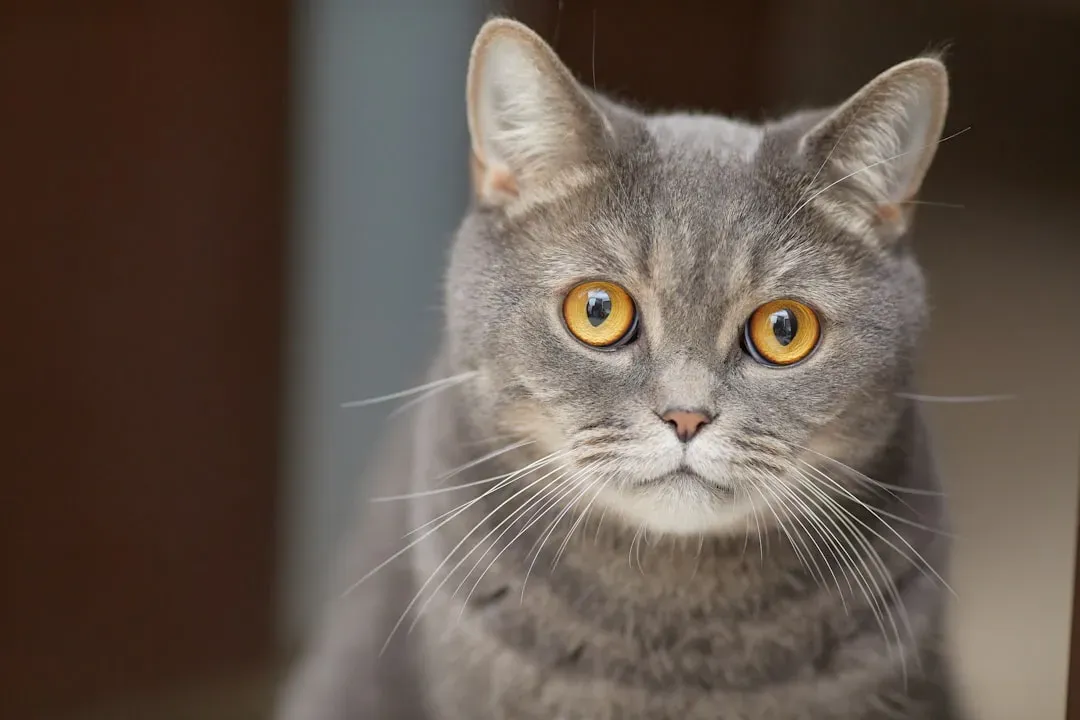
Your cat has far more rod cells in its eyes than you do, making them exceptional at detecting movement in dim conditions. A reflective layer behind the retina called the tapetum lucidum amplifies available light, allowing cats to see in conditions roughly six times darker than what humans require. When your cat stares intently at what looks like a blank wall, it may be tracking something in light levels your eyes simply can’t register.
Cats can also see ultraviolet wavelengths invisible to the human eye. Certain fabrics, cleaning residues, and surface coatings reflect UV light in patterns we cannot perceive, making a blank wall or floor visually interesting to your cat. What looks like an empty stretch of plaster to you could be lit up with information your cat is carefully processing.
Your Cat Is Hearing Things You Simply Cannot
Humans can detect sounds in a frequency range from about 20 to 20,000 Hz. Cats, on the other hand, can hear from about 80 Hz up to 85,000 Hz, giving them one of the broadest hearing ranges among mammals. That stare you’re watching might have nothing to do with vision at all.
Cats can detect high-frequency sounds well beyond the human range. Pipes expanding inside walls, rodents behind baseboards, and HVAC systems all produce sounds your cat hears clearly. When your cat stares at a wall, what holds their attention is often what they hear. Think of it less as blank gazing and more as focused listening with eyes wide open.
The Hunter Instinct Never Really Switches Off
Cats are ambush predators, so they don’t immediately charge after their target. When they detect something that might be prey, they wait and see before chasing. Then, once they do chase and it disappears, they wait it out. That prolonged, motionless staring you’re watching is a hunting behavior, not a personality quirk.
That intense focus can be attributed to their hunting instincts. Even though domesticated feline friends may not need to hunt for food anymore, the predatory nature is deeply ingrained in their DNA. When your cat stares at the wall, they might be imagining themselves pouncing on an imaginary prey, honing their hunting skills in the safety of your home. Thousands of years of domestication haven’t dulled the edge of those instincts one bit.
Their Sense of Smell Tells a Story You Can’t Read
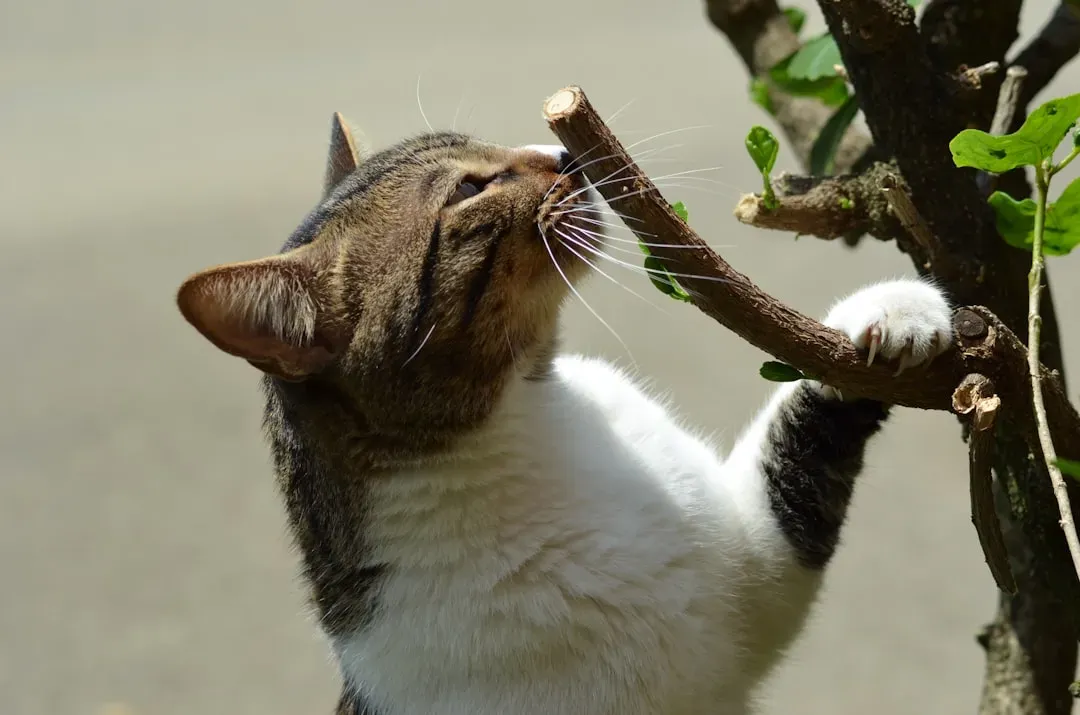
A domestic cat’s sense of smell is 9 to 16 times as strong as a human’s. Cats rely heavily on scent. A wall near a doorway might carry residual pheromones from your cat, another pet, or wildlife outside. Staring is often part of processing these invisible scent messages.
Cats possess a specialized organ called the Jacobson’s organ, located in the roof of their mouth, which allows them to analyze scents in a way that goes beyond human comprehension. This is why cats often exhibit a behavior known as the flehmen response, where they curl their lips and open their mouths slightly to better capture and interpret scents. When you see that strange open-mouthed pause, your cat is essentially running a second nose.
Tiny Things You’d Never Notice Are Front and Center
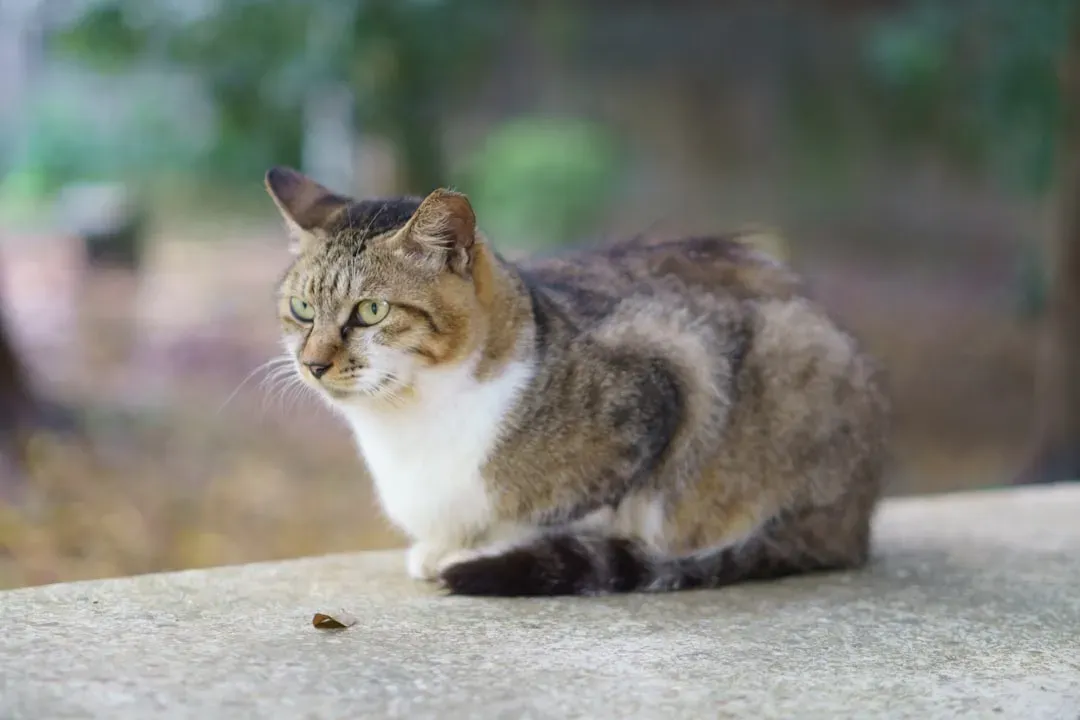
Your cat, with a keen eye for moving objects, might be tracking the erratic flight of a microscopic fly, a speck of dust floating in a beam of light, or a particle dancing in the air. These are potential prey for the hunting mind, even if the cat chooses not to make any attempt to catch them. It’s a fully engaged mental exercise that looks, from your seat across the room, like absolutely nothing.
A cat’s retina has photoreceptor cells called rod cells and cone cells. They have more rod cells that allow cats to detect low light and follow movements, unlike humans. Cats can also see tiny insects that we can’t, so it may look like they’re staring at nothing when there’s an army of bugs they have their eyes fixed on. Your floor or wall might be considerably more populated than you realize.
Flickering Light and Reflections Are Irresistible Triggers
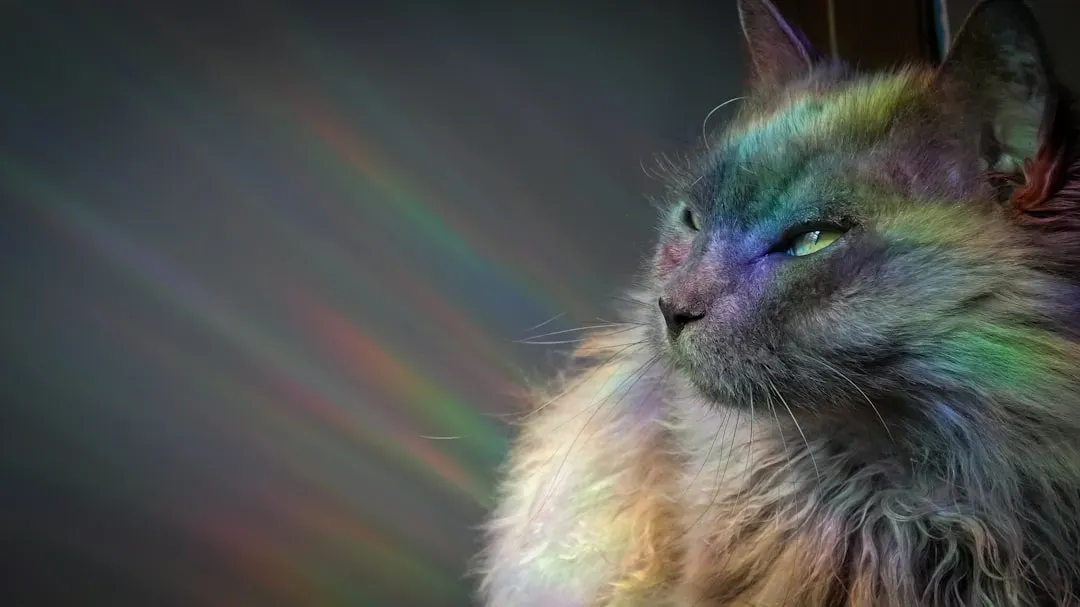
One researcher noticed her cat always staring at a specific spot at a certain time of night, until she realized it was a gap in the curtains that revealed a flash of light from a passing car. It just looked like the cat was staring at the same part of the wall all the time, but the cat was actually monitoring it to see if that light was going to come back. Something that happens once is apparently worth watching for many times over.
Sunlight shifting across a wall or a reflection bouncing off a phone screen can catch your cat’s eye instantly. Corners amplify these effects because two surfaces meet, creating visual contrasts that cats are wired to investigate. LED lighting can also produce a flicker invisible to humans but fully noticeable to cats. Your modern home is full of triggers your cat finds genuinely compelling.
Sometimes It Really Is Just Cats Being Cats
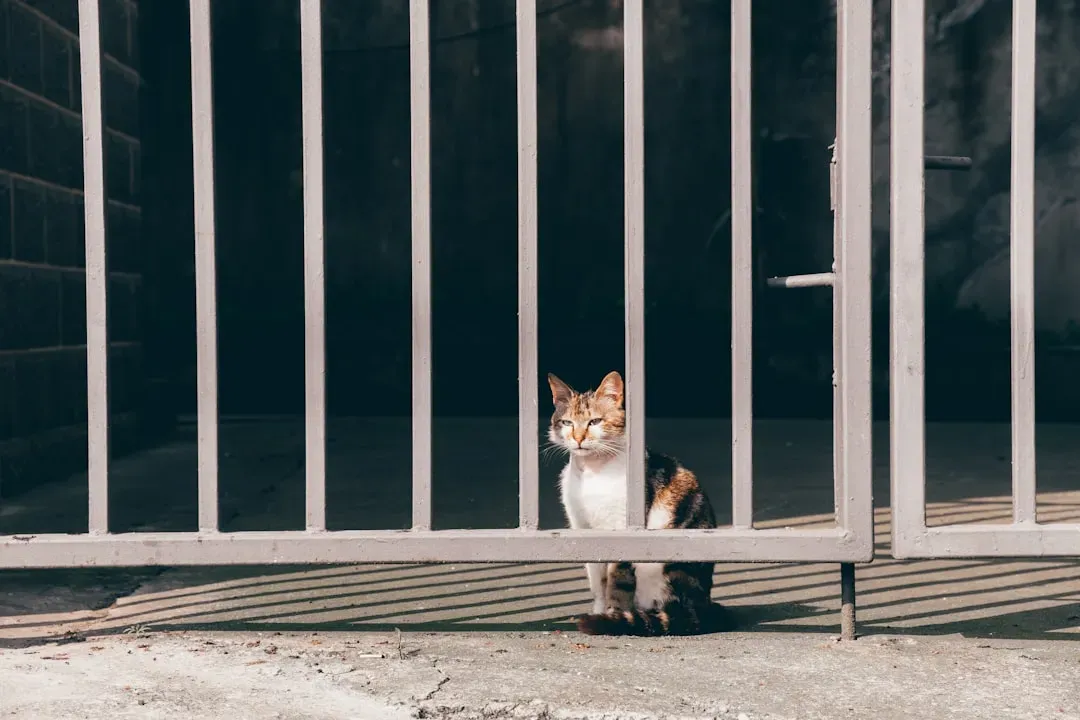
Cats don’t actually think as humans do when they stare off into space. Instead, this behavior is linked to their biological instincts, energy conservation, and a sense of relaxation. Staring can also be a way for cats to conserve energy. By remaining still and focused on something in the distance, they can keep an eye out for potential prey while resting.
Sometimes the reason your cat might be staring at the wall is for, well, no reason at all. Sometimes we stare off into space for no reason, and your cat may be doing the same. There’s a quiet comfort in knowing that occasionally, your deeply mysterious feline is doing precisely what you do during a slow afternoon meeting.
When Staring Could Signal a Health Concern
Sometimes, especially in older cats, staring into space can be a symptom of a condition called Feline Hyperesthesia Syndrome. This is a type of neurological hypersensitivity in which the cat may hallucinate, often reacting as if something were bothering them on their back or tail. If this behavior is accompanied by unusual meowing, compulsive back licking, or sudden jerking movements, it’s best to consult a veterinarian to rule out this possibility.
Older cats can develop feline cognitive dysfunction, similar to dementia in humans. Symptoms include disoriented staring, pacing, and changes in sleep patterns. If your senior cat stares more often and seems confused, a vet visit is warranted. Focal seizures, originating in the cerebral cortex, can also cause a cat to stare into space, and they can be a hereditary condition. If drooling or incoordination follows, a trip to the vet is warranted.
Can Cats Really Sense What We Can’t? The Ghost Question
What seems like a sixth sense is actually complex environmental information processing through superior senses, particularly smell and hearing, that far exceed human capabilities. The idea that cats perceive the supernatural is persistent, understandable, and easy to arrive at when you watch them react to things that genuinely aren’t visible to you.
Regardless of beliefs about the spirit world, cats cannot sense ghosts. It’s more likely your cat is fixated on a sound or other anomaly that humans can’t detect. This might not be the answer avid ghost hunters are looking for, but it is what science says. Still, the fact that your cat’s senses reach so far beyond your own isn’t exactly a disappointing explanation.
How to Support Your Cat’s Sensory Life at Home
Happy, healthy cats receive a good dose of physical and mental stimulation every day, especially if it taps into their instincts. Things that stimulate their natural tendencies are often in the enrichment category. Cats need mental and physical stimulation. A lack of engaging activities or toys can lead to boredom, which might cause your cat to focus intently on any slight movement or sound as a form of entertainment. Ensuring your cat has access to a variety of toys, scratching posts, and climbing structures can help alleviate boredom.
Maintaining predictable routines helps tremendously. Regular feeding times, consistent play sessions, and reliable cleaning schedules make your cat feel secure. If your cat obsesses over fixations to the point that it disrupts typical healthy behavior, that’s a cause for concern. While some stimuli are good, too much can create unhealthy stress. A little observation goes a long way in understanding what your cat’s staring habit is actually telling you.
Conclusion: There’s More Going On Than Meets the Eye
Your cat’s vacant-looking stare into the corner of the room is rarely vacant at all. It’s a window into a sensory experience that runs parallel to yours but reaches much further. The sounds inside your walls, the UV patterns on your floor, the scent of a spider that passed by an hour ago – all of it is live information your cat is actively sorting through.
Understanding this doesn’t make your cat any less wonderfully strange. It just shifts the mystery from the supernatural to something arguably more interesting: a creature sharing your home who experiences that home in a completely different dimension. The next time your cat freezes and stares, resist the urge to check for ghosts. Check the baseboards instead.
Kristina is a young writer from India. An arts graduate and an avid content creator, Kristina is passionate about animals and wildlife. She enjoys exploring topics related to pet care, animal behavior, conservation, and nature, combining thorough research with engaging storytelling.